

Plan & prepare now for Cyclone Gabrielle advises RANZ –
The Restaurant Association is urging hospitality businesses across the North Island to prepare for every event, as Cyclone Gabrielle arrives.
In its online resources it highlights the need to clear outdoor eating areas, compile stock takes, and consider backing up power supplies.
“Our advice to members is that you can never be over prepared for a situation like this,” said CEO Marisa Bidois.
“Hospitality businesses are uniquely affected by weather events such as cyclones so it’s wise to plan ahead to minimize the damage and business interruption.”
The Association has put together a checklist for businesses looking to get prepared ahead of the storm. This includes:
- Ensure you are monitoring weather conditions regularly – things can change rapidly. Keep up to date with the advice of your local Civil Defense organisation.
- For businesses with outdoor eating areas, ensure any chairs, tables and other loose items are secured or stored away safely.
- Move everything off the floor that you can store elsewhere.
- Ensure contact numbers (and emergency contacts) of team members are updated and easily accessible. Have a plan for communicating with your team.
- Ensure any critical documents and business related data is securely backed up and accessible.
- Check insurance is up to date and in place.
- Ensure adequate supplies of torches, fresh batteries, brooms, mops and buckets as well as a backup water source.
- Clearing any obstructions disturbing the flow of water down any storm water drains.
- Do a walkthrough of the business and clear any materials around the area that can easily be considered flying debris during a cyclone.
- Carry out a stock take of all supplies and equipment in case there is any damage or loss of stock. Take photos of high-value items.
- Ensure vehicles are away from low lying areas (and insurance is up to date).
- Create a business continuity plan.
- Consider an alternate power source. Some businesses are able to operate during power outages if they have a generator. This can also ensure that fridges and freezers do not turn off and minimize stock loss.
- Communicate with customers. Use your social media channels to keep people informed on whether you have been impacted or not.
- Be sure to remind your team to also be prepared in their own homes.
“It is really important to be prepared but also to remain calm. Our businesses have been under a lot of pressure over the last few years and it is important to look after yourself and your wellbeing. We have a number of resources on our site to help you through this.”
The Restaurant Association also urges diners to listen to warnings from local emergency information hubs and civil defense as well as communicating with local businesses.
For customers, it is important to listen to warnings from your local emergency information hubs and civil defense. Contact the business on the day to see if they are still open for business. Some of the feedback we have had from members has been that bookings are canceled often well in advance and at times unnecessarily so be sure to communicate. The businesses will also be in touch with you regarding any changes that may need to take place.”
Hospitality business owners can access the Restaurant Association resources here
Mental wellbeing resources can be accessed via the First Steps website here
Go to https://www.restaurantnz.co.nz/emergency-response-hub/ for more information.

Hospitality Business Leader’s Forum 2023:
Bring back hospitality
By Mayor of Auckland, Wayne Brown
Thank you for inviting me to contribute to the Hospitality Business magazine Leader’s Forum. Hospitality is my third biggest spend, after taxes and rates, and I have invested in this industry, so I’m probably a good person to listen to.
Studies have shown that 68% of all lost business results from the indifferent, uncaring attitudes of employees towards customers.
I cannot tell you the number of times I’ve entered a restaurant and stood there, being ignored by staff who don’t appear to be busy or told that a half-empty dining room is fully booked. It’s almost a weekly occurrence.
We need to put the hospitality back in this industry.
Every customer who comes through the door is an opportunity for repeat business – they’re going to spend more, more often, and promote your business to others. Where’s the friendly, generous reception for your customers, and your staff?
Staffing is a real problem, but the industry’s skills gap – compounded by COVID-19, closed international borders, and fewer graduates from hospitality and tourism schools – can’t be solved through immigration alone.
My view is, if you want something done properly, you might have to do it yourself.
In a survey of 396 hospitality workers, Voices from the Front Line, 81% stated they received no training in their jobs. If you want to keep people, you have to train them and pay them. If you pay the least, you’re going to lose people to your competitors eventually.
It’s important to understand the industry you’re in, and your business has to be competitive. Know your customers and your competitors, and offer superior quality, superior value, or something different – and don’t stand still.
Plenty of people changed their business model or product offering during COVID-19 and continued to trade well. It’s pretty simple, but it’s never easy, and I applaud those of you whose businesses have emerged stronger and competitive. There is something to be learned here.
If we look at Auckland’s inner-city, a recent resident’ survey shows the main reason people like living in the city center is access to shops and restaurants (63%), and the main reason to dislike living in the city center is that people do not feel safe (45%).
Safety issues, anti-social behavior, violence, and crime had a real impact on retail and hospitality post-COVID, and all agencies must work together effectively with businesses to address these problems.
As an interim solution, I want to see more police on the streets, and I urge business associations like the Heart of the City to spend any excess funds on regular security patrols. It’s free to become a member of your local business association because they’re funded by a targeted rate on local business rate payers, so make sure you join.
Spending money on security is a better bet than spending money on events to attract customers in the current environment, because they won’t stick around or come back if they don’t feel safe.
We also need to think about long-term practical measures to bring people back to inner-city Auckland, such as making it easier to convert empty office spaces into much-needed residential housing.
More people mean busier, safer streets, and thriving businesses.

Demand is high – No supply –
Opportunity in the outer suburbs
By Gerrick Numan
The inner suburbs, the ‘cool’ areas, have a lot of restaurants, cafes and bars. The demand is high but so is supply. That doesn’t mean another one won’t work, it just means there are opportunities elsewhere.
In some under-serviced outer suburbs, the demand is high and there’s no supply.
People are there, with money, looking to eat out but they have nowhere to go. If your concept is right, your chances of success are higher in the outer suburbs.
Just look at Peach’s Hot Chicken. We designed a venue for them in Panmure, Auckland, an area better known for pawn shops than dining, and they’ve had crazy queues out the door every single night.
Now they’re moving to a venue twice the size down the road. An excellent concept plus low competition has meant a much more profitable restaurant than if they had opened in the inner suburbs.
We’ve done the same for Sumthin Dumplin in Botany and many others.
Rent
Not only is competition lower in the suburbs, so are the rents.
A shop that costs you $80k per year in rent in an inner suburb, can cost $25k in the outer suburbs. That’s $55k in your pocket, immediately. The old real estate saying that you ‘make your money when you buy’ applies to leasing a space for a hospitality business too.
In an industry where margins are slim, lower rents can make a huge difference.
If you do $15k in sales per week, the lower rent means a drop in your annual rent percentage from 10% to 3% – an additional 7% of profit.
Postpandemic
There is less demand for retail spaces. So you will have increased negotiating power with landlords. This could mean a long rent free period or a significant capital contribution from landlords.
You will also be in a good place to negotiate a ‘sale friendly’ lease
Ie a lease that will be attractive to future buyers of your venue (multiple rights of renewal, annual rental increases capped at CPI, no demolition clauses). Get in touch with me any time if you want me to explain these ideas.
There is potential in failed venues.
The financial and emotional impacts of a failed concept on operators are nothing to be taken lightly. But at some point these venues and their unused fit outs and equipment will need to be used again. This can be an excellent opportunity to open a venue, without the massive expense and risk that comes from setting up a kitchen from scratch.
Where to from here?
If you need any help assessing a site, or tweaking your concept, get in touch with me anytime and let’s figure out a way to keep moving forward. www.mille.co.nz
Carnival Wants to end Cheap Cruises (Royal Caribbean Agrees)
A hotel room that sells for $100 a night comes with a place to sleep, maybe a pool, and if you’re really lucky, a free, very mediocre breakfast. Buy a cruise cabin for $100 a night — something that’s easy to do right now — and you get your cabin, multiple pools, hot tubs, shows, live music, and as much food as you can eat from multiple venues.
That’s a great deal when cruise prices are relatively in line with land-based vacation prices. While they’re depressed, which they have generally been since the cruise industry returned from its covid-related shutdown in July 2021, both Royal Caribbean Group (RCL) – Get Free Report and Carnival Cruise Lines (CCL) – Get Free Report expect that to change.
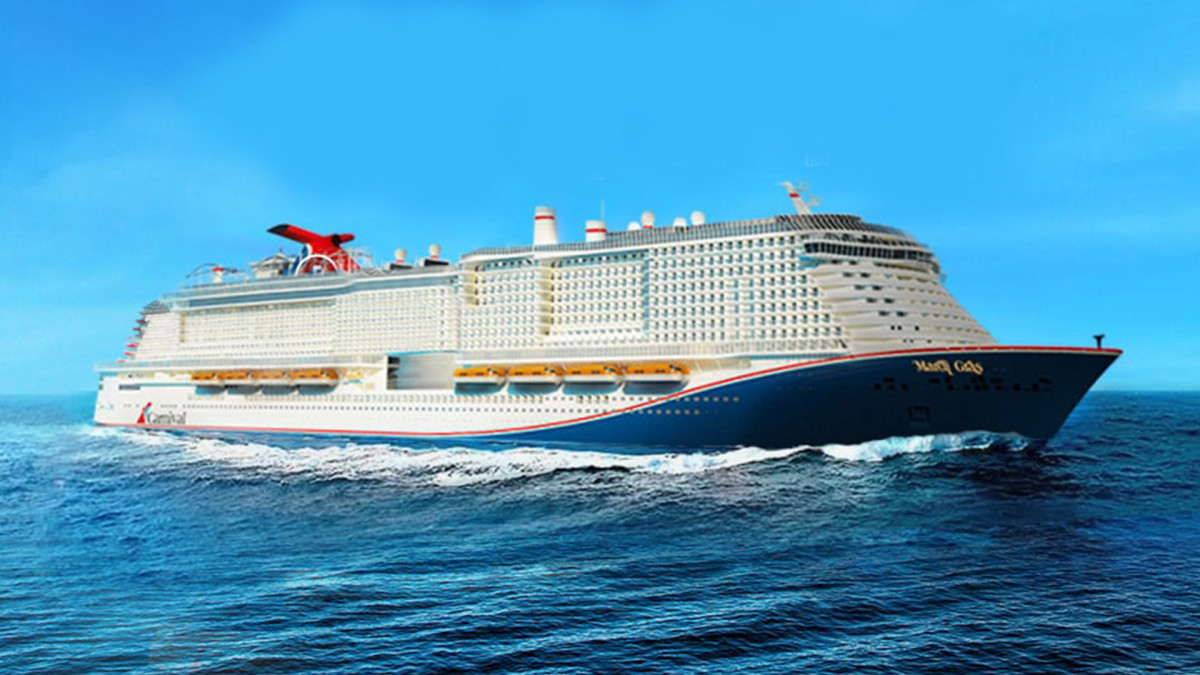
Both cruise lines have been aggressive in positioning their fleets, managing capacity, and building excitement. Carnival recently added Celebration, its newest US flagship, and Royal Caribbean has Wonder of the Seas, which began sailing during the pandemic.
Carnival CEO Josh Weinstein made it clear that he has a plan to bring cruise pricing higher, and he talked about it during the cruise line’s fourth-quarter earnings call.
Carnival Cruise Line
Carnival Sheds Ships, Ramps up Ads
Carnival removed a number of ships from its namesake brand in 2022. It also took three ships from its Costa line, which sails in Europe and has been impacted by both covid and the war in Ukraine, and assigned them to Carnival, giving that cruise line a new experience to market.
Weinstein has been focusing on making the various Carnival brands as efficient as possible. This has included adding new ships and dropping old ones.
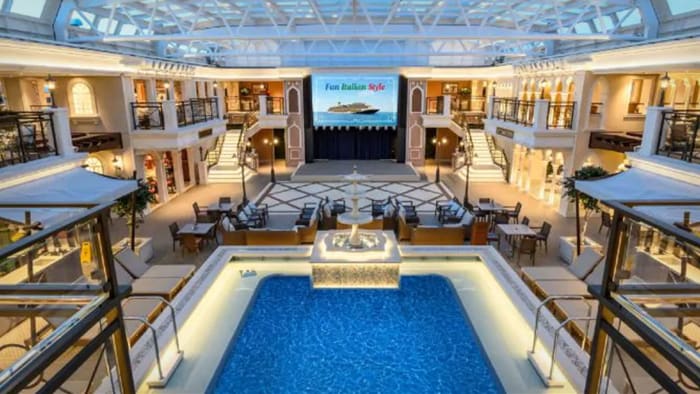
“When coupled with the delivery of larger, more efficient ships, including the successful introduction of Carnival Celebration last month and the addition of Arvia for P&O Cruises just last week, this will result in nearly a quarter of our fleet consisting of new capacity,” he said. “This fleet transformation results in an 8-percentage-point increase in balcony cabins, along with a tremendous increase in available real estate on board to deliver even more differentiated onboard experiences and generate associated revenues contributing to durable revenue growth going forward.”
Basically, newer ships come with more revenue opportunities than older ones and Carnival used the pandemic to reset its fleet, adding new ships and phasing out older ones. Weinstein has also taken steps to let customers new and old know what the Carnival cruise lines have done.
“We are capitalizing on the 25% to 50% value gap for land-based alternatives that, frankly, should not exist with new marketing campaigns to communicate our significant value advantage to land-based alternatives, including newly launched digital creatives from several brands, ” the CEO explained. “We plan to continue these increased investments in advertising as we head into next year to promote a strong ‘wave’ season where we capture disproportionately higher bookings for the year, particularly our important summer season.”
Weinstein has his various brands focusing on maximizing revenue with an eye toward bringing higher prices.
“On the revenue management side, we are ensuring that each brand is utilizing pricing philosophies to maximize revenue, from launch to sailing, and sharing best practices across brands,” he added.
Royal Caribbean Wants Higher Prices Too
Royal Caribbean Group President Michael Bayley has also commented on cruise prices being too low. He explained why that has been the case in an interview with TheStreet.
“All of us were coming from very low load factors. And we were trying to get to our model number of 100% plus. And so, yeah, pricing was a challenge during that period,” he said.
The Royal Caribbean executive is confident that higher prices will return in 2023.
“I am more optimistic about pricing now than I’d been before. I think we’ve seen ourselves, our load factors are back, our bookings are solid, and our pricing is recovering,” Bayley said.
Royal Caribbean has Icon of the Seas, the first in a new class of ships, set for delivery late in 2023. Bookings on that new ship have been at record levels. In a broad sense, while cruise prices have been depressed, newer ships have been selling at premium prices.

Virtual Reality comes to Christchurch –
Christchurch is to host the 29th ACM Virtual Reality Software and Technology (VRST) symposium in October 2023.
Over 300 delegates are expected for the three-day program at Te Pae Christchurch Convention Centre. The interdisciplinary conference, secured by academic lead Professor Rob Lindeman, Director of University of Canterbury’s HIT Lab NZ will include Virtual Reality (VR) and Human-Computer Interaction (HCI), engineering, science, design, psychology, education, medicine and gaming experts .
ChristchurchNZ Head of Business Events, Megan Crum says the city is a premier business events hub with modern new infrastructure set in an inspirational destination.
“We are delighted to be welcoming international VR software and technology experts to our smart city. They will find a vibrant innovation ecosystem and a wealth of talent and knowledge to share in this beautiful South Island location,” he said.
Ōtautahi Christchurch, home to the University of Canterbury HIT Lab NZ, celebrated 20 years as a world leader in mixed-reality research and development this year.
Professor Lindeman says the conference will allow the Christchurch VRST community to host experts from around the globe, creating a valuable platform for discussion and connection, and an opportunity to showcase their thought leadership globally.
“The HIT Lab NZ focuses on helping support people in carrying out their work and leisure tasks. New Zealand companies and organizations regularly come to us, asking how immersive technologies can help them in providing solutions to real problems. Whether it’s Fire and Emergency (FENZ), SnowSportsNZ, or for-profit companies, our students and staff love working on impactful projects.”
“As well as the HIT Lab NZ, Ōtautahi Christchurch also boasts a strong video game and creative culture, with several independent and medium-sized companies, and an open sharing vibe around embracing the future together,” he says.
“We look forward to sharing knowledge and networking with the international community, who was quick to jump at the chance to come to Christchurch next year. Christchurch ticks all the boxes as a progressive, forward-thinking city, easily accessed through Christchurch International Airport, with the opportunity to explore the region after the event,” he said.
Tourism New Zealand General Manager New Zealand & Business Events, Bjoern Spreitzer says:“This is a great win for New Zealand, bringing high-quality visitors to our shores who will explore Aotearoa and share their expertise and build networks with our local specialists in the growing VR field.”