

Hospitality Business Leader’s Forum 2023:
Bring back hospitality
By Mayor of Auckland, Wayne Brown
Thank you for inviting me to contribute to the Hospitality Business magazine Leader’s Forum. Hospitality is my third biggest spend, after taxes and rates, and I have invested in this industry, so I’m probably a good person to listen to.
Studies have shown that 68% of all lost business results from the indifferent, uncaring attitudes of employees towards customers.
I cannot tell you the number of times I’ve entered a restaurant and stood there, being ignored by staff who don’t appear to be busy or told that a half-empty dining room is fully booked. It’s almost a weekly occurrence.
We need to put the hospitality back in this industry.
Every customer who comes through the door is an opportunity for repeat business – they’re going to spend more, more often, and promote your business to others. Where’s the friendly, generous reception for your customers, and your staff?
Staffing is a real problem, but the industry’s skills gap – compounded by COVID-19, closed international borders, and fewer graduates from hospitality and tourism schools – can’t be solved through immigration alone.
My view is, if you want something done properly, you might have to do it yourself.
In a survey of 396 hospitality workers, Voices from the Front Line, 81% stated they received no training in their jobs. If you want to keep people, you have to train them and pay them. If you pay the least, you’re going to lose people to your competitors eventually.
It’s important to understand the industry you’re in, and your business has to be competitive. Know your customers and your competitors, and offer superior quality, superior value, or something different – and don’t stand still.
Plenty of people changed their business model or product offering during COVID-19 and continued to trade well. It’s pretty simple, but it’s never easy, and I applaud those of you whose businesses have emerged stronger and competitive. There is something to be learned here.
If we look at Auckland’s inner-city, a recent resident’ survey shows the main reason people like living in the city center is access to shops and restaurants (63%), and the main reason to dislike living in the city center is that people do not feel safe (45%).
Safety issues, anti-social behavior, violence, and crime had a real impact on retail and hospitality post-COVID, and all agencies must work together effectively with businesses to address these problems.
As an interim solution, I want to see more police on the streets, and I urge business associations like the Heart of the City to spend any excess funds on regular security patrols. It’s free to become a member of your local business association because they’re funded by a targeted rate on local business rate payers, so make sure you join.
Spending money on security is a better bet than spending money on events to attract customers in the current environment, because they won’t stick around or come back if they don’t feel safe.
We also need to think about long-term practical measures to bring people back to inner-city Auckland, such as making it easier to convert empty office spaces into much-needed residential housing.
More people mean busier, safer streets, and thriving businesses.
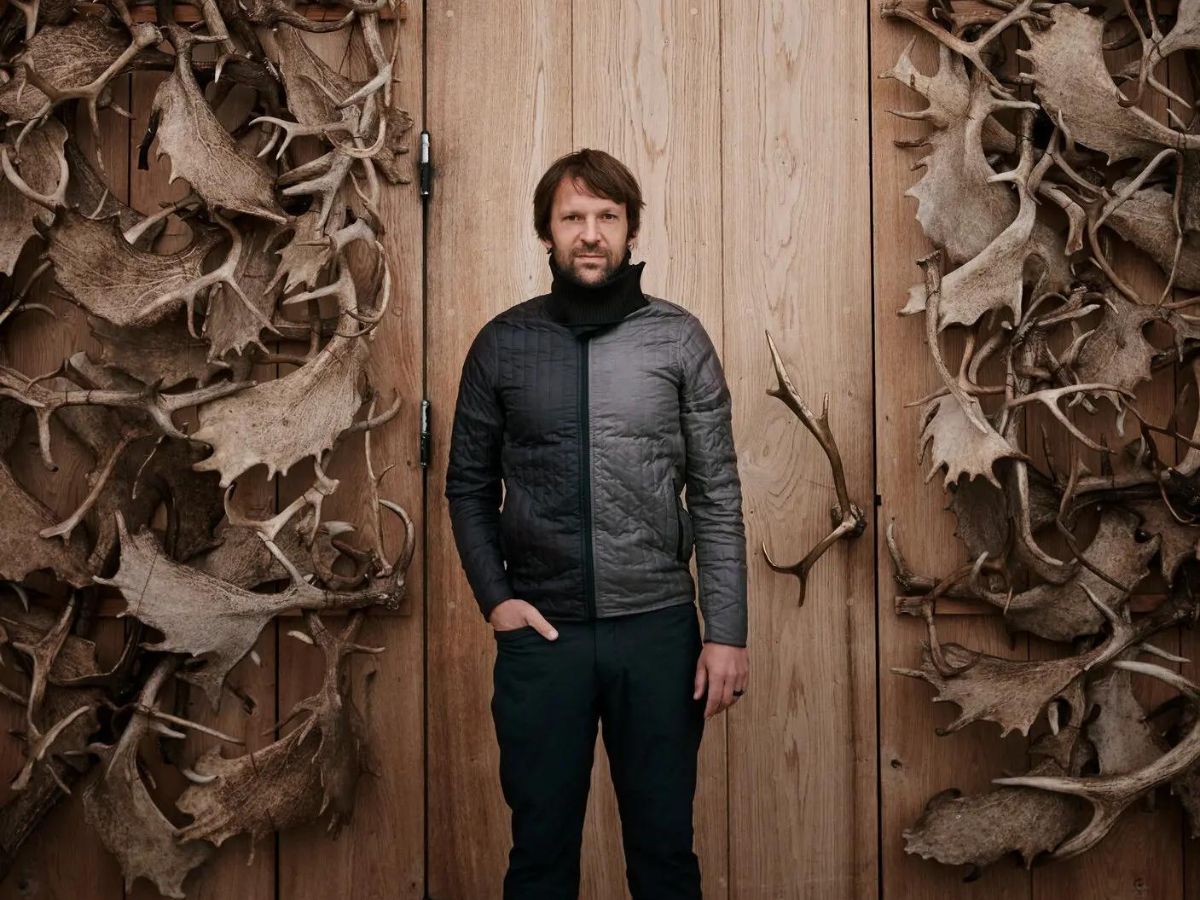
Noma announces 2024 closure to enter food lab field –
Noma, the Copenhagen restaurant that helped define a genre of ultra high-end, locally foraged, and culinary groundbreaking cuisine, has announced that it will close its doors in 2024.
After several announcements over the years that Noma was temporarily closing, opening up pop-up locations in Mexico, Japan, or Australia, becoming a pandemic-era burger joint or otherwise reinventing itself, the renowned restaurant has announced it is shutting down regular service.
For good this time. Once the restaurant closes its doors, Noma will host occasional pop-ups and transform into a full-time food lab, which essentially means the newest player in the world of direct-to-consumer food products (like Wild Rose Vinegar and Smoked Mushroom Garum ) is the world’s most famous restaurant.
A Noma spokesperson has said that they do not consider this a closing of the brand. “To continue being noma, we must change,” reads a statement on the restaurant’s website.
“Winter 2024 will be the last season of Noma as we know it.”
The restaurant is known for fantastical and interestingly named dishes like Moldy Egg Tart and Reindeer Heart Tartare, and garnered three Michelin stars in 2021, as well as winning first-place rankings on the World’s 50 Best Restaurants list.
Opened in 2003 by Claus Meyer and René Redzepi, Noma and its culinary team pioneered a style of cooking that came to be known as New Nordic, relying on local ingredients that often have to be painstakingly foraged and prepared. These labor-intensive processes and the punishing schedules needed to execute them simply cannot coexist with fair, equitable and humane work practices, Redzepi told The New York Times. “It’s unsustainable,” he said. “Financially and emotionally, as an employer and as a human being, it just doesn’t work.”
Noma’s announcement comes just months after the restaurant began paying its interns. In October of 2021, the restaurant announced that for the first time, its interns, known as stagiaires or stages in the industry, would accept pay.
In the world of fine dining, interns are rarely paid, and are routinely asked to maintain grueling work hours in exchange for the invaluable “experience” of working at a top restaurant. Because Noma is arguably the most prestigious kitchen in the world, these interns come from around the globe to learn from the most well-regarded chefs in the industry.
A Noma spokesperson said that after the restaurant’s transformation, the intern program will continue. “The transition into Noma 3.0 has no correlation to our paid internship program (which will continue for the next two years and onwards),” they said.
The practice of paying Noma interns has reportedly added $US50,000 in monthly operating expenses to the restaurant’s budget, according to The New York Times.
While Noma—the restaurant—is closing its doors in 2024, the culinary braintrust will be reincarnated in what Redzepi is calling “Noma 3.0.” The Noma test kitchen will develop new products and dishes to sell on an e-commerce platform and occasionally open up as a pop-up restaurant. It’s certainly not the last we’ll be hearing from Redzepi and his team, as they branch out into new-to-them territory. But as Redzepi wrote in the closing announcement, “Serving guests will still be a part of who we are, but being a restaurant will no longer define us.” Sources: Bon Apetit/ Noma/ NY Times

Demand is high – No supply –
Opportunity in the outer suburbs
By Gerrick Numan
The inner suburbs, the ‘cool’ areas, have a lot of restaurants, cafes and bars. The demand is high but so is supply. That doesn’t mean another one won’t work, it just means there are opportunities elsewhere.
In some under-serviced outer suburbs, the demand is high and there’s no supply.
People are there, with money, looking to eat out but they have nowhere to go. If your concept is right, your chances of success are higher in the outer suburbs.
Just look at Peach’s Hot Chicken. We designed a venue for them in Panmure, Auckland, an area better known for pawn shops than dining, and they’ve had crazy queues out the door every single night.
Now they’re moving to a venue twice the size down the road. An excellent concept plus low competition has meant a much more profitable restaurant than if they had opened in the inner suburbs.
We’ve done the same for Sumthin Dumplin in Botany and many others.
Rent
Not only is competition lower in the suburbs, so are the rents.
A shop that costs you $80k per year in rent in an inner suburb, can cost $25k in the outer suburbs. That’s $55k in your pocket, immediately. The old real estate saying that you ‘make your money when you buy’ applies to leasing a space for a hospitality business too.
In an industry where margins are slim, lower rents can make a huge difference.
If you do $15k in sales per week, the lower rent means a drop in your annual rent percentage from 10% to 3% – an additional 7% of profit.
Postpandemic
There is less demand for retail spaces. So you will have increased negotiating power with landlords. This could mean a long rent free period or a significant capital contribution from landlords.
You will also be in a good place to negotiate a ‘sale friendly’ lease
Ie a lease that will be attractive to future buyers of your venue (multiple rights of renewal, annual rental increases capped at CPI, no demolition clauses). Get in touch with me any time if you want me to explain these ideas.
There is potential in failed venues.
The financial and emotional impacts of a failed concept on operators are nothing to be taken lightly. But at some point these venues and their unused fit outs and equipment will need to be used again. This can be an excellent opportunity to open a venue, without the massive expense and risk that comes from setting up a kitchen from scratch.
Where to from here?
If you need any help assessing a site, or tweaking your concept, get in touch with me anytime and let’s figure out a way to keep moving forward. www.mille.co.nz