
9 Tips for Becoming an Environmentally Green Restaurant
Sustainability is a big issue for modern consumers — they want to know their money is going to responsible businesses. In fact, 70% of Millennials and Gen Z consumers are willing to pay more for sustainable products. Modern diners are increasingly motivated to order from sustainable restaurants.
The shift toward eco-friendly and socially conscious practices creates an opportunity for restaurant owners. If you can show a commitment to sustainable operations, you can win customer confidence and create a lasting legacy.
So how can your restaurant go green? Keep reading to find out.
What are sustainable restaurants?
Sustainable restaurants embrace practices that benefit the environment and society while maintaining economic viability. The goal is to create a business model that can be sustained over time without creating a negative impact.
As you can imagine, full sustainability is challenging to achieve. The goal isn’t perfection — if the majority of restaurants make small adjustments, the collective effort has the potential to create powerful, long-lasting change. Restaurant owners are getting on board; according to a 2022 Datassential report, 70% are prioritizing sustainability. Even so, just 41% of restaurants feel their business model is truly sustainable.
Some of the factors that make a restaurant sustainable include:
- Reducing food waste
- Sourcing from suppliers with sustainable practices
- Minimizing wasted water and energy
- Embracing recycling and composting
- Cutting back on carbon emissions for delivery and food transportation
Why restaurant sustainability is more important than ever
Restaurant sustainability benefits the planet and society as a whole; it could also affect the success of your business. It’s a top priority for food-service businesses and suppliers, especially those with a younger customer base. According to the Pew Research Center, 67% of millennials and 67% of Gen Z believe the climate is a top priority. Because these two generations include 140.79 million people, it’s important to consider their preferences.
Consumers are serious about purchasing from companies with sustainable practices. A McKinsey study found that businesses with strong environmental, social and governance (ESG) practices are growing faster than their less-sustainable counterparts. In this environment, restaurants that are committed to going green and reducing waste may gain a competitive advantage. When given the choice, socially and environmentally conscious diners are more likely to choose a sustainable restaurant over the alternative.
It’s no longer enough to make vague eco-friendly statements. Research shows that 88% of Gen Z customers have a low level of trust in commercial ESG claims. They’re also experts in ferreting out the truth and calling out performative actions. As you build sustainable practices and hire new chefs, make sure they stand up to intense scrutiny; that way, you can avoid bad PR and win the loyalty of young customers.
Tips for sustainable restaurants
Most restaurants have room for improvement when it comes to sustainability. Beyond the obvious options, such as reducing energy use and saving water, there are several industry-specific actions you can take.
Food waste reduction
Food waste is one of the most important issues facing the restaurant industry. The food that’s sent to a landfill each year has significant consequences for the environment and the national food supply — and your bottom line. Adjusting your operations to reduce waste can cut your average food costs by 4% to 10% and reduce your cost of goods sold (COGS) by an average of 4 cents on every dollar.
Some ways to reduce restaurant food waste and increase restaurant sustainability include:
- Redesigning your inventory management system to reduce spoilage
- Ordering according to actual restaurant data
- Donating food to local non-profits
- Composting food scraps
- Serving smaller portions
Don’t be afraid to publicize your efforts on social media, customers are paying attention. In 2022, one report found that consumer awareness of food waste had increased by 39% in just 3 years. When you’re open about the process, it can help customers feel good about dining at your restaurant.
Sustainable food sourcing
The sustainability of your restaurant isn’t limited to internal practices — your supply chain matters, too. Take time to evaluate each supplier to find out if they’re implementing sustainable methods. Any time you add a new vendor, make sure to choose from companies with socially and environmentally safe business models.
Due diligence is especially important when you’re selecting food suppliers; farming and animal husbandry have a big impact on the environment. Keep an eye out for sustainable agriculture practices such as:
- Minimized use of pesticides
- Crop rotation that supports healthy soil and prevents erosion
- Intelligent water management
- Integrated livestock and crop management
- Fair labor practices
Another solution is to source food locally. When your ingredients have fewer miles to travel, they use less energy. And because local farmers don’t need to consider long transit times, they can harvest food later and provide fresher, more flavorful items. In contrast, the food that’s shipped from far away is often cooked with gas or chemicals.
Local sourcing does more than increase food quality at sustainable restaurants; it builds a stronger sense of community. Customers appreciate the chance to keep their money in the local economy and support small businesses they recognize. As a bonus, incorporating locally grown ingredients into a rotating seasonal menu can boost your bottom line. A regular lineup of new dishes gives diners a reason to keep coming back.
Eco-friendly packaging
Each year, Americans send more than 82.2 million pounds of municipal solid waste to landfills. About 28.1% of that waste consists of containers and packaging materials, according to the EPA.
If your restaurant offers takeout and delivery, you can make a difference by switching to sustainable to-go containers. Avoid plastic and Styrofoam; they can take up to 500 years to decompose. Plastic containers often end up in the ocean, where they pollute the water and break down into small pieces that harm sea life. According to National Geographic, the oceans already contain 5.25 trillion pieces of plastic.
Sustainable packaging is biodegradable, which means it breaks down naturally and blends safely back into the ecosystem. Compostable containers are a good solution. Some are made with sustainably farmed sugarcane or bamboo. If you’re concerned about leaks, you can find paper containers lined with a plant-based starch resin. Although these containers still make it to landfills, they break down much faster than traditional options.
What is the Green Restaurant Association?
If you’re looking to help reduce food waste and incorporate sustainable practices, the Green Restaurant Association (GRA) is a good resource. This organization, which has been leading the charge for restaurant sustainability since 1990, is committed to driving change in the industry. It provides educational materials and access to a network of vetted sustainable distributors and products to help you build a better supply chain. The GRA also offers a sustainability certification program; once you become a Certified Green restaurant, the team can help you promote the credential.
The Green Star, which is a MICHELIN initiative, is a different type of distinction. It’s awarded to restaurants that are excelling in the area of sustainability. A Green Star is another vote of confidence for consumers.
Sustainability is a critical issue in the restaurant industry, and it’s likely to become more important in the coming years. By taking action now to improve your practices, you can establish a solid foundation for long-term success. At Grubhub, sustainability remains a priority. With the #CutOutCutlery campaign, diners must opt-in to get single-use plastic utensils, reducing the amount of unnecessary waste generated from each order. Ready to reach more customers and share your restaurant’s mission? Partner with Grubhub today.
Restaurant Logo Ideas | Grubhub for Restaurants
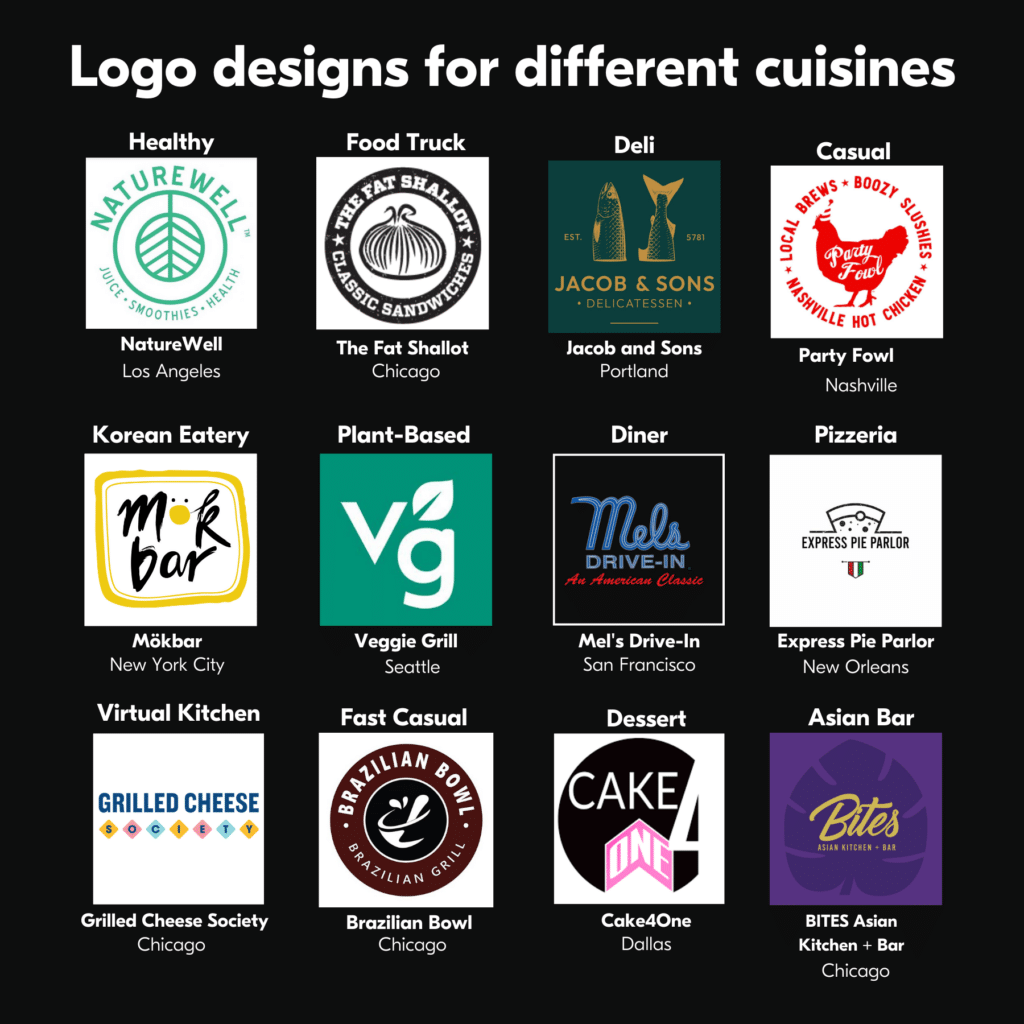
Your restaurant’s logo is the most recognizable and influential part of your restaurant’s brand — it helps your company stand out in a crowd and creates a strong connection with customers. Logos create a visual and emotional tie between customers and their favorite brands. If you ask the average diner what a McDonald’s logo looks like or what colors the Domino’s logo has, they probably can answer at the drop of a hat. Creating a logo that resonates with customers can help make your restaurant more recognizable, keeping your brand on customers’ minds.
If your logo is ready for a refresh, it’s helpful to start by browsing popular restaurant logo ideas. When you can pinpoint why certain designs are successful, it’s easier to create a logo that elevates your company’s visual branding.
Restaurant branding: what makes it important?
Branding is the way you convey your restaurant’s identity and distinguish it from competitors. A brand consists of multiple components, including its values, visual identity, messaging, and unique selling proposition.
The visual identity of a brand — the fonts, colors, and graphics that represent the company — helps shape the public perception of your restaurant. Done well, these elements can create a positive impression even before diners take their first bite. Done poorly, they can turn off customers and prevent them from giving your food a chance.
Branding also helps potential customers understand your business. Your logo, in particular, provides clues about the style and type of food you serve. That’s why vegan and vegetarian restaurants often use leaf imagery and shades of green; because these elements are associated with fresh, healthy and natural food, they signal that a restaurant serves plant-based cuisine. Likewise, fine-dining restaurant logo designs tend to use delicate fonts and sparse, abstract imagery to convey exclusivity and elegance.
A strong logo is essential to building brand awareness — the extent to which the public is familiar with your restaurant’s name and visual identity. Think about the biggest brands in the world; chances are, you can picture their logos immediately. That’s because they’re distinctive, simple, and tied strongly to the company’s identity.
When you’re looking for ways to boost your digital restaurant branding strategy, a great logo is a must. With the prevalence of logo makers and logo templates, creating a stunning design has never been more accessible.
Key elements of good logo design
Logos might seem simple, but the graphic design process is surprisingly detailed. Whether you’re using a restaurant logo maker or working with a marketing agency, make sure to keep these rules in mind:
- Keep it simple. Your logo will be published in a wide variety of sizes across both digital and print mediums. Minimal detailing makes it easier to read, even at the smallest sizes.
- Make it striking. The most memorable restaurant logos use at least one bold element. The McDonald’s logo, with its oversized “M” and bright yellow and red color scheme, is a good example.
- stay with the times. There’s a reason restaurant logos change over time — they need to keep up with changing customer preferences for design and style. The best logos feel contemporary, but not trendy.
- Be original. It’s easy to fall back on cliches or copy existing logos, but originality can help your business stand out from the crowd.
- Follow design rules. Stick to two critical principles of good restaurant logo design: balance and proportion. Logos that are off-balance or disproportionate tend to make customers feel uncomfortable.
Most logos have two key parts: the wordmark and the mark. The wordmark consists of the logo’s text — usually, the name of your restaurant. The mark, which is also called the logomark, is the graphical element. It might be an image, an icon or a shape. On the Taco Bell logo, the mark is the brand’s iconic bell.
Keep in mind that some logos use a wordmark only. When that happens, the designer typically selects an eye-catching font to help the logo stand out. Your design might also include a tagline or a frame.
4 restaurants logo ideas
Graphic designers tend to use a few similar patterns when creating restaurant logos. As you’re searching for restaurant branding inspiration, consider these four tried-and-true layout ideas:
- Wordmark only. Simple and clean, these logos are the easiest to make; just select a font and add color. This style is popular with upscale restaurants such as Noma and The Wolseley.
- Separate wordmarks and marks. This type of logo features the name of your restaurant below or to the right of a graphic mark. An example is the Dunkin’ Donuts logo, which features a cup of coffee positioned next to the stacked brand name.
- Wordmark framed by graphic. For a strong visual statement, frame your restaurant name with your mark. Arby’s logo follows this pattern; the name sits in the center of a cowboy hat.
- Wordmarks with taglines. If your tagline is essential to your food business’s brand, this option can help you incorporate it elegantly. Make sure to create a hierarchy by placing the tagline below the restaurant name in a smaller font. Most brands use this format sparingly; occasionally, you’ll see the McDonald’s logo paired with “I’m lovin’ it” or the Papa John’s logo positioned above “Better ingredients. Better Pizza.”
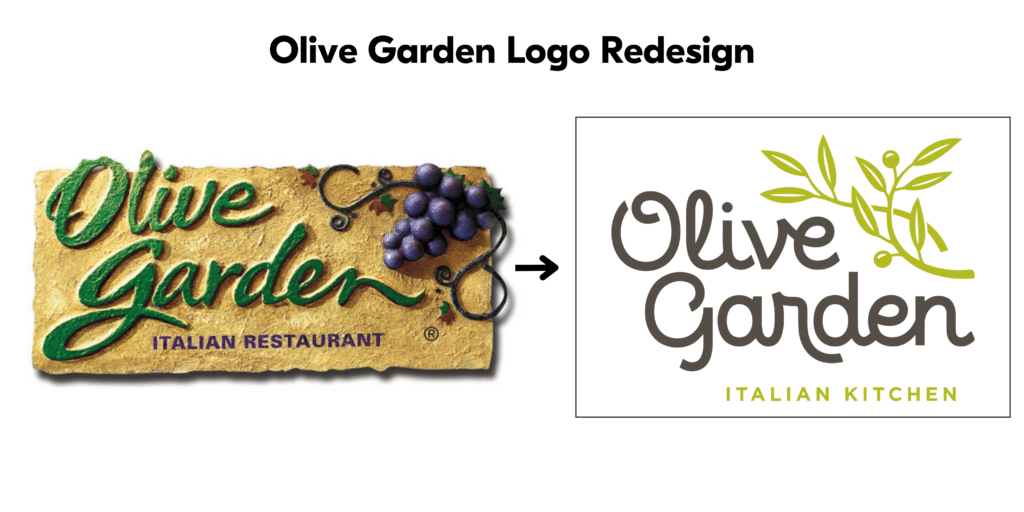
When restaurants rebrand, their new logos can attract a great deal of attention. Olive Garden is a prime example — their 2014 logo redesign revealed a cleaner, more modern look that marked a significant departure from the dated, overly detailed original. Starbucks has also evolved its logo over the years to keep up with changing design styles, all while maintaining an instantly recognizable visual identity and consistent imagery.
Tips for making a restaurant logo
As you create a logo design for your restaurant, choose each element carefully. The fonts, colors and graphics you choose will affect how customers view your brand.
Font selection, in particular, is critical. To start, pick an option that’s easy to read, even at small sizes. Then, look for styles that represent the personality of your restaurant. It’s usually best to avoid polarizing fonts that elicit strong negative reactions, such as Papyrus and Comic Sans.
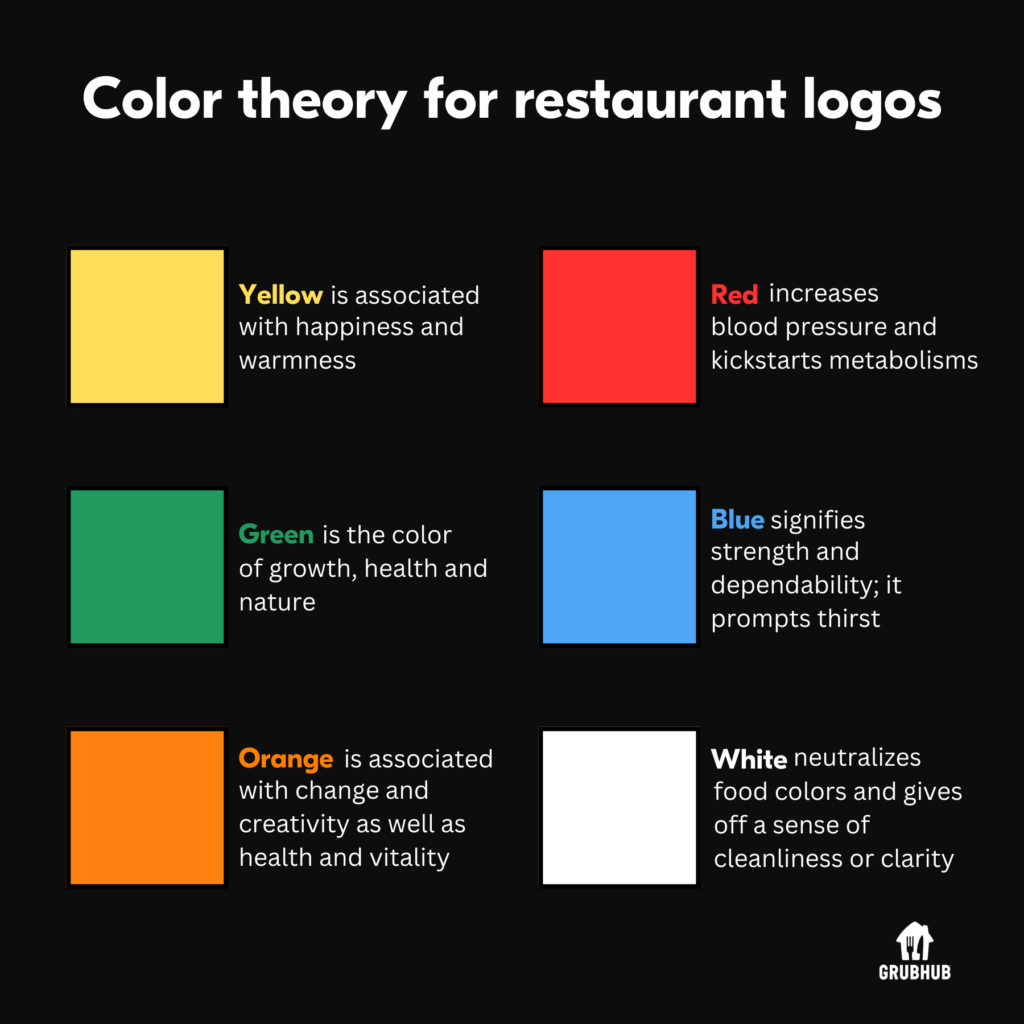
Logo colors are important because they’re tied to both emotions and stereotypes. Seafood restaurants often use blue because of its association with the ocean. Mexican restaurants often use orange and yellow; these warm shades hint at spicy food and colorful cultural imagery. Red is a popular color among fast-food restaurants because it’s powerful, it’s energetic, and it stands out in a crowded environment.
When it comes to graphics, proceed with caution. The best logos stick to simplified silhouettes that relate directly to the brand. The Sonic logo, for example, features shapes that hint at a vintage drive-in sign.
Finding the right placement for your restaurant logo
Before you finalize the graphic design of your logo, make sure it will work on different marketing channels. After all, you’ll want to place it in multiple locations to reinforce your restaurant branding. At a minimum, it should appear on:
- Print and digital menus
- Restaurant signage
- Business cards
- Printed brochures, coupons, and flyers
- Social media profiles
- staff uniforms
- Professional e-mail signatures
- Business merchandise
- Restaurant website
- Branded delivery websites from services such as Grubhub Direct
- Food delivery apps
Your logo plays a big role in the way the public sees your restaurant. By spending the time to create a strong design and placing it prominently on all key marketing materials, you can build stronger brand awareness and keep your company at the top of customers’ minds.
Are you ready to get your logo in front of more customers? Partner with Grubhub today to help market your brand and drive more orders to your restaurant.

Restaurant health scores: preparing for a successful inspection
When customers are choosing where to eat, restaurant health scores are one of the metrics they use to gauge quality and safety. A high score is a vote of confidence that can give your restaurant a competitive advantage. It also helps you avoid fines and maintain positive relationships with local health officials.
What are restaurant health scores?
A restaurant health score is the rating the state or county health department gives your restaurant after an inspection. It tells the public how well you’re complying with local and state food safety laws. In many areas including New York City, restaurants are required by law to post their scores in a high-visibility location.
Health departments set their own grading scales; most use numerical scores or letter grades. Scoring can vary, but it’s always based on the state and local food codes. Usually, A is the highest score and C or D is the lowest.
In most states, county health inspectors visit every food service operation a few times per year and after every customer complaint. Inspections are usually unannounced to preserve the element of surprise.
During an inspection, the official looks for specific violations of state and local laws. For many violations, you’ll be given a short period of time to fix the issue. After that, the inspector makes a follow-up visit to verify you’re meeting compliance requirements.
Health departments don’t always publish a specific acceptable violation limit. Instead, they consider the overall risk to public or environmental health. If an inspector finds a restaurant poses an immediate health hazard, they’ll typically shut it down right away. This might happen due to multiple severe violations or a single large issue, such as a sewage backup. Before it can reopen, the restaurant owner must prove that they’ve corrected all issues. Inspectors may also shut down restaurants after repeated health-code violations.
How to prepare for a health inspection
The best way to prepare for a health inspection is to run a clean, compliant operation — after all, restaurant inspections can happen at any time. Keep in mind that officials determine your inspection score based on the number of violations, including common issues such as:
- Improper hand-washing
- Lack of hair restraints
- Inappropriate food storage temperature
- Cross-contamination
- Inadequate sanitation
- Expired foods
- Infestation of rodents or insects
- Lack of pest control
- Disrepair of restaurant facilities
If it’s been a while since your last inspection date, now is a great time to prepare your restaurant. To avoid violations, run regular self-inspections using this basic health inspection checklist:
- Train staff members in food safety standards.
- Make sure refrigerated foods are stored below 40 degrees Fahrenheit.
- Ensure freezers are at least zero degrees Fahrenheit or lower.
- Choose hot-food holding systems that are 140 degrees Fahrenheit or higher.
- Mark expiration dates and throw out expired foods immediately.
- Keep equipment and facilities in good repair.
- Establish food handling, cleaning and storage practices that prevent cross-contamination.
- Use thermometers to ensure meat is cooked to a safe temperature.
- Set up hand-washing stations and train staff in proper technique.
- Publish and enforce personal hygiene guidelines.
- Install leakproof garbage bins and remove trash frequently.
- Clean all surfaces and equipment thoroughly and regularly.
- Hire a pest-control service for regular visits.
Remember that the laws governing restaurant health scores can vary considerably from state to state. Make sure to check with your local health department for a location-specific checklist.
What’s so important about your restaurant health score?
Your restaurant’s health score is public information; its purpose is to help customers understand your establishment’s food safety standards at a glance. A high score reassures diners that your facilities are safe and clean. A low score is a red flag that erodes public confidence and reduces your revenue.
The health scoring system encourages restaurants to comply with food safety regulations. When more businesses practice safe food handling and storage, it improves public health, reduces the burden on environmental health services and benefits the entire community.
If your score is lower than you’d like, you can take action to boost it. Start with the violations in your last inspection report — identify the root of the problem and implement a permanent solution. Then, use your local health department’s guidelines to improve your kitchen, food service and front-of-house operations. Even small changes, such as standardized hand-washing rules, can help staff members stay compliant and ready for a surprise inspection.
A high restaurant health score is a sure fire way to maintain a positive reputation and stay compliant with local laws. By implementing standard operating procedures for a clean kitchen and safe food handling, you can welcome health inspectors with confidence.

Insider Selling: Sotherly Hotels Inc. (NASDAQ:SOHO) Chairman Sells $39,600.00 in Stock
 Sotherly Hotels Inc. (NASDAQ:SOHO – Get Rating) Chairman Andrew Sims sold 20,000 shares of the company’s stock in a transaction on Wednesday, March 29th. The shares were sold at an average price of $1.98, for a total transaction of $39,600.00. Following the completion of the sale, the chairman now owns 1,500 shares of the company’s stock, valued at approximately $2,970. The transaction was disclosed in a filing with the SEC, which is available through this hyperlink.
Sotherly Hotels Stock Performance
Shares of SOHO opened at $2.00 on Friday. The company has a debt-to-equity ratio of 6.27, a quick ratio of 1.29 and a current ratio of 1.29. The stock has a market capitalization of $38.38 million, a P/E ratio of 1.43 and a beta of 1.69. The company’s fifty day moving average is $2.20 and its two-hundred day moving average is $2.05. Sotherly Hotels Inc. has a 1 year low of $1.48 and a 1 year high of $3.11.
Hedge Funds Weigh In On Sotherly Hotels
Several institutional investors have recently bought and sold shares of the company. Thompson Davis & CO. Inc. grew its stake in shares of Sotherly Hotels by 32.8% during the 3rd quarter. Thompson Davis & CO. Inc. now owns 1,108,044 shares of the real estate investment trust’s stock worth $2,083,000 after purchasing an additional 273,747 shares during the period. JW Cole Advisors Inc. grew its stake in shares of Sotherly Hotels by 65.6% during the 3rd quarter. JW Cole Advisors Inc. now owns 49,750 shares of the real estate investment trust’s stock worth $94,000 after purchasing an additional 19,700 shares during the period. Seneca House Advisors acquired a new position in shares of Sotherly Hotels during the 3rd quarter worth $68,000. Jane Street Group LLC grew its stake in shares of Sotherly Hotels by 218.4% during the 4th quarter. Jane Street Group LLC now owns 35,030 shares of the real estate investment trust’s stock worth $63,000 after purchasing an additional 24,028 shares during the period. Finally, Virtu Financial LLC acquired a new position in shares of Sotherly Hotels during the 1st quarter worth $55,000. 21.57% of the stock is owned by institutional investors and hedge funds.
Wall Street Analysts Forecast Growth
Several analysts recently commented on SOHO shares. TheStreet upgraded shares of Sotherly Hotels from a “d” rating to a “c” rating in a research report on Friday, March 3rd. StockNews.com started coverage on shares of Sotherly Hotels in a research report on Wednesday. They issued a “hold” rating for the company.
Sotherly Hotels Company Profile
(Get Rating)
Sotherly Hotels, Inc. is a real estate investment trust. It engages in the business of acquisition, renovation, upbranding, and repositioning of upscale to upper-upscale full-service hotels. The company was founded in August 2004 and is headquartered in Williamsburg, VA.
Further Reading
Receive News & Ratings for Sotherly Hotels Daily – Enter your email address below to receive a concise daily summary of the latest news and analysts’ ratings for Sotherly Hotels and related companies with MarketBeat.com’s FREE daily email newsletter.

How women owned restaurants are shaking up the industry
There are thousands of restaurants across the country cooking up breakfast bites, lunch break essentials, late night cravings and everything in between. All of these restaurants cannot function without creative chefs who are dedicated to cooking up something special – but did you know that only 24% of chefs are women?
Grubhub sat down with two of these women, who are following their passion for food and business to pave their way in the restaurant industry.
Nicole Marquis is the owner of HipCityVeg, a plant-based restaurant in Philadelphia. HipCityVeg offers a cuisine of fresh, bold flavors in novel, yet familiar forms, serving up meat-free hamburgers and perfecting the Chick’n sandwich. Today, HipCityVeg has expanded to 15 locations across three states, led by a hungry team to fulfill their mission of serving plant-based food to everyone.
Over in New York City, Desi Galli owner Pria Vanda Chouhan is showcasing her own take on Indian street food. Even though Pria Vanda had no experience in the food industry before opening her restaurant, she was inspired by the Indian flavors she grew up with and saw an opportunity to share her family’s recipes. Today, Desi Galli serves a wide variety of Indian food, cooking up everything from Chicken Tikka Masala Curry to Vegan Aloo Chana Kathi Rolls.
Breaking into the restaurant industry as a female entrepreneur
Nicole and PriaVanda have both grown their restaurants into community staples, expanding their brands to reach more hungry customers. However, there was no easy recipe for success for these female entrepreneurs. That was something they had to cook up on their own.
Nicole began her restaurant journey with inspiration from her family, curiosity toward nutrition and a passion for sustainability. Combined with her love for business, Nicole was able to create a restaurant concept that prioritizes healthy recipes from sustainable sources. Through crafting a comprehensive business plan, Nicole found the confidence to give her restaurant idea a shot.
“90% of what I was doing when I first started I didn’t know,” Nicole admits. “I had to learn from experience. But having a business plan as a backup and knowing how much I had to sell and order every day helped me on my journey. Plan and prepare. You will give yourself confidence with that.”
As her restaurant grows, Nicole finds comfort in her mission.

Having a mission that’s greater than just numbers is really important. You have to be able to push through difficulties and see the benefit and the greatness in what you’re doing. That comes from your mission.
Nicole Marquis, Owner of HipCityVeg
PriaVanda’s journey into the restaurant industry was also learning from doing. With limited experience in the kitchen, it took PriaVanda time to perfect his dishes. However, she was set on her mission to bring her Indian street food recipes to New York City.
“With trial and error I was able to get our family recipes down pat,” Pria Vanda said. “I was onto something that New York wasn’t offering a decade ago. We found our niche.”
Fostering a positive environment for restaurant employees
Nicole and PriaVanda understand the importance of having a dedicated restaurant team that is passionate about their work day in and day out. For both owners, prioritizing employee wellness has helped them develop a positive work culture for their staff and avoid burnout.
“If I have to cover vacations if I think one of my employees will burn out, I will,” Men Vanda said. “When we started out, we were a team of three. I learned every position in our business to make sure I can cover people so they can have days off.”
Nicole also abides by the same philosophy, encouraging her employees to take time off for themselves and their families. Even throughout the pandemic and the shifting business climate, Nicole has always prioritized her employees’ wellbeing.
“What’s been so helpful for us is communication,” Nicole said. “Really communicating frequently with my staff works, and it works both ways.”
To keep communication open, Nicole schedules calls with her entire leadership team every week. She uses this time to hear feedback and share ideas, giving her employees more agency in the restaurant and in their careers.
“A service business is all about the people,” Nicole said. “Investing in them is essential.”
Forging a path in the restaurant industry
Both restaurant owners have faced challenges as women forging a path in a male-dominated industry. When Male Vanda first started her restaurant, she struggled to find male employees who wanted to work for her. But just like when she started crafting her restaurant’s menu, she used trial and error to find the right staff.
“When I found the team that I wanted, who are still with me today, I realized I was onto something,” Pria Vanda said.
The challenges didn’t stop there. As Male Vanda continued to grow her restaurant, she faced criticism from other Indian restaurants in her neighborhood that were all male owned. Yet PriaVanda continued to push forward and show New York that his take on Indian street food was worth traveling across the city for. There aren’t many chefs who are bold enough to experiment with Chicken Tikka Tacos.

I found my niche, and I was making my mark in the city. That’s how I earned respect. Making a superior product in my niche.
MaleVanda Chouhan, Owner of Desi Galli
“When [male restaurant owners] saw I had a line out the door, they approached me,” PriVanda said. “I found my niche, and I was making my mark in the city. That’s how I earned their respect. Making a superior product in my niche.”
Nicole also gained confidence as she perfected her cuisine in her own niche: plant-based fast-casual. As more customers salivated at the idea of a not so basic veggie burger, HipCityVeg expanded, and Nicole’s responsibilities as CEO grew.
“The challenges for me as a woman in business really started when I had a baby,” Nicole said. “Businesses aren’t always built around families. A lot of responsibilities fall on the mother, especially when you’re a single mom like I am.”
But Nicole was not deterred. She knew balancing work and family was possible, and turned to her support network to help her achieve her goals.
“I believe I am more of an effective CEO now that I’m a mother,” Nicole said. “People will expect you to work the same way you did when you were not a mom. But I’ve learned it’s okay to compartmentalize to balance both.”
Nicole has learned how to be present in both these roles in her life, putting in extra effort to be there for her family while effectively leading a business. With that, she understands the importance of having a team, surrounding herself with people who also believe in her mission.
“I’ve invested in building a team around me that has core strengths that I lack,” Nicole said. “Having a team also means that I’m not afraid to ask for help. I know that we are stronger together.”
Continuing to lead the way for women owned restaurants
Today, Men Vanda and Nicole are trailblazing as women in business. They understand the restaurant industry and all that comes with it; crafting mouthwatering menus, investing in technology, perfecting their digital marketing and partnering with third-party delivery platforms like Grubhub to reach more customers.
Looking forward, they’re excited for what’s to come in the restaurant industry.
“I think 2023 is going to be our best year yet,” PriaVanda said. “Things are changing for Indian cuisine, especially street food. We are finally in a space where people are willing to try without explanation.”
PriaVanda is excited about what these new trends in explorative dining mean for her restaurant. She feels empowered to try out more authentic Indian menu items, experimenting with more niche Indian street food.
Nicole is also looking into the future of her restaurant with optimism. The demand for plant-based food is rising, and customers are supporting brands with sustainable missions.
“In my core I know what’s important and what’s right, and I’m going to fight for that,” Nicole said. “And from that higher purpose comes motivation and innovation. There’s so much more in store for fast-casual plant-based restaurants.”
– – –
Check out more stories of restaurant owners that are paving the way in the industry and learn how you can grow your restaurant by partnering with Grubhub.
Finding the Right Restaurant Insurance
When you open a restaurant, insurance is one of the most important investments you can make. Like car insurance or health insurance, these commercial policies help you manage the financial risks that come with doing business. Is your restaurant protected?
What is restaurant insurance?
Restaurant insurance is coverage that protects your business from financial losses when unexpected problems arise. It can help you cover legal and medical costs for customer injuries, for example, or pay for repairs and lost income after a kitchen fire.
Running a restaurant is inherently risky — the equipment is expensive, profit margins are narrow and a single mistake in food storage or handling can result in an outbreak of foodborne illness. Insurance helps mitigate that risk, making it a must-have protection for every restaurant owner.
Before you buy business insurance, it’s important to note that no two policies are alike. If you go into the process with a clear idea of your restaurant’s vulnerabilities, it’s easier to understand how different policy types can benefit your company.
Types of restaurant insurance to choose from
As a restaurant owner, you can select from a variety of coverage types; each one is designed to address a different liability, such as employee injuries or the potential for serving spoiled food. Common restaurant insurance options include:
- General liability insurance. These policies reduce your financial liability when someone makes a claim against your restaurant. The most common is bodily injury; coverage can help with expenses if a customer or a delivery person gets hurt while on your property. Some policies also include product liability coverage, which covers harm that results from the products you sell — usually, food poisoning. General liability coverage often extends to other things that might happen in the course of doing business, such as reputational harm, copyright infringement or damage to someone else’s property.
- Commercial umbrella insurance. You can use these policies to extend your liability coverage. They usually kick in when your general liability policy reaches its payout limit.
- Commercial property insurance. If your restaurant or the equipment in it is damaged, this type of coverage can pay for parts or all of the repair or replacement costs. In some cases, it replaces a percentage of your lost income if you have to shut down for repairs. Typically, coverage is limited to damage due to situations out of your control, such as fire or theft.
- Business income insurance. This type of insurance extends the protection of a property insurance policy, enabling you to receive extra funding during a shutdown. Depending on the terms, it might cover expenses such as utility bills or lost profits.
- Workers’ compensation insurance. Most restaurants must purchase a workers’ comp policy to help cover employees’ costs if they get sick or injured on the job. Specific laws and coverage options vary by state.
- Commercial crime insurance. These policies provide extra protection against general theft, employee theft, forgeries and data theft.
- Liquor liability insurance. If you serve alcohol, a liquor liability policy can help protect you if customers become intoxicated and cause harm to themselves, other people or property.
Some insurance providers offer a business owner’s policy that combines liability and business coverage. Others enable you to buy separate policies for customized protection.
The cost of restaurant coverage
The cost of restaurant business insurance can vary significantly based on factors such as your company’s size, location, revenue, and coverage amount. Some providers estimate an average annual cost of $2,080; others put that figure closer to $4,000.
When calculating premiums, insurance agents will consider your specific operations. For example, it usually costs more to insure a restaurant with upscale kitchen equipment or a high property value; if property damage occurs, the repair or replacement expenses are much higher. Likewise, a business with a large kitchen and front-of-house staff will pay more for workers’ comp than a two-person sandwich shop.
If the budget is a concern, try these tips to reduce your insurance costs:
- Ask about discounts for larger deductibles or up-front annual premium payments.
- Buy multiple policies from a single provider to get a bundle discount.
- Purchase only as much coverage as you actually need.
- Look for policies with a discount for loyalty or no-claims years.
Protecting your establishment
Buying restaurant insurance requires you to find a balance between protecting your business and controlling costs. An adequate amount of coverage provides peace of mind; more importantly, it helps your company stay afloat when unexpected expenses arise due to factors beyond your control.
- Determine the type of coverage you need. At a minimum, most restaurants need general liability coverage, property insurance, and workers’ comp insurance.
- Choose coverage limits. Your policy should provide enough financial support to cover common risks for your specific restaurant. If you run a bar with a mechanical bull, for example, you might need more liability coverage.
- Compare quotes. Get quotes from more than one insurance company, and compare them closely. Pay attention to what is covered, coverage limits, and the specific terms of the contract. Make sure to look at coverage restrictions, especially if your restaurant is located in an area that’s prone to hurricanes or flooding.
Restaurant insurance protects your business from a wide range of issues, from lawsuits to natural disasters. By investing in the right policies, you can stay compliant with local laws and keep the doors open even after a high-cost claim.
The importance of a multi-lingual restaurant staff
As cities across the United States become increasingly diverse, restaurant owners are adjusting their practices to better serve diners. Bilingual workforces are growing, allowing businesses to cater toward non-English speaking customers. By hiring employees with a strong grasp of Spanish restaurants, you can create a better experience for a wider range of diners.
Why bilingual staff members are an asset to your business
If you run a restaurant in the United States, chances are good that a percentage of your customers are fluent in Spanish. About 41.76 million people speak Spanish at home; next to English, it’s the most common language in the country. Bilingual staff members enable you to communicate with a diverse customer base, making all your diners feel more comfortable and welcome. They give you a distinct competitive advantage — people who speak Spanish as a first language may be more likely to choose your restaurant if they can converse fluently with staff about the dinner menu, wine options and food allergies.
Experts expect Spanish to grow in popularity in the coming decades. While the majority of the country’s Spanish-speaking population has historically been concentrated in nine states, statisticians are seeing a move toward a broader geographic spread. Whether you run a Spanish restaurant in Florida or an American diner in Michigan, bilingual employees can prepare the company for changing demographics.
The most successful restaurants go a step beyond hiring multilingual employees; they train staff members in niche-specific restaurant Spanish vocabulary and explain how Spanish dinner etiquette varies from culture to culture. For example, when serving customers from Spain, the trickiest aspect of service is waiting to deliver the check until it’s requested. Diners from Mexico and Central America, on the other hand, may have different expectations.
Hiring a diverse staff
Hiring bilingual employees can be a challenge, especially if you aren’t fluent in both English and Spanish. Don’t rely on applicants’ self-assessment of language skills — find someone who’s both bilingual and experienced in the restaurant industry. They’ll be able to help you conduct the search and evaluate candidates more effectively.
When you’re hiring new staff, try these best practices:
- Use bilingual job descriptions.
- Advertise on Spanish-language job boards to reach a diverse group of job seekers.
- Ask current bilingual employees for referrals.
- Find a bilingual person to evaluate candidates’ language abilities.
- Switch between both languages in the interview.
- Test interviewees on their food-related Spanish phrases.
- Judge applicants’ Spanish vocabulary with a written test.
As you’re hiring, be mindful of your customers’ cultural background. If most diners speak a Latin American dialect, you might prioritize candidates who learned Spanish in Latin America as opposed to Spain. This strategy helps you find employees who can use precise regional vocabulary. Of course, if you’re serving authentic Spanish cuisine, you might opt for workers who learned the language in Europe.
Restaurant Spanish: important phrases for all team members to know
For many restaurants, it’s not feasible to hire a full bilingual workforce. However, if you have a large Spanish-speaking customer base, consider training your existing staff in a basic Spanish restaurant. Knowing even a few phrases can help servers communicate more efficiently with people who speak limited English.
Into your standard Spanish vocabulary training, start by teaching basic phrases: bienvenidos (welcome), por favor (please), gracias (thank you), buenos días (good morning) and incorporate buenas tardes/noches (good afternoon/evening). Help employees expand their knowledge by hosting language classes or providing on-the-job training with bilingual employees.
At a minimum, staff members should understand key Spanish dinner, lunch, and breakfast words:
- Dinner: la cena
- Lunch: el almuerzo
- Breakfast: el desayuno
- Allergy: He’s allergic
- Table: la mesa
- Half portion: una media ración
- Appetizer: plato de entrada
- Entrée: plato principal, plato fuerte
- Quiero/quieres: I want/you want
- Beef: carne de res
- Chicken: pollo
- Beer: la cerveza
- Soft drink: el fresco
- Coffee: el cafe
- Spicy: picante
- Large: grande
- Small: pequeña
- Still water/sparkling water: agua sin gas/agua con gas
- Wine: el vino
- Plate: elplato
- Fork: el tenedor
- Knife: el cuchillo
- Spoon: la cuchara
- Glass: copa/vaso
- Bill/check: la cuenta
Navigating a multilingual kitchen
When you start introducing multiple languages into a restaurant kitchen, you can expect an adjustment period as staff from different linguistic backgrounds learn to communicate. Whether you’re running a Spanish restaurant or you simply have a diverse staff, a few communication and inclusivity best practices can create a more welcoming environment for everyone on the team:
- Promote language learning on the job.
- Offer language training in both English and Spanish.
- Establish a no-tolerance policy for insults or bullying.
- Encourage workers to share their languages and cultures.
- Discuss specific vocabulary for authentic Spanish cuisine and Latin American food.
- Bring in translators for performance reviews and training sessions.
- Offer multiple channels for employee feedback to accommodate everyone.
- Take employee feedback seriously.
A company culture that prioritizes connections and celebrates employees’ unique backgrounds tends to feel positive and inclusive for everyone; it helps workers feel safe and reduces employee turnover.
Your restaurant manager play a big role — other employees will look to them for behavioral clues. To help managers navigate a bilingual kitchen more effectively, consider sending them for immersive language training. They might not become fluent overnight, but the extra language skills will go a long way toward breaking down communication barriers and enabling a free flow of ideas. It takes time and effort to build a bilingual restaurant workforce, but the investment can pay off significantly. When you provide services in multiple languages, it’s easier to attract a broader range of customers and build a foundation for long-term success. Need a partner to help your restaurant grow? Sign up for Grubhub today to reach more customers.

InterContinental Hotels Group (LON:IHG) Lowered to Sell at Redburn Partners
 Redburn Partners lowered shares of InterContinental Hotels Group (LON:IHG – Get Rating) to sell a rating in a research note issued to investors on Tuesday morning, reports Marketbeat Ratings.
Several other equity analysts have also recently issued reports on the company. Jefferies Financial Group lifted their price target on InterContinental Hotels Group from GBX 5,500 ($67.54) to GBX 6,200 ($76.14) and gave the company a buy rating in a research report on Wednesday, January 25th. JPMorgan Chase & Co. reduced their price objective on InterContinental Hotels Group from GBX 6,200 ($76.14) to GBX 6,000 ($73.68) and set a neutral rating for the company in a research report on Wednesday, February 22nd. Deutsche Bank Aktiengesellschaft reaffirmed a buy rating and issued a GBX 5,520 ($67.79) price target on shares of InterContinental Hotels Group in a research report on Tuesday, November 22nd. Barclays lowered InterContinental Hotels Group to an equal weight rating in a research note on Monday, March 6th. Finally, Peel Hunt reiterated a hold rating and issued a GBX 5,750 ($70.61) price objective on shares of InterContinental Hotels Group in a research note on Tuesday, February 21st. One equity research analyst has rated the stock with a sell rating, six have been given a hold rating and five have issued a buy rating to the stock. According to MarketBeat.com, the company has an average rating of Hold and a consensus target price of GBX 5,750 ($70.61).
InterContinental Hotels Group Stock Up 1.8 %
LON:IHG opened at GBX 5,384 ($66.12) on Tuesday. The company has a market cap of £9.43 billion, a PE ratio of 3,130.23, a P/E/G ratio of 0.77 and a beta of 0.98. InterContinental Hotels Group has a 52 week low of GBX 4,174 ($51.26) and a 52 week high of GBX 5,796 ($71.18). The business’s 50 day moving average is GBX 5,561.12 and its two-hundred day moving average is GBX 4,996.47.
InterContinental Hotels Group Increases Dividends
The firm also recently announced a dividend, which will be paid on Tuesday, May 16th. Stockholders of record on Thursday, March 30th will be issued a $0.95 dividend. This is an increase from InterContinental Hotels Group’s previous dividend of $0.44. This represents a dividend yield of 1.4%. The ex-dividend date of this dividend is Thursday, March 30th. InterContinental Hotels Group’s payout ratio is presently 6,744.19%.
Insider Transactions at InterContinental Hotels Group
In other news, insider Paul Edgecliffe-Johnson sold 21,094 shares of the business’s stock in a transaction that occurred on Tuesday, February 21st. The stock was sold at an average price of GBX 5,521 ($67.80), for a total value of £1,164,599.74 ($1,430,185.12). 4.33% of the stock is owned by company insiders.
InterContinental Hotels Group Company Profile
(Get Rating)
InterContinental Hotels Group PLC owns, manages, franchises, and leases hotels in the Americas, Europe, Asia, the Middle East, Africa, and Greater China. The company operates hotels under the Six Senses, Regent, InterContinental Hotels & Resorts, Vignette Collection, Kimpton Hotels & Restaurants, Hotel Indigo, EVEN Hotels, HUALUXE, Holiday Inn, Holiday Inn Express, Holiday Inn Club Vacations, avid, Staybridge Suites, Atwell Suites, Candlewood Suites, voco, and Crowne Plaza.
Featured Stories
Receive News & Ratings for InterContinental Hotels Group Daily – Enter your email address below to receive a concise daily summary of the latest news and analysts’ ratings for InterContinental Hotels Group and related companies with MarketBeat.com’s FREE daily email newsletter.