

Introducing The Cube! –
Indulge in the ultimate culinary delight with the exquisite Cube at Cordis Auckland’s new premium local neighborhood bar Our Land is Alive.
Experience the sweet option of Berry and Vanilla Cream Pavlova or for those craving a savory experience, the Steak and Mushroom Pie awaits creation.
But be quick, as Executive Chef Volker Marecek is only making 10 of each a day so it’s first in, first served!
what: The Cube: Sweet and Savory
when: Monday to Friday only (limited batch of 10 each prepared daily)
where: Our Land is Alive
Time: Available from 12pm (until they run out!)
Prices: $19.50 each
Don’t miss this chance to experience the best of both worlds with this mouth-watering pair at Our Land is Alive, the home of NZ’s best, locally sourced ingredients. To book yours today, simply email [email protected].

Do you have a new foodie creation from your kitchen that you would love to publish? Let me know at: [email protected]
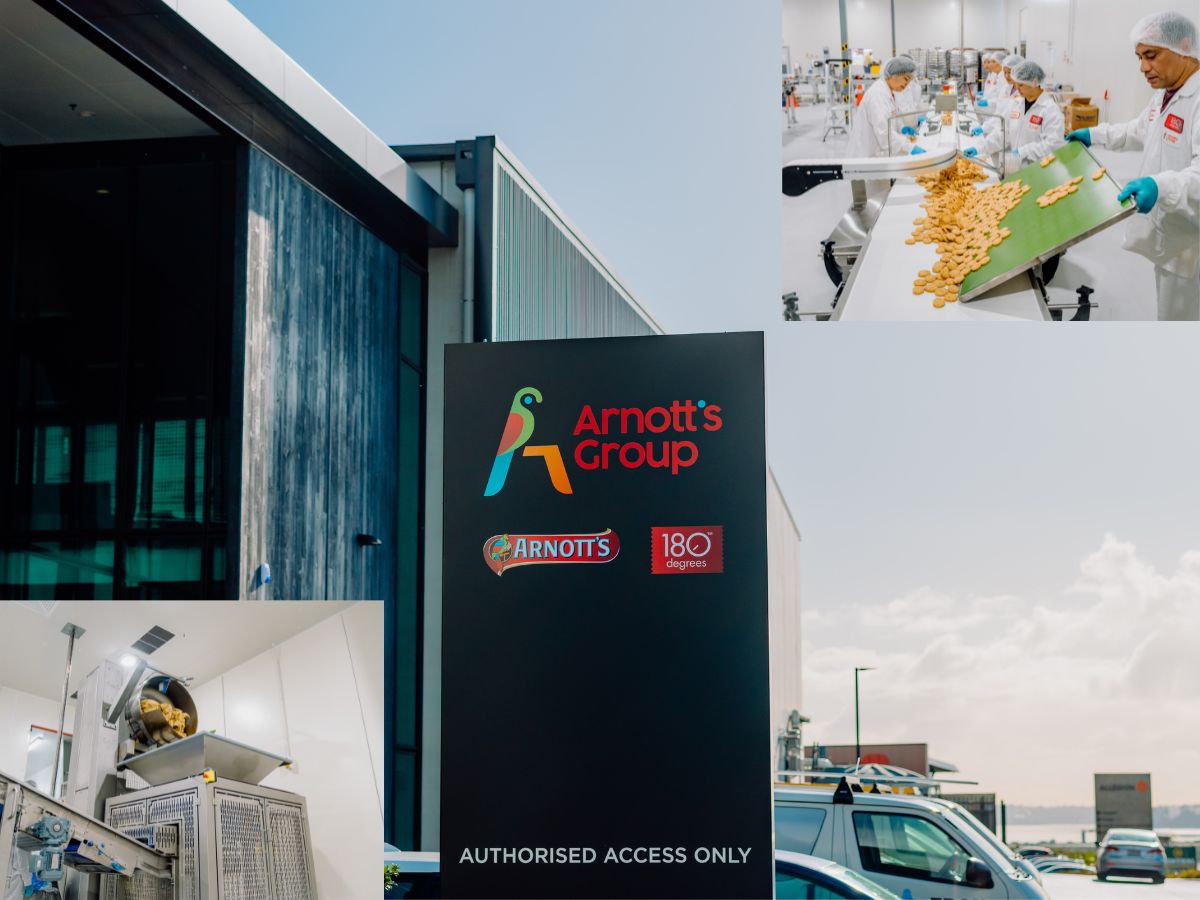
Arnott’s open world class facility in Avondale –
The Arnott’s Group (TAG) has resumed manufacturing in New Zealand, bringing a welcome boost to the local economy and exciting additions to its iconic snacking and cracker range.
Officially opened today, TAG’s new multi-million-dollar, 4000sqm manufacturing facility in Avondale, Auckland, has been designed as an innovation hub for Arnott’s sweet and savory biscuits across the ANZ region and to accommodate further growth and expansion of the 180 degree cracker brand, acquired by the business in May 2021.
Arnott’s Group CEO, George Zoghbi said the new facility signals TAG’s commitment to ongoing investment in New Zealand, enhancing localized supply chains and strengthening manufacturing, technology, capability and skills.
“The Avondale facility has been designed to unlock world-class innovation and flexibility for the broader Arnott’s network and will allow us to increase our locally made Arnott’s range,” Zoghbi said.
“The integration of 180 degrees in 2021 and the subsequent construction of Avondale, have meant greater speed and agility within the New Zealand arm of our 157-year-old business, that will allow us to unlock new products and reach new consumers.”
“It will also further strengthen the century long affection we know Kiwis have had for the Arnott’s brand, which recently saw us recognized as NZ’s most trusted biscuit brand in the 2023 Readers Digest Annual Trusted Brand Awards.”
Mike Cullerne, TAG’s Country Director NZ, said the opening of the Avondale facility reaffirms TAG’s commitment to the local NZ economy, industry and community, as part of the business’ ‘local support’ ethos.
“Today’s announcement is a welcome boost for local suppliers who are responsible for everything from ingredients to logistics and will also allow us to strengthen relationships with our retail partners around the country and continue supporting local food relief charities.”
“Our fast and flexible facility in Avondale will support further expansion of the premium 180 degrees brand both domestically and in Australia and allow us to develop new Arnott’s biscuits for New Zealand customers to enjoy. Last year alone, New Zealanders consumed over 30 million 180 degrees crackers – an astonishing level of support for this locally made brand.”
The inaugural Arnott’s products baked at the Avondale facility are Arnott’s Shortbread Bites, a new range of premium biscuits made with fruit from Barkers of Geraldine. The melt-in-your-mouth shortbread range (available July 2023) are batch baked, with pure NZ butter and quintessentially NZ flavours. There are three varieties:
- Black Doris Plums made with Black Doris plum puree plus decadent dark chocolate chips.
- Feijoa made with sweet feijoa puree plus poppy seeds.
- Mixed Berries made with boysenberry & blackcurrant puree plus decadent white chocolate chips.

When Should You Buy Hyatt Hotels Corporation (NYSE:H)?
Today we’re going to take a look at the well-established Hyatt Hotels Corporation (NYSE:H). The company’s stock received a lot of attention from a substantial price movement on the NYSE over the last few months, increasing to US$123 at one point, and dropping to the lows of US$104. Some share price movements can give investors a better opportunity to enter the stock, and potentially buy at a lower price. A question to answer is whether Hyatt Hotels’ current trading price of US$110 reflects the actual value of the large-cap? Or is it currently undervalued, providing us with the opportunity to buy? Let’s take a look at Hyatt Hotels’ outlook and value based on the most recent financial data to see if there are any catalysts for a price change.
Check out our latest analysis for Hyatt Hotels
What’s The Opportunity In Hyatt Hotels?
According to my valuation model, Hyatt Hotels seems to be fairly priced at around 2.8% below my intrinsic value, which means if you buy Hyatt Hotels today, you’d be paying a fair price for it. And if you believe that the stock is really worth $113.36, then there isn’t much room for the share price to grow beyond what it’s currently trading. Is there another opportunity to buy low in the future? Since Hyatt Hotels’ share price is quite volatile, we could potentially see it sink lower (or rise higher) in the future, giving us another chance to buy. This is based on its high beta, which is a good indicator of how much the stock moves relative to the rest of the market.
What does the future of Hyatt Hotels look like?

Future outlook is an important aspect when you’re looking at buying a stock, especially if you are an investor looking for growth in your portfolio. Buying a great company with a robust outlook at a cheap price is always a good investment, so let’s also take a look at the company’s future expectations. However, with an extremely negative double-digit change in profit expected over the next couple of years, near-term growth is certainly not a driver of a buy decision. It seems like high uncertainty is on the cards for Hyatt Hotels, at least in the near future.
What This Means For You
Are you a shareholder? Currently, H appears to be trading around its fair value, but given the uncertainty from negative returns in the future, this could be the right time to reduce the risk in your portfolio. Is your current exposure to the stock beneficial for your total portfolio? And is the opportunity cost of holding a negative-outlook stock too high? Before you make a decision on the stock, take a look at whether its fundamentals have changed.
Are you a potential investor? If you’ve been keeping tabs on H for a while, now may not be the most advantageous time to buy, given it is trading around its fair value. The stock appears to be trading at fair value, which means there’s less benefit from mispricing. Furthermore, the negative growth outlook increases the risk of holding the stock. However, there are also other important factors we haven’t considered today, which can help gel your views on H should the price fluctuate below its true value.
So if you’d like to dive deeper into this stock, it’s crucial to consider any risks it’s facing. In terms of investment risks, we’ve identified 3 warning signs with Hyatt Hotels, and this understanding should be part of your investment process.
If you are no longer interested in Hyatt Hotels, you can use our free platform to see our list of over 50 other stocks with a high growth potential.
Have feedback on this article? Concerned about the content? get in touch with us directly. Alternatively, email editorial-team (at) simplywallst.com.
This article by Simply Wall St is general in nature. We provide commentary based on historical data and analyst forecasts only using an unbiased methodology and our articles are not intended to be financial advice. It does not constitute a recommendation to buy or sell any stock, and does not take account of your objectives or your financial situation. We aim to bring you long-term focused analysis driven by fundamental data. Note that our analysis may not factor in the latest price-sensitive company announcements or qualitative material. Simply Wall St has no position in any stocks mentioned.
Join A Paid User Research Session
You’ll receive a US$30 Amazon Gift Card for 1 hour of your time while helping us build better investing tools for the individual investors like yourself. Sign up here

9 trends in AI in restaurants
Technology is rapidly evolving in businesses, and the restaurant industry is no exception. Restaurateurs are learning that utilizing technology can make their operations smoother, growing their business. Advancements like AI in restaurants have made technology more accessible to businesses, introducing conversational language to make it easier for business owners, staff and customers to interact with technology.
The great thing about AI is that it’s a technology that can cater directly to your business needs. Don’t worry – this isn’t a technology that will take over your business, rather work for you, improving operations and streamlining your kitchen. And even better, with evolutions like ChatGPT, accessing this technology is easier than ever.
Take a look at our tips on how you can implement AI into your business to improve the experience for both your employees and customers.
What is AI?
AI (or artificial intelligence) is the simulation of human intelligence by computer systems. AI uses machine learning and predictive analytics to interact with humans. AI systems have the ability to ingest large amounts of data, look for patterns and correlations and make future predictions or answer questions. AI takes machine learning to the next level by using a variety of techniques to generate creative solutions.
No two restaurants are the same, and the needs of each restaurant owner are different. AI has made working with technology more personalized to each business.
What is ChatGPT?
ChatGPT makes conversing with AI simple. It uses an AI language processing tool to allow for human-like conversations with a chatbot. ChatGPT was created by OpenAI, and taps into the power of Google to spit out answers to user-generated questions. It’s like having your own personal assistant – for free!
The great thing about ChatGPT is that it’s moldable. You can be as specific or vague as you want, performing endless tasks like dishing up food industry trends or writing your menu descriptions. You can specify the format you want the program to deliver (like a social media caption) and limit the amount of content it will produce (like asking it to use 200 characters).
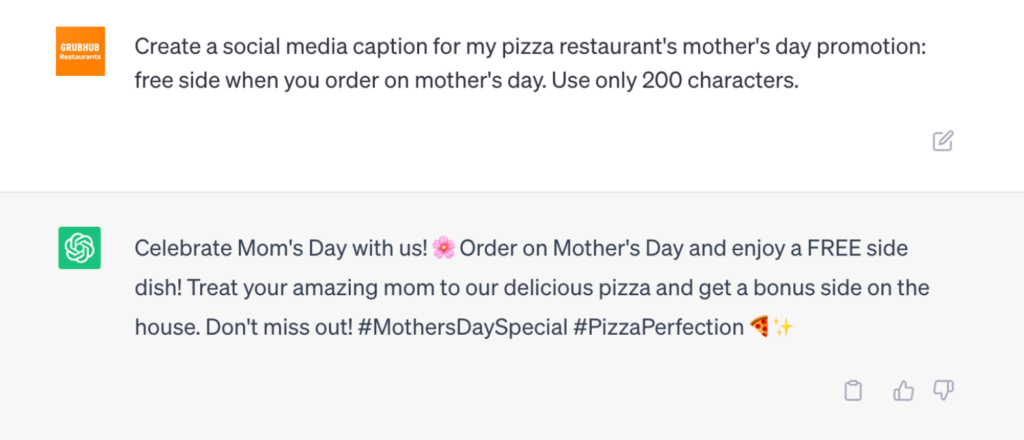
Don’t know what to ask ChatGPT? Ask them the best way to use ChatGPT for restaurants. For example, if you type “What are good questions to ask you about running my restaurant?” ChatGPT will respond with a list of questions you can explore like “What are some effective strategies for managing food costs in a restaurant?” or “What are some best practices for hiring and training restaurant staff?” Plug in those questions and ChatGPT will instantly serve you an in-depth answer.
Get started with ChatGPT by creating your free account.
Why should restaurants implement AI?
Working in the restaurant industry is chaotic, and turning to technology like AI can help make daily operations smoother. Using AI tools can help make your most ambitious restaurant ideas a reality.
AI integrations have helped restaurants by:
- Improving efficiency and accuracy. AI eliminates the risk of human error, increasing your accuracy to improve efficiency.
- Streamline Labor. AI can help complete restaurant tasks, reducing your labor costs and curbing employee turnover.
- Making smarter decisions. AI analyzes restaurant information and data to help you make more informed business decisions based on industry trends and your restaurant’s performance.
- Creating content. ChatGPT can write menu descriptions, social content and marketing materials for your restaurant.
- Cutting costs. AI can help you analyze your spending and finances to improve your ROI.
- Customize the customer experience. AI can allow for menu customization to allow your diners to have more control over their dishes and experience.
- Growing customer base. AI has helped restaurants grow their customer base by finding new diners and improving their reputation by responding to customer inquiries and creating engaging content.
9 ways to use AI in your restaurant
Ready to give AI a shot? Here are some ways you can utilize AI in your restaurant.
1. Phone operations
With the help of voice assistants, AI can talk directly to your customers and become your personal phone assistant. Answering phones requires employee labor, and if you grow your business, it can be difficult to always be on the line. In a Popmenu survey, 83 percent of customers will move on and find another restaurant if they try to call and get voicemail more than once. Enabling AI phone technology can allow you to care for your customers without the extra labor.
Tools like SoundHoud allow you to customize your phone system’s answers to talk with customers to answer questions and take orders. You can customize your AI phone answering to take reservations, answer frequent questions and take messages.
2. Take orders
Self-service ordering is rising in popularity. It makes the process easier for customers who can easily see all the menu options at their fingertips, and it helps staff avoid wasting time taking orders. AI makes online ordering even easier by reacting to customer behavior and predicting their next move.
Fast casual restaurants have been some of the first businesses to embrace AI ordering. Taco Bell’s in-store kiosks use AI to identify up-sale opportunities based on the customer’s order, and McDonald’s opened their first completely digital restaurant in Texas.
Not all AI integrations are a total robot takeover, and there are simple ways you can use AI to help with customer orders.
POS integration is one of the most common AI tools restaurateurs use. These tools help simplify order and menu management by connecting your different POS systems. This way you can keep track of orders, inventory and staff all from one place.
3. Get industry insights
Keeping up with the ever changing restaurant industry is difficult, especially as customer habits and tastes change. AI is a great tool for gathering and sorting through trend information. ChatGPT taps into the power of Google, making research simple. Try asking ChatGPT questions about the restaurant industry to get insight into customer cravings.
What kinds of questions should you try asking ChatGPT?
- What are the top ordered restaurant foods?
- What fruits and vegetables are in season right now?
- What is the most popular way to serve chicken?
- What are the top ordered dinner foods?
4. Enhance your menu
Research shows that menus with images and dish descriptions resonate better with customers. Now, you can create the perfect menu with the help of AI. You can use ChatGPT to generate menu text by asking them to create a one-sentence description of your dishes. Looking for menu photo tips for your cuisine? Ask ChatGPT for help on composition and style. Wondering what recipes are in season? Ask ChatGPT what’s trending.
AI’s influence in menu engineering doesn’t stop there. Technology has enabled restaurants to get a better handle on their inventory. Solutions like ClearCOGS offer a kitchen ingredient management system that can keep track of your inventory to help you plan food preparation and ordering.
5. Analyze data
Odds are you have many types of restaurant technology in your restaurant, and some of these systems are collecting valuable data. Take Grubhub, for example. Our platform collects data on your customers, and serves it up to you in our Customer Insights dashboard.
Digging into data is one of the best ways to understand your customers, staff, supplies and overall business. Don’t bite off more than you can chew by trying to dig through this data on your own. You can use AI to analyze data, segment customers, organize information and find insights.
Want to create a targeted marketing campaign? Copy and paste your customer data into ChatGPT and ask them to pull out repeat customers. You can then create marketing materials specifically tailored to this customer base.
Let’s say you want to understand your customers’ impressions of your restaurant. You can copy and paste the reviews into ChatGPT and ask it to look for the main trends. You’ll then get insight into the general sentiment of your customers to help make adjustments to make their experience more positive.
You can also use AI to track operational data from your restaurant. AI can help you analyze busy and quiet business hours so you can adjust your staffing accordingly.
6. Keep track of finances
When it comes to keeping track of your finances, you only want to use technology you can trust. With POS integration, you can search and find fraudulent or inconsistent transactions, look at purchasing data and understand transaction trends. With this info, you can better prepare your inventory and adjust prices based on the Cost of Goods Sold (COGS).
You can use AI to unpack your restaurant’s finances. ChatGPT can help you analyze your pricing menu so that you can competitively price your items. You can ask ChatGPT the average price of a specific menu item, or how much specific ingredients cost in different seasons.
7. Organize operations
As a restaurant owner, you have a lot on your plate. Relieve some stress by allowing AI to take care of tedious tasks. As we’ve mentioned, POS integration can be a lifesaver for restaurant owners by tapping into AI to streamline operations.
Turning to technology to handle these tasks that could take employee hours gives your staff back valuable time they can invest in other areas of your business. AI tools can help you schedule employees based on busy times so that you’re prepared to handle a rush. You can also use your POS system to keep track of inventory so you can get 86 items as soon as they run out.
AI can help you make informed decisions about your restaurant, predict inventory changes, customer trends and employee needs so you can stay on top of your business.
AI can also help you communicate with your employees. Need help creating onboarding materials for your staff? ChatGPT can write it for you. Just ask it to write a training guide for a certain position.

8. Create marketing materials
Without marketing, customers won’t know about your restaurant. But with marketing campaigns getting more creative, it can be hard to come up with ideas that stand out. That’s where AI can come in – generating ideas and copy for all your marketing needs.
A good marketing campaign covers all bases: social media, email, website and paper inserts. ChatGPT can help you write copy that is optimized for each platform. Let AI help you create targeted marketing materials that resonate with your customers.

Social media marketing is one of the best ways to reach customers directly, but coming up with what to post can be overwhelming. AI can help you create content, write captions and understand trends. You can use ChatGPT to come up with social media captions, hashtags and respond to comments and messages.
9. Improve the customer experience
Finding and attracting new customers is difficult for any restaurant. You can use AI to help you interact with customers to ensure they have a positive experience with your business.
Responding to reviews is a tedious yet necessary task to keep your customers satisfied. Solutions like Chatmeter have made understanding and interacting with customers easier by compiling all the online conversations about your brand.
AI can also help you craft a response to negative reviews. Timeliness for responding to these reviews is key to showing a customer you care. If a customer writes a review on your website claiming that their service was poor, you can ask ChatGPT to craft a response.

AI features on online ordering tools remember a customer’s history to customize featured offerings based on their behavior. When a customer orders from your restaurant on Grubhub Marketplace, the platform will remember their preferences when they come back to order again. This technology helps make restaurant visits more consistent, prompting repeat customers to continue ordering.
Grow your restaurant technology with a trusted partner by your side
Embracing the latest trends in restaurant technology can help grow your business. Innovations like AI give restaurants the power to streamline their owners’ operations and customize their customer experience. POS tools have made embracing new technologies even easier by improving how restaurants manage orders, inventory and customer data.
No matter how you plan on tapping into AI tools at your restaurant, there’s no doubt that this technology is here to stay. Why not get ahead of the trend?
Ready to grow your business and attract new customers? Partner with Grubhub today to tap into the latest in restaurant technology.
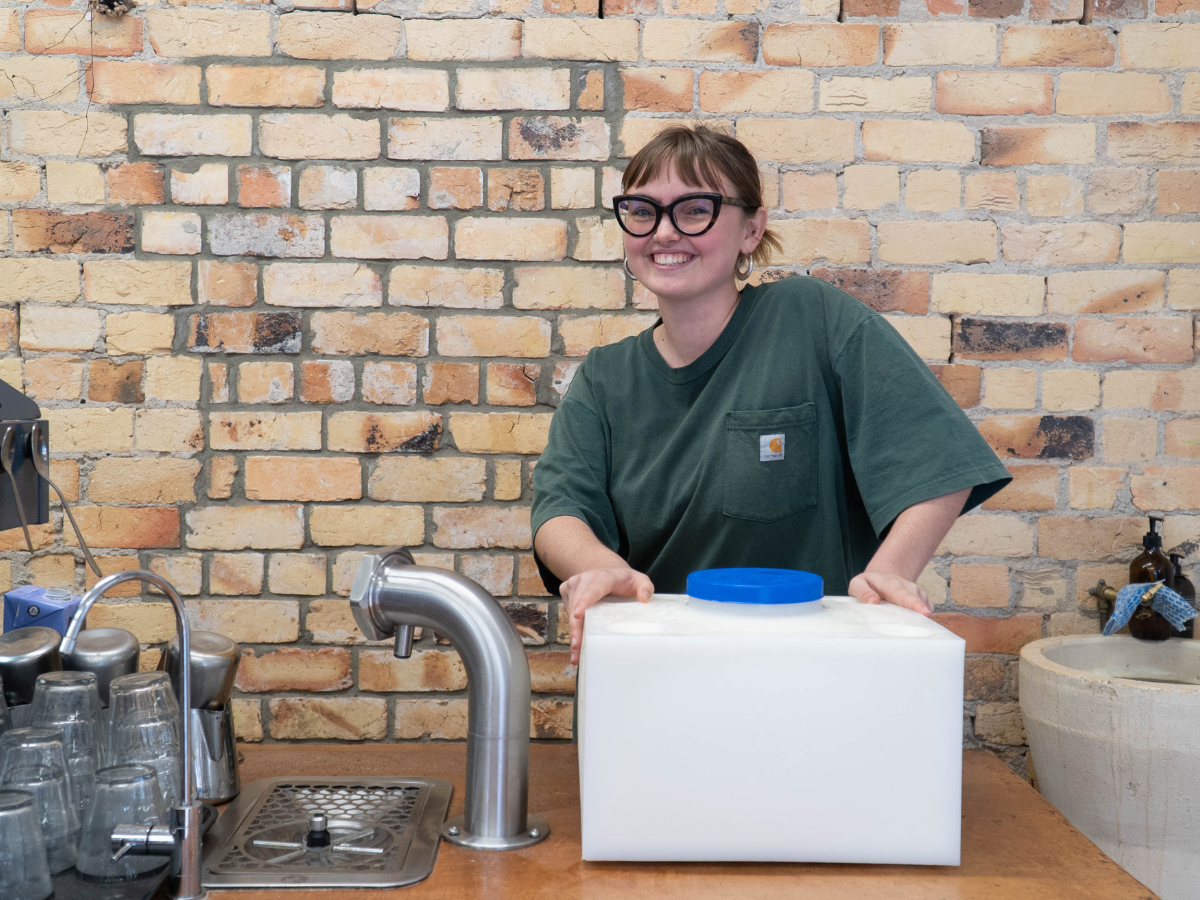
Reusable milk kegs launched today will eliminate thousands of single-use bottles –
An innovative reusable milk keg could see the average New Zealand café eliminate up to 10,000 single-use milk bottles a year.
The Udder Way officially launched in New Zealand today, ahead of World Milk Day – June 1, which this year focuses on how the dairy industry is reducing its environmental footprint.
The Tasmanian company has joined forces with Waikato owned and operated Green Valley Dairies, which is filling the reusable milk kegs in New Zealand with organic and non-organic milk.

Each The Udder Way keg holds 18 liters of milk and has a lifespan of at least eight years before being recycled and turned back into kegs. This allows the average café to eliminate 7000 to 10,000 milk bottles a year.
Green Valley Dairies general manager Mark Pulman says that the innovative milk kegs are unlike anything he has seen before and are a big win for the dairy industry, hospitality sector and the environment.
“This is the most exciting reusable packaging solution we have come across. It’s great to have an alternative option that’s specifically designed for both the dairy and food service industries, with all the relevant certifications. We’re also proud to be playing our part in helping our customers reduce their environmental footprint,” says Pulman.
The idea for the reusable milk kegs came to The Udder Way founder Ed Crick while he was running three cafes in Tasmania.
“We were going though almost 30,000 plastic milk bottles a year, which really concerned me. We were making the effort to use things like sustainable coffee cups and henceforth our bins were overflowing with plastic bottles,” says Crick.

So, the former tradition started dreaming up ways to eliminate the need for single-use plastic milk bottles. In 2021, he launched The Udder Way in Australia, with the mission to eliminate 100 million single-use plastic milk bottles globally, per year.
“Two years on from launching our kegs in Australia, we’re now removing around 1.6 million milk bottles from waste a year. With more and more businesses coming on board every day on both sides of the Tasman, we anticipate that number to triple by the end of 2023,” said Crick.
Daily Bread is one New Zealand business which has signed on to use The Udder Way milk kegs.
“We’re always looking for ways to reduce our environmental footprint, so the decision to change to The Udder Way milk kegs was a no brainer. It’s actually amazing! The kegs are easy to use, take up less space than milk bottles and create much less waste at the end of each day,” says Daily Bread manager Emily Hancock.
The Udder Way kegs can be connected to existing milk dispensing units or a simple tap system can be provided, allowing baristas to easily pour milk without the waste and clutter of plastic milk bottles.

For more information or to order milk in kegs, visit www.theudderway.com or www.gvd.co.nz

Disappointment at APTR decision –
The accommodation industry has expressed its disappointment with the Supreme Court ruling that the Auckland Council’s Accommodation Provider Targeted Rate (APTR) funding for tourism is valid.
The contentious hotel bed tax was introduced in 2017 by the Auckland Council to boost tourism funding and has now been given the green light after being suspended in 2020 due to the impact of the COVID-19 pandemic on the hospitality economy.
Hospitality New Zealand’s Accommodation Association Lead & Sector Chair, Troy Clarry, says the decision to overturn the Court of Appeal ruling will have long-term implications for operators; not only for Auckland but probably throughout New Zealand.
“The APTR, as proposed by the council, is unfair, inappropriate and simply does not work – Covid-19 proved that beyond all doubt.
“It did not work as intended and now Auckland has no funding for marketing and events, inevitably affecting New Zealand’s ability to attract major events going forward. But this ruling is the end of the matter and we now need to move forward.
“We pleaded with other local councils around New Zealand to work with the industry on models similar to the fairer funding model for destination marketing that has worked on with Tataki Auckland Unlimited and the wider tourism sector since the Court of Appeal ruling 18 months back.
“This is well advanced and covers the wider industry on a much fairer basis, and we ask other councils to look at what is being done and work with local tourism operators on similar models.
“At the same time we also ask the Government to work with us to develop a centralized funding model.
“This is urgent – not just for the industry but also for the benefits tourism can provide to the whole economy – GtDP, tax take, GST, branding etc.
“We still have a concern around targeted rates in general, and our concern with this ruling is that councils around New Zealand will now be tempted to implement targeted rates, not just for tourism but for other sectors going forward.
“So, we urge councils to work with the sector to find alternative fair, reasonable, and nationally endorsed funding models for tourism.
“Ultimately, we want to solve the funding for tourism problems, and this needs central government involvement.
“The hospitality and accommodation sector has always been willing to work with councils and the government, and we think this is the perfect time to do that. But it needs to be done quickly because we’re already falling behind competitively in international tourism and our ability to attract travelers from abroad.”
The Supreme Court ruling, released on May 12 determined that the APTR was reasonable and complied with the legislation in the Local Government Act 2002.

What you need to know about tip pooling
Tips are an integral part of the restaurant industry. They motivate employees to provide exceptional service, creating an experience that brings customers back time and again. For employers in many states, tips can also make up the difference between the server minimum wage and the federal minimum wage. If you’re looking for ways to distribute tips more fairly among employees, tip pooling is one option.
What are the tips for pooling?
Tip pooling is a practice where restaurant employees put all or part of their tips into a communal pool. The employer divides the total funds among eligible workers, either equally or using a predetermined ratio. This method is an alternative to tip sharing, where servers and bartenders voluntarily hand over part of their tips to other employees who help with service but don’t receive tips.
As you might guess, tip pooling can be a polarizing tipping method. It’s usually beneficial for employees such as bussers and expediters, but servers who tend to receive higher tips may find the practice unfair. And if certain employees work harder than others, either in perception or reality, tip pooling can create conflict among the staff.
For some employers, tip pools are the most sensible option. Take coffee shops, for example — multiple people are involved in taking orders and making drinks, but customers only tip once. By pooling tips, everyone receives their fair share. The same goes for any counter-serve restaurant where cashiers and kitchen employees work together to prepare orders.
Tip pooling is less common in traditional table service restaurants, but that’s not out of the question. As an employer, you might use this method to promote a collaborative rather than competitive atmosphere. If you’re currently using a tip credit system to satisfy minimum-wage requirements, you can still use a tip pooling system as long as you stay compliant with any applicable laws.
How are pooled tips calculated?
The way you calculate pooled tips depends on local, state and federal laws. All restaurants are subject to the Fair Labor Standards Act (FLSA), which allows employers to mandate a tip pooling arrangement for staff members. If you take a tip credit, the FLSA only permits your tip pool to include employees who traditionally receive tips. When you pay a minimum wage for all employees, you can also include non-tipped workers such as chefs or dishwashers. According to employment law, employers, managers and supervisors may not accept money from a tip pool.
The tip pooling method and timeline you choose also affects the calculation. If you pool tips for each shift and distribute them evenly, the process is simple. Add together all the tips at the end of the shift and divide them by the number of employees working. If the tips total $1,000 and you have 10 employees, each person will receive $100.
When you choose a percentage or points-based system, the process is slightly more complex. Imagine you have two servers that receive 40% each, a host that receives 15% and a busser who gets 5%. For a shift with $1,000 in tips, each server would get $400, the host would receive $150, and the busser would get $50.
Federal tip pooling law requires you to distribute the tip pool by payday at the latest. For card tips, you’re permitted to deduct the credit card company’s transaction fee percentage — unless doing so pushes the employee’s compensation below the minimum wage.
At tax time, your employees must report 100% of the tips they receive. The IRS also monitors employee tips as a percentage of your restaurant’s income. If tips make up less than 8% of your gross receipts, you must make up the difference and split it among tipped employees.
Tip pooling methods to try
Tip sharing is rarely a one-size-fits-all solution; as an employer, you can customize the process to fit your operations and employee preferences. Keep in mind that tip sharing doesn’t require you to pool 100% of tips. If servers and other tipped employees are good at the prospect, consider creating tip pools from 20% to 50% of the total gratuities.
Common tip-splitting methods include:
- Even distribution. The tip pool is split evenly between all employees. This method is useful for bakeries, fast food outlets, coffee shops and counter-serve restaurants where employees work together to prepare orders, serve meals and clean up after customers.
- Percentage-based. Employees receive a percentage of the tip pool based on their contribution to service. Because servers handle the bulk of the customer-facing duties, they typically get a majority of tips. Bussers, hosts and bartenders usually receive smaller percentages.
- Points. This tip-pooling method is similar to the percentage system, except employees receive a certain number of points depending on their role. Add up the points for everyone who’s working, then divide the total tips by the number of points to get a per-point dollar value. The point value changes every shift, helping to account for variations in staffing and order volume.
After you choose a tip-pooling method, you must decide whether to calculate tips at the end of each shift or at the end of the day. Shift-based distribution requires more accounting work on the employer’s side, but it offers fair compensation for employees who work the busiest shifts. You might choose a workday distribution method — where employees receive tips based on the number of hours they work — if you’re open for a limited number of hours or if your orders tend to be stable across shifts.
The pros and cons of pooling tips
Not sure if tip pooling is right for your restaurant? The pros and cons can help you make a decision.
Pros of pooling tips
- All service employees receive tips from the tip pool.
- Employees aren’t penalized when they’re assigned to a low-tipping table.
- Tip pools can encourage teamwork.
Cons of pooling tips
- Tip pooling laws can complicate your tip credit system.
- Employees are compensated equally even if they put in less work.
- It can create conflict between average and high-performing workers.
- Pooling tips adds complexity to employer accounting procedures.
When in doubt, ask your restaurant employees how they feel about pooled tips. Experienced, highly skilled workers may be strongly opposed; if they’re forced to pool tips with new or lower-performing workers, they’ll almost certainly make less money. When employees rotate positions in a counter-serve restaurant, however, the system can benefit the entire team.
Keep employees happy while growing your business
If your employees are happy with it, a tip pool can boost morale across the entire team. But employee appreciation shouldn’t stop there. Taking time to show your employees you appreciate their work will help foster a healthy work environment. Keeping employee practices consistent and fair will help minimize turnover.
Don’t forget to include your delivery tips, too. With Grubhub, you can opt to self-deliver orders within your preferred radius to ensure all tips remain with in-house staff. To learn more or try the system for free, get started with a Grubhub account.

Pebblebrook Hotel Trust (NYSE:PEB) Price Target Cut to $16.00 by Analysts at Truist Financial
 Pebblebrook Hotel Trust (NYSE:PEB – Get Rating) had its price objective lowered by equity researchers at Truist Financial from $18.00 to $16.00 in a note issued to investors on Thursday, The Fly reports. Truist Financial’s price target would indicate a potential upside of 12.60% from the company’s current price.
A number of other research analysts have also issued reports on the stock. Barclays reduced their target price on shares of Pebblebrook Hotel Trust from $22.00 to $18.00 and set an “equal weight” rating on the stock in a report on Wednesday, December 21st. The Street lowered shares of Pebblebrook Hotel Trust from a “c-” rating to a “d+” rating in a report on Friday, December 30th. StockNews.com started coverage on shares of Pebblebrook Hotel Trust in a report on Thursday, March 16th. They issued a “sell” rating on the stock. Wells Fargo & Company dropped their price objective on shares of Pebblebrook Hotel Trust from $17.00 to $14.00 and set an “equal weight” rating for the company in a research note on Thursday, March 30th. Finally, Stifel Nicolaus dropped their price objective on shares of Pebblebrook Hotel Trust from $16.50 to $15.25 in a research note on Monday, March 27th. Three investment analysts have rated the stock with a sell rating and six have given a hold rating to the company. According to MarketBeat.com, the company presently has a consensus rating of “Hold” and an average target price of $17.88.
Pebblebrook Hotel Trust Stock Down 1.3 %
Shares of Pebblebrook Hotel Trust stock opened at $14.21 on Thursday. The Pebblebrook Hotel Trust has a 52-week low of $12.37 and a 52-week high of $26.14. The company has a 50 day moving average of $14.44 and a 200 day moving average of $14.86. The company has a quick ratio of 0.38, a current ratio of 0.38 and a debt-to-equity ratio of 0.77. The company has a market capitalization of $1.78 billion, a P/E ratio of -14.65, a P/E/G ratio of 0.60 and a beta of 1.85.
Pebblebrook Hotel Trust (NYSE:PEB – Get Rating) last announced its earnings results on Tuesday, February 21st. The real estate investment trust reported ($0.34) EPS for the quarter, missing analysts’ consensus estimates of $0.18 by ($0.52). The business had revenue of $319.61 million during the quarter, compared to analyst estimates of $309.55 million. The Pebblebrook Hotel Trust had a negative net margin of 6.26% and a negative return on equity of 2.77%. The business’s revenue was up 29.3% compared to the same quarter last year. During the same period in the previous year, the firm earned $0.06 earnings per share. As a group, research analysts forecast that the Pebblebrook Hotel Trust will post 1.71 EPS for the current fiscal year.
Insider Transactions at Pebblebrook Hotel Trust
In other Pebblebrook Hotel Trust news, CEO Jon E. Bortz purchased 14,000 shares of the company’s stock in a transaction dated Thursday, March 16th. The shares were bought at an average price of $13.62 per share, with a total value of $190,680.00. Following the completion of the transaction, the chief executive officer now directly owns 1,108,102 shares in the company, valued at approximately $15,092,349.24. The purchase was disclosed in a legal filing with the Securities & Exchange Commission, which is available through this hyperlink. In other news, CEO Jon E. Bortz acquired 14,000 shares of the firm’s stock in a transaction that occurred on Thursday, March 16th. The stock was acquired at an average cost of $13.62 per share, for a total transaction of $190,680.00. Following the completion of the acquisition, the chief executive officer now owns 1,108,102 shares in the company, valued at $15,092,349.24. The transaction was disclosed in a filing with the Securities & Exchange Commission, which is available at this hyperlink. Also, CEO Jon E. Bortz purchased 11,000 shares of the firm’s stock in a transaction on Wednesday, March 22nd. The stock was purchased at an average price of $12.95 per share, with a total value of $142,450.00. Following the completion of the purchase, the chief executive officer now owns 1,122,102 shares of the company’s stock, valued at $14,531,220.90. The disclosure for this purchase can be found here. Insiders have acquired a total of 39,865 shares of company stock valued at $555,064 over the last 90 days. 2.40% of the stock is owned by company insiders.
Institutional Trading of Pebblebrook Hotel Trust
Several hedge funds have recently added to or reduced their stakes in the company. Guggenheim Capital LLC increased its stake in shares of Pebblebrook Hotel Trust by 1.2% in the 3rd quarter. Guggenheim Capital LLC now owns 58,938 shares of the real estate investment trust’s stock valued at $855,000 after purchasing an additional 724 shares during the last quarter. PNC Financial Services Group Inc. increased its stake in shares of Pebblebrook Hotel Trust by 11.5% in the 4th quarter. PNC Financial Services Group Inc. now owns 11,653 shares of the real estate investment trust’s stock valued at $156,000 after purchasing an additional 1,199 shares during the last quarter. Assetmark Inc. increased its stake in shares of Pebblebrook Hotel Trust by 27.2% in the 4th quarter. Assetmark Inc. now owns 5,959 shares of the real estate investment trust’s stock valued at $80,000 after purchasing an additional 1,273 shares during the last quarter. Investnet Asset Management Inc. increased its stake in shares of Pebblebrook Hotel Trust by 0.5% in the 3rd quarter. Investnet Asset Management Inc. now owns 280,528 shares of the real estate investment trust’s stock valued at $4,070,000 after purchasing an additional 1,303 shares during the last quarter. Finally, Jane Street Group LLC increased its stake in shares of Pebblebrook Hotel Trust by 3.5% in the 2nd quarter. Jane Street Group LLC now owns 38,154 shares of the real estate investment trust’s stock valued at $632,000 after purchasing an additional 1,305 shares during the last quarter.
About Pebblebrook Hotel Trust
(Get Rating)
Pebblebrook Hotel Trust is a real estate investment trust, engaging in investments and acquisitions in hotel properties. Its hotels are located in markets like Atlanta, Georgia, Boston, Massachusetts, Chicago, Illinois, Key West, Miami and Naples, Florida, Los Angeles, San Diego and San Francisco, California, Nashville, Tennessee, New York, New York, Philadelphia , Pennsylvania, Portland, Oregon, and Seattle, Washington.
Featured Articles

Receive News & Ratings for Pebblebrook Hotel Trust Daily – Enter your email address below to receive a concise daily summary of the latest news and analysts’ ratings for Pebblebrook Hotel Trust and related companies with MarketBeat.com’s FREE daily email newsletter.