

Flourishing Food Truck future on the horizon –
At high school in Wellington, Jes Howes was struggling to thrive and fast losing self-esteem. By Year 13, Howes decided it was time to move on and find a different pathway. With the encouragement of her parents, who knew she had a passion for cooking, she researched options at Whitireia and WelTec | Te Pukenga and embraced a new future.
Jes quickly immersed himself in his new, hands-on, practical study in the Commercial Kitchens of the hospitality campus and qualified in bakery, cookery and hospitality management. This experience cemented her ideas about pursuing a career doing what she loved, cooking, and Jes wanted to start her own food truck business.
“I love cooking and baking and it was while I was doing the courses that I came up with my food truck idea,” says Jes.
“I had this vision of a cool truck serving burgers and chips to people out on a Saturday night on Courtney Place. It will be fun and I know everyone loves hot, fresh food when they have a big night out.”
To complement her hospitality qualifications and to help her set up a new business, Howes has returned to learning at Whitireia and WelTec | Te Pūkenga to gain the accounting and management knowledge she needs to get going with her plans.
Howes is now in the process of completing this qualification and recently spoke about her experiences to almost 700 students at the recent graduation ceremony held by Whitireia and WelTec | Te Pukenga.
“When I was at school I had low self-confidence and really did not know what I wanted to do,” says Jes.
“When I started at Whitireia and WelTec | Te Pūkenga I met such lovely people in my class and I realized there was a student support team, who helped me with my learning difficulties.”
Howes described the student support team as being a big encouragement to her, having helped her navigate through her studies and explaining her situation to her tutors.
Disability advisor at Whitireia and WelTec | Te Pūkenga, Rebecca Burns said Jes Howes is an inspiration and despite potential learning barriers, she has achieved both personal and academic success.
“The importance of seeking and receiving support is strongly evident and I know that Jes is a strong advocate for our support services which extends to both students and staff. We have been privileged to walk this journey alongside Jes,” said Burns.
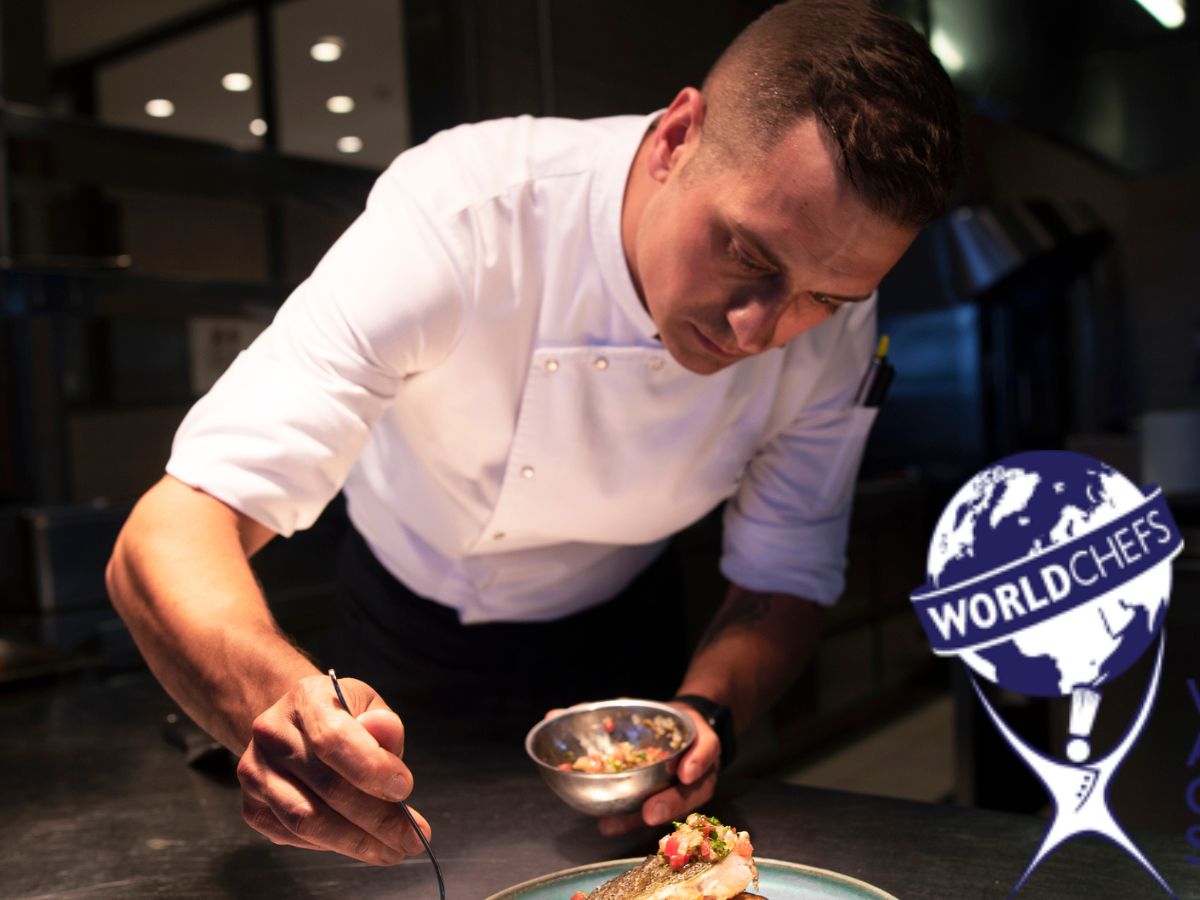
Chefs to represent NZ –
Expressions of Interest are open for chefs keen to represent New Zealand at the Worldchefs Pacific Rim semi-finals in Christchurch from July 4 – 6, 2023.
The Semi-final winners progress to represent the Pacific Rim region at the Worldchefs final to be held in Singapore from October 22 – 25th 2024.
All entrants must be members of NZ Chefs on or before May 30, 2023 and if successful, maintain membership for the duration of the competition programme.
The semi-finals category challenges are:
• Global Chefs
• Young Chef – must be born on or after 1st January 1999
• Pastry Chefs
• Vegan Chefs
Along with the opportunity to represent New Zealand on the international stage, the chosen candidate in each category will also receive the following prize package:
• Mentoring from a former NZ Culinary Team member
• $500 account credit from Bidfood NZ to assist with the cost of ingredients for the practice
• Flights and accommodation to Christchurch for the Pacific Rim semi-finals
• Profile of themselves and place of work in industry publications
To be eligible for selection as the New Zealand candidate entrants must be a full member of NZ Chefs and be a NZ citizen or permanent resident. They must also provide the following:
• Completed application form with two referees and competition history
• Head and shoulders photo in chefs uniform
• Up-to-date professional CV
• A written menu featuring the dishes required for the chosen category, with a description outlining design choices and philosophy (200 words max).
For more information on this event visit https://worldchefs.org/globalchefschallenge/
and
https://worldchefs.hosco.com/en/association/new-zealand

Hospitality Excellence Awards open for entries –
Entries are open for the 25thth Hospitality New Zealand Awards for Excellence. The 2023 awards are steeped in history, recognizing businesses and people across the hospitality and accommodation sectors, celebrating industry success and excellence.
The Hospitality New Zealand Awards for Excellence are the longest running, national awards that honor the achievements of the hardworking and talented people who make the hospitality and accommodation industries exceptional.
Entries are now open to the public, closing on April 14.
There are 25 categories to apply for, spanning hospitality, accommodation, gaming and more, with the overall Supreme Winner Award to be selected from the category finalists.
Finalists across all business and people categories will be announced on April 21.
In a change from previous years, the winners of the People of the Year award categories will be awarded at the Hospitality Social Evening 2023, at Sweat Shop Brew Kitchen, Sale Street, Freeman’s Bay on June 27.
People Of The Year Categories:
Leader of the Year: Hospitality, and Leader of the Year – Accommodation: people who are dedicated to their profession and contribute to and inspire confidence in the industry.
Future Leader of the Year: someone who is making a significant contribution in their role, be it front of house, duty manager, chefs, barista and bar staff, or the unsung hero who demonstrates exceptional leadership qualities and is seen as an industry leader of the future.
Chef of the Year: someone whose attitude and dedication has contributed to the success of their business, and who demonstrates leadership, innovation, and the pursuit of excellence.
Supplier of the Year: a supplier who is dedicated to their profession and who contributes to and inspires confidence in the hospitality industry.

The Awards for Excellence 2023 black-tie dinner celebration taking place on June 28 , will conclude the two-day #HNZ23 conference and trade show event at the Pullman Hotel in Auckland.
Hospitality New Zealand Chief Executive Julie White said, ” These awards are the pinnacle of our industry. It gives all operators nationwide a chance to recognize and reward those who continue to excel and progress in our industry and create the highest possible standards for both their guests and their team.
“Last year, when we held our first in-person awards for two years, I said every hospitality business and every worker out there deserves a medal for the guts and perseverance they’ve shown through what was probably the toughest period the industry has ever been through. I say it again – because the hits just keep coming but somehow, they keep getting up again.
“To those who have been working so hard to offer support to their communities and customers, these awards are a huge thank-you for your work, even if you don’t or can’t enter, or aren’t one of the winners .
The Awards for Excellence 2023 will again be hosted by Hospitality New Zealand in conjunction with long-time principle partner Lion New Zealand.
Lion New Zealand’s Managing Director Craig Baldie said Lion was delighted to continue to support the awards.
“Lion has proudly sponsored the Awards for 25 years and we are delighted to be supporting them again for the 25th anniversary year. We look forward to celebrating excellence in the industry.”
Up to five finalists will be named in each category and businesses are being asked to consider whether they can submit multiple categories. Entries close on April 14. For further information and to enter go to: https://www.hospitality.org.nz/s/awards
:quality(70)/cloudfront-us-east-1.images.arcpublishing.com/adn/H5R2GFFI5BG7BBLPB6BD2GZ5OM.jpg "Hotel WiFi can be terrible. Here are some tips to deal with it.")
Hotel WiFi can be terrible. Here are some tips to deal with it.
:quality(70)/cloudfront-us-east-1.images.arcpublishing.com/adn/H5R2GFFI5BG7BBLPB6BD2GZ5OM.jpg)
Maybe you’ve experienced road warrior panic, as I did last week.
I was traveling for work and during one important video call in my hotel room, the WiFi flaked out and we disconnected. Early the next morning, my laptop kept getting booted off the in-room internet while I was trying to meet a deadline.
I was sleepy, still in my pajamas and stressed.
Crummy WiFi in your hotel room isn’t the world’s most pressing problem. But when you pay for a home (and an office) away from home, you expect some comforts: a comfortable bed, a hot shower and reliable internet access.
You can’t fix the internet in your hotel. But you are not completely powerless over that flaky hotel WiFi.
Why is the internet often terrible in hotels?
It’s complicated to spread internet access to all rooms, and hotels haven’t typically treated WiFi as a priority.
Many hotels know their guests expect internet access, but that doesn’t mean it has to be any good. Hotels’ internet equipment and software may not have kept up with your love of video streaming, Zoom calls and other data-hogging activities.
“They didn’t necessarily invest in the best WiFi,” said David Henry, president and general manager of connected home products and services at Netgear, which makes internet equipment.
Hotels are also stuffed with WiFi-blocking obstacles such as walls, electrical equipment, and other humans all sharing limited internet bandwidth.
That’s not an excuse, though. It’s also tricky to pipe hot water to 100 rooms of people taking showers at the same time. You don’t put up with balky plumbing, and you shouldn’t accept unreliable internet.
What you can do: Try to move around
If you’ve been having trouble, experiment to see if some parts of your hotel room have a stronger internet connection. On my flaky video call, it seemed to help when I moved away from the window.
Parking yourself in an uncrowded hotel lobby or business center with a separate internet connection might be a step up from the in-room WiFi shared among 50 rooms.
Some hotels offer basic internet service included in the room price and speedier WiFi if you pay extra. I hate this, but a couple of internet experts said the paid tier might be a good bet.
If most people don’t pay for the zippy service and you do, then you’ll be using a less crowded internet lane.
Ask for help
Sascha Meinrath, a telecommunications professor at Penn State University, suggested asking hotel staff (nicely) if you can switch rooms.
He said that hotels may set aside rooms for loyal guests or VIPs, and internet service is likely to be better there. I’m not bold enough to ask for an upgrade, but you could try.
Front desk staff are not your tech support, but it might also be worth asking them about your in-room WiFi troubles. They might know areas of the hotel with better internet service.
Use your phone as a WiFi hotspot
Depending on your mobile service plan, you may be able to use your phone to beam WiFi to your laptop.
You may need to ask your phone provider or look up instructions for using your phone as an internet hotspot. (Here are FAQs from Verizon, AT&T and T-Mobile.)
This isn’t a great solution if you travel a lot. Using your phone as a WiFi hub chugs through data and your battery, you might be charged extra and the phone company may slow down your connection.
You can also buy dedicated mobile hotspots, although that adds another phone bill to your budget.
Don’t keep crummy hotel WiFi a secret
Not everyone cares about the same hotel amenities. Having a pool at the hotel might be important to you, and it isn’t for me. Unreliable WiFi is a dealbreaker for me and maybe not for you.
But if quality internet service matters to you, let the hotel know in customer feedback and reviews.
“The ball is in the court of the consumer to elevate the importance to the hotel operators,” Henry said.
Travel websites aren’t necessarily helpful in empowering you.
After my hotel stay, I wanted to see if other people complained about the hotel’s balky WiFi on sites including Hotels.com and Travelocity. It was almost impossible to shift through reviews for specific amenities or terms like “WiFi.”
And while those travel websites tend to list whether a hotel offers internet service and whether it costs extra, they don’t appear to assess the quality.
Expedia Group, which owns travel websites including Expedia, Hotels.com and Travelocity, said search results on Hotels.com include a “traveler experience” filter for properties with “business friendly” amenities including WiFi. You can also choose to read only reviews written by business travelers. I didn’t find these options helpful.
After I checked out of my WiFi dead zone hotel, it emailed me a feedback survey. I usually ignore those things. This time I responded and said I probably wouldn’t stay in the hotel again because I couldn’t rely on the WiFi.
I felt like I did my small part to help future pajama-clad guests trying to meet work deadlines.
One tiny win
I love rules. Here’s my colleague Chris Velazco’s golden rule for gadgets:
“If it isn’t seriously broken, and you got whatever it was less than two years ago, don’t even think about replacing it.”
For phones both new and old, repairs might be a good return for your investment, Chris says. You might spend $100 at a repair shop having your battery replaced or more to fix your busted screen. That’s not cheap, but it’s a bargain compared to the cost of a new device.
Shira Ovide writes The Washington Post’s The Tech Friend, a newsletter about making your technology into a force for good. She has been a technology journalist for more than a decade and writes for a tech newsletter at the New York Times.

How Restaurants Should Be Using Sustainable Food Containers
As younger, environmentally conscious diners become a majority of the food-industry customer base, many restaurants are making sustainability a top priority. To-go containers are a key focus — disposable packaging is a significant contributor to commercial waste. The right sustainable products can help you protect the environment while maintaining food quality.
Why sustainability matters
Increasing restaurant sustainability is one way to reduce your impact on the environment, especially when it comes to takeout containers. According to the EPA, containers and packaging are responsible for more than 23% of all the trash that goes to landfills in the United States. By switching to compostable, reusable, or recyclable to-go container alternatives, you can minimize your ecological footprint.
Your bottom line will also benefit — after all, customers care about sustainability. Millennials and Gen Z diners, in particular, are likely to pay attention to your company’s environmental practices. In fact, 71% of millennials and 75% of Gen Z consumers consider sustainability when making purchasing decisions. As these two generations wield $65 billion and $100 billion in purchasing power, respectively, paying attention to their preferences can give you a competitive advantage. If you’re currently sending out food in plastic containers with clear lids, it could be time to rethink your restaurant’s sustainability practices.
Sustainability made simpler
Sometimes, boosting restaurant sustainability is as simple as choosing different to-go containers and lids. Start by considering your use of plastic; it’s one of the biggest contributors to ocean pollution and accounts for 12.2% of solid waste. While it may not be feasible to completely eliminate plastic packaging, reducing your usage can help.
You might also consider joining Grubhub in the CutOutCutlery campaign, which is designed to help address the issue of plastic waste in the restaurant industry. The aim is simple — by requiring that customers opt in to receive plastic cutlery with their food, you can help reduce the amount of utensils that are thrown out unused. It’s an easy action, but it can go a long way toward reducing the 40 billion pieces of disposable cutlery American diners use each year.
When you partner with Grubhub for delivery orders, it’s easier than ever to be sustainable. Each order automatically defaults to a no-cutlery setting, cutting back on plastic waste immediately.
Some additional ways to increase sustainability in your restaurant include:
- Educate. Let customers know what they can do with their takeout containers when they’re done eating. Depending on the container, this might include recycling them or reusing them as food storage.
- Reduce. Streamline your packaging and use disposable items to minimize waste. While you’re at it, you might adjust portion sizes or kitchen practices to reduce food waste.
- Go local. Incorporate locally sourced food into your menu whenever possible; it requires less fuel, produces fewer emissions and supports the local economy.
- Recycle. For convenience, offer on-site recycling to help customers separate their plastic, paper, food scraps and landfill waste.
If you decide to implement a recycling program, make sure you understand what each recycling symbol means. The most recognizable symbol features a triangle made with three arrows. It indicates that the item can be recycled, and the number in the center explains how. If you don’t see this symbol on paper or plastic products, they may not be recyclable.
You may also see symbols that indicate a product is compostable or biodegradable. Compost symbols vary; some feature a circle with an apple core in the center, while others look like a ribbon loop with leaves at one end. Biodegradable products often feature a triangle or circle made of leaves.
What are the best to-go containers for restaurant delivery?
When you’re choosing the best takeout container for your restaurant, sustainability is a top factor. The most sustainable food containers are compostable or biodegradable; they’re usually made from compostable paper, sugarcane, wheat straw or bamboo. Recyclable paper, plastic, or aluminum boxes and hot cups are the next best solution.
Make sure to consider other factors, including:
- durability. Your container should be strong enough to support the weight of the food without sagging or collapsing. For heavy, wet items, a container with a clear lid is often a sturdy option.
- Sizing. To-go containers should be sized to fit the portion. Go too big and your servings will look small; too small and the contents will be challenging to eat without spills.
- Loose lids. The lid should fit tightly, even when the package shifts during transit.
- Branding. Customize takeout containers with branding to support your marketing efforts. Depending on your delivery and takeout volume, you might order preprinted packages or personalize them with a stamp.
The best takeout containers fulfill each of these categories. You can order them from restaurant wholesalers. If sustainability is a top priority, work with a sales representative to identify boxes that are both secure and environmentally friendly.
How can you package food for delivery to ensure quality?
After you choose to-go containers, it’s important to train your kitchen staff in proper food packaging. When everyone in your restaurant understands best practices, it helps ensure each meal arrives in good condition.
As you’re packaging food, follow these steps:
- Separate hot and cold items. Keeping them in separate bags makes it easy to maintain the correct temperature in transit. Use insulated bags to help keep hot foods hot during delivery.
- Package liquids carefully. Choose containers with tight lids, and ensure they’re secure before packing them. Use cup carriers for extra stability, and make sure glass bottles are protected.
- Follow alcohol delivery rules. For beverage delivery, make sure to label drinks as alcoholic and package them in a separate container. Clear labels keep you compliant and make it easier for delivery drivers to follow local laws.
- Vent fried foods. Keep fried items crispy by choosing vented boxes that let out condensation.
- Labels and seals. Give customers extra confidence by sealing plastic and paper food containers to ensure food safety. It’s also a good idea to label hot liquids to prevent spills and injuries to both delivery drivers and diners.
Partner with Grubhub for sustainable food delivery
Safe packaging is the first step; it’s also important to work with a reliable delivery partner. At Grubhub, our platform optimizes punctuality and efficiency to maximize food quality. Drivers can pick up orders within minutes of preparation, and delivery zone boundaries ensure meals arrive quickly. With the integrated utility opt-in, sustainability is built into the process.
Sign up for Grubhub today to start serving sustainable customers.

Humble rescued cauli becomes ice cream from HELL –
It’s cauliflower but not as you know it – the humble vegetable is the hero ingredient in HELL’s newest plant-based offering, a unique ice cream made by Kiwi start-up EatKinda.
Launching nationwide across HELL’s 77 stores in Strawberry Swirl and Mint Choc Bikkie flavours, the ice cream is believed to be the world’s first of its kind being made commercially. It includes the use of cauliflower which would otherwise go to waste purely for cosmetic reasons.

EatKinda is the brainchild of Jenni Matheson and Mrinali Kumar. The duo has gone from making ice cream on their kitchen bench to scaling up to commercial production to take their products nationwide with HELL.
A passionate vegan of more than 20 years, Matheson first came up with her cauliflower ice cream recipe while looking to use up vegetables from her garden.
“After initially trying pumpkin and other vegetables I had grown, it quickly became clear that cauliflower was the perfect base. It has a beautiful texture without an overpowering taste, meaning you can create flavors easily,” she says.
Matheson took her recipe for a start-up weekend in Taranaki in 2020, where she met Kumar, who was completing a Bachelor of Food Technology at Massey University. EatKinda was soon born, making a premium ice cream that is creamy, delicious and, most importantly, plant-based.
Kumar says they use “rescued” cauliflower for their ice cream whenever possible, a deliberate decision given a large amount of New Zealand’s crops don’t even make it to the shelves.
“Apart from cosmetic imperfections, such as being the wrong size, an odd color, or not pretty enough for the supermarkets, the cauli we use is completely fine to eat. We source it from suppliers including Perfectly Imperfect, a social enterprise that saves cosmetically imperfect food from rotting in the ground. It’s a win-win for everyone,” she says.
Callum Davies, founder of HELL and equally passionate about plant-based alternatives, says the team was amazed by how delicious the cauliflower ice cream was when they tasted it.
“It sounds like it will be good for you but not tasty – yet we were blown away and knew we had to offer it to our customers. We’re always pushing the envelope in offering plant-based alternatives and think people will be just as in love with it as we are. It’s a pretty sweet aftertaste knowing that it’s dairy-free and uses rescued cauliflower,” he says.
Ben Cumming, CEO of HELL, says sustainability is one of the brand’s core values, which is why it’s important for them to support companies like EatKinda as they tackle issues around climate change and food waste.
“We’ve always been big on plant power – from our Burger Pizza using Impossible Beef to the recent Steak & Cheese Pie Pizza using Fable Steak (a mushroom alternative). For us, it’s about showing amazing plant-based alternatives and showing people that being kinder to the planet doesn’t mean compromising on taste.
“While we have very little food waste in our own HELL kitchens, it is a significant issue for the wider food industry, so we are thrilled to support EatKinda’s work in addressing that by adding their ice cream to our menu,” he says.
EatKinda wants to revolutionize the ice cream industry – changing how science and technology are used in the primary sector to create sustainable and animal-free sweet treats. Davies says HELL has been working closely with Matheson and Kumar to ready them for nationwide expansion, something he is familiar with after opening the first HELL store in Kelburn 27 years ago.
“It’s really hard building a business and a brand from nothing, so we are stoked we can share our knowledge and experience with other generations of Kiwi businesses. After hearing EatKinda’s story and tasting the ice cream, it was an easy decision for us to work with them to launch through our network and help take their business to the next stage,” he said.

Traveling to Hawke’s Bay

Advice From : Hawke’s Bay Tourism – Hawke’s Bay – New Zealand
Q. Can I travel to the Hawke’s Bay region?
Parts of Hastings District and Central Hawke’s Bay, and some operators in Napier, remain operational for business, but we encourage all potential travelers, including those keen to check on family and friends, to book ahead and/or contact accommodation providers and experience operators to confirm current operating conditions.
Hawke’s Bay Airport is fully operational, however restrictions and road closures apply. Please check Waka Kotahi for the most up-to-date information on the roading network. Air New Zealand has introduced a temporary service between Gisborne and Napier airports.
Hawke’s Bay’s Visitor Economy is the third largest contributor to regional GDP, and is estimated to represent 9-10% of the total employment in the region. It will, therefore, play an important role in the recovery, bringing money into the economy, and supporting jobs and businesses, including both Hastings and Napier CBDs.
We look forward to welcoming visitors back to the entirety of our region – from Wairoa in the north to Pōrangahau in the south – when the time is right.
Q. Is it safe to visit the Hawke’s Bay region?
Civil Defense has declared an emergency in Wairoa, Napier, Hastings and Central Hawke’s Bay, and some areas in these districts remain without power or reliable communications.
Some roads in and around the region remain closed, while others are designated for essential/critical workers only. Please check Waka Kotahi for further information and follow instructions, including when essential travel-only applies. Areas impacted by flooding may be contaminated by silt, which contains contaminants that could be harmful.
However, parts of Hawke’s Bay remain safe and operational for business. We encourage potential travelers, including those keen to check in on family and friends, to book ahead and/or contact your accommodation providers and experience operators to confirm current operating conditions before departing for Hawke’s Bay.
Q. How can I get to Hawke’s Bay?
Hawke’s Bay Airport is fully operational and Air New Zealand is flying to Hawke’s Bay from Wellington, Auckland and Christchurch daily.
A number of roads in and around the region remain closed, including both State Highway 2, between Napier and Gisborne, and State Highway 5, between Napier and Taupo. For full roading updates, please visit Waka Kotahi.
Please be aware that some roads are for essential/critical travel and workers only. Please ensure you take your time and allow for variations.
Q. When should I plan to visit Hawke’s Bay?
Parts of the region are open for business now, so if you do have a reservation or have plans to visit, please check with your accommodation providers and experience operators. The operators who can safely open will value your support.
While Civil Defense has declared an emergency in place for the full region, the situation on the ground is changing rapidly, so please return here for updates.
If you would prefer to postpone your visit to Hawke’s Bay, mid-late Autumn is beautiful, and June is a fantastic time to visit with Winter FAWC! Food and Wine Classic running throughout the month.
Q. How many tourism operators have been impacted by the flooding?
Hawke’s Bay Tourism is conducting a detailed audit of operators, with an emphasis on who is operating as normal.
Many businesses are getting back to business, with more coming online every day. We recommend you reach out directly to your accommodation and experience providers for updates.
Q. Is accommodation available or is it being used for emergency accommodation?
Parts of the region, including accommodation providers, are now open to visitors.
However, there is an increased demand for accommodation in Hawke’s Bay at the moment so we recommend visitors book ahead, ensuring operators can be prepared for your arrival.
Please be aware, some accommodation providers may be prioritizing displaced residents and/or essential workers.
Q. I have booked a holiday in Hawke’s Bay in the next few weeks. Should I cancel?
Parts of Hawke’s Bay remain open for business, but we encourage potential travelers, including those keen to check in on family and friends, to book ahead and/or confirm with accommodation providers and experience operators. Businesses who can operate safely will value your support.
For those visitors who made arrangements not to visit, we look forward to welcoming you when the time is right. Your support will play an important part in Hawke’s Bay’s recovery, bringing money into the economy, supporting jobs and businesses.
Q. I want to cancel my trip – will I get my money back?
We recommend you check with your travel agent or review the cancellation policies of each individual provider. We encourage you to check insurance policies as well.
Q. What is happening with Cruise?
Napier Port in agreement with Napier City Council advised that cruise ship calls would not call into Napier for the week ending Sunday 26th February 2023. The decision will be reviewed on an ongoing basis with other stakeholders.
Q. What is Tourism doing to support the response and recovery?
Many businesses that play key roles within the Hawke’s Bay Visitor Economy are working hard to support fellow businesses hardest hit and those helping with the immediate response.
Hospitality businesses are delivering meals to affected communities and volunteers, while others are contributing both financially and with time and energy to the clean-up. Industry peers in other regions, including Wairarapa and Auckland, have created fundraising opportunities to contribute financially to the region’s recovery.
Q. What support do Hawke’s Bay Visitor Economy businesses need right now?
After three years of dealing with the ups and downs of the Covid pandemic, the impact of Cyclone Gabrielle, during what ought to be one of our busiest months, will be significant.
Businesses that cannot trade or have had business severely affected by Cyclone Gabrielle and/or the subsequent impacts, may need financial support to get through. Hawke’s Bay Tourism is working to advocate on their behalf
The post Traveling to Hawke’s Bay appeared first on .
How restaurants can use email marketing
Nothing is more enticing than a crisp coupon to your favorite business. The idea that you can get your favorite items for less can motivate any customer to take action. The same applies to restaurant deals. One mouthwatering deal sent directly to a customer can prompt them to place an order.
What’s a guaranteed way to reach your customers? Email marketing.
Restaurant email marketing programs are a proven method of building customer loyalty. A well-timed email can bring in new diners and remind recent diners to return. Email marketing is worth the investment. For every $1 you spend on email marketing, you can expect an average return of $36. With a strong email marketing campaign you can sit back and watch your ROI flow in.
How can restaurants use email marketing?
There are hundreds of ways to market a restaurant, but email marketing has proven to be successful. why? Because you can send specific messages and offers to specific customers, personalizing the marketing experience. Getting diners’ emails allows you to communicate with people who are familiar with your brand and who are interested in continuing to dine with you. Sending an email reminds a customer of your offerings and encourages them to place another order.
What type of content should you feature in your restaurant’s emails? Here are some places to start:
- Newsletters: Send out a monthly newsletter featuring all your offerings for the month, including any holidays, events or days you will be closed.
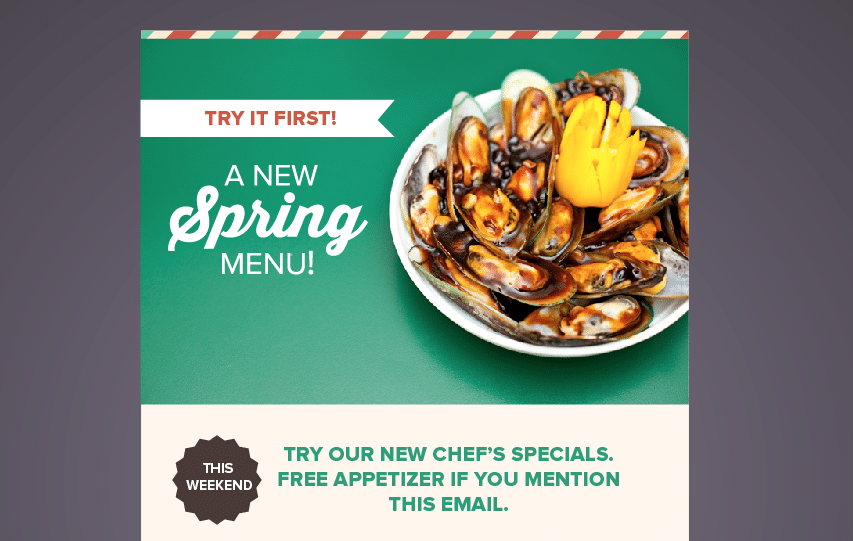
- New menus: If you launch a new menu let your customers know in an email.
- Promotions: Include limited-time promotions in your emails where customers will get a deal if they show the email or use a code and check out.
- Special hours: Send out an email whenever you change your hours or offers to keep customers informed.
- Events: Let your customers know what events you have planned and how they can sign up.
- Contests: Encourage diners to get involved with your brand by running contests with real (edible) prizes.
- Birthdays: Collect customers’ birthdays when you get their email addresses so you can send them a special birthday message with an exclusive deal.
- Feedback: Invite your customers to share feedback about their experience at your restaurant.
These days, the average consumer is getting dozens of emails from businesses every day. While emails allow you to reach customers on their devices whenever you like, you have to be careful about how frequently you communicate. As a restaurant, it’s best practice to send only one email a week. You can even make your communication monthly if you are running a newsletter.
Successful email marketers are acutely aware of the 80/20 rule: roughly 80% of customer actions (opens, clicks, orders, etc.) come from roughly 20% of your customer subscribers. Not even the most influential brands expect a 100% open rate, let alone a high click through rate.
The average email open rate in the restaurant industry is 20.26%, so don’t expect every subscribed customer to be engaged. However, even if a diner doesn’t open your email, receiving messages from your restaurant increases brand awareness.
Drive traffic to your restaurant website
Email marketing is just one ingredient in crafting the perfect online marketing strategy. All elements of your digital marketing strategy should work together. Think of your marketing channels as a web – all intertwined to encourage diners to place an order.
You should link to your restaurant’s website, social media profiles and online ordering platform in your emails. Place an email signup form on your website to encourage curious customers to become subscribers. You can even offer a promotion to incentivize diners to enter their emails on your website.
Check out this website pop up that incentives customers to sign up for an email newsletter:

Increasing your restaurant’s online presence helps your restaurant stay relevant in the modern world. Your restaurant’s website should showcase your brand while giving a clear avenue for action.
Don’t have an online ordering platform? Try Direct, a commission-free online ordering platform that can be custom branded for your restaurant. Including an online ordering link in your digital marketing materials allows you to convert curious online visitors to paying customers.
How to start a successful restaurant email marketing program
Setting up email marketing does not have to be complicated. Check out our guide to affordable digital marketing tools for more tips on how to create engaging content.
We’ve broken down three simple steps you can take to get your first email campaign off the ground.
Choose your software
First, you need to choose an email service provider. Conveniently, most email marketing services offer a free trial period, so spend some time testing platforms before spending a dime.
Your restaurant is unique, and your emails should be as well. Look for a platform that allows for easy customization and lets you “drag and drop” elements to create the perfect template.
Email solutions should also provide reports showing how many people subscribe, unsubscribe and forward your emails to friends, so you can evaluate the success of your campaigns. The best email marketing software also gives you the ability to segment your subscriber list. That way you can send out specifically targeted emails to first-time diners, regular customers and everyone in between.
A few popular services are MailChimp, YesMail and ExpressPigeon.
Collect customer emails
Once you have an email solution set up, it’s time to collect customer email addresses for your restaurant email marketing campaign. Add new subscribers by placing opt-in links on your website and social media feeds encouraging people to subscribe for deals and regular updates. You can also post QR codes around your restaurant or at the bottom of your take out menu for an easy way to sign up.
Take advantage of email forwarding, the digital version of word-of-mouth, by creating incentives to pass along your emails, such as a free appetizer if a customer refers to a friend. Offline, ask customers to provide their email address on comment and response cards or place a fishbowl on your counter to collect signup slips and business cards.
Keep track of how you get customers’ emails so that you can segment your audience. Market segmentation is the process of dividing your customers into groups based on shared characteristics. Segmenting your audience can help make sure your emails resonate with those they are targeting. Segmenting your audience based on factors like where they order (online or in-person), engagement (how often they click on your emails) or loyalty (how often they order) allows you to curate more relevant content so you get better open and click rates.
Craft your content
As the heart of your email campaign, your email content needs to be engaging and informative. Use a consistent layout to keep your planning time to a minimum and make your emails easier for customers to read.
Personalize your emails as much as possible. If you have multiple restaurant locations, segment your subscribers into lists and tailor emails by location. Use software that can insert first names into each separate email, and send customers special emails, such as their birthday. The more personalized you can be with emails, the less likely they are to end up in the trash.
You can also automate email streams with software like ActiveCampaign to map out what emails you want to send in a particular order. This way you can batch email content in a chronological order so that none of your customers miss out on your offerings – it doesn’t matter when they subscribe.
It’s good practice to keep emails short and sweet. The average person only spends 10 seconds looking at an email, so you want to design your email to quickly catch the attention of diners. It starts with an attention grabbing subject line. Your subject line should hint at the content in your email, intriguing readers to learn more. Organize your email content with the most urgent information at the top. All important and eye-catching information should fit on users’ screen before they scroll.
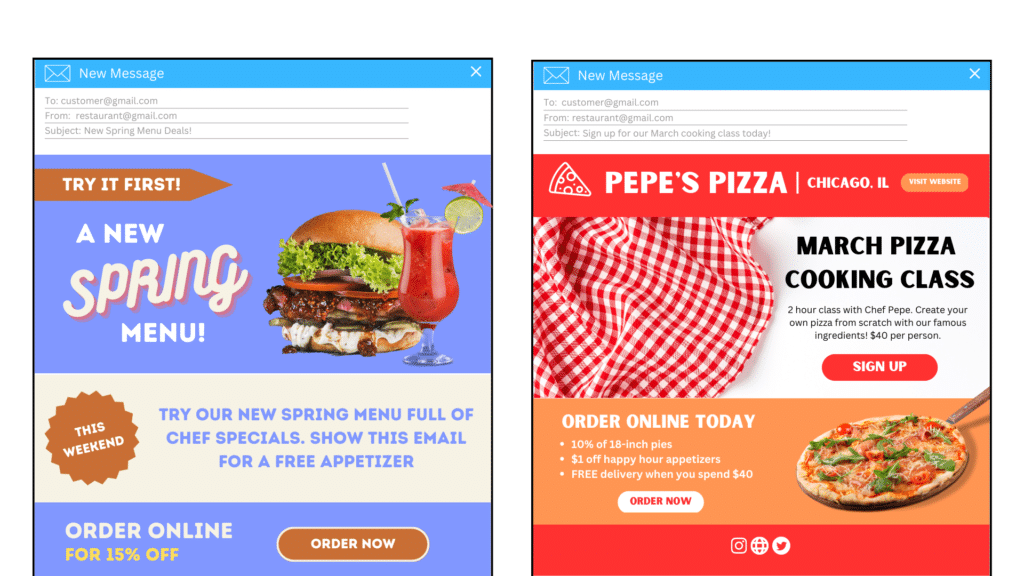
Last but no least, consider using the following restaurant promotion ideas a recurring theme in your emails:
- Deals and daily specials
- Upcoming events
- Changes menu
- “Instagram of the Week” – highlight your food in action by including a customer-submitted photo from Instagram
- “Tweet of the Week” – recognize your active Twitter followers by calling out a positive or humorous Tweet mentioning your restaurant
- customer reviews
Think of your emails as a small part of your digital presence. Make sure you plug in your restaurant’s online ordering site, website and social media platforms in all your emails to remind customers of where they can find out more about your business. Giving channels for customers to learn more about your restaurant helps ensure that their journey with your restaurant continues.
Upgrade your marketing strategy with Grubhub
Taking your marketing strategy to the next level is a lot easier with a dedicated partner by your side. That’s where Grubhub comes in. At Grubhub, we are dedicated to helping you grow your digital presence by offering tools like Marketplace, promotions, POS integrations and Direct.
Direct is a commission-free online ordering platform available to all Grubhub partners. With Direct, you own your customers’ data. That can mean their emails as well. You can leverage this customer data to increase customer loyalty, driving your bottom line.
Ready to increase your digital reach and gain more customers? Partner with Grubhub today.