
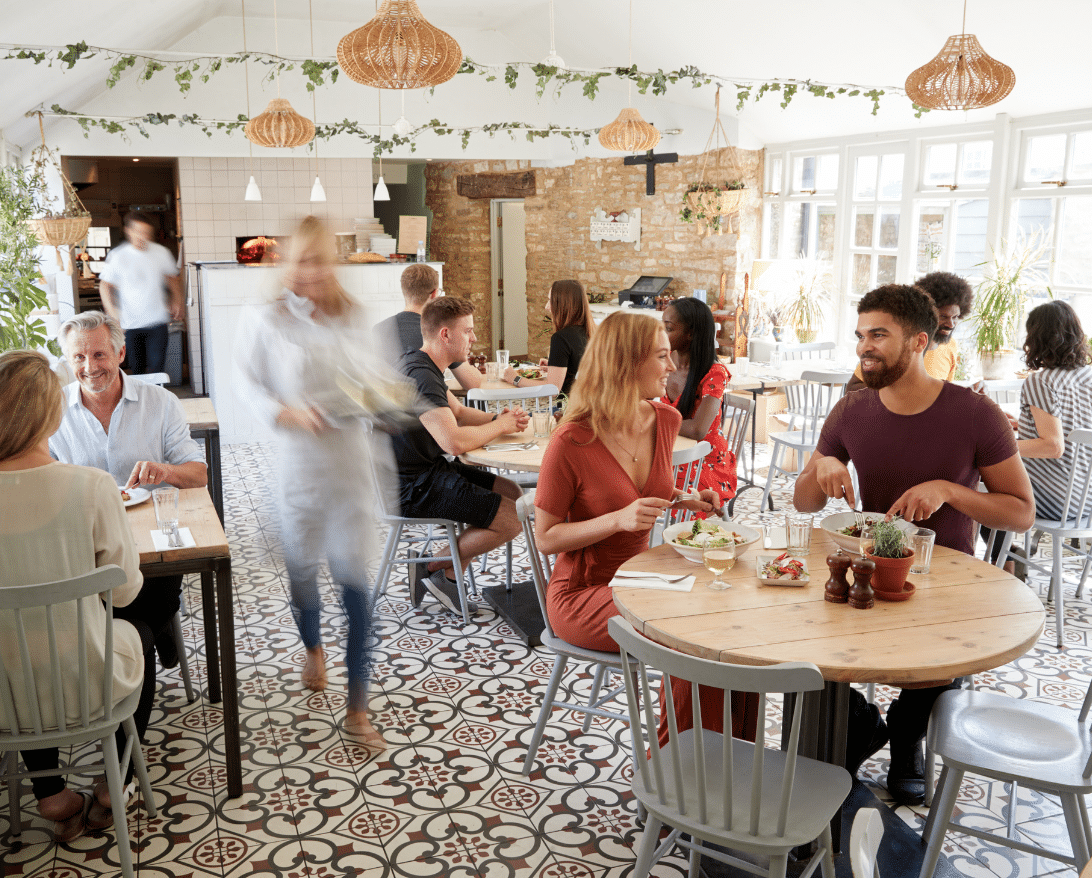
An all-inclusive guide to restaurant branding
The food-service industry is both competitive and crowded; new establishments enter the market every day. In this environment, strong restaurant branding is a must. Well done, it can help your business stand out from the crowd and build customer loyalty.
What is restaurant branding?
Restaurant branding is the process of creating a recognizable identity for your restaurant. A great brand is both visual and experiential; it encompasses the different ways customers interact with the company. This includes visual components, such as your logo design, menu layout and signature colors, as well as big-picture elements, such as the brand voice and core values.
Branding helps you carve out a place for your restaurant in a challenging industry. It communicates how your establishment is different from competitors so customers can make an informed choice.
Think about the most popular restaurants you know — chances are, they have strong brand identities. That’s because successful restaurant branding comes with a few key benefits:
- Easier customer acquisition. A strong identity builds brand awareness and recognition, ensuring potential customers know about your restaurant and understand your unique selling proposition (USP). This familiarity increases the chances that diners will choose your establishment for their next meal.
- Higher customer retention rates. After a customer dines at your restaurant, your branding reminds them of the experience and encourages them to come back for more. Because it’s cheaper to retain existing customers than to find new ones, this perk can boost your bottom line.
- Better brand loyalty. When your brand messaging resonates deeply with customers who share the same values or preferences, it can build long-lasting brand loyalty. Loyal customers are more likely to try new foods, attend events and spend more money at your business.
- Consistent customer experience. When your branding is clear across all touchpoints, guests know they can rely on you to deliver a consistent experience. This can give your restaurant a competitive advantage when customers are in the mood for something specific.
- Increased order volume and revenue. If a customer loves your brand, they’re more likely to share it with friends and family. In many cases, a personal referral is all it takes to convince a new customer to try your restaurant.
- Easier hiring. A recognizable brand helps attract job seekers who fit your restaurant’s personality and values — a big advantage when it comes to hiring and retaining employees.
How to build a brand in the restaurant industry
Next to creating the menu, building a strong brand identity is one of the most impactful things you can do as a restaurant owner. Take your time with each step — an intentional, thoughtful process helps you get it right on the first try.
1. Research your target audience
Restaurants get nearly all of their business from dine-in customers and delivery orders. To succeed, your brand must meet the needs of the local market.
To start, determine how many of your customers are:
- Local residents
- Just passing through
- Tourists in the city or region
Then, break down each group into different demographics. How old are they? Why are they dining out? What are their dietary preferences? What are their priorities? What food do they like?
The more you know about your target audience, the easier it is to identify what they look for in a restaurant brand. Local health-conscious diners might want fresh ingredients, while college students are likely to prioritize price. People who are just passing through probably want a convenient location and fast service.
2. Define your restaurant brand
This is the most important step in the restaurant branding process: defining your brand. Your goal is to distill your business ideas into a clear, concise concept. Start by identifying key elements:
- Mission. This statement describes what your restaurant does. For example, the mission of sweetgreen is “building healthier communities by connecting people to real food.”
- Vision. A vision statement explains what you want your restaurant to achieve in the future. It gives your brand something to strive for.
- Brand values. These are the core beliefs that inform all your business decisions. For example, Chipotle’s brand values include “making food fresh every day,” “fighting for our planet” and “treating our people right.”
- Unique selling proposition. Your USP is the element that distinguishes you from competing restaurants in your area. It should be something that benefits customers, such as a unique atmosphere, new cuisine or fast service. Think about what sets your restaurant apart.
- brand positioning. This concept refers to how you position your brand to affect customer perception; it’s directly connected to your USP. You might position yourself as the go-to spot for healthy lunchtime takeout or the most romantic date-night restaurant in town. Think of how your restaurant will serve customers.
- Concept. A restaurant concept defines the overall theme, atmosphere and service type. This will help you when you start physically planning your restaurant.
- Signature dishes or ingredients. Identify the foods that will be the stars of your menu. This might include the chef’s specialty dishes, a unique local ingredient or seasonal ingredients.
- Aesthetic. Describe how you want the restaurant branding to look. It might be clean and modern, bold and colorful, or cozy and earthy.
It’s not uncommon to discover areas of overlap between different restaurant branding ideas. If you’re opening the only counter-service spot in town, for example, your restaurant concept might also be its USP.
3. Develop your brand identity
Now that you have a clear understanding of your restaurant brand, it’s time to create a brand identity — the elements that help customers recognize your company.
First, develop a strong foundation:
- Brand name. This is the name of your restaurant. It often conveys something specific about your location, personality, style or cuisine.
- Brand personalities. List the characteristics of your restaurant to explain the vibe and diner experience. You might use words such as fun, sophisticated, youthful, innovative or healthy.
- Brand voice. Your brand voice is the way you use words to express the restaurant’s personality in marketing materials, menu descriptions and customer communications. Consider your tone, vocabulary choices and style. A trendy bistro might use slang terms, and if you run a cozy local coffee shop, you could write as though you’re speaking to a friend.
- Brand stories. Write a short narrative that explains your restaurant’s origins, mission, vision and values. Keep this handy so you can add an “about us” section to your restaurant’s website further down the line.
Finally, it’s time to create the most recognizable part of a brand: the visual elements. These are the things that create the look and feel of your brand. At a minimum, you should:
As you develop these visual brand elements, ensure each one reflects the intangible elements of your restaurant — namely, its personality and style. If you’re building a fun, family-friendly restaurant, you can use playful fonts, bold colors and saturated food photos on the menu. A fine-dining establishment might opt for script fonts, a sparse menu design and black-and-white photos.
For a restaurant, interior design is an extension of the brand’s visual identity. It should match the overall aesthetic of your logo, fonts and colors to create a cohesive brand image and a consistent experience.
4. Create a restaurant branding strategy
The last step in restaurant branding is getting your new brand in front of your target audience. Use a variety of marketing tactics to build name recognition and awareness.
- social media Build profiles on popular social media apps like Facebook, Instagram and TikTok. This is one of the best ways to directly connect with customers and introduce them to your brand. Use your visual identity elements wherever possible to help customers recognize your brand. Individual posts are a great place to showcase and refine your brand voice.
- Email marketing. Collect email addresses from your guests and/or buy access to local mailing lists. Send marketing emails to promote specials, new menu items and events.
- Influencer marketing. Pay local micro food influencers to promote your restaurant to their blog readers and social media followers. Social media influencers can have a direct impact on growing your brand’s reach.
- Online ordering. Build visibility among local diners by putting your restaurant on an online ordering platform such as Grubhub. This will give your restaurant instant access to a large cohort of customers.
Branding best practices
Restaurant branding is different for every company; your brand strategy should be tailored to your business, food and guests. To build a successful restaurant brand, use these best practices:
- Create brand guidelines to maintain consistency for visual elements and food photos.
- Make sure your messaging is clear and consistent from channel to channel.
- Build brand integrity with friendly, helpful customer service.
- Respond to customer comments and reviews using your brand voice.
- Share your brand story on social media accounts.
- Post regularly on your blog and social media to increase brand awareness.
- Hone in on your company’s unique qualities to develop a one-of-a-kind brand.
- Add branding elements to your to-go and delivery packaging.
By following these tips you can design a restaurant brand that will strongly resonate with customers and grow your ROI.
Grow your brand with a trusted partner
The more exposure customers have to your restaurant branding elements, the more familiar they become. Your delivery partner can be a valuable asset — a reputable platform like Grubhub gets your restaurant and menu in front of customers who are actively looking for new places to eat. Sign up today to start increasing order volume and building brand awareness.

FY2024 EPS Estimates for Host Hotels & Resorts, Inc. Raised by Analyst (NASDAQ:HST)

Host Hotels & Resorts, Inc. (NASDAQ:HST – Get Rating) – Zacks Research increased their FY2024 earnings estimates for shares of Host Hotels & Resorts in a note issued to investors on Thursday, June 22nd. Zacks Research analyst N. Dass now anticipates that the company will post earnings per share of $1.87 for the year, up from their previous estimate of $1.86. The consensus estimate for Host Hotels & Resorts’ current full-year earnings is $1.91 per share.
HST has been the subject of several other research reports. Morgan Stanley upped their price objective on shares of Host Hotels & Resorts from $18.00 to $19.00 in a research report on Friday, May 12th. StockNews.com started coverage on Host Hotels & Resorts in a report on Thursday, May 18th. They issued a “hold” rating for the company. Citigroup lowered their price objective on Host Hotels & Resorts from $22.00 to $21.00 and set a “buy” rating for the company in a research note on Friday, March 3rd. Wells Fargo & Company cut their price target on shares of Host Hotels & Resorts from $21.00 to $18.00 and set an “overweight” rating on the stock in a report on Thursday, March 30th. Finally, Compass Point upgraded Host Hotels & Resorts from a “neutral” rating to a “buy” rating and set a $22.00 price objective for the company in a report on Friday, May 5th. Three equity research analysts have rated the stock with a hold rating and seven have given a buy rating to the company. Based on data from MarketBeat.com, the company has an average rating of “Moderate Buy” and an average price target of $20.86.
Host Hotels & Resorts Trading Down 1.6 %
HST stock opened at $16.24 on Monday. The company has a debt-to-equity ratio of 0.61, a current ratio of 5.44 and a quick ratio of 5.44. The company has a fifty day moving average price of $17.10 and a two-hundred day moving average price of $16.46. Host Hotels & Resorts has a one year low of $14.51 and a one year high of $19.76. The stock has a market cap of $11.55 billion, a price-to-earnings ratio of 14.50 and a beta of 1.29.
Hedge Funds Weigh In On Host Hotels & Resorts
Several hedge funds have recently modified their holdings of the stock. Ronald Blue Trust Inc. increased its position in Host Hotels & Resorts by 96.7% during the fourth quarter. Ronald Blue Trust Inc. now owns 1,617 shares of the company’s stock valued at $25,000 after acquiring an additional 795 shares during the last quarter. Allworth Financial LP lifted its stake in Host Hotels & Resorts by 82.3% in the first quarter. Allworth Financial LP now owns 1,506 shares of the company’s stock worth $25,000 after acquiring an additional 680 shares during the period. GPS Wealth Strategies Group LLC purchased a new stake in Host Hotels & Resorts in the first quarter worth about $26,000. Brown Brothers Harriman & Co. lifted its stake in Host Hotels & Resorts by 1,921.5% in the first quarter. Brown Brothers Harriman & Co. now owns 1,314 shares of the company’s stock worth $26,000 after acquiring an additional 1,249 shares during the period. Finally, Belpointe Asset Management LLC lifted its stake in Host Hotels & Resorts by 66.2% in the first quarter. Belpointe Asset Management LLC now owns 1,871 shares of the company’s stock worth $31,000 after acquiring an additional 745 shares during the period. Hedge funds and other institutional investors own 97.92% of the company’s stock.
Insider Transactions at Host Hotels & Resorts
In related news, Director Walter C. Rakowich sold 3,688 shares of the business’s stock in a transaction that occurred on Monday, June 5th. The shares were sold at an average price of $17.47, for a total transaction of $64,429.36. Following the completion of the sale, the director now directly owns 58,616 shares in the company, valued at $1,024,021.52. The sale was disclosed in a document filed with the Securities & Exchange Commission, which is accessible via this link. Company insiders own 1.20% of the company’s stock.
Host Hotels & Resorts Increases Dividends
The business also recently declared a quarterly dividend, which will be paid on Monday, July 17th. Stockholders of record on Friday, June 30th will be paid a $0.15 dividend. The ex-dividend date of this dividend is Thursday, June 29th. This is a positive change from Host Hotels & Resorts’s previous quarterly dividend of $0.12. This represents a $0.60 dividend on an annualized basis and a dividend yield of 3.69%. Host Hotels & Resorts’s payout ratio is currently 53.57%.
About Host Hotels & Resorts
(Get Rating)
Host Hotels & Resorts, Inc is an S&P 500 company and is the largest lodging real estate investment trust and one of the largest owners of luxury and upper-upscale hotels. The Company currently owns 72 properties in the United States and five properties internationally totaling approximately 41,900 rooms.
Further Reading
Receive News & Ratings for Host Hotels & Resorts Daily – Enter your email address below to receive a concise daily summary of the latest news and analysts’ ratings for Host Hotels & Resorts and related companies with MarketBeat.com’s FREE daily email newsletter.

Your guide to creating a restaurant membership program
As a restaurant owner or operator, you know customer retention and loyalty can help your business thrive over the long term. If you’re looking for a new way to encourage repeat business and build a community, consider one of the newest trends in the food-service industry: restaurant membership programs.
What’s a restaurant membership program?
In a restaurant membership program, your customers pay a one-time or recurring fee to gain instant access to exclusive perks or discounts. The benefits vary by restaurant but might include free delivery, food discount codes or invitations to special tasting sessions.
Think of a membership program as a paid version of a traditional loyalty program. Because you collect membership fees, you can afford to provide more valuable perks.
Your restaurant benefits, too. The program creates an additional revenue stream that’s both steady and predictable. Assuming membership stays high, this extra cash flow can create a financial cushion that protects your business against volatility in the industry. And when diners are paying for memberships, they’re more likely to visit frequently to maximize the benefits. This builds loyalty and boosts order volume.
Are restaurant memberships here to stay?
Although membership in a restaurant might seem like a novel idea, the concept isn’t new. Businesses, including Costco, Peloton and Amazon Prime, have been using the subscriptions model successfully for years.
Dining memberships are still an emerging trend. In 2022, PF Chang’s introduced Platinum Rewards. In return for a $6.99 monthly fee, members enjoy benefits such as VIP concierge access, free delivery and extra reward points. Panera Bread’s $11.99-monthly Unlimited Sip Club comes with free delivery and a selection of free drinks.
It remains to be seen whether restaurant subscriptions are sustainable. After all, the perks come at a cost, and there’s always the risk that customers will cancel the membership unexpectedly. Taco Bell manages this uncertainty by offering its Taco Lover’s Pass sporadically and only for limited periods of time.
Memberships and subscriptions may become an industry staple, but only if restaurants see an adequate return on investment. Independent establishments experimenting with the model have expressed optimism, but they also emphasize the need to control labor and ingredient costs.
How to build a membership program into your customer retention strategy
With a sustainable price point and the right benefits, a membership program can be an effective way to increase your revenue and customer retention rates. Successful memberships are strategically designed to suit your restaurant’s margins, clientele and menu.
1. Choose member benefits
Restaurant membership programs are all about the benefits. To start, figure out what you can offer customers that’s worth the monthly or yearly fee. Consider common perks:
- Free delivery
- Free drinks, sides or dessert
- Priority reservations
- event invitations
- Members-only tasting events
- Dedicated support channel
- Input on new menu items
- Meal kits
- Special monthly takeout meals
If you already have a loyalty program, you might consider adding a premium tier with extra points for each purchase or more valuable reward options.
When choosing benefits, don’t be afraid to get creative. For inspiration, look to the take-care-of-me club at the El Lopo bar in California. When a member arrives, employees automatically bring drinks and dishes that are hand-picked based on the customer’s unique preferences. Members also get free event entrance and the option to try any wine by the glass instead of buying a full bottle.
It’s important to choose perks that are cost-effective for you and valuable to customers. For example, El Lopo gives its members discounted cases of wine — in essence, passing on the restaurant’s wholesale discount. It doesn’t cost the business extra, and customers get access to a perk that’s hard to find elsewhere.
2. Set membership pricing
Once you have a list of potential perks, decide how much you’ll need to charge to make the program worthwhile. The goal is to set a price that’s attractive to customers and beneficial for the restaurant.
Keep in mind that while it’s nice to make a profit on a membership fee, that’s not the only goal; you’re also trying to increase order volume and encourage repeat business.
Say you charge a membership fee of $85 per month and give customers a $100 dining credit plus other benefits that are free for your restaurant, such as priority access to reservations or VIP seating. You lose out on $15, but you also gain a guaranteed $85 in revenue that you might not have gotten otherwise.
Your overall revenue will probably rise as well. McKinsey found that when members pay to join this type of program, they’re 60% more likely to increase their spending at the business.
3. Issue membership cards
Remind guests of their special status by issuing a membership card to everyone who signs up. You can opt for a physical card, a digital card or both. Digital cards are convenient; a physical card is a clever way to keep your restaurant at the top of customers’ minds. When a member glimpses the card in their wallet, it reminds them of their benefits. This small nudge can motivate customers to choose your restaurant instead of a competitor.
The importance of customer experience
The customer experience is a big factor in the success of a restaurant — especially when you cater to locals rather than tourists. A positive, rewarding experience keeps diners coming back. The more you can do to improve guests’ interactions and visits, the easier it is to boost loyalty and retention.
Done well, a restaurant membership program enhances the customer experience. It makes members feel like part of a community, and the perks provide value diners can’t get anywhere else. You can enhance these positive feelings by:
- Greeting members by name
- Remembering members’ preferences and providing personalized food and drink recommendations
- Hosting members-only discounts and customer appreciation events
- Introducing members to chefs and managers
To ensure members have a great experience whether they’re dining in or ordering out, extend the program benefits to your delivery platform. With Grubhub’s promotions and loyalty tools, it’s easy to set up a rewards system that operates automatically.
How to encourage diners to sign up for your loyalty program
When your membership program is ready to launch, it’s time to start marketing it to customers. Promote the membership incentives on your:
Each time you mention the program, let customers know how they can sign up. Consider adding a small sign to each table with a QR code; diners can join before they place their orders and start using their benefits right away.
Want to build a buzz? Offer the first memberships to a select group of regulars. This strategy creates a sense of exclusivity — and as word gets out, it’s likely to inspire curiosity and desire among other customers. Ask your first group for feedback about the program; you’ll give them a sense of ownership and encourage long-term participation. After you open the program to the public, you might offer special “founders” benefits to your original members as a thank you and an incentive to stay.
You can also use the customer data your restaurant collects to promote the program to past diners. Simply send out an email or text with a link to the sign-up page. If you use Grubhub for Restaurants or Grubhub Direct, your customer data is always available in the Customer Insights dashboard. Whether you run a national chain or an independent restaurant, Grubhub can help you promote your membership program to more customers. Ready to grow your business? Sign up for Grubhub today.
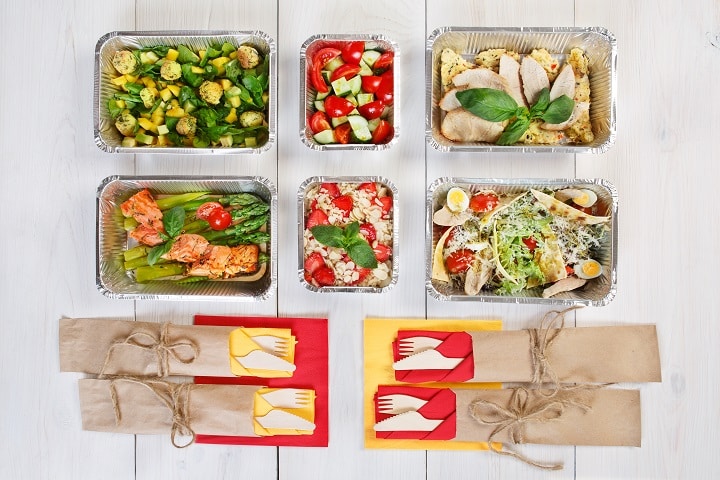
Preparing Restaurant Delivery for the Summer Months
Rain or shine, humidity or snow, food delivery is a year-round business. But for restaurants that offer delivery, the same rules that apply to winter meal transportation don’t always hold during the summer. That’s why it’s important to make sure you’re prepared for summer restaurant deliveries.
Food delivery in the warmer months presents new opportunities and challenges. Here are a few ways to capitalize on the sunshine and keep your delivery cool during the summer rush:
Create a summer delivery menu
The warmer months bring new seasonal ingredients, making it a great time to update your menu. Investigate what local ingredients are in season and feature them in your summer dishes. Many customers will be in search of summer menu classics like cold drinks, fresh fruit, barbecue and seafood. Adding light and fresh dishes to your menu can make your restaurant the go-to summer spot.
Run a summer promotion
Nothing gets a customer more excited to place an order than a good deal. This summer, take advantage of the summer rush by offering exclusive promotions that highlight your seasonal offerings.
Looking for ideas to promote your restaurant on social media? Consider using social media holidays to give customers a reason to celebrate your cuisine. Pick a holiday food that coincides with your menu offerings, and run a discount on that item to celebrate the holiday. On National Ice Cream Day (July 16), give out a free cone with every purchase. Posting about your promotions on social media using hashtags like #NationalIceCreamDay will help spread the word.
With more potential customers out and about, summer is a great time to double down on advertising. Emails, billboards, fliers, social posts and delivery inserts are all great ways to let diners know about your promotions.
Assemble a bike delivery staff
Sunshine and mild temperatures open up a whole new food delivery alternative: bikes. Consider augmenting your existing pool of delivery drivers with cyclists who can fulfill nearby orders. But when it comes to long-distance deliveries, sushi and smoothies still hold up better in an air-conditioned car than on two wheels.
When you partner with Grubhub, your restaurant can get access to our experienced drivers who can be trusted to get your dishes to customers safely. Learn more about how Grubhub delivery protects your restaurant’s reputation.
Stock up on the right packaging
In the summertime, food delivery packaging needs to control for seasonal variables such as humidity and scorching heat along with everyday challenges such as potholes and other road turbulence. When it comes to popular warm weather menu items – such as salads – make sure the delivery drivers are equipped with plenty of ice to keep the salads fresh. Similarly, you’ll want durable drink packaging on hand so cold beverages aren’t lukewarm by the time they’re delivered.
Take a look at these tips on how to select packaging that is both high quality and sustainable.
Accommodate catering delivery
For a lot of diners, summer means picnics in the park, backyard BBQs and neighborhood block parties. If you don’t already, now might be the time to offer food delivery for larger groups and event orders. Your restaurant can offer full-service catering for events, or opt for delivery and drop-off catering for a cheaper price. Adding catering to your restaurant is a great way to diversify your revenue this summer.
Before promoting this specific service, be sure to accumulate the right hot/cold packaging (and insulated travel bags or boxes) that can handle bulk orders.
Partner with a food delivery service provider
More likely than not, your existing delivery employees will be requesting time off this summer for their own vacations. By outsourcing your food delivery to a service provider like Grubhub, you can guarantee access to a steady stream of drivers whenever orders come through – and save yourself the scheduling headache.
Ready to reach new customers and grow your business with Grubhub? Signup today!
Get the Most Out of GrubHub Online Ordering
So you’ve implemented Grubhub online ordering to bring more orders and greater efficiency to your restaurant, but are you doing all you can to capitalize on your investment? Your Grubhub partnership comes with an array of best-in-class technology and tools to grow your business and reach new diners.
Here are seven tips and tricks on how you can make the most out of your restaurant’s Grubhub partnership.
1. Launch promotions
Did you know that restaurants can run their own promotions on Grubhub? Whether the goal is to introduce a new menu item, increase ticket sizes or generate loyalty, promotions catch the eye of value-driven diners. You can tap into loyalty tools to encourage customers to place repeat orders to receive an exclusive reward. The best part? Promotions can be added, changed or removed as you, the restaurant owner, see fit. Experiment with promotions and loyalty tools on Grubhub, and your diners might be checking out your menu more often to see what new offers are available that day.
2. Encourage online ordering through Direct
Modern diners flock online to get their next meal. Digital ordering and delivery have grown 300% faster than dine-in traffic since 2014. These days, diners expect their favorite restaurants to offer online ordering. That’s why many restaurants are turning to Direct, a commission-free online ordering platform. Direct is a branded online ordering platform that can integrate with your existing website. You can customize it to match your restaurant’s look and feel, and access customer data to improve sales. The best part? You won’t pay any additional fees whatsoever — all eligible Marketplace restaurants can join Direct free of charge.
3. Optimize delivery
According to our Grubhub data report, 63% of surveyed consumers report increased frequency of third-party restaurant delivery orders compared to pre-pandemic. Better yet, 90% of surveyed consumers expect increased usage going forward. Offering delivery at your restaurant is essential to capturing this demand.
Grubhub’s restaurant delivery service is perfect for restaurant owners who want professional, knowledgeable delivery drivers but don’t want to deal with the operational overhead of managing a delivery program including scheduling, insurance and tip-outs. For those who do delivery themselves, your Grubhub Account Advisor can help you optimize your fees, minimums and delivery zone to ensure you are attractive to local diners.
4. Streamline point-of-sale operations
Did you know that Grubhub can integrate with your restaurant’s point-of-sales (POS) or ordering system? Grubhub works with all kinds of technology providers to help streamline a restaurant’s ordering and fulfillment operations. Restaurants can increase efficiency by simplifying order throughput to a single system. This integration can help restaurants increase efficiency, update multiple menus in real time and streamline employee training. Streamlining your technology reduces clutter and makes managing your restaurant easier.
Check out what POS systems you can integrate with Grubhub.
5. Analyze your diner data
With online ordering from Grubhub, restaurant owners have detailed access to their order data. Through dedicated, secure accounts, restaurant owners can access their restaurant sales data from a tablet or computer. The customer insights dashboard gives insight into the online ordering habits of specific customer groups. Metrics such as month-over-month order volume allow owners and managers to review the restaurant’s performance, spot trends and identify new opportunities for growth.
6. Promote your online ordering link
Now that you have all the tools you need to process online orders, the last step is to spread the word. One of the best ways to reach customers directly is through social media. Creating and maintaining Instagram, Facebook and even TikTok accounts for your restaurant is a great way to get your cuisine in front of interested customers. Make sure to add a link to your restaurant’s online ordering site like Direct, Grubhub or your website to your social media bios.
You also want to make sure your restaurant is searchable on the web. Creating a website for your restaurant if you don’t have one, or optimizing your website to include a way to place an order is essential in establishing an online presence. 77% of consumers reported they are likely to visit a restaurant’s website before they dine in or order takeout and delivery. Including your online ordering link on your website can prompt customers to place an order. If you claim your restaurant on Google Business, you can customize what link diners are directed to when they look up your restaurant.
Grow your restaurant with Grubhub
At Grubhub, we understand that running a restaurant doesn’t come with a recipe. That’s why we are always looking for the best solutions to help restaurants grow. Whether you use Grubhub for delivery and pickup, or have customized your Direct site to get more commission-free orders, there are many ways you can get the most out of your Grubhub partnership. Is your restaurant not on Grubhub yet? Partner with Grubhub today to reach new customers and grow your business. Sign up now!

Boost deliveries and test new menu concepts with virtual restaurants
The pandemic changed the way customers order from restaurants. Offering delivery and pickup has become essential for restaurants to stay competitive, shifting the way we understand restaurant growth. This change has also led to the rise of a new type of restaurant: virtual restaurants.
Virtual restaurants have become one of the biggest growth opportunities in the industry. The virtual restaurant market is estimated to reach $1 trillion by 2030, proving this type of business to be a reliable avenue for growth. Virtual restaurants can launch in about a quarter of the time of a physical restaurant, saving you time and money.
Read on to learn what virtual restaurants are, then be sure to download the checklist to understand exactly how you can experiment with a new brand of cuisine while growing your delivery sales.
Demystifying The Virtual Restaurant
Also known as virtual kitchens, ghost kitchens or delivery-only restaurants, the virtual restaurant concept is actually quite simple.
They are delivery-only operations that accept orders solely online—through apps and websites like Grubhub. With no need for a brick and mortar location, the restaurant only exists online.
Restaurateurs can launch a virtual restaurant to experiment with a new menu concept, brand a subset of existing menu items or capture unique customer demands for particular food in the market. In this way, restaurants can open up a whole new “restaurant” without any additional expenditure on staff or rent.
Since all orders are placed digitally and delivered, customers don’t know (or care) that the restaurant is “virtual.” They may even be excited to try new concepts if they are put out by their favorite local restaurant. Their only concern is that the food tastes great, is easy to order and is delivered to their door.
Paving The Way To Your Own Virtual Restaurant
So what goes into creating a stellar virtual dining experience? Take a look at these steps you can follow to launch your own virtual restaurant.
Step 1: Choose Your Cuisine
Your menu can expand your existing offerings or be based on a subset of items from your current menu. You can even test out an entirely different concept—one that may even be completely different from your physical restaurant. With the data provided by Grubhub, you can even pinpoint what type of food customers are searching for, but not finding, within your delivery boundaries, and create a menu that fills that gap.
Once you’ve decided on what type of cuisine you want to serve, the next step is to engineer your menu. Explore how competitors price and market their cuisine, look into local diners’ ordering habits and decide how you want to source ingredients. You’ll need to compile data to calculate food costs, identify contribution margins and determine what menu items are likely to sell. After you’ve evaluated this data, the final step is to create menu prices. These prices don’t need to be set in stone – you should evaluate your business during the first few months of operations to optimize your menu.
Step 2: Create Your Brand
Now that you know what you want to sell, you need to brand your restaurant to build customer recognition. Your brand should reflect your virtual restaurant’s cuisine type and niche. Spend time deciding on brand assets like a name, logo, theme and photos – these things will be the first things diners see when they order from your restaurant.
Use your branding to convey your restaurant’s identity and distinguish it from competitors. Make sure you have a good understanding of your target customers before you finalize branding to ensure that your restaurant’s theme will resonate with them.
Step 3: Develop a delivery strategy
Virtual restaurants cannot function without delivery. Your virtual restaurant’s delivery fleet should be professional, timely and efficient. Because your restaurant doesn’t have a physical storefront, your drivers are the ones who will interact with customers. Ensuring you have the best drivers can make sure your brand is represented well.
Grubhub delivery can help take work off your plate by handling out-of-house services for your virtual brand. Grubhub delivery allows restaurants to expand their delivery boundaries and reach customers in a timely manner, giving diners real-time updates on their progress. Our fleet of over 300,000 drivers are experienced and professional, equipped with the right tools to make sure your cuisine reaches your customers.
Step 4: Launch Your Virtual Restaurant
So you think you’re ready to launch your virtual restaurant? Before you start cooking, make sure you have enough inventory to support your virtual restaurant staff. Your staff should be trained on how the virtual kitchen will operate, and you should have a plan on how your virtual restaurant will work in tandem with your brick and mortar location if applicable.
Launching your virtual restaurant is as simple as publishing your menu online. You can add an online ordering link to your restaurant’s website to start. Want to get your restaurant in front of eager diners instantly? You can list your virtual restaurant on a third-party delivery platform like Grubhub to get access to 33+ million customers. Listing your restaurant on Grubhub Marketplace makes it easy for customers to place an order right from any device via an app or online platform.
Grubhub partners also get access to Direct, a commission-free online ordering platform that is completely free to use. With Direct, you can list your virtual restaurant’s menu online and easily manage restaurant info from your existing Grubhub account. Direct can also integrate into your existing website, giving customers an easy way to place an order. And the cherry on top is that Direct collects customer data that you can download for free and use to better target your marketing efforts. Learn more about how Direct can help your virtual restaurant grow.
Step 5: Market your virtual brand
A virtual restaurant isn’t subject to the same street recognition as brick and mortar restaurants. Restaurants that don’t have a physical dining room need to put in extra effort to make their presence known. Simply creating a website isn’t enough to generate a customer base. You need to market your new brand to potential customers to make them aware of your offerings.
Your marketing strategy should be holistic – covering web, email, social media and good old fashioned word of mouth. Your restaurant’s website should contain all the necessary info about your brand, featuring the menu, hours, delivery method and how to order. Modern diners use social media to explore new cuisines. Create social media pages for your restaurant on popular platforms like Instagram, Facebook and TikTok to share your creations. Once you start getting customers, collect their emails so you can send them announcements, deals and promotions to prompt them to place an order.
Just because your restaurant doesn’t have a physical location that customers can visit doesn’t mean you can’t connect with your local community. Old fashioned forms of marketing like fliers, signs and press announcements are a great way to make your presence known to your neighborhood. You can even partner with local businesses to cater an event to grow awareness of your brand.
Finally, encourage your customers to leave reviews about your restaurant on your website, Google Business page or on Grubhub. Reviews are a great way to legitimize your restaurant, especially when you’re just starting out. Plus, positive reviews can serve as free marketing for your restaurant.
Making A Virtual Restaurant Work For You
There are many exciting advantages to opening a virtual restaurant in addition to your physical restaurant.
- Obtain High Rewards For Low Investment. Virtual restaurants are efficient and save money because they grow your business without increasing overhead costs.
- Grow Delivery Sales. You can open up new channels of revenue using the same amount of staff, space and resources by operating one, or multiple, virtual restaurants out of one physical kitchen.
- Reach New Customers. By branching out with a new concept, you can reach an entirely different customer base.
- Innovate and Lead. With little risk, you are free to experiment and test out what works to create successful concepts and satisfy needs in your particular market. Also, being able to change your menu on the fly without updating printed menus or signage allows you to be flexible and creative.
- Increase Digital Presence. By living online, your brand will get valuable exposure through the Grubhub website and mobile app.
Whether you want to increase delivery sales or experiment with a new restaurant concept, a virtual restaurant can help you reach your goals with low risk and high rewards. Learn more about opening a virtual restaurant. Ready to reach new customers and grow your business with Grubhub? Signup today!

How to start a restaurant
Opening a restaurant is a dream for foodies everywhere. As an owner, you enjoy full creative control over the menu, food quality and customer experience. Before you start a restaurant, however, it’s important to understand exactly what goes into the process.
So sit back, untie your apron and dig into the steps for opening a restaurant.
Steps to open a restaurant
Opening a restaurant is both exciting and complicated. From getting licenses to planning a menu and buying kitchen equipment, each phase requires patience and attention to detail. Use these steps to organize your plan of attack.
1. Decide on a restaurant concept
Your restaurant concept is the central idea or theme of the business. Typically, it involves two core elements: the cuisine you offer and the environment in which you serve it.
Popular cuisines include:
- italian
- Indian
- mexican
- chinese
- American
- sushi
- vegan
- BBQ
- Pizza
Once you know what kind of food you want to serve, it’s time to design the environment. Some common style and size options are:
- Diner
- Fast food
- fast casual
- Counter-serve
- Sit-downs
- ghost kitchen
- Fine dining
- Café/bistro
- Coffee shop
- Pubs
To crystallize your concept, summarize the idea into a sentence. For example, “a small fast-casual café serving espresso drinks and elevated comfort foods in a cozy setting.”

2. Build a restaurant business plan
Write a restaurant business plan that describes your operations, analyzes the market and identifies the target audience. It should also lay out the structure of the organization and make financial projections.
A well-researched plan is a roadmap for opening a restaurant — you can use it to guide every important decision, from choosing a location to setting the menu. Potential investors will use the plan to determine your potential for success.
When you’re opening a small restaurant, the business plan can be less complex. You might include fewer details about the organizational structure and focus primarily on the target audience and competitor analysis.
3. Secure restaurant funds
There’s no getting around it: It’s expensive to open a restaurant. Many owners need to seek funding to help cover the costs of rent, furniture, decor, equipment, insurance, licensing and labor.
Some common funding sources for restaurants are:
- Business loans
- Business lines of credit
- Financial support from family and friends
- External investors
- Crowdfunding
- Grants
Restaurant startup costs can vary considerably based on size, type, and location. One survey of restaurant owners reported that average totals range from $175,000 to $750,500. Another report estimated startup costs ranging from $95,000 to $2 million.
Owning a restaurant can be profitable. However, since profit margins are tight — usually ranging from 3% to 5% — you must control factors such as inventory tracking, ingredient selection and food waste.
4. Find a restaurant location
Location is one of the most important factors in a restaurant’s success. It determines everything from public perception to the customers you’re most likely to attract. A restaurant that’s highly visible and set in a convenient location may have an easier time than one that’s hidden away on a back street with no parking.
As you evaluate locations, consider these factors:
- Price
- size
- Layouts
- Available parking
- driving distance
- Proximity to public transportation
- Visibility from the sidewalk or road
- Ease of access
- Existing kitchen facilities
Think about your target audience, too. Where do they live? Will they walk or drive to the restaurant? What kind of environment do they prefer?
Use audience insights to guide your property search. If your goal is to be the local date-night hotspot, for example, you might prioritize a property with a beautiful view or an intimate vibe.
5. Obtain restaurant licenses and permits
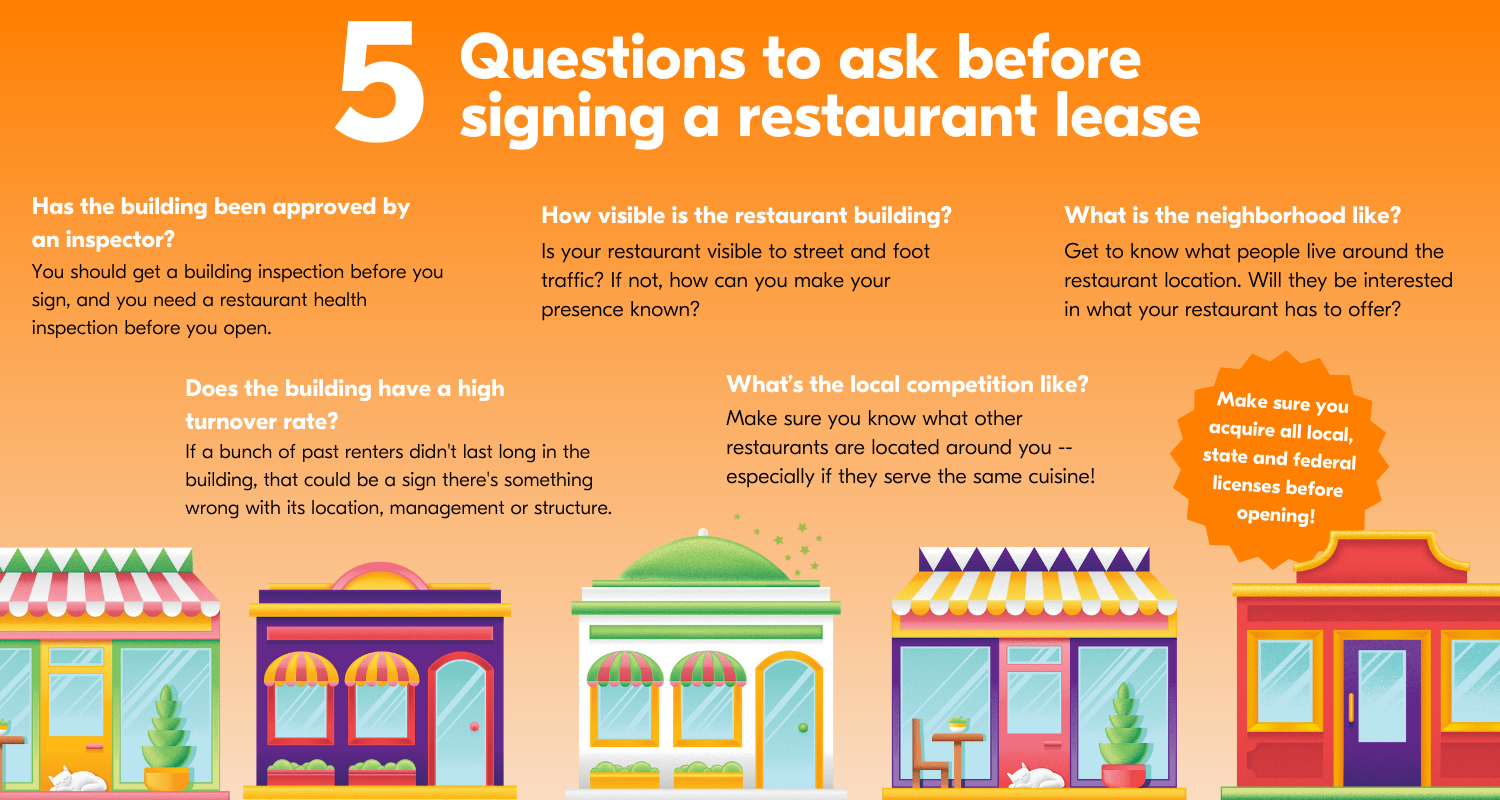
Every restaurant needs a license; it demonstrates to customers and officials that you know how to operate legally and safely. Restaurant licensing requirements vary based on your location and business and may be required by city, county, state, or federal regulations. Common licenses and permits include:
County/city
- Business license
- Food service license
- Food handler’s license
- Building health permit
- Certificate of occupancy
- Sign permit
state
Federal
6. Create your restaurant menu
Work with your chef to craft a menu. Most menus fall into five categories: static, cyclical, fixed-price, du jour and à la carte. As you choose dishes, consider these factors:
- Alignment with restaurant concept
- Popularity and competitive advantage
- Most important ingredients
- Ingredient availability and seasonality
- Prep time and complexity
- Costs and profit margins for each dish
- Food allergies and dietary preferences
When you come up with a short list of dishes, consider menu pricing; set prices that are acceptable to your target market but still enable you to make a profit. If certain items are too expensive for the restaurant concept, eliminate them from the menu.
At this point, you should have a final list of dishes. To design the menu, follow these tips:
- Separate dishes into categories.
- Allow plenty of white space.
- Highlight priority meals with bold fonts or graphic elements.
- Indicate items that are safe for allergies and dietary restrictions.
- Write applying descriptions.
- Take beautiful photos for your website and delivery menu.
7. Find restaurant equipment and food suppliers
With your menu in mind, find suppliers that can deliver the necessary ingredients on your required schedule. Build community and gain a competitive advantage by working with local suppliers to source high-quality foods with short delivery times. Other options include national wholesalers, catering suppliers, and commercial butchers, farmers, and fishmongers.
Then, purchase the necessary equipment for the restaurant. At a minimum, you’ll need appliances and furniture for:
- Food preparation
- Foodstorage
- Foodservice
- Guest comfort
- safety
- Cleaning
- trash collection
Equipment is a big investment, but you can buy used items to save money without sacrificing functionality.
Technology is another important consideration; it helps you market the company, process orders efficiently, and capture more delivery business. Most restaurants need a point of sale (POS) system, printer, cash drawer, payment processing technology, kitchen displays, and a mobile ordering system. Grubhub can streamline your tech stack — it integrates with many POS systems, so delivery orders flow right through to the kitchen.
8. Hire restaurant staff
Place job postings in local newspapers, on online job boards, and in social media groups. You can also reach out to professional contacts for referrals, especially when it comes to manager and chef candidates.
The number of employees you need depends on the size of the business. At a minimum, you should hire:
- general manager
- Chefs and/or cooks
- Dishwashers
- Hosts
- Bartenders
- Servers
- bussers
- Janitors
In small restaurants, the same people may fill several of these roles. Large or specialized restaurants may need additional staff members, such as a food and beverage manager, executive chef, pastry chef, sommelier and kitchen manager.
Onboarding is paramount for a new restaurant. With thorough orientation and training, workers can do their jobs with confidence and create a positive experience for customers. This is a great time to establish company values and traditions that minimize employee turnover: respect, fair and flexible scheduling, continuing education, staff safety and an inclusive environment.
9. Create a restaurant marketing plan
Marketing is critical for a restaurant startup. Done successfully, it builds a buzz and gets local customers excited to try your food. A marketing plan helps you stay on task and build brand awareness, even amidst the chaos of a grand opening. This document maps out your marketing strategy — what you want to achieve with your promotions, how you’ll do it, and how you’ll know it’s successful.
As you build a restaurant marketing plan, include these items:
- Description of the target audience
- Competitor marketing analysis
- Marketing objectives, such as building brand awareness or increasing foot traffic
- Marketing activities that achieve your objectives, such as social media campaigns or marketing emails
- Metrics to track the performance of marketing activities
For modern restaurants, a website is the most important marketing tool. It’s the core of your web presence; customers will visit to see the menu, look at photos and find opening hours. To drive additional business, consider adding a branded online ordering website with Grubhub Direct.
10. Host a grand opening
There are two phases to a restaurant opening: the soft opening and the grand opening.
During a soft opening, you invite a select group of people to try your restaurant. It’s a great time to get your staff up to speed, refine your operations and experiment with a trial menu to see how customers respond to different dishes. Before your soft launch, you should have a menu with prices, all necessary equipment and trained kitchen and front-of-house staff.
After you implement the lessons from the soft launch, you can plan the grand opening — the first day the restaurant is open to the public. Make sure to build excitement with advertisements, social media posts and influencer marketing. Create a sense of occasion by offering special treats to the first customers, setting up a photo background or planning live entertainment.
Invest in tools to grow your business
Getting to your restaurant’s grand opening takes time and effort, but the results are rewarding. With careful planning and an organized approach, you can set the business up for long-term success. Grubhub is here to support restaurant growth. Our solutions like professional delivery, direct online ordering, POS integration and virtual restaurant support can help get your new restaurant in front of eager customers. Want to learn more about how partnering with Grubhub can benefit your business? Try Grubhub free for 30 days.

This New Hotel on Long Island’s North Fork Has 200 Feet of Beachfront and a Heated Saltwater Pool
Hotel Moraine, North Fork’s newest boutique hotel, is all about family-friendly relaxation — and stunning ocean views from every room.

Courtesy of Hotel Morraine
North Fork, the 30-mile peninsula parallel to the Hamptons, is a food and wine lover’s paradise (there are more than 60 vineyards in the area). But the region, which is also home to many farms nestled among sunflower fields, craft breweries, and quaint oceanfront hotels, has also been a magnet for travelers seeking a quieter and more laid-back escape than what its more famous neighbors across the bay offer . And North Fork’s newest boutique stay focuses on exactly that — providing guests of all ages with a tranquil setting to relax, recharge, and explore.
Hotel Moraine, located in the historic village of Greenport on the Long Island Sound, is a 20-key property that debuted on June 5.
Courtesy of Hotel Morraine
Courtesy of Hotel Morraine
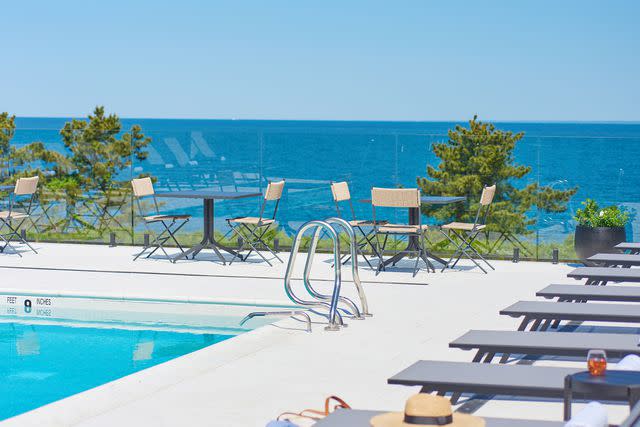
The two-story hotel, nestled on three beachfront acres of lush greenery and verdant lawns, draws inspiration from the North Fork’s farmhouses. The lobby, with its high ceilings and large glass walls, is reminiscent of a barn and houses the reception area, a shop and a bar serving everything from coffee and pastries in the morning to cocktails with freshly squeezed juice in the evenings. From there, guests can transition to the heated saltwater pool and covered deck with fire pits and unobstructed water views. Salads, lobster rolls, kid-friendly fare, and a curated selection of local wines (the property’s owners are behind Croteaux Vineyards, a nearby rosé farm) are on the poolside menu.
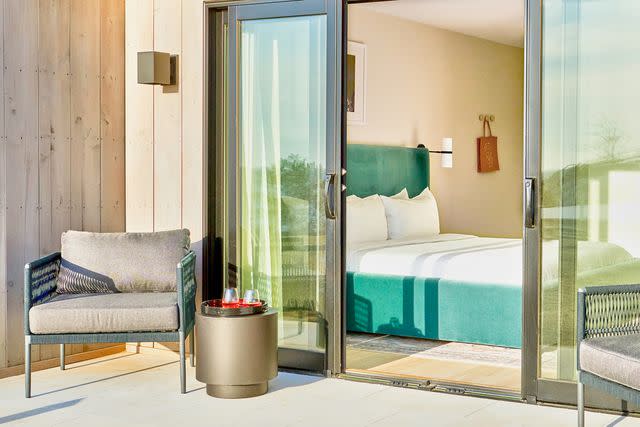
All 20 rooms come with water views, high-end decor touches, like custom rugs and cabinetry, spa bathrooms with soaking tubs or walk-in showers, Anatome toiletries, Bellino bed linens, plush Kassatex robes, and soothing coastal-inspired colors.
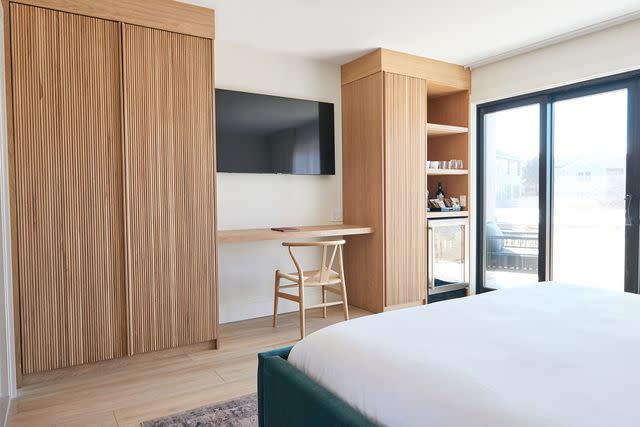
Courtesy of Hotel Morraine
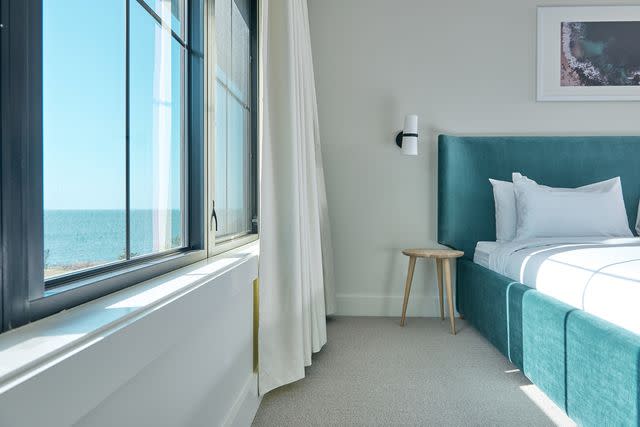
Courtesy of Hotel Morraine
Guests who’d like to stay active can head to the hotel’s gym, swim in the ocean (the property has 200 feet from beachfront), or get a stand-up paddleboard and explore the coastline from the water.
Greenport’s main drag is lined with vintage boutiques, antique shops, and family-owned restaurants, all within a short drive from Hotel Moraine. No car? The hotel has an in-house car for local drop-offs and pickups.
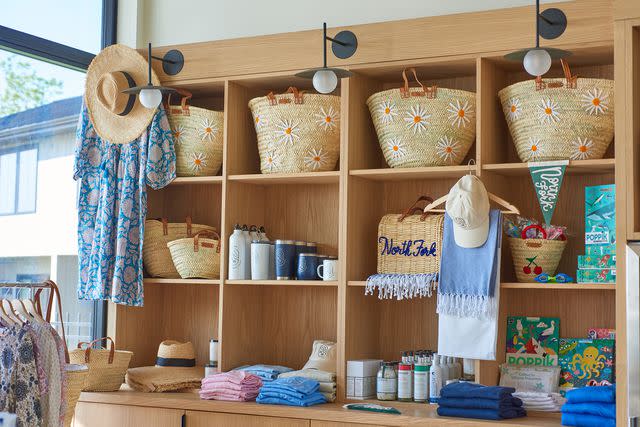
Courtesy of Hotel Morraine
Nightly rates at Hotel Moraine start at $350, and you can book your stay at hotelmoraine.com.
For more Travel & Leisure news, make sure to sign up for our newsletter!
Read the original article on Travel & Leisure.