
How restaurants can use email marketing
Nothing is more enticing than a crisp coupon to your favorite business. The idea that you can get your favorite items for less can motivate any customer to take action. The same applies to restaurant deals. One mouthwatering deal sent directly to a customer can prompt them to place an order.
What’s a guaranteed way to reach your customers? Email marketing.
Restaurant email marketing programs are a proven method of building customer loyalty. A well-timed email can bring in new diners and remind recent diners to return. Email marketing is worth the investment. For every $1 you spend on email marketing, you can expect an average return of $36. With a strong email marketing campaign you can sit back and watch your ROI flow in.
How can restaurants use email marketing?
There are hundreds of ways to market a restaurant, but email marketing has proven to be successful. why? Because you can send specific messages and offers to specific customers, personalizing the marketing experience. Getting diners’ emails allows you to communicate with people who are familiar with your brand and who are interested in continuing to dine with you. Sending an email reminds a customer of your offerings and encourages them to place another order.
What type of content should you feature in your restaurant’s emails? Here are some places to start:
- Newsletters: Send out a monthly newsletter featuring all your offerings for the month, including any holidays, events or days you will be closed.
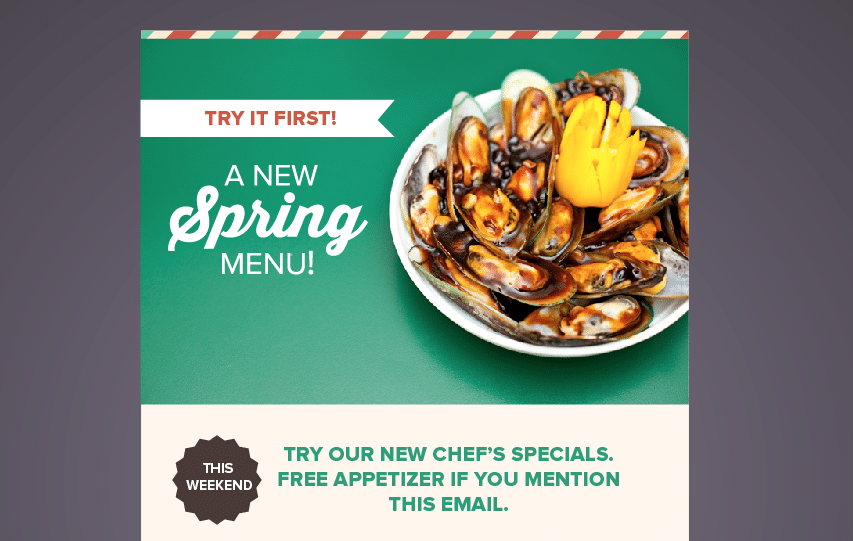
- New menus: If you launch a new menu let your customers know in an email.
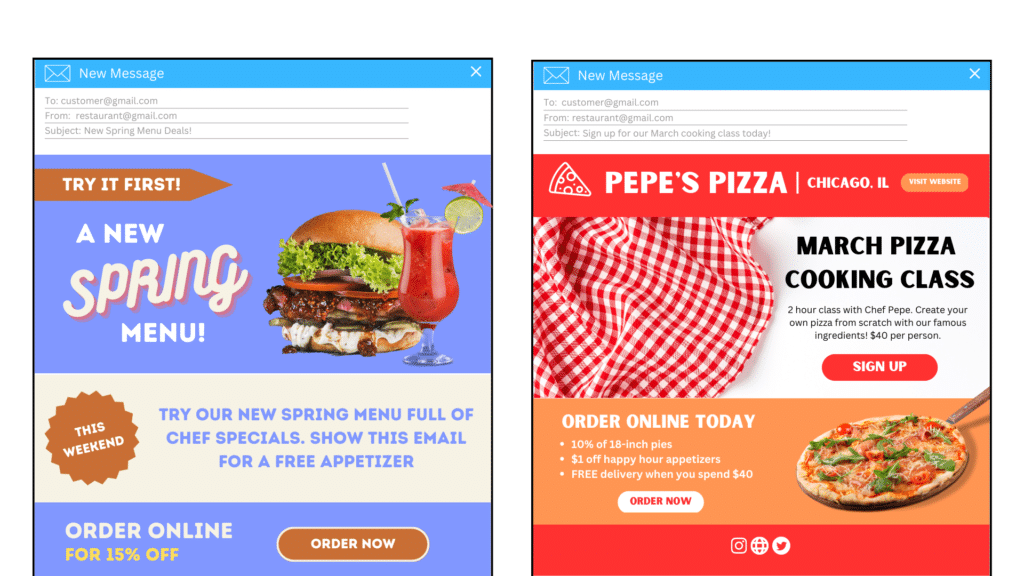
- Promotions: Include limited-time promotions in your emails where customers will get a deal if they show the email or use a code and check out.
- Special hours: Send out an email whenever you change your hours or offers to keep customers informed.
- Events: Let your customers know what events you have planned and how they can sign up.
- Contests: Encourage diners to get involved with your brand by running contests with real (edible) prizes.
- Birthdays: Collect customers’ birthdays when you get their email addresses so you can send them a special birthday message with an exclusive deal.
- Feedback: Invite your customers to share feedback about their experience at your restaurant.
These days, the average consumer is getting dozens of emails from businesses every day. While emails allow you to reach customers on their devices whenever you like, you have to be careful about how frequently you communicate. As a restaurant, it’s best practice to send only one email a week. You can even make your communication monthly if you are running a newsletter.
Successful email marketers are acutely aware of the 80/20 rule: roughly 80% of customer actions (opens, clicks, orders, etc.) come from roughly 20% of your customer subscribers. Not even the most influential brands expect a 100% open rate, let alone a high click through rate.
The average email open rate in the restaurant industry is 20.26%, so don’t expect every subscribed customer to be engaged. However, even if a diner doesn’t open your email, receiving messages from your restaurant increases brand awareness.
Drive traffic to your restaurant website
Email marketing is just one ingredient in crafting the perfect online marketing strategy. All elements of your digital marketing strategy should work together. Think of your marketing channels as a web – all intertwined to encourage diners to place an order.
You should link to your restaurant’s website, social media profiles and online ordering platform in your emails. Place an email signup form on your website to encourage curious customers to become subscribers. You can even offer a promotion to incentivize diners to enter their emails on your website.
Check out this website pop up that incentives customers to sign up for an email newsletter:

Increasing your restaurant’s online presence helps your restaurant stay relevant in the modern world. Your restaurant’s website should showcase your brand while giving a clear avenue for action.
Don’t have an online ordering platform? Try Direct, a commission-free online ordering platform that can be custom branded for your restaurant. Including an online ordering link in your digital marketing materials allows you to convert curious online visitors to paying customers.
How to start a successful restaurant email marketing program
Setting up email marketing does not have to be complicated. Check out our guide to affordable digital marketing tools for more tips on how to create engaging content.
We’ve broken down three simple steps you can take to get your first email campaign off the ground.
Choose your software
First, you need to choose an email service provider. Conveniently, most email marketing services offer a free trial period, so spend some time testing platforms before spending a dime.
Your restaurant is unique, and your emails should be as well. Look for a platform that allows for easy customization and lets you “drag and drop” elements to create the perfect template.
Email solutions should also provide reports showing how many people subscribe, unsubscribe and forward your emails to friends, so you can evaluate the success of your campaigns. The best email marketing software also gives you the ability to segment your subscriber list. That way you can send out specifically targeted emails to first-time diners, regular customers and everyone in between.
A few popular services are MailChimp, YesMail and ExpressPigeon.
Collect customer emails
Once you have an email solution set up, it’s time to collect customer email addresses for your restaurant email marketing campaign. Add new subscribers by placing opt-in links on your website and social media feeds encouraging people to subscribe for deals and regular updates. You can also post QR codes around your restaurant or at the bottom of your take out menu for an easy way to sign up.
Take advantage of email forwarding, the digital version of word-of-mouth, by creating incentives to pass along your emails, such as a free appetizer if a customer refers to a friend. Offline, ask customers to provide their email address on comment and response cards or place a fishbowl on your counter to collect signup slips and business cards.
Keep track of how you get customers’ emails so that you can segment your audience. Market segmentation is the process of dividing your customers into groups based on shared characteristics. Segmenting your audience can help make sure your emails resonate with those they are targeting. Segmenting your audience based on factors like where they order (online or in-person), engagement (how often they click on your emails) or loyalty (how often they order) allows you to curate more relevant content so you get better open and click rates.
Craft your content
As the heart of your email campaign, your email content needs to be engaging and informative. Use a consistent layout to keep your planning time to a minimum and make your emails easier for customers to read.
Personalize your emails as much as possible. If you have multiple restaurant locations, segment your subscribers into lists and tailor emails by location. Use software that can insert first names into each separate email, and send customers special emails, such as their birthday. The more personalized you can be with emails, the less likely they are to end up in the trash.
You can also automate email streams with software like ActiveCampaign to map out what emails you want to send in a particular order. This way you can batch email content in a chronological order so that none of your customers miss out on your offerings – it doesn’t matter when they subscribe.
It’s good practice to keep emails short and sweet. The average person only spends 10 seconds looking at an email, so you want to design your email to quickly catch the attention of diners. It starts with an attention grabbing subject line. Your subject line should hint at the content in your email, intriguing readers to learn more. Organize your email content with the most urgent information at the top. All important and eye-catching information should fit on users’ screen before they scroll.
Last but no least, consider using the following restaurant promotion ideas a recurring theme in your emails:
- Deals and daily specials
- Upcoming events
- Changes menu
- “Instagram of the Week” – highlight your food in action by including a customer-submitted photo from Instagram
- “Tweet of the Week” – recognize your active Twitter followers by calling out a positive or humorous Tweet mentioning your restaurant
- customer reviews
Think of your emails as a small part of your digital presence. Make sure you plug in your restaurant’s online ordering site, website and social media platforms in all your emails to remind customers of where they can find out more about your business. Giving channels for customers to learn more about your restaurant helps ensure that their journey with your restaurant continues.
Upgrade your marketing strategy with Grubhub
Taking your marketing strategy to the next level is a lot easier with a dedicated partner by your side. That’s where Grubhub comes in. At Grubhub, we are dedicated to helping you grow your digital presence by offering tools like Marketplace, promotions, POS integrations and Direct.
Direct is a commission-free online ordering platform available to all Grubhub partners. With Direct, you own your customers’ data. That can mean their emails as well. You can leverage this customer data to increase customer loyalty, driving your bottom line.
Ready to increase your digital reach and gain more customers? Partner with Grubhub today.
19 March food holidays for your restaurant to celebrate
Did you know 45% of US customers say they’ve tried a new restaurant after seeing a restaurant’s post on social media? That’s why it’s more important than ever to make sure your restaurant is establishing an effective social media strategy to grab customers’ attention. One great way to make your restaurant stand out online is to celebrate national food holidays on social media.
Take a look at these tips on how you can take advantage of food holidays this month and keep scrolling to get the full March calendar.
What are national food holidays?
National food holidays are micro holidays that center around a certain cuisine. They are often celebrated on social media and encourage diners to band together to show appreciation for everything from Oreos (March 6) to hot chicken (March 30). While these holidays don’t warrant a day off, they can still be fun to observe and celebrate. As a restaurant owner, a food holiday is the perfect excuse to offer an irresistible promotion that will encourage diners to place an order.
Why your restaurant should celebrate national food holidays
Everyone loves having something to celebrate, and restaurants can use food holidays to build excitement around their dishes. Food holidays are particularly popular on social media as diners go online to share what cuisine they’re celebrating. Acknowledging a food holiday on social media by using the holiday’s hashtag can instantly make your restaurant relevant to a wider audience.
Food holidays put specific dishes top of mind. When diners are craving waffles on International Waffle Day (March 25), you want them to turn to your breakfast menu to get their fix. Posting about your food can motivate diners to order from your restaurant. In fact, 53% of millennial TikTok users visited a restaurant after seeing it on the app. Incorporating food holidays in your social media strategy incentivizes hungry diners to check out your cuisine.
3 tips for marketing national food holidays
A successful food holiday marketing strategy begins with a strong digital presence. Modern diners flock online to discover new restaurants and place orders. Digital tactics are important for your restaurant marketing strategy.
To make your national food holiday celebrations as effective as possible, tie them into a larger restaurant marketing strategy that looks at the big picture, not just a single opportunity. A restaurant marketing strategy is a formal plan that documents, tracks and analyzes all your marketing efforts and activities.
1. Pile on promotions
Nothing motivates a diner to press ‘order now’ more than a discount. Rolling out promotions not only attracts more customers to your menu, but also encourages loyalty. Diners are more likely to place repeat orders if they think a restaurant has a good deal. In fact, 81% of consumers would switch restaurants if they saw a good deal. Your food holiday promotions can be the first thing that catches a potential customer’s eye.
Here are some promotion ideas that can get diners drooling for your dishes:
- Discount dollar amounts: On National Sloppy Joe Day (March 18), offer $1 off your sloppy sandwiches.
- Discounted items: Celebrate National Pound Cake Day (March 4) by offering 50% off a slice of pound cake when a customer purchases a coffee.
- Discount-themed ingredients: Celebrate National Oreo Day (March 6) by offering 20% off all Oreo flavored menu items.
- Free items with purchase: On National Banana Cream Pie Day (March 2) spread the sweetness by offering a free slice of banana cream pie with every entree.
When you partner with Grubhub, launching promotions is as easy as pie. Restaurants that partner with Grubhub gain access to free-to-use promotional and marketing tools that are proven to increase orders and customers.
With Grubhub’s Promotions and Loyalty Tools, you can:
- Run seasonal promotions to make the most of national food holidays
- Offer your customer the right discount at the right time
- Increase your ROI with our advanced technology and huge volumes of restaurant and customer data
2. Highlight online ordering
Getting customers excited about a food holiday is great, but unless you give them an easy avenue to place an order, all that momentum around your dishes will be lost.
Your restaurant’s website serves as the backbone of your digital presence. Your website should have all things a diner needs to know about your restaurant – this includes your menu, hours, location, story and an online ordering platform. Finding a platform that converts curious diners into satisfied customers can be difficult. That’s why restaurants are turning to Direct to reach more customers, drive online ordering and establish their advertising efforts with zero commission costs.
88% of restaurant operators stated a branded experience is very important for sales. With Direct, your restaurant can create an online ordering web page that’s designed and branded to match your existing restaurant’s look and feel. It can be easily integrated into your existing website (if you have one) or can act as your main site if need be. Learn more about how Direct can drive online ordering.

Once your website is up and running, you want to make sure it’s searchable. When potential diners search your restaurant on Google, your Business Profile is usually the first thing to pop up. Claim your restaurant’s Google Business Profile so that you can make sure it correctly displays your hours, address, pricing and website link. When your Business Profile features the correct info and links, it’s far more likely a customer will place an order or come in to check you out.
3. Get social
Nobody will know your restaurant is celebrating a national food holiday unless you spread the word. That’s where social media comes in. TikTok, Instagram and Facebook are all powerful places to establish a restaurant social media presence.
Looking for some tips to make your restaurant pop on social media? Try these ideas:
- Showcase your dishes by posting delectable photos and videos of them on national food holidays.
- Use trending hashtags like #NationalOreoDay or #NationalPotatoChipDay to reach a larger audience beyond your social media followers.
- Use local hashtags like #BostonFoodie or #NYCeats to connect with customers nearby.
- create a quiz about your dishes to boost engagement with your national food holiday promotions.
- Launch a contest with prizes that relate to your restaurant and die in with your national food holiday promotion.
It’s easy for restaurant owners’ plates to pile up, leaving little time to strategize about marketing. That’s why developing a social media calendar is essential for planning out how you will roll out your promotions.
A social media calendar is a way to organize your upcoming social media posts and promotions by date. Planning posts in advance gives you time to lay out promotions, batch content and solidify your menu to align with your offerings.
Check out these tips on how to market national food holidays on social media.
What social media holidays are coming next?
March brings the first tastes of spring, Mardi Gras beads and shamrocks. March also brings 19 food holidays for your restaurant to celebrate. Your restaurant can reserve a day this month to celebrate flapjacks (March 7), Ravioli (March 20) or Spanish paella (March 26). No matter what cuisine you’re celebrating, it pays to run a food holiday promotion.
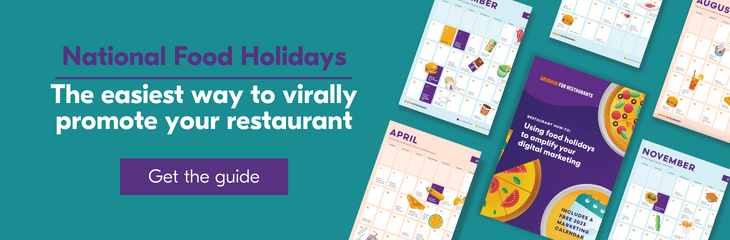
Download our Guide to National Food Holidays to learn how to spearhead your promotional marketing and elevate your digital presence. Use your new calendar to create a marketing plan or amplify your existing one. National food holidays could be your next step toward increased sales and a wealth of new customers.
March national food holidays
March is National Noodle Month and National Sauce Month.
- March 1: Mardi Gras
- March 2: National Banana Cream Pie Day
- March 3: National Cold Cuts Day
- March 4: National Pound Cake Day
- March 6: National Oreo Day
- March 7: National Flapjack Day
- March 9: National Meatball Day
- March 10: National Ranch Dressing Day
- March 13: National Chicken Noodle Soup Day
- March 14: National Potato Chip Day
- March 17: Saint Patrick’s Day
- March 18: National Sloppy Joe Day
- March 19: National Corn Dog Day
- March 20: National Ravioli Day
- March 21: National Crunchy Taco Day
- March 23: National Chip and Dip Day
- March 24: National Cheesesteak Day
- March 25: International Waffle Day
- March 26: National Spanish Paella Day
- March 30: National Hot Chicken Day

How to collaborate with micro influencers to grow restaurant sales
Social media can have a big impact on users’ food choices — scroll through Instagram food posts on an empty stomach and you’ll experience the effect for yourself. The power of social media suggestion is so strong, in fact, that it’s a cornerstone of many restaurants’ marketing strategies. One study found that 53% of millennials have eaten or ordered from restaurants after coming across them on TikTok. Social media has a direct influence on diners.
If you run a restaurant, now’s the time to go all in on social media. As you expand your online presence, working with micro-influencers is one way to quickly build a bigger audience and maximize your marketing budget.
What are micro influencers?
A micro influencer is a person who has a small, highly targeted social media following — typically, between 1,000 and 50,000 followers. These influencers build an audience by posting about a specific topic, offering opinions and sharing products or locations.
In the food industry, micro-influencers are often called food bloggers or food influencers. They usually focus on cooking, specific cuisines, outrageous dishes or restaurant reviews. Some people review different desserts, for example, while others focus on the best restaurants in a specific city or region.
The power of the micro influencer lies in the name: influence. Followers value the person’s opinions, perspectives or style. If the influencer shares a positive opinion of a product or a restaurant, it can affect consumer decision-making and result in a surge of sales for the business.
Influencing is such a powerful driver for sales, in fact, that brands regularly drop tens of thousands of dollars on sponsored posts. As a result, successful food influencers have gained millions of followers and six-figure incomes.
If your restaurant’s marketing budget is smaller, you can still integrate a similar strategy — that’s where micro influencers come in. Because they have smaller followings, these online personalities tend to be more affordable, available and flexible. Their audiences are often more loyal and engaged, which can result in a higher ROI.
Of course, paid posts aren’t the only way to get exposure from influencers. They often come to your restaurants and mention your food without being asked. To keep tabs on what people are saying about your restaurant, it’s critical to build a social media presence and monitor brand mentions.
Why partner with food bloggers?
Influencing is the modern version of word-of-mouth advertising. When you partner with food bloggers, you can leverage their network to build brand awareness for your restaurant. Since the review or recommendation is coming from a trusted source, followers may be more receptive to the message.
While you can reach new audiences through your own social media, food bloggers speed up the process. With a single post, you can reach a broad group of people who are already interested in what you have to offer — no targeted advertising required. Influencer marketing fits neatly into your existing social media strategy by driving traffic to your business website, profiles and online ordering platforms.
3 tips to successfully collaborate with food bloggers
Collaborating with food bloggers and micro-influencers can be an effective way to increase your restaurant’s social media reach and engagement. Foodie influencers live and breathe social media, so they understand exactly how to capture their followers’ attention and convince them to buy.
Authenticity is critical — audiences can spot an insincere money grab a mile away. To get the most from a partnership, it’s important to find the right blogger for your brand. Food influencer marketing is most effective when restaurants and influencers feel like a natural, organic match.
1. Build your restaurant’s social media presence
The best way to find food influencers is to meet them where they are — on social media. Before you reach out to bloggers, take time to build a robust and attention-grabbing digital presence. At a minimum, you should have:
Regular posts attract new customers, but they also show influencers you’re online and active. After all, exposure goes both ways; bloggers rely on you to share their posts to form a collaboration.
If you already have an established online presence, take engagement to the next level. Encourage your followers to comment by asking questions, hosting contests, or seeking input about new menu items. Give people (and bloggers) a reason to stop in by posting about specials and followers-only deals. When someone comments, respond; it’s a fun way to humanize the brand and attract influencers who want to work with people rather than a faceless corporation.
Keep in mind that some influencers will order delivery before writing a review. Don’t forget to include a link to your online ordering platform. Convenience matters — if your existing system doesn’t provide a fast, seamless experience, switch to Grubhub Direct to create a branded, commission-free website ordering at no additional cost.
2. Follow trending hashtags and accounts
Social media is all about the trends. To find top influencers, keep an eye out for trending hashtags that food bloggers use to connect with followers. Follow the hashtags to find relevant accounts and engage in the latest discussions. Look for posts with plenty of thoughtful comments; they indicate the audience is highly engaged.
Start with popular restaurant-related tags:
- #Foodie
- #FoodBlogger
- #Foodstagram
- #FoodPhotography
- #GoodEats
- #RestaurantPhotography
If you have an independent restaurant, find micro-influencers by refining your hashtag search with niche terms. For example, if you run a restaurant in Chicago, you could follow #ChicagoRestaurants, #ChicagoFoodie or #ChicagoEats. Do you focus on a specific cuisine? Try hashtags such as #ThaiFood, #PastaLover, #HealthyEats or #ChicagoVegans.
While you’re exploring hashtags, you’ll probably come across accounts that feature restaurants in your city or genre. Follow them and note when they share posts from local bloggers; it’s a great way to spot micro-influencers in your area.
3. Reach out to influencers directly
As soon as you find an influencer who seems like a good match for your restaurant, reach out directly. Request a collaboration, and explain a little bit about your restaurant’s story and vibe. Your message should also explain:
- What you’re looking for: You might want a restaurant review or a menu promotion, for example.
- What you’re offering in return: Few people are willing to work for free. At a minimum, you should offer a free meal or a discount. If you want to work with popular influencers, be prepared to pay.
Don’t be afraid to start with small, local influencers — people with highly relevant, active audiences that can bring big returns for your business. They also receive fewer offers, so you can often start a partnership on a budget. When you’re reaching out to someone with 10,000 or more followers, get in touch by email. People with large audiences get hundreds of DMs, so email is a good way to ensure your message doesn’t get lost in the shuffle.
How to prepare for a food influencer’s visit
Preparation is the key to a successful blogger collaboration. To get ready, follow these steps:
- Choose a good time: Suggest a time when the restaurant is busy but not completely full. The bloggers can get a sense of the vibe, and the staff will have time to provide plenty of attention.
- Focus on presentation: Make sure your table settings, plating, and presentation are top-notch and ready to shine in the influencer’s photos. Consider seating the blogger near a window; the natural light will help the food look its best.
- Agree on a menu in advance: Work with the influencer before the visit and decide whether they’ll be trying a specific dish, selecting from a tasting menu or ordering off the regular menu.
- Prep your staff: Ask servers to be prompt and courteous but not overbearing, and suggest the owners stop by the table to say hello. End the visit on a positive note by thanking the influencer and inviting them back.
Give influencers a reason to celebrate with food holidays
Influencers are always looking for new trends to inspire content. In the restaurant industry, food holidays — days that celebrate a specific food or cuisine — are the perfect fit. Get in on the fun by inviting local influencers to post about your restaurant on a relevant holiday; find a full list on the National Food Holiday calendar. Sweeten the deal by giving them a special discount to include in the post. On National Donut Day, you might host a $1 donut promotion or hand one out for free to every diner.

Your cuisine is a click away with Grubhub
To get the most from your influencer marketing campaign, it’s important to give viewers an easy way to order. That’s where Grubhub Direct comes in. Include your Direct link in your social media profile and the influencer’s post and customers can order while your restaurant is top of mind. To get started and put your restaurant in front of more customers, join Grubhub today.
How to login to your Grubhub for Restaurants account
Logging in to your Grubhub For Restaurants account is the way restaurants can manage orders, view account details, manage payments and get help. If you are a restaurant currently live on Grubhub, login to your Grubhub for Restaurants account here. You can access your account as an admin or basic user to manage Grubhub orders. When you go live, you should already have an account created for you- for more info about this you can navigate to the Help center within your account. Read below to learn how to log in for the first time.
Create a Grubhub for Restaurants admin account
With a few days of going live on Grubhub for Restaurants, you should receive an email to login to your account if you are an admin. Review the steps below to reset your password for your Grubhub for Restaurants account.
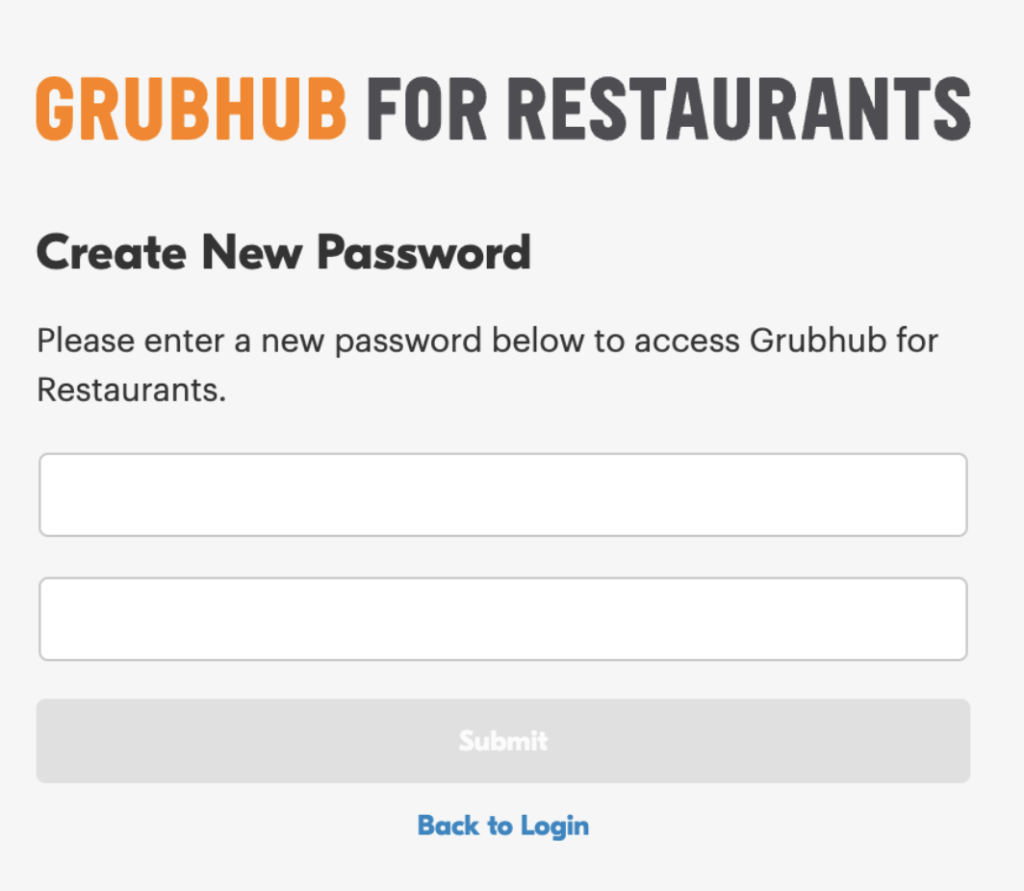
- Click on Create your password.
- Select a new password, confirm it and click Submit.
- You should be automatically redirected to restaurants.grubhub.com
- Use your new password to log in to Grubhub for Restaurants.
- Go to restaurant.grubhub.com
- Type in your username (your email address).
- Type in your password. You can choose to select Remember me, which will save your password so you don’t need to type it every time you log in.
- Select Sign in
Learn more about adding other users who can assist in editing your account.
If you do not receive the login email, contact your sales representative.
How to log in to your Grubhub for Restaurants admin account for the first time
With a few days of going live on Grubhub for Restaurants, you should receive an email to login to your account if you are an admin. Review the steps below to reset your password for your Grubhub for Restaurants account.
Note that depending on your account access, you may have different GFR account capabilities (basic vs. admin). Restaurant managers are typically given admin access, and can set up basic access for their staff within their account. To learn more about basic access, reach out to your restaurant manager.
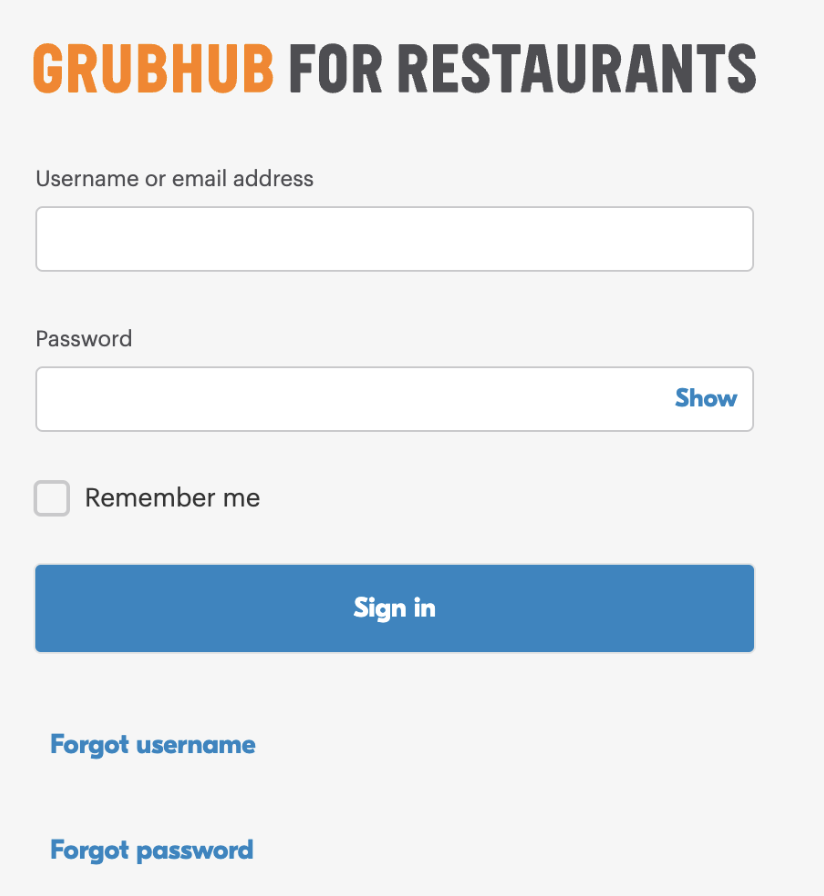
- Visit restaurant.grubhub.com/login
- Enter your username, which should be your email address associated with your Grubhub for Restaurants account. This applies to both basic and admin accounts.
- Click on Forgot Password
- An email will be sent to you with instructions on how to reset your password.
- You should receive instructions in your email within the next few minutes.
- Click on Reset password within the email you receive.
- Create a new password and log in again with your same username and new password.
- Select Sign in.
- Note that access to your Grubhub for Restaurants account may look different depending on whether your account has basic or admin access. For more information on access, reach out to your restaurant manager.
Learn more about adding other users who can assist in editing your account.
If you don’t receive the login email or still have issues, contact your Account Advisor, or, if you haven’t gone live on Grubhub for Restaurants yet, contact your ROI rep.
Forgot Password or Username
If you forget your password or username, select Forgot username or Forgot password, and additional instructions will pop up on the screen.
If you forgot your username, reach out to your restaurant manager and ask them for the login. If you are unable to contact anyone else who can edit your account and provide the right username, contact Grubhub Restaurant Care at 877-799-0790.
Sign Up with Grubhub
Not yet signed up with Grubhub for Restaurants? Get started using the button below and start getting more orders for your business.


How to Incorporate Locally Sourced Food Into Your Menu
More and more diners care about a restaurant’s sustainability practices. According to the 2020 National Restaurant Association Industry Report, 76% of adults said they are more likely to visit a restaurant that offers locally sourced food. If your restaurant doesn’t tap into the locally sourced food movement, you may be missing out on potential customers.
Continue reading to discover ways to integrate locally sourced ingredients into your restaurant’s menu.
What are locally sourced goods?
Locally sourced goods typically refer to food, ingredients or other consumable products that are sourced, purchased or procured within a specific radius distance from where they will be used. This definition varies depending on what people consider local, but to consumers, the label “locally sourced” means that the ingredients are healthier and fresher than other products purchased from farther away.
The push for local food and farm-to-table restaurants has grown in recent years due in part to the desire to support local growers and farmers. Buying from those in your community boosts the economy, creates more jobs and helps support produce growers.
Where can you get locally sourced ingredients?
Buying locally sourced food and ingredients can seem daunting at first, but there are many resources available to help connect you to local farmers and suppliers. Visit your local farmers market to meet farmers or network with farm-to-table restaurants in your area to learn which local suppliers they’ve had success with in the past.
Once you’ve found local farmers and suppliers to work with, focus on establishing a meaningful relationship with them. Small gestures, such as thanking your suppliers and keeping them updated on any changes within your restaurant, can go a long way toward showing suppliers that you value them as a business partner.
The more time you invest in building these relationships, the greater chance you’ll have to receive the ingredients you need. You may even enjoy some unexpected benefits such as the first pick of produce or discounts for your continued loyalty.
Even with close relationships built with farmers, there may still be some difficulties you have to overcome when purchasing locally.
How inflation affects local food prices
When inflation rises, so do food prices. Because it costs more to farm during times of high inflation, farmers must raise their produce prices to balance their return on investment. That means that food inflation may affect whether or not your restaurant can afford to purchase locally.
Even with the topic of food inflation being prevalent, it’s still possible to include locally sourced food in your entrées.
Tips for incorporating locally sourced food into your menu
You don’t have to replace every single item on your menu with locally sourced items or break the bank to include local goods. Here are some ideas for adding ingredients that will boost your local economy:
Start slow and set realistic goals
Sourcing local ingredients can be higher-cost due to working with small suppliers, which means switching your menu overnight to feature these ingredients can be costly. Help ease your restaurant’s transition by setting reachable goals, such as purchasing a small amount of locally sourced ingredients or only buying locally sourced food that is close in cost to your traditional ingredients.
It might also make sense for you to test run incorporating locally sourced ingredients into your menu. Consider featuring a special on your menu or even hosting a weekly local foods night that offers a special entrée made entirely from local ingredients.
Offering locally sourced food for sale as a retail model in your restaurant is also a great way to introduce the concept to your customer base. When indoor dining was shut down in New York during the height of the pandemic, The Council Cafe transformed its storefront restaurant into a local market featuring locally produced bread from Naira Bread in New York.
The Council Cafe’s market supported other local businesses and made locally sourced food accessible to their customer base.
Use locally-sourced food to fuel your seasonal menu items
Sticker shock is often enough to keep many restaurant owners from incorporating locally sourced ingredients into their menus, but it doesn’t have to be costly. By purchasing in-season produce, you can include local ingredients that are both more affordable and of higher quality.
Lighthouse, a farm-to-table restaurant in New York City, has found success in leveraging locally sourced ingredients in its seasonal dishes. The staff even put organic food waste to work by using vegetable and fruit scraps to make compost for their herb garden, which is used to create in-house spice mixes.
While buying locally sourced food can seem expensive at first, being strategic with your menu and using in-season ingredients can help reduce the cost of locally sourced food.
Seek out sustainable seafood from local fishermen
According to the World Wildlife Foundation, fishing is one of the largest contributors to the decrease in ocean wildlife populations. While the actual act of fishing is not terrible for the environment, overfishing — which is when fish are removed from the water faster than the species can replenish — is detrimental to our oceans.
Taking the extra step to seek out sustainable seafood options from local fishmongers is not only the right move for the environment but can also help your restaurant reach new diners. According to the Marine Stewardship Council, 70% of North American shoppers would like to hear more from restaurants about the sustainability of their fish and seafood products.
Fish, a sustainable seafood restaurant based in Sausalito, California, has become a success by creating inventive dishes that feature seasonally caught fish. By purchasing directly from local fishers, Fish can confidently communicate to their customers the exact path the seafood took from the water to their plate.
Attract more customers with a locally sourced menu
Tapping into the local food movement is a great way to grow your customer base and positively impact the environment. You may also be surprised by the health benefits that your customers experience from higher-quality food. According to Virtua Health, fruits and vegetables start to lose their nutrients within 24 hours of being picked, so the fresher your restaurant’s food is, the better it will be for those enjoying it.
Using locally sourced ingredients does not need to be an expensive or time-consuming task for your restaurant. Start by developing relationships with local farmers and fishers, creating seasonal dishes and setting realistic sustainability goals for your restaurant model.
Are you interested in learning more restaurant sustainability tips? Check out 10 restaurant sustainability tips that can help you reduce food waste and improve your restaurant’s profit margins.
Grubhub customers are hungry for restaurants that feature fresh ingredients and sustainable practices. Sign up to become a Grubhub restaurant partner today and be introduced to 33+ million diners who are looking for their next delicious meal.