

The importance of a multi-lingual restaurant staff
As cities across the United States become increasingly diverse, restaurant owners are adjusting their practices to better serve diners. Bilingual workforces are growing, allowing businesses to cater toward non-English speaking customers. By hiring employees with a strong grasp of Spanish restaurants, you can create a better experience for a wider range of diners.
Why bilingual staff members are an asset to your business
If you run a restaurant in the United States, chances are good that a percentage of your customers are fluent in Spanish. About 41.76 million people speak Spanish at home; next to English, it’s the most common language in the country. Bilingual staff members enable you to communicate with a diverse customer base, making all your diners feel more comfortable and welcome. They give you a distinct competitive advantage — people who speak Spanish as a first language may be more likely to choose your restaurant if they can converse fluently with staff about the dinner menu, wine options and food allergies.
Experts expect Spanish to grow in popularity in the coming decades. While the majority of the country’s Spanish-speaking population has historically been concentrated in nine states, statisticians are seeing a move toward a broader geographic spread. Whether you run a Spanish restaurant in Florida or an American diner in Michigan, bilingual employees can prepare the company for changing demographics.
The most successful restaurants go a step beyond hiring multilingual employees; they train staff members in niche-specific restaurant Spanish vocabulary and explain how Spanish dinner etiquette varies from culture to culture. For example, when serving customers from Spain, the trickiest aspect of service is waiting to deliver the check until it’s requested. Diners from Mexico and Central America, on the other hand, may have different expectations.
Hiring a diverse staff
Hiring bilingual employees can be a challenge, especially if you aren’t fluent in both English and Spanish. Don’t rely on applicants’ self-assessment of language skills — find someone who’s both bilingual and experienced in the restaurant industry. They’ll be able to help you conduct the search and evaluate candidates more effectively.
When you’re hiring new staff, try these best practices:
- Use bilingual job descriptions.
- Advertise on Spanish-language job boards to reach a diverse group of job seekers.
- Ask current bilingual employees for referrals.
- Find a bilingual person to evaluate candidates’ language abilities.
- Switch between both languages in the interview.
- Test interviewees on their food-related Spanish phrases.
- Judge applicants’ Spanish vocabulary with a written test.
As you’re hiring, be mindful of your customers’ cultural background. If most diners speak a Latin American dialect, you might prioritize candidates who learned Spanish in Latin America as opposed to Spain. This strategy helps you find employees who can use precise regional vocabulary. Of course, if you’re serving authentic Spanish cuisine, you might opt for workers who learned the language in Europe.
Restaurant Spanish: important phrases for all team members to know
For many restaurants, it’s not feasible to hire a full bilingual workforce. However, if you have a large Spanish-speaking customer base, consider training your existing staff in a basic Spanish restaurant. Knowing even a few phrases can help servers communicate more efficiently with people who speak limited English.
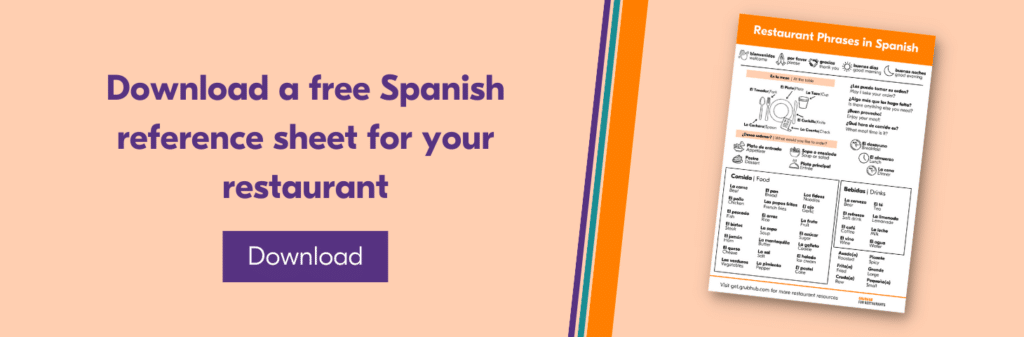
Into your standard Spanish vocabulary training, start by teaching basic phrases: bienvenidos (welcome), por favor (please), gracias (thank you), buenos días (good morning) and incorporate buenas tardes/noches (good afternoon/evening). Help employees expand their knowledge by hosting language classes or providing on-the-job training with bilingual employees.
At a minimum, staff members should understand key Spanish dinner, lunch, and breakfast words:
- Dinner: la cena
- Lunch: el almuerzo
- Breakfast: el desayuno
- Allergy: He’s allergic
- Table: la mesa
- Half portion: una media ración
- Appetizer: plato de entrada
- Entrée: plato principal, plato fuerte
- Quiero/quieres: I want/you want
- Beef: carne de res
- Chicken: pollo
- Beer: la cerveza
- Soft drink: el fresco
- Coffee: el cafe
- Spicy: picante
- Large: grande
- Small: pequeña
- Still water/sparkling water: agua sin gas/agua con gas
- Wine: el vino
- Plate: elplato
- Fork: el tenedor
- Knife: el cuchillo
- Spoon: la cuchara
- Glass: copa/vaso
- Bill/check: la cuenta
Navigating a multilingual kitchen
When you start introducing multiple languages into a restaurant kitchen, you can expect an adjustment period as staff from different linguistic backgrounds learn to communicate. Whether you’re running a Spanish restaurant or you simply have a diverse staff, a few communication and inclusivity best practices can create a more welcoming environment for everyone on the team:
- Promote language learning on the job.
- Offer language training in both English and Spanish.
- Establish a no-tolerance policy for insults or bullying.
- Encourage workers to share their languages and cultures.
- Discuss specific vocabulary for authentic Spanish cuisine and Latin American food.
- Bring in translators for performance reviews and training sessions.
- Offer multiple channels for employee feedback to accommodate everyone.
- Take employee feedback seriously.
A company culture that prioritizes connections and celebrates employees’ unique backgrounds tends to feel positive and inclusive for everyone; it helps workers feel safe and reduces employee turnover.
Your restaurant manager play a big role — other employees will look to them for behavioral clues. To help managers navigate a bilingual kitchen more effectively, consider sending them for immersive language training. They might not become fluent overnight, but the extra language skills will go a long way toward breaking down communication barriers and enabling a free flow of ideas. It takes time and effort to build a bilingual restaurant workforce, but the investment can pay off significantly. When you provide services in multiple languages, it’s easier to attract a broader range of customers and build a foundation for long-term success. Need a partner to help your restaurant grow? Sign up for Grubhub today to reach more customers.

A New Era of Training
Written by: Amanda Charreton
Imagine putting on a headset and suddenly finding yourself behind the front desk attending to a guest in need or behind the scenes in the kitchen setting up the perfect tray for room service delivery. Even though virtual reality (VR) first made its name in the gaming industry, this technology has become increasingly popular in different sectors such as medicine and the military. The ability for a user to fully immerse themselves in a lifelike computer-generated environment is now slowly making its way into the hospitality industry. So far, VR has been an indispensable marketing tool for hotels to better manage their guests’ experiences and expectations. With a headset, anyone can be transported to any part of the world and benefit from visual tours and visits to different locations and sites. But what about using this technology for more internal and resourceful purposes? Hilton, one of the world’s largest hospitality companies, has started utilizing VR as a tool to successfully train all of its employees, starting from entry-level all the way up to corporate and executives. After being awarded a number two ranking in World’s Best Workplace in Fortune magazine in 2020, one can’t help but wonder: is VR the source of such success? What are its possible implications in HR and training?
Since the pandemic, one of the biggest challenges faced by the hospitality industry is a labor shortage. Hotels worldwide have had difficulty filling vacant positions, and when they do, most possess little to no knowledge about the industry. Since most come from different fields and sectors, they lack the necessary skills to confidently perform in hospitality. VR calls for a new, experiential way of learning that exposes employees to real-life working scenarios, role-playing and decision-making simulations. They are exposed to the complexity and physicality of all the different aspects of hotel operations, whether it be conflict management with a guest, room service or even learning all the different steps that go into the perfect room cleaning and housekeeping procedures. Nonetheless, can this technology be used for more than just the physical aspect of onboarding? Can VR help employees develop the empathy and emotional intelligence required to operate successfully in the hospitality industry?
With VR, companies can better assess how users handle situations by observing their emotional state, tone of voice, facial expressions, language and vocabulary. As a result, trainers can better evaluate the employee’s performance potential by analyzing their perceptual cues and stimuli to computer-generated simulations. Some hospitality companies are even using this tool as a way to train their corporate and executive-level employees in different coaching, leadership and empathy training programs. By exposing them to the hotel’s day-to-day operations, top-level teams can better understand the complexity of the daily tasks, developing greater empathy and appreciation for lower-level teams. Therefore, companies can now offer greater hospitality services and promote employee development, engagement and satisfaction. From an employer perspective, this type of training allows for more realistic training than classical in-room or e-learning training and onboarding. Employers can benefit from training their workforce at a bigger scale and faster pace, all at a lower cost. As mentioned by the senior director of learning innovation at Hilton, Blaire Bhojwani, the hospitality company was able to reduce its in-class training time from four hours to 20 minutes. PwC, which also uses VR training, has noted training completed at a much faster rate as employees demonstrated greater commitment and engagement to their learning from both a cognitive and emotional point of view.
The use of VR training in the hospitality industry now helps companies bridge the gap between unskilled labor and employee performance. As a result, employees benefit from cross-skill training in housekeeping, F&B procedures and conflict management. And who knows what comes next? As VR continues to expand, we are just beginning to discover all its different opportunities within the industry for customers and human resources.
This blog post received Third Place in the Fall 2022 HFTP/MS Global Hospitality Business Graduate Student Blog Competition presented by the HFTP Foundation. Participants are students participating in the Master of Science in Global Hospitality Business, a partnership between the Conrad N. Hilton College of Global Hospitality Leadership at the University of Houston, the School of Hotel and Tourism Management at Hong Kong Polytechnic University and EHL. The blog posts that received the top scores will be published on HFTP Connect through March 2023. Learn more at HFTP News.

Amanda Charreton is is a student in the Master of Science in Global Hospitality Business, a partnership between three world-leading hospitality management schools over three continents: EHL (École Hôtelière de Lausanne), The Hong Kong Polytechnic University and Conrad N. Hilton College at University of Houston.
Resources:
Seabourn uses VR solution to train cruise waitstaff. Hospitality Technology. (2021, December 17). Retrieved October 25, 2022, from https://hospitalitytech.com/seabourn-uses-vr-solution-train-cruise-waitstaff
Minett, D. (2018, January 22). What virtual reality can teach us about the guest experience: By Dean Minett. Hospitality Net. Retrieved October 25, 2022, from https://www.hospitalitynet.org/opinion/4086237.html
Pougnet, S. (2020, Nov. 11). Virtual reality: An efficient tool for recruiting new talent: By Stephanie Pougnet, Phd. Hospitality Net. Retrieved October 25, 2022, from https://www.hospitalitynet.org/opinion/4101581.html
How Hilton uses Oculus for learning & development: Oculus for business. How Hilton Uses Oculus for Learning & Development | Oculus for Business. (n.d.). Retrieved October 25, 2022, from https://business.oculus.com/case-studies/hilton/
Virtual reality: The future of education? Hospitality News & Business Insights by EHL. (n.d.). Retrieved October 25, 2022, from https://hospitalityinsights.ehl.edu/virtual-reality-future-of-education?utm_source=Youtube&utm_medium=Social&utm_content=VR
Hospitality news. Heart of the House Hospitality. (n.d.). Retrieved October 25, 2022, from https://www.heartofthehouse.com/virtual-reality-training-hotels/
Virtual reality: The future of education? Hospitality News & Business Insights by EHL. (n.d.). Retrieved October 25, 2022, from https://hospitalityinsights.ehl.edu/virtual-reality-future-of-education?utm_source=Youtube&utm_medium=Social&utm_content=VR
Schrier, C. (2021, Sept. 9). Virtual reality training prepares hospitality workers for the next era of Travel. Strivr. Retrieved October 25, 2022, from https://www.strivr.com/blog/accenture-hospitality/#:~:text=Through%20case%20studies%20and%20client,companies%20can%20train%20their%20employees.

Restaurant employee onboarding made easy
Regular hiring is a reality for many restaurants. Each time a new employee joins the staff, you must train them and introduce them to your company’s practices. A streamlined, standardized and comprehensive onboarding process can simplify the process, boost retention and enable new employees to work independently in less time.
Employee onboarding: increase retention with proper training
Employee onboarding is the process of orienting, training and integrating new employees into your restaurant. Well done, onboarding helps each new hire feel comfortable and familiar with the company; it also gives them the skills they need to perform their jobs with confidence.
Employees care deeply about proper training. In fact, Gallup research finds that learning opportunities are important to 75% of frontline employees. It’s one of the top priorities for workers — the only factors that rank higher are job growth and pay. Supportive management comes in fourth, so it’s important to hire the right restaurant manager.
Despite the importance of onboarding, only 12% of employees in the United States are satisfied with their companies’ processes.
If you can find a way to beat the statistics and improve workers’ first weeks on the job, it can have far-reaching benefits for your restaurant. In particular, improving onboarding can go a long way toward reducing employee turnover. That’s a big deal, considering 40% of turnover happened during the first year of employment.
Onboarding improves employee retention by building:
- Confidence. Comprehensive onboarding gives workers the tools and skills they need to succeed.
- Clarity. Employees learn exactly what they’re expected to do, so they can perform to higher standards and gauge their progress accurately.
- Culturalunderstanding. Workers get to know the restaurant’s traditions, values, and vibe.
- Relationships. During onboarding, employees create relationships that make the workplace more fun, friendly and welcoming. These bonds help workers feel like they belong.
- Job satisfaction. When workers have strong social bonds and the ability to perform well, they are more likely to be satisfied with their position.
New hire checklist: what to include in your restaurant employee onboarding
A good onboarding process starts well before new hires start work; you can start building a connection right away. The first thing to do with a new restaurant employee is to provide important information. For example, you might send a welcome email that includes the orientation date, an onboarding schedule and a list of documents to bring on the first day. This strategy eliminates uncertainty and sets expectations so that employees can prepare. It also establishes a relationship immediately, which can help reduce the chances that workers will ghost you before they start — something 30% of employees have done.
Phases of the restaurant employee onboarding process include:
- Pre-onboarding (or preboarding). The first step of onboarding begins as soon as the new hire accepts the job offer and ends on their first day. It’s a great time to let the workers know what to expect from their first few days and weeks. At the same time, you should prepare paperwork, uniforms and other documents that help employees understand the company and culture.
- Orientation. This phase starts when the new employee arrives for their first day. It typically includes an orientation session, paperwork signing, setting up digital accounts, a tour of the restaurant and an introduction to the team. You might also educate the new hire on company policies and procedures, including server minimum wage.
- Training. At this point, the employee is ready to start learning their roles and responsibilities. For front-of-house positions, you might pair the new hire with an experienced employee for on-the-job training. Kitchen workers may learn hygiene practices, food preparation, inventory management standards and how to operate equipment, depending on their position.
- Transition and growth. During this stage, the employee transitions into their new job, working independently in their position. Consider assigning each hire a mentor who can offer guidance and advice. It’s important to schedule regular check-ins to answer questions, ask for feedback and identify any outstanding issues.
Every restaurant will have a slightly different onboarding process, depending on their operations. If you own a franchise, you may need to train workers in corporate policies; for fine-dining establishments, you might include educational sessions on table settings, precise serving etiquette and communicating with chefs.
Regardless of your restaurant’s size and style, the best employee onboarding process is both thorough and personal. At the end, new workers should have a clear understanding of their role and how it fits into the overall business model. And most importantly, they should feel welcome and accepted as part of the team.
As you design and execute a unique onboarding program, a new hire checklist can help you cover all the bases:
- Send a welcome email with key dates and information.
- Print new-hire paperwork.
- Prepare employee handbook, job description, and benefits and payroll information.
- Order the employee’s uniform, name tags, and any necessary equipment.
- Create accounts for POS, time-tracking system, and e-mail.
- Plan an orientation session and tour.
- Introduce the employee to the team.
- Offer standalone and on-the-job training.
- Pair the new hire with an existing employee for mentorship.
- Ask for feedback.
- Check in at regular intervals.
Tips for a streamlined onboarding process
A streamlined employee onboarding process can set a positive tone for a new hire. It provides the information they need to know without hours of dry training sessions. To achieve this balance, try establishing onboarding best practices such as:
- Complete paperwork digitally to save time.
- Make sure uniforms, accounts and name tags are ready on the first day.
- Announce the new hire to current employees before the start date.
- Utilize employee onboarding software and on-the-job training to keep workers engaged.
- Offer opportunities to socialize with other employees.
- Explain lingo, table numbering and unique restaurant practices.
- Assign a single point of contact for questions.
- Offer a first-day package with branded merchandise.
- Ask managers to communicate frequently with each new restaurant employee.
Successful restaurants rely heavily on standardized onboarding processes. In-N-Out Burger, for example, uses comprehensive training and transparent levels of development to ensure workers are fully prepared for each role. This system seems to be working — the chain is ranked as the 10th best place to work on Glassdoor, making it the only restaurant in the top 50.
To make your onboarding more successful, use these tips:
- Involve current employees. Ask them what the new employee needs to know, and include the suggestions in the onboarding process. As a bonus, this practice can keep your team engaged and help minimize restaurant employee turnover.
- Be organized and prepared. When your materials and staff are ready for the new hire, they’ll be able to move through the process with ease.
- Showcase restaurant culture. Find ways to integrate new workers into the culture. Invite them to the staff tasting session before dinner service, for example, or ask them to participate in a customer’s birthday celebration.
The importance of new hire training
Training is one of the most important parts of the employee onboarding process — it enables workers to perform their jobs safely, efficiently, and in compliance with the health code. Each new hire should receive a thorough education in the skills and information they need to perform their job. For servers, this might include taking orders, working the POS system and serving meals. A kitchen-crew hire is more likely to need training in your restaurant’s food-prep practices, recipe preparation and stove operations.
Effective training typically involves the entire team. Restaurant managers and existing employees should support new workers by answering questions, offering helpful tips, and gently correcting mistakes. Your human resources team can encourage this type of collaborative behavior with employee recognition programs.
Streamline your restaurant onboarding with Grubhub
A key part of the onboarding process involves training new employees to use your restaurant’s POS technology and online ordering system. Grubhub makes this process quick and convenient by seamlessly integrating with a variety of popular POS systems and creating an intuitive operation that’s easy to learn. As a result, workers can master the procedures for in-house, takeout and delivery orders in less time. If you’re looking for ways to save time, ensure accurate orders, and improve your onboarding system, get started with Grubhub today.
Hotel chef that serves with a smile recognized as ‘outstanding ambassador’
Charlotte’s tourism and hospitality industry has successfully bounced back after the hardships brought on by the pandemic.
In 2022, hotel demand in Uptown Charlotte for leisure travel was up 130% over pre-pandemic numbers and up 154% for group or convention-related travel. In addition, Mecklenburg County hit its highest annual total hotel revenue ever at $887 million.
A group of the people and businesses that helped support the growth and recovery were honored last week, including one worker Your704′s Elsa Gillis recently met.
ALSO READ: Two Charlotte chefs, one bar named semifinalists in the James Beard Awards
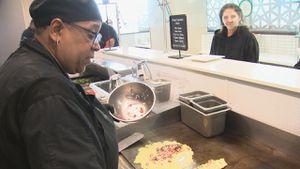
Over the course of 15 years, Wanda Grady has been smiling and singing her way through the early morning breakfast service at the Embassy Suites by Hilton in Uptown where she’s the omelette chef.
Grady’s positive attitude has not gone unnoticed by coworkers, hotel guests (her name is all over reviewed on TripAdvisor), or the Charlotte Regional Visitors Authority, who recently recognized her as “Outstanding Ambassador” at its annual Partners in Tourism Awards.
“It’s a beautiful hotel. Everybody is wonderful to me, I’m wonderful to everybody … You couldn’t ask for nothing more in your life,” Grady said.
Her coworker Harvey Johnson says Grady is a bright part of each person’s day.
“Every day, she’s like that every day,” Johnson said. “She has been like that for the last 13 years that we have been working together, she’s always the same. Regardless of what she’s going through, and of course we go through different things in life, she does a fantastic job.”
Grady believes it’s important to be kind to others because you never know what someone is going through.
“It’s important because it helps uplift people,” she said. “There’s people that travel through these hotels because someone’s at the hospital … there’s so many different reasons that bring you here.”
VIDEO: Colombian bakery is a family affair

How to login to your Grubhub for Restaurants account
Logging in to your Grubhub For Restaurants account is the way restaurants can manage orders, view account details, manage payments and get help. If you are a restaurant currently live on Grubhub, login to your Grubhub for Restaurants account here. You can access your account as an admin or basic user to manage Grubhub orders. When you go live, you should already have an account created for you- for more info about this you can navigate to the Help center within your account. Read below to learn how to log in for the first time.
Create a Grubhub for Restaurants admin account
With a few days of going live on Grubhub for Restaurants, you should receive an email to login to your account if you are an admin. Review the steps below to reset your password for your Grubhub for Restaurants account.
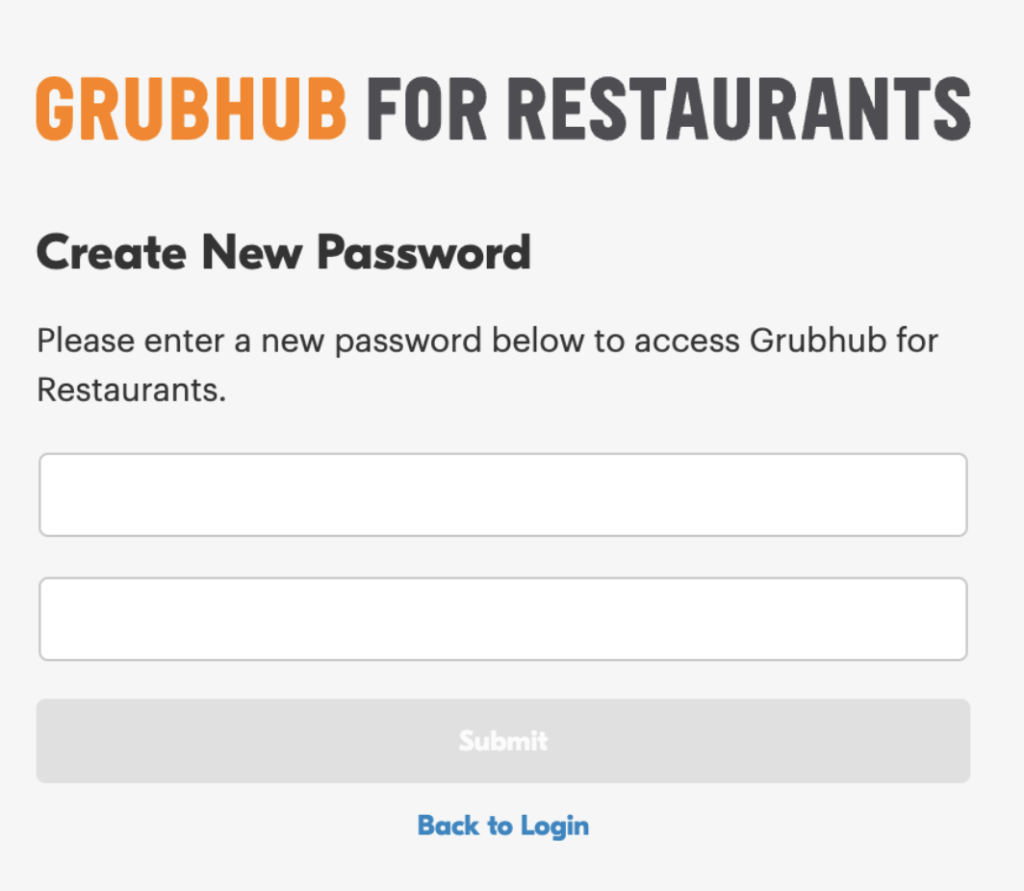
- Click on Create your password.
- Select a new password, confirm it and click Submit.
- You should be automatically redirected to restaurants.grubhub.com
- Use your new password to log in to Grubhub for Restaurants.
- Go to restaurant.grubhub.com
- Type in your username (your email address).
- Type in your password. You can choose to select Remember me, which will save your password so you don’t need to type it every time you log in.
- Select Sign in
Learn more about adding other users who can assist in editing your account.
If you do not receive the login email, contact your sales representative.
How to log in to your Grubhub for Restaurants admin account for the first time
With a few days of going live on Grubhub for Restaurants, you should receive an email to login to your account if you are an admin. Review the steps below to reset your password for your Grubhub for Restaurants account.
Note that depending on your account access, you may have different GFR account capabilities (basic vs. admin). Restaurant managers are typically given admin access, and can set up basic access for their staff within their account. To learn more about basic access, reach out to your restaurant manager.
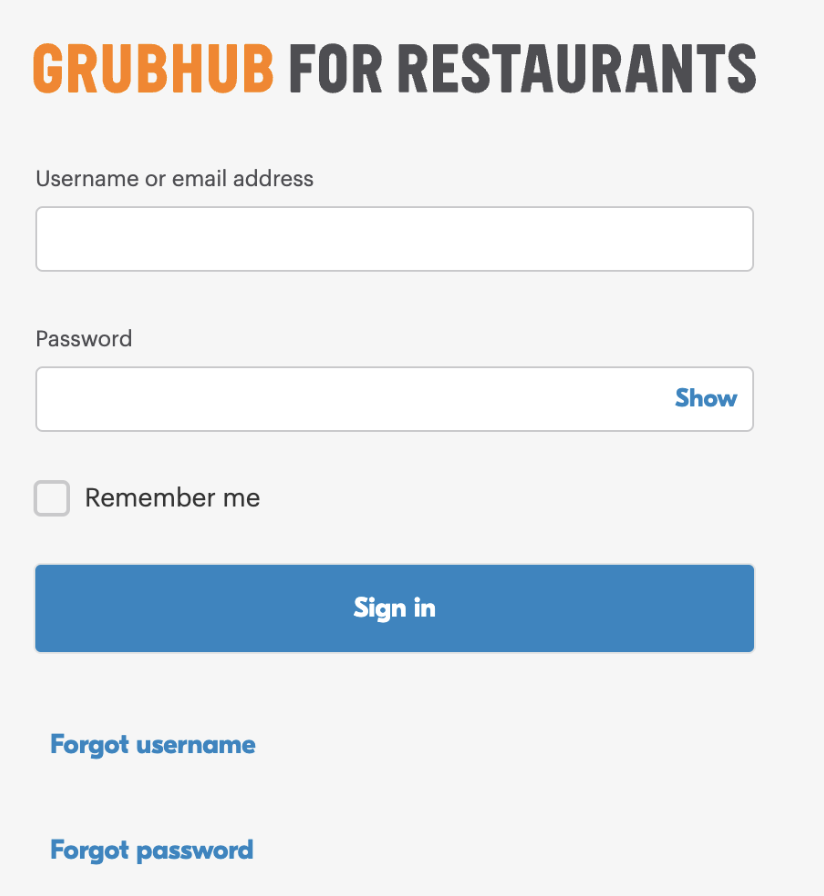
- Visit restaurant.grubhub.com/login
- Enter your username, which should be your email address associated with your Grubhub for Restaurants account. This applies to both basic and admin accounts.
- Click on Forgot Password
- An email will be sent to you with instructions on how to reset your password.
- You should receive instructions in your email within the next few minutes.
- Click on Reset password within the email you receive.
- Create a new password and log in again with your same username and new password.
- Select Sign in.
- Note that access to your Grubhub for Restaurants account may look different depending on whether your account has basic or admin access. For more information on access, reach out to your restaurant manager.
Learn more about adding other users who can assist in editing your account.
If you don’t receive the login email or still have issues, contact your Account Advisor, or, if you haven’t gone live on Grubhub for Restaurants yet, contact your ROI rep.
Forgot Password or Username
If you forget your password or username, select Forgot username or Forgot password, and additional instructions will pop up on the screen.
If you forgot your username, reach out to your restaurant manager and ask them for the login. If you are unable to contact anyone else who can edit your account and provide the right username, contact Grubhub Restaurant Care at 877-799-0790.
Sign Up with Grubhub
Not yet signed up with Grubhub for Restaurants? Get started using the button below and start getting more orders for your business.