

US hotels set for earnings bump from robust travel even as costs weigh By Reuters
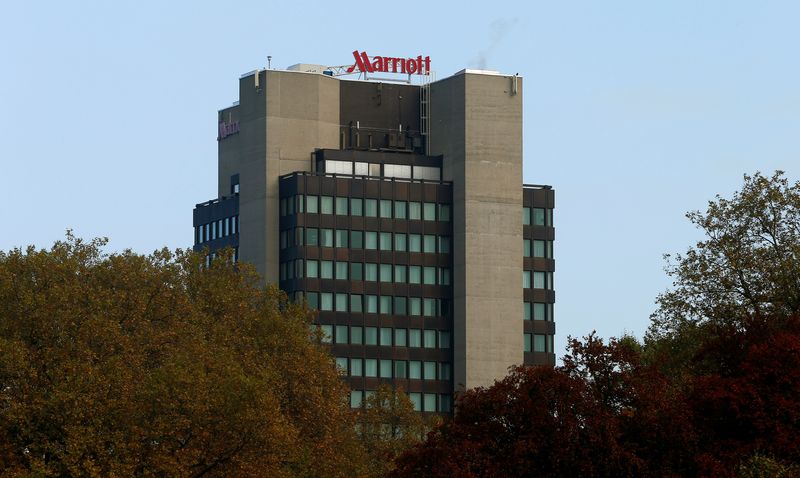
© Reuters. FILE PHOTO: Company’s logo is seen on the Marriot hotel in Zurich, Switzerland October 27, 2016. REUTERS/Arnd Wiegmann
By Priyamvada C
(Reuters) – US hotel operators are expected to post a rise in first-quarter profit even as they pour in money to lure travelers to make bookings directly through their websites, instead of turning to travel agencies.
While bookings have been getting a boost from increased business and leisure travel, the investments in hotels have made to reduce their reliance on online travel agencies (OTAs), which tend to have higher marketing budgets, is eating into the gains.
Last year, US hotels received about $49 billion from online direct bookings and $57 billion from OTA bookings, according to travel market research firm Phocuswright.
“During uncertain economic times, when travelers are looking to stretch their dollars as far as possible, OTAs can help drive demand,” Phocuswright’s senior analyst Madeline List said.
THE CONTEXT
In recent years, hospitality giants like Marriott International (NASDAQ:) Inc and Hilton Worldwide Holdings (NYSE:) Inc. have doubled down on their own loyalty programs as they attempt to spend less on commissions and other costs related to third party businesses.
Through these programs, the hotels promise exclusive perks to customers in the form of redeemable points for stays at specific hotels in their franchise, among other travel benefits.
However, in the face of an uncertain economy, travelers have increasingly relied on OTAs like Booking Holdings (NASDAQ:) Inc, which give them a wider range of choices and prices to book from, alongside incentives like advance cancellation, as opposed to upfront payments .
“When the economy is weak and hotels may not be getting as much business from traditional sources as corporate travel or meetings and conventions, they become that much more reliable on online travel agencies,” Atmosphere Research Group’s travel industry analyst Henry Harteveldt said.
GRAPHIC: Hotel bookings through online intermediaries https://fingfx.thomsonreuters.com/gfx/buzz/akveqxqbwvr/Hotels.png
THE FUNDAMENTALS
* Analysts expect Marriott’s revenue to rise 28.8% to $5.4 billion when it reports results on May 2; earnings per share is estimated to be $1.84
* Analysts expect Hilton’s revenue to rise 28% to $2.2 billion when it reports results on April 26; earnings per share is estimated to be $1.13
* Analysts expect Booking’s revenue to rise 40% to $3.8 billion when it reports results on May 4; earnings per share is estimated to be $10.67
GRAPHIC: US travel operator’s stock performance https://fingfx.thomsonreuters.com/gfx/buzz/zjvqjoewkpx/US%20hotel%20operators%20stocks.png
WALL STREET SENTIMENTS
* For Marriott, six of 23 brokerages rate the stock “buy” or higher, 16 “hold” and one “sell” or lower, as per Refinitiv data
* For Hilton, nine of 22 brokerages rate the stock “buy” or higher and 13 “hold”, as per Refinitiv data
* For Booking, 19 of 33 brokerages rate the stock “buy” or higher, 13 “hold” and one “sell” or lower, as per Refinitiv data
Your Guide to Restaurant Credit Card Processing
Credit card processing is one of the most significant developments to hit the restaurant industry in recent memory. This convenient technology lets business owners accept payments remotely, without the need for cash or checks. It makes buying and selling easier for merchants and customers alike, promoting smoother business processes.
Although most companies have managed credit card transactions the same way for years, new restaurant technology trends are revolutionizing the process. If your restaurant accepts cards as payment, it’s helpful to understand the underlying systems that make both the new and old methods possible.
Let’s dig in.
What is credit card processing?
Credit card processing is the method businesses use to accept payments by card. It includes a complex sequence of actions that are initiated when a customer swipes, taps or dips their card at your POS terminal. When the process is complete, the payment appears in your bank account.
For decades, customers paid for food by offering cash or writing a check. That all changed in 1950 when the first true credit card — the Diners Club card — allowed customers to charge their meals at a select number of restaurants in New York. Recognizing the benefits of this handy payment processing method, more businesses got on board. The idea spread to other cities, and within a few years, numerous banks began to offer credit cards.
Today, restaurants use this technology to provide a faster and more convenient checkout process. Unlike other payment methods, which require you to accept cash or checks and manually deposit them into your bank account, credit card processing allows you to transfer money remotely from a customer’s bank to yours.
The ins and outs of credit card processing
Restaurant credit card processing seems simple on the surface — a customer hands you a card, and the terminal either accepts or denies the payment. Behind the scenes, it’s considerably more complicated.
When the customer inserts their card, the card reader sends an authorization request to the device’s payment processor. The processor then relays the request to the network for the appropriate card association; Visa or MasterCard are two common national processing options. Using this network, your bank checks to make sure the customer’s account has enough money to cover the bill. The system returns a code that tells your POS to approve or deny the transaction.
These initial steps of credit card processing happen in seconds. However, when a transaction is approved, it can take a few days for the customer’s bank to send the funds to your bank.
Credit card technology is evolving, and your restaurant may have one of a few primary processing types. The oldest is the magnetic stripe, which stores customer information and transmits it to your POS via swipe. Most banks, however, have now adopted cards that are embedded with a tiny chip. They generate a different code for every purchase, creating an extra layer of security and making it harder to steal account information.
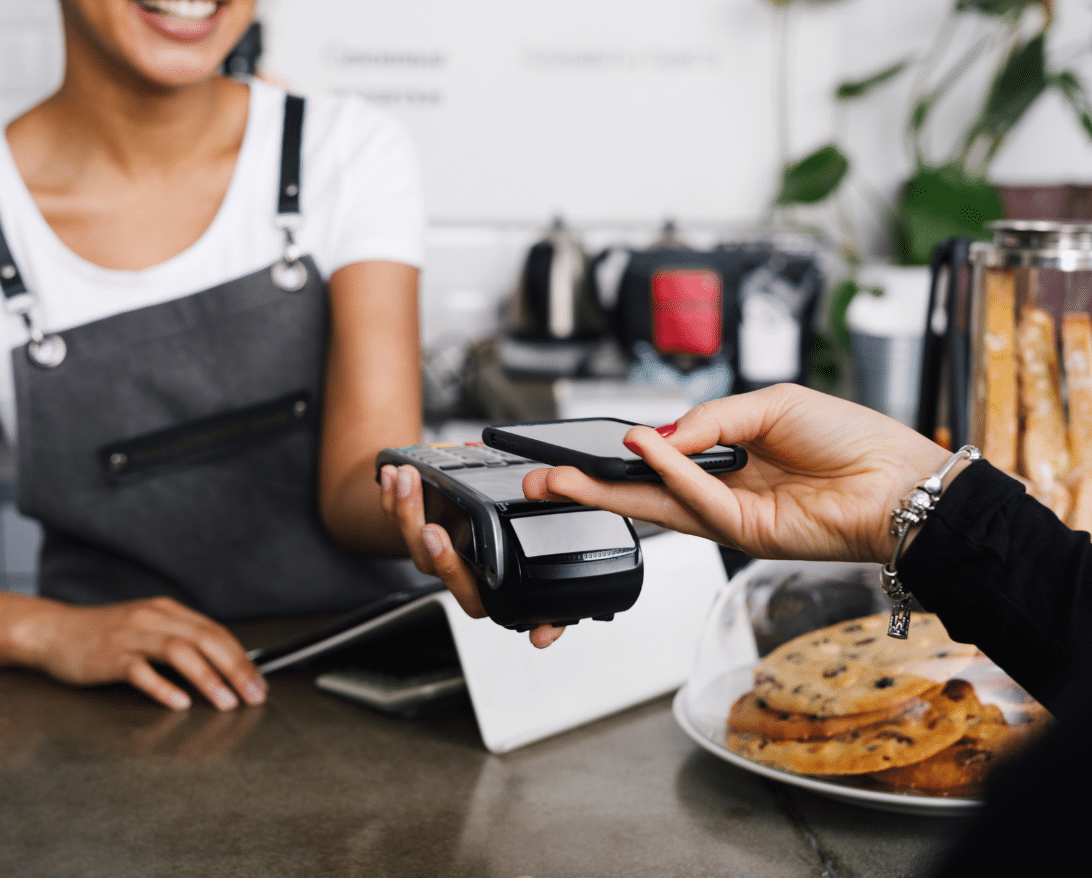
Today, many customers prefer a third option: contactless cards. These cards have chips that are equipped with tiny radio antennas. To transmit their account information, the customer taps the card on the reader — it sends the information over radio waves using radio frequency identification (RFID). Systems like Apple Pay use similar near-field communication (NFC) technology, enabling customers to pay with cards stored on their smartphones.
Keeping up with these latest trends in restaurant technology can help make your menu more accessible to customers. In fact, 80% of consumers have used contactless payments. If you fall into the 67% of US retailers who don’t offer this payment method, you could be missing out.
What to look for in a credit card processor
A high-performing credit card processor enables you to complete transactions quickly and create a better customer experience. When you’re choosing a credit card processor, consider these factors:
- Payment processing types. Select a processor that accepts a wide variety of in-person and online transactions. At a minimum, this includes swipe, chip, and contactless cards. RFID or NFC payments are particularly important; more than 50% of Americans use contactless payments. Most models also enable you to manually type in the customer’s credit card number for phone transactions or as a backup if other methods fail. If your restaurant participates in off-site events, look for a processor that allows mobile payment processing.
- Fees. Credit card processors charge a variety of fees for their services. Verify the percentages and calculate how they’ll affect your profit margins.
- Customer service options. Make sure an agent is available around the clock to help you if a problem arises. Read customer reviews; if you see a pattern of complaints about service, proceed with extreme caution. Regular outages or payment problems can damage customer relationships.
- Physical hardware. Investigate the type of hardware the processor offers and make sure it’s appropriate for your restaurant. It’s also a good idea to check whether the card reader is separate or built into a proprietary POS.
- compatibility. Verify that the system is compatible with your existing POS, CRM, and bookkeeping software.
- Terms. Check the terms of the agreement to find out how long it takes before funds are deposited into your account, verify the length of the contract, and learn about the fees for early termination.
Common credit card processing fees to be aware of
Accepting credit card payments involves multiple parties; each one typically charges a small processing fee for every transaction you make. They usually include:
- Merchant service fees. This is what your payment processor charges for its processing services.
- Interchange fees. This payment goes to the customer’s credit card issuer.
- assessment fee. This fee is charged every month as a percentage of your total sales. It goes to the credit card associations for the different types of cards you accept.
Actual fee amounts can vary considerably but usually range between 1.5% and 3.5% of each transaction. Each payment processor has its own pricing structure, so it’s important to compare quotes. The most expensive options tend to be those that charge a percentage of the sale plus an additional fee. Even though the flat fee is usually small, it can add up significantly over time. You can avoid high fees by choosing a provider that eliminates charges for renting equipment and sending statements.
Keep in mind that fees can vary between transaction types. To find the best deal, compare your sales data to the processor’s costs for in-person transactions, online sales, contactless app payments, and non-preferred cards.
Benefits of using credit card processing at your restaurant
Despite credit card processing fees, it’s almost always beneficial for your business to accept debit cards and credit card payments. Doing so helps you deliver a more convenient experience — customers can enjoy your food without a trip to the ATM. And because they don’t have to worry about having enough cash on hand, diners are free to spend more.
Modern consumers are accustomed to paying by card; in 2022, 41% of Americans made all their regular purchases without cash. Accepting cards lets you bring in more revenue from these cash-free customers.
Credit card processing also benefits your employees. The digital system reduces the risk of human error, making it easier to balance the till. Because customers don’t have to wait for change, transactions move more efficiently.
While credit cards have both benefits and drawbacks, you can minimize risk with these best practices:
- Ask for customer IDs.
- Use the chip instead of the magnetic stripe whenever possible.
- Offer contactless payments.
- Give a receipt for every transaction.
- Partner with a secure, reputable processor.
For most restaurants, the benefits of credit card processing far outweigh the fees. By choosing a payment processor carefully, you can minimize costs and deliver a fast, seamless checkout experience. Looking for more ways to integrate technology into your restaurant? Partner with Grubhub today to explore POS integrations, online ordering and delivery.
How to get a liquor license
Alcohol can be a profitable revenue stream for your restaurant. It’s an easy win — the markup is high, the labor requirements are low, and the product has a long shelf life. In fact, the average restaurant makes about 20% to 25% of its income from alcohol sales. Before you can add beer, wine or spirits to your menu, however, you’ll need a valid liquor license.
What is a liquor license?
A liquor license is the permit you need to make, distribute or sell alcohol legally. These licenses are usually issued by your state, but counties and cities may also set additional restrictions. While each area has its own rules, most liquor licenses regulate factors such as:
- The types of liquor you can sell
- When you can sell alcohol
- Where customers can consume the alcohol they buy
- Limits on alcohol sales
- Who can buy alcohol from you
- Price limits on alcohol
It’s important to understand the specific liquor laws for your state, county and city — after all, you’ll need a license before you can sell a single drink. Most areas offer several license classes to suit different establishments. Common classes include:
- Beer and wine. These licenses allow you to sell beer, wine, cider and occasionally other malt beverages. Most areas have distinct beer and wine licenses for bars, restaurants, wineries, breweries and catering businesses.
- All-liquor. This license goes by many names, but it typically permits you to sell beer, wine and spirits.
- Tavern. A tavern license is designed for establishments where alcohol makes up the majority of sales.
- Hotel. Hotels that serve alcohol on the premises need this type of license, which may offer both on-premises and off-premises consumption.
- Brewing. A brewing license allows an establishment to brew its own beer and sell it to customers. Other licenses may also be required.
Most states have multiple variations on these licenses that specify whether you need to sell food, if customers can take their drinks to go and rules for live entertainment. Make sure to start early; the application process can take months.
How to get a liquor license
Your state’s liquor-control body, which is often called the Department of Alcoholic Beverage Control (ABC), typically handles the licensing process. It can tell you how to get a liquor license and advise you of any local laws that might affect the process. Some states require you to have a seller’s permit and appropriate business tax registrations before you can apply.
The process can vary by state, county and city but usually involves a variation of these steps:
- File an application. Contact your state’s ABC and file an application. You may be able to apply online; in certain areas, however, you’ll need to bring the application to the nearest ABC office. Expect to pay an application fee. You may also be able to apply for a temporary permit to sell alcoholic beverages before the official review process is complete.
- Post a public notice. Many areas require you to post a public notice in your restaurant to let customers know you’re applying for a liquor license. Certain states have additional rules for publishing a notice in the local newspaper or advising neighboring homes and businesses about your plans.
- Pay license fees. Depending on your area, you can expect to pay anywhere from $500 to $4,000 or more. There may also be additional fees if you need inspections or multiple licenses. You’ll also need to pay a renewal fee every 1 or 2 years.
- Wait for the licensing review. During this process, which can take anywhere from 1 month to 1 year, officials review your application. They’re likely to investigate you and your premises, as well as local laws. If you qualify, the state will either mail or hand-deliver your license.
- Post license and required notices. Most states require you to display your physical liquor license behind glass. Some also require alcohol warnings for minors and pregnant people.
Given the potential length of the application review, it’s important to integrate it into your planning process. Expect delays if issues arise or if your state has met its quota for new liquor licenses. If that’s the case, you will likely need to make do with a beer and wine permit until the next period begins.
Other bar licenses you may need
The liquor licensing process can be complex; you may need more than one permit, depending on the structure of your business. For example, if you plan to host live music, you’ll often need a separate license. In New York, it’s called a cabaret liquor license. Michigan has separate permits for businesses that offer catering, dancing, or entertainment. If you’re offering food, plan to get a health permit and a food service license.
You might also need a special alcoholic beverages license to:
- Offer extended hours
- Sell liquor at a secondary location
- host events
- Have a second bar
- Selling alcohol to members only
- Operate at a private golf club or a ballpark
Each license comes with its own fee, which could be anywhere from $500 to $1,000 or more. Most licenses are administered through the state ABC, but your city council may have additional requirements when you’re applying for a new license; the city clerk can provide details.
Grow your alcohol selection with Grubhub
Since 2020, alcohol delivery has been a growing trend; customers appreciate the ability to enjoy a drink with their meals at home. A number of states now allow restaurants to offer alcoholic beverages in addition to their regular menu. It can be a worthwhile investment — on Grubhub, the average order value increases by $14-$15 when you add alcohol.
If your state permits, Grubhub makes it easy to add alcohol to your delivery menu. You’ll need to package drinks separately and advise customers that delivery drivers will check IDs at the time of drop-off. You can streamline the process by taking steps to optimize your restaurant for beverage delivery. Choose secure packaging, for example, and make sure to provide insulation for hot or cold drinks.
Whether you’re hoping to offer alcohol sales on-site or with delivery orders, a liquor license is a must. Start the process well in advance and you can be ready to serve drinks as soon as you open them to the public.
Finding the Right Restaurant Insurance
When you open a restaurant, insurance is one of the most important investments you can make. Like car insurance or health insurance, these commercial policies help you manage the financial risks that come with doing business. Is your restaurant protected?
What is restaurant insurance?
Restaurant insurance is coverage that protects your business from financial losses when unexpected problems arise. It can help you cover legal and medical costs for customer injuries, for example, or pay for repairs and lost income after a kitchen fire.
Running a restaurant is inherently risky — the equipment is expensive, profit margins are narrow and a single mistake in food storage or handling can result in an outbreak of foodborne illness. Insurance helps mitigate that risk, making it a must-have protection for every restaurant owner.
Before you buy business insurance, it’s important to note that no two policies are alike. If you go into the process with a clear idea of your restaurant’s vulnerabilities, it’s easier to understand how different policy types can benefit your company.
Types of restaurant insurance to choose from
As a restaurant owner, you can select from a variety of coverage types; each one is designed to address a different liability, such as employee injuries or the potential for serving spoiled food. Common restaurant insurance options include:
- General liability insurance. These policies reduce your financial liability when someone makes a claim against your restaurant. The most common is bodily injury; coverage can help with expenses if a customer or a delivery person gets hurt while on your property. Some policies also include product liability coverage, which covers harm that results from the products you sell — usually, food poisoning. General liability coverage often extends to other things that might happen in the course of doing business, such as reputational harm, copyright infringement or damage to someone else’s property.
- Commercial umbrella insurance. You can use these policies to extend your liability coverage. They usually kick in when your general liability policy reaches its payout limit.
- Commercial property insurance. If your restaurant or the equipment in it is damaged, this type of coverage can pay for parts or all of the repair or replacement costs. In some cases, it replaces a percentage of your lost income if you have to shut down for repairs. Typically, coverage is limited to damage due to situations out of your control, such as fire or theft.
- Business income insurance. This type of insurance extends the protection of a property insurance policy, enabling you to receive extra funding during a shutdown. Depending on the terms, it might cover expenses such as utility bills or lost profits.
- Workers’ compensation insurance. Most restaurants must purchase a workers’ comp policy to help cover employees’ costs if they get sick or injured on the job. Specific laws and coverage options vary by state.
- Commercial crime insurance. These policies provide extra protection against general theft, employee theft, forgeries and data theft.
- Liquor liability insurance. If you serve alcohol, a liquor liability policy can help protect you if customers become intoxicated and cause harm to themselves, other people or property.
Some insurance providers offer a business owner’s policy that combines liability and business coverage. Others enable you to buy separate policies for customized protection.
The cost of restaurant coverage
The cost of restaurant business insurance can vary significantly based on factors such as your company’s size, location, revenue, and coverage amount. Some providers estimate an average annual cost of $2,080; others put that figure closer to $4,000.
When calculating premiums, insurance agents will consider your specific operations. For example, it usually costs more to insure a restaurant with upscale kitchen equipment or a high property value; if property damage occurs, the repair or replacement expenses are much higher. Likewise, a business with a large kitchen and front-of-house staff will pay more for workers’ comp than a two-person sandwich shop.
If the budget is a concern, try these tips to reduce your insurance costs:
- Ask about discounts for larger deductibles or up-front annual premium payments.
- Buy multiple policies from a single provider to get a bundle discount.
- Purchase only as much coverage as you actually need.
- Look for policies with a discount for loyalty or no-claims years.
Protecting your establishment
Buying restaurant insurance requires you to find a balance between protecting your business and controlling costs. An adequate amount of coverage provides peace of mind; more importantly, it helps your company stay afloat when unexpected expenses arise due to factors beyond your control.
- Determine the type of coverage you need. At a minimum, most restaurants need general liability coverage, property insurance, and workers’ comp insurance.
- Choose coverage limits. Your policy should provide enough financial support to cover common risks for your specific restaurant. If you run a bar with a mechanical bull, for example, you might need more liability coverage.
- Compare quotes. Get quotes from more than one insurance company, and compare them closely. Pay attention to what is covered, coverage limits, and the specific terms of the contract. Make sure to look at coverage restrictions, especially if your restaurant is located in an area that’s prone to hurricanes or flooding.
Restaurant insurance protects your business from a wide range of issues, from lawsuits to natural disasters. By investing in the right policies, you can stay compliant with local laws and keep the doors open even after a high-cost claim.
/cloudfront-us-east-1.images.arcpublishing.com/dmn/AGPQSNCM4ZCQVPB7OWA6NP4WFA.jpg "McKinney’s Denizen Hotel eyes summer groundbreaking")
McKinney’s Denizen Hotel eyes summer groundbreaking
Developers working for more than a year on a new McKinney hotel hope to break ground on the project in the coming months.
The Denizon Hotel is planned on State Highway 121 at Alma Road in the huge Craig Ranch development.
Archstreet Hotel Partners will build the more than 100-room hotel as part of the mixed-use District 121 project. The almost 20-acre development also includes a new office building plus restaurant and retail space. The four-story hotel building is expected to cost about $20 million.
“We hope to start work this summer and open in the fall of 2024,” Archstreet founder Michael Mueller said. He previously founded Nylo Hotels, which built properties in Las Colinas and Plano.
Dallas architect 5G Studio Collaborative is designing the luxury hotel.
The Denizen Hotel will be the latest addition to the hospitality market along SH 121 between Frisco and McKinney – a corridor that’s seen dramatic growth.
The Craig Ranch development includes thousands of homes plus commercial and retail construction.
Dallas-Fort Worth is the country’s fastest growing hotel market with more than 170 projects in the development pipeline.

March game day promotion ideas for your restaurant
The college basketball tournament is coming. 67 games, 179,560 heart-wrenching, bracket-busting, Cinderella-storytelling minutes of action – and your restaurant can’t miss a single one. With over 10 million people tuning in for each basketball game in 2022 there are endless opportunities to score big this March.
Use these tips on how to grow your business, along with Grubhub, to conveniently offer the delicious food, tasty snacks, refreshing drinks and other essentials your hungry diners need to enjoy every minute of the mania.
How to capture more customers on game days
While the college basketball teams battle it out all month long, fans are eager to build their own brackets and follow their favorite teams to the end. The college basketball tournament tips off on March 14, and in the championship game on April 3. That means you have over 20 days to reach basketball fans and encourage them to include your restaurant in their game day strategy.
1. Offer game day deals
Promotions are the easiest way to bring the fans to your restaurant and a great way to encourage on-premise and off-premise dining. An irresistible deal could influence a diners’ game decision and motivate them to order from your restaurant, especially for those who are balling on a budget.
Is your restaurant listed on Grubhub Marketplace? With Marketplace, your restaurant can easily deploy mouthwatering promotions. You can offer a dollar off or a percentage off an order, or gift your customers with free delivery or a free menu item. You can also use promotions to encourage diner loyalty all tournament long. While diners are watching the game and enjoying delicious food, offer them a deal on their next delivery order to enjoy the next game.
Your game day deals can encourage in-person patronage as well.
Is your restaurant located near a college or university? College basketball is a perfect opportunity to get students to stop by. Offer a student discount for those who show you their student ID. Your restaurant can even host a tournament bracket contest where customers with the closest to perfect brackets win a prize.
If your restaurant is the perfect location for game day viewing, offer deals that will keep customers coming back all month long. Go old school and give out punch cards to diners that they can bring each time they visit your restaurant. After five punches, they can get a drink, an appetizer or even a meal for free. Make sure your restaurant is ready for game day viewing – that means televisions, plenty of seating and a stocked bar. You also want to schedule your staff to cover the game time crowd.
2. Create a special game-day menu items
It’s not just the fans cheering who can have all the fun. Use the tournament to create special game-day food bundles and party packages in your delivery menu on Grubhub. Include restaurant favorites or name each combo after one of the NCAA teams playing. Appetizers are likely to be the winning item, so make sure to prepare for larger volumes of orders.
What menu deals are sure to be a slam dunk?
- Game day basketball are great additions to your take out and delivery menus. Feed a watch party with shareable appetizers and drinks.
- happy hour deals score big during the March tournament. Start your happy hour earlier to align with game schedules.
- Team-themed drinks and dishes not only make your restaurant a big tournament contender, but also give you the opportunity to creatively rebrand your menu items all month long.
Is your restaurant located in a team’s homebase? This year there will be games hosted in over a dozen cities across the country. For the fans who made it to the watch party, offer a free drink if your team wins! Or better yet, if they lose, nothing cures the basketball blues like an ice-cold beer, right?
3. Use alcohol to increase online order sales
There’s no doubt alcohol plays a part in the madness this March. As a restaurant, this is a perfect time to promote your drink offerings.
Offering beverage delivery can be a buzzer beater shot that can put your restaurant on top. What are the top drinks during the March tournament? Beer is a must for any game day menu. Canned hard ciders and seltzers are also popular among fans and are easy to add to a delivery order. It’s also a good idea to offer cocktails – you can get creative and make themed cocktails based on the teams in the tournament. Take a look at more tips on how to optimize your restaurant for beverage delivery.
Adding alcohol and cocktails has become a huge opportunity for restaurants on Grubhub to easily increase the average order volume by a whopping $14-15. Read how restaurants are incorporating the latest to-go cocktail trends in their Grubhub delivery strategy.
4. Encourage online dining engagement
It’s no doubt that in order for restaurants to be successful, a strategic online presence is vital, especially during tournament season. In fact, 52% of March basketball tournament viewers were active on social media during the games last year. Twitter is a big hub for basketball fans, with tournament related topics reaching over 576,000 engagements and 1.57 billion impressions.
Does your restaurant have a winning social media presence? Easily connect with your audience online by taking part in the March mania on social media. If your restaurant has that perfect game-day setup, use social media and your restaurant’s website to promote viewing parties on-premises. Get your diners involved by creating a bracket of your restaurant’s best appetizers for hungry customers to vote on which will be half-off on their game day delivery orders.
Use Canva to find tournament-themed graphics and create shareable content to get your restaurant noticed. Check out more tips on how to grow your social media presence.
No restaurant’s digital presence is complete without online ordering. That’s why many restaurants are turning to Direct, our customizable online ordering site that is completely commission-free. With the ability to download diner data and reach out to those owned customers on their own, Direct restaurants are using this data to target loyal customers and boost their orders.
Promote your online ordering platform and restaurant’s website on your social media to turn curious scrollers into raving fans of your food.
What type of tournament promotions should your restaurant run?
It doesn’t matter what type of restaurant you run, there are opportunities to get in on the March tournament madness. Games start in the early afternoon and stretch into the night, giving more opportunities for restaurants to get in on the tournament.
Bars and pubs are the most popular spots for basketball watch parties. The casual atmosphere, big screen TVs and the flow of alcohol and appetizers make for a perfect spot to watch all the action unfold. If you run one of these establishments, encourage customers to dine in and stay awhile while they watch the game at your restaurant.
If you run a casual or a fast casual restaurant, the tournament is the perfect time to double down on delivery. While you may not have the space to host a watch party, your restaurant can still be the center of at-home gatherings if you offer to-go deals. Want to expand your delivery before tipping off? Partner with Grubhub to get your to-go offerings in front of more customers.
Make this tournament season a slam dunk with Grubhub
No matter what restaurant you run there are dozens of opportunities to get in on the basketball madness this March. 92% of basketball fans said they plan to purchase food from bars or restaurants during the game. Turn customers into loyal fans by giving them opportunities to score delicious deals.
Need a teammate to help your restaurant grow? Partner with Grubhub today.
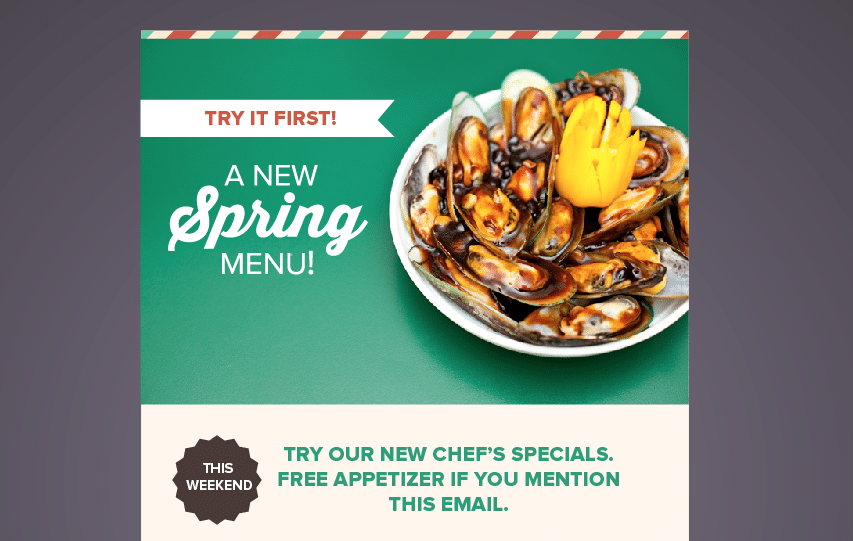
How restaurants can use email marketing
Nothing is more enticing than a crisp coupon to your favorite business. The idea that you can get your favorite items for less can motivate any customer to take action. The same applies to restaurant deals. One mouthwatering deal sent directly to a customer can prompt them to place an order.
What’s a guaranteed way to reach your customers? Email marketing.
Restaurant email marketing programs are a proven method of building customer loyalty. A well-timed email can bring in new diners and remind recent diners to return. Email marketing is worth the investment. For every $1 you spend on email marketing, you can expect an average return of $36. With a strong email marketing campaign you can sit back and watch your ROI flow in.
How can restaurants use email marketing?
There are hundreds of ways to market a restaurant, but email marketing has proven to be successful. why? Because you can send specific messages and offers to specific customers, personalizing the marketing experience. Getting diners’ emails allows you to communicate with people who are familiar with your brand and who are interested in continuing to dine with you. Sending an email reminds a customer of your offerings and encourages them to place another order.
What type of content should you feature in your restaurant’s emails? Here are some places to start:
- Newsletters: Send out a monthly newsletter featuring all your offerings for the month, including any holidays, events or days you will be closed.
- New menus: If you launch a new menu let your customers know in an email.
- Promotions: Include limited-time promotions in your emails where customers will get a deal if they show the email or use a code and check out.
- Special hours: Send out an email whenever you change your hours or offers to keep customers informed.
- Events: Let your customers know what events you have planned and how they can sign up.
- Contests: Encourage diners to get involved with your brand by running contests with real (edible) prizes.
- Birthdays: Collect customers’ birthdays when you get their email addresses so you can send them a special birthday message with an exclusive deal.
- Feedback: Invite your customers to share feedback about their experience at your restaurant.
These days, the average consumer is getting dozens of emails from businesses every day. While emails allow you to reach customers on their devices whenever you like, you have to be careful about how frequently you communicate. As a restaurant, it’s best practice to send only one email a week. You can even make your communication monthly if you are running a newsletter.
Successful email marketers are acutely aware of the 80/20 rule: roughly 80% of customer actions (opens, clicks, orders, etc.) come from roughly 20% of your customer subscribers. Not even the most influential brands expect a 100% open rate, let alone a high click through rate.
The average email open rate in the restaurant industry is 20.26%, so don’t expect every subscribed customer to be engaged. However, even if a diner doesn’t open your email, receiving messages from your restaurant increases brand awareness.
Drive traffic to your restaurant website
Email marketing is just one ingredient in crafting the perfect online marketing strategy. All elements of your digital marketing strategy should work together. Think of your marketing channels as a web – all intertwined to encourage diners to place an order.
You should link to your restaurant’s website, social media profiles and online ordering platform in your emails. Place an email signup form on your website to encourage curious customers to become subscribers. You can even offer a promotion to incentivize diners to enter their emails on your website.
Check out this website pop up that incentives customers to sign up for an email newsletter:

Increasing your restaurant’s online presence helps your restaurant stay relevant in the modern world. Your restaurant’s website should showcase your brand while giving a clear avenue for action.
Don’t have an online ordering platform? Try Direct, a commission-free online ordering platform that can be custom branded for your restaurant. Including an online ordering link in your digital marketing materials allows you to convert curious online visitors to paying customers.
How to start a successful restaurant email marketing program
Setting up email marketing does not have to be complicated. Check out our guide to affordable digital marketing tools for more tips on how to create engaging content.
We’ve broken down three simple steps you can take to get your first email campaign off the ground.
Choose your software
First, you need to choose an email service provider. Conveniently, most email marketing services offer a free trial period, so spend some time testing platforms before spending a dime.
Your restaurant is unique, and your emails should be as well. Look for a platform that allows for easy customization and lets you “drag and drop” elements to create the perfect template.
Email solutions should also provide reports showing how many people subscribe, unsubscribe and forward your emails to friends, so you can evaluate the success of your campaigns. The best email marketing software also gives you the ability to segment your subscriber list. That way you can send out specifically targeted emails to first-time diners, regular customers and everyone in between.
A few popular services are MailChimp, YesMail and ExpressPigeon.
Collect customer emails
Once you have an email solution set up, it’s time to collect customer email addresses for your restaurant email marketing campaign. Add new subscribers by placing opt-in links on your website and social media feeds encouraging people to subscribe for deals and regular updates. You can also post QR codes around your restaurant or at the bottom of your take out menu for an easy way to sign up.
Take advantage of email forwarding, the digital version of word-of-mouth, by creating incentives to pass along your emails, such as a free appetizer if a customer refers to a friend. Offline, ask customers to provide their email address on comment and response cards or place a fishbowl on your counter to collect signup slips and business cards.
Keep track of how you get customers’ emails so that you can segment your audience. Market segmentation is the process of dividing your customers into groups based on shared characteristics. Segmenting your audience can help make sure your emails resonate with those they are targeting. Segmenting your audience based on factors like where they order (online or in-person), engagement (how often they click on your emails) or loyalty (how often they order) allows you to curate more relevant content so you get better open and click rates.
Craft your content
As the heart of your email campaign, your email content needs to be engaging and informative. Use a consistent layout to keep your planning time to a minimum and make your emails easier for customers to read.
Personalize your emails as much as possible. If you have multiple restaurant locations, segment your subscribers into lists and tailor emails by location. Use software that can insert first names into each separate email, and send customers special emails, such as their birthday. The more personalized you can be with emails, the less likely they are to end up in the trash.
You can also automate email streams with software like ActiveCampaign to map out what emails you want to send in a particular order. This way you can batch email content in a chronological order so that none of your customers miss out on your offerings – it doesn’t matter when they subscribe.
It’s good practice to keep emails short and sweet. The average person only spends 10 seconds looking at an email, so you want to design your email to quickly catch the attention of diners. It starts with an attention grabbing subject line. Your subject line should hint at the content in your email, intriguing readers to learn more. Organize your email content with the most urgent information at the top. All important and eye-catching information should fit on users’ screen before they scroll.
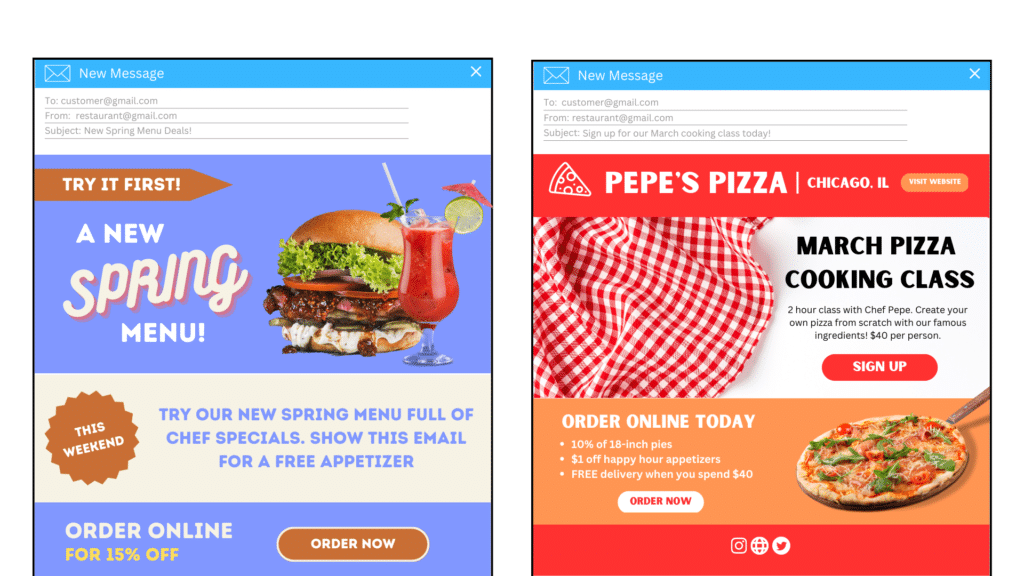
Last but no least, consider using the following restaurant promotion ideas a recurring theme in your emails:
- Deals and daily specials
- Upcoming events
- Changes menu
- “Instagram of the Week” – highlight your food in action by including a customer-submitted photo from Instagram
- “Tweet of the Week” – recognize your active Twitter followers by calling out a positive or humorous Tweet mentioning your restaurant
- customer reviews
Think of your emails as a small part of your digital presence. Make sure you plug in your restaurant’s online ordering site, website and social media platforms in all your emails to remind customers of where they can find out more about your business. Giving channels for customers to learn more about your restaurant helps ensure that their journey with your restaurant continues.
Upgrade your marketing strategy with Grubhub
Taking your marketing strategy to the next level is a lot easier with a dedicated partner by your side. That’s where Grubhub comes in. At Grubhub, we are dedicated to helping you grow your digital presence by offering tools like Marketplace, promotions, POS integrations and Direct.
Direct is a commission-free online ordering platform available to all Grubhub partners. With Direct, you own your customers’ data. That can mean their emails as well. You can leverage this customer data to increase customer loyalty, driving your bottom line.
Ready to increase your digital reach and gain more customers? Partner with Grubhub today.

How the property changed hands
DELAND — The historic Hotel Putnam has seen a lot in its 100 years at 225 W. New York Ave. in downtown.
Demolition began on Feb. 13, about six weeks after a structural engineer recommended it be torn down because of the level of deterioration.
Here’s a look at what happened just within the past 10-plus years:
2012: Apartments no more
Owner Jayne Rocco receives notice from the bank that it would begin collecting “all rents and profits” due to her falling behind on mortgage payments.
The last of the remaining tenants were evicted from the Putnam, which had been serving as a 60-unit apartment building, the previous year as many had stopped paying their rent, which led to Rocco falling behind on the mortgage.
The two clubs on the first floor, JR’s Saloon and Club Envy, also closed around this time.
moving out:The Hotel Putnam’s final days as an apartment building in downtown DeLand
2013: New owner from New York City
The Hotel Putnam was purchased from Occor Inc., owned by Rocco, for $902,800, by Soly Halabi with Venture Capital Properties in New York City, according to property records.
Halabi said he and his silent partner in the venture wanted to restore the property for operation as a hotel or possibly apartments.
‘Move quickly’:The new owner talks about intentions for the Putnam Hotel project
2014: Plans for Putnam ‘on hold’
A year into owning the Putnam, Halabi says the plans he and his silent partner have for the building are “on hold for the time being.”
He also said they wouldn’t knock the aging building down.
“There’s too much history with the building,” Halabi said that July.
2015: Sold again
A Daytona Beach-based development company purchases the Putnam for $450,000, according to property records.
Summit Hospitality Management Group declined to comment at that time on the plans for the vacant building.
2016: Hotel Putnam ‘available’
A for-sale sign is posted at the front of the property, just west of the intersection of West New York and Florida avenues.
The listed agent, Scott Garrett with the Orlando-based Boss Commercial Real Estate, said the asking price was $999,999.
Summit Hospitality’s vice president of operations said that September that the company was actually hoping to keep the acquisition and find a possible partner in the project.
2017: New proposal from new developer
Sarasota-based Tony Collins, who was under contract to buy the Putnam, proposes a plan to the City Commission in April that would see the city contribute $750,000 in cash over five years.
![Developer Tony Collins stands in front of the Hotel Putnam in DeLand. [News-Journal/Nigel Cook]](https://www.gannett-cdn.com/authoring/2017/06/05/NDNJ/ghows-LK-4fde5992-04ed-063e-e053-0100007f06ed-f2e1f53e.jpeg?width=660&height=422&fit=crop&format=pjpg&auto=webp)
Additionally, Collins sought a change to the city’s code that would amount to a tax exemption of $600,000 to $700,000 over 10 years. Collins pitched using the Putnam for “high-end” apartments with a museum space on the first floor.
The commission voted that June to invest $500,000 from the general fund over five years.
By the year’s end, the agreement expired as Collins failed to obtain the necessary financing.
expired:The agreement between the developer and DeLand on Hotel Putnam failed to come to fruition
2018: Orlando-based developer enters the picture; a fire breaks out
Mohamed Rashad via his company, Big Bubba Investments, LLC, purchases the Putnam for $1 million.
Not long after making the purchase with plans to turn it into a multi-family project, DeLand firefighters responded to the property after a blaze was spotted.
Future after fire?:Prospects for DeLand’s historic Hotel Putnam uncertain after blaze
The investigation into the “set-fire” was closed six months later, no suspects were identified.
It was common knowledge that trespassers entered the property and/or the actual building now and then.
2021: Utah-based developer brings hope
Axia Partners bought the Putnam Hotel from Rashad for $2.3 million in November.
DeLand City Manager Michael Pleus said he and others familiar with the property’s history were feeling as hopeful as Axia had experience with major redevelopments.