
Restaurant health scores: preparing for a successful inspection
When customers are choosing where to eat, restaurant health scores are one of the metrics they use to gauge quality and safety. A high score is a vote of confidence that can give your restaurant a competitive advantage. It also helps you avoid fines and maintain positive relationships with local health officials.
What are restaurant health scores?
A restaurant health score is the rating the state or county health department gives your restaurant after an inspection. It tells the public how well you’re complying with local and state food safety laws. In many areas including New York City, restaurants are required by law to post their scores in a high-visibility location.
Health departments set their own grading scales; most use numerical scores or letter grades. Scoring can vary, but it’s always based on the state and local food codes. Usually, A is the highest score and C or D is the lowest.
In most states, county health inspectors visit every food service operation a few times per year and after every customer complaint. Inspections are usually unannounced to preserve the element of surprise.
During an inspection, the official looks for specific violations of state and local laws. For many violations, you’ll be given a short period of time to fix the issue. After that, the inspector makes a follow-up visit to verify you’re meeting compliance requirements.
Health departments don’t always publish a specific acceptable violation limit. Instead, they consider the overall risk to public or environmental health. If an inspector finds a restaurant poses an immediate health hazard, they’ll typically shut it down right away. This might happen due to multiple severe violations or a single large issue, such as a sewage backup. Before it can reopen, the restaurant owner must prove that they’ve corrected all issues. Inspectors may also shut down restaurants after repeated health-code violations.
How to prepare for a health inspection
The best way to prepare for a health inspection is to run a clean, compliant operation — after all, restaurant inspections can happen at any time. Keep in mind that officials determine your inspection score based on the number of violations, including common issues such as:
- Improper hand-washing
- Lack of hair restraints
- Inappropriate food storage temperature
- Cross-contamination
- Inadequate sanitation
- Expired foods
- Infestation of rodents or insects
- Lack of pest control
- Disrepair of restaurant facilities
If it’s been a while since your last inspection date, now is a great time to prepare your restaurant. To avoid violations, run regular self-inspections using this basic health inspection checklist:
- Train staff members in food safety standards.
- Make sure refrigerated foods are stored below 40 degrees Fahrenheit.
- Ensure freezers are at least zero degrees Fahrenheit or lower.
- Choose hot-food holding systems that are 140 degrees Fahrenheit or higher.
- Mark expiration dates and throw out expired foods immediately.
- Keep equipment and facilities in good repair.
- Establish food handling, cleaning and storage practices that prevent cross-contamination.
- Use thermometers to ensure meat is cooked to a safe temperature.
- Set up hand-washing stations and train staff in proper technique.
- Publish and enforce personal hygiene guidelines.
- Install leakproof garbage bins and remove trash frequently.
- Clean all surfaces and equipment thoroughly and regularly.
- Hire a pest-control service for regular visits.
Remember that the laws governing restaurant health scores can vary considerably from state to state. Make sure to check with your local health department for a location-specific checklist.
What’s so important about your restaurant health score?
Your restaurant’s health score is public information; its purpose is to help customers understand your establishment’s food safety standards at a glance. A high score reassures diners that your facilities are safe and clean. A low score is a red flag that erodes public confidence and reduces your revenue.
The health scoring system encourages restaurants to comply with food safety regulations. When more businesses practice safe food handling and storage, it improves public health, reduces the burden on environmental health services and benefits the entire community.
If your score is lower than you’d like, you can take action to boost it. Start with the violations in your last inspection report — identify the root of the problem and implement a permanent solution. Then, use your local health department’s guidelines to improve your kitchen, food service and front-of-house operations. Even small changes, such as standardized hand-washing rules, can help staff members stay compliant and ready for a surprise inspection.
A high restaurant health score is a sure fire way to maintain a positive reputation and stay compliant with local laws. By implementing standard operating procedures for a clean kitchen and safe food handling, you can welcome health inspectors with confidence.
Restaurant employee onboarding made easy
Regular hiring is a reality for many restaurants. Each time a new employee joins the staff, you must train them and introduce them to your company’s practices. A streamlined, standardized and comprehensive onboarding process can simplify the process, boost retention and enable new employees to work independently in less time.
Employee onboarding: increase retention with proper training
Employee onboarding is the process of orienting, training and integrating new employees into your restaurant. Well done, onboarding helps each new hire feel comfortable and familiar with the company; it also gives them the skills they need to perform their jobs with confidence.
Employees care deeply about proper training. In fact, Gallup research finds that learning opportunities are important to 75% of frontline employees. It’s one of the top priorities for workers — the only factors that rank higher are job growth and pay. Supportive management comes in fourth, so it’s important to hire the right restaurant manager.
Despite the importance of onboarding, only 12% of employees in the United States are satisfied with their companies’ processes.
If you can find a way to beat the statistics and improve workers’ first weeks on the job, it can have far-reaching benefits for your restaurant. In particular, improving onboarding can go a long way toward reducing employee turnover. That’s a big deal, considering 40% of turnover happened during the first year of employment.
Onboarding improves employee retention by building:
- Confidence. Comprehensive onboarding gives workers the tools and skills they need to succeed.
- Clarity. Employees learn exactly what they’re expected to do, so they can perform to higher standards and gauge their progress accurately.
- Culturalunderstanding. Workers get to know the restaurant’s traditions, values, and vibe.
- Relationships. During onboarding, employees create relationships that make the workplace more fun, friendly and welcoming. These bonds help workers feel like they belong.
- Job satisfaction. When workers have strong social bonds and the ability to perform well, they are more likely to be satisfied with their position.
New hire checklist: what to include in your restaurant employee onboarding
A good onboarding process starts well before new hires start work; you can start building a connection right away. The first thing to do with a new restaurant employee is to provide important information. For example, you might send a welcome email that includes the orientation date, an onboarding schedule and a list of documents to bring on the first day. This strategy eliminates uncertainty and sets expectations so that employees can prepare. It also establishes a relationship immediately, which can help reduce the chances that workers will ghost you before they start — something 30% of employees have done.
Phases of the restaurant employee onboarding process include:
- Pre-onboarding (or preboarding). The first step of onboarding begins as soon as the new hire accepts the job offer and ends on their first day. It’s a great time to let the workers know what to expect from their first few days and weeks. At the same time, you should prepare paperwork, uniforms and other documents that help employees understand the company and culture.
- Orientation. This phase starts when the new employee arrives for their first day. It typically includes an orientation session, paperwork signing, setting up digital accounts, a tour of the restaurant and an introduction to the team. You might also educate the new hire on company policies and procedures, including server minimum wage.
- Training. At this point, the employee is ready to start learning their roles and responsibilities. For front-of-house positions, you might pair the new hire with an experienced employee for on-the-job training. Kitchen workers may learn hygiene practices, food preparation, inventory management standards and how to operate equipment, depending on their position.
- Transition and growth. During this stage, the employee transitions into their new job, working independently in their position. Consider assigning each hire a mentor who can offer guidance and advice. It’s important to schedule regular check-ins to answer questions, ask for feedback and identify any outstanding issues.
Every restaurant will have a slightly different onboarding process, depending on their operations. If you own a franchise, you may need to train workers in corporate policies; for fine-dining establishments, you might include educational sessions on table settings, precise serving etiquette and communicating with chefs.
Regardless of your restaurant’s size and style, the best employee onboarding process is both thorough and personal. At the end, new workers should have a clear understanding of their role and how it fits into the overall business model. And most importantly, they should feel welcome and accepted as part of the team.
As you design and execute a unique onboarding program, a new hire checklist can help you cover all the bases:
- Send a welcome email with key dates and information.
- Print new-hire paperwork.
- Prepare employee handbook, job description, and benefits and payroll information.
- Order the employee’s uniform, name tags, and any necessary equipment.
- Create accounts for POS, time-tracking system, and e-mail.
- Plan an orientation session and tour.
- Introduce the employee to the team.
- Offer standalone and on-the-job training.
- Pair the new hire with an existing employee for mentorship.
- Ask for feedback.
- Check in at regular intervals.
Tips for a streamlined onboarding process
A streamlined employee onboarding process can set a positive tone for a new hire. It provides the information they need to know without hours of dry training sessions. To achieve this balance, try establishing onboarding best practices such as:
- Complete paperwork digitally to save time.
- Make sure uniforms, accounts and name tags are ready on the first day.
- Announce the new hire to current employees before the start date.
- Utilize employee onboarding software and on-the-job training to keep workers engaged.
- Offer opportunities to socialize with other employees.
- Explain lingo, table numbering and unique restaurant practices.
- Assign a single point of contact for questions.
- Offer a first-day package with branded merchandise.
- Ask managers to communicate frequently with each new restaurant employee.
Successful restaurants rely heavily on standardized onboarding processes. In-N-Out Burger, for example, uses comprehensive training and transparent levels of development to ensure workers are fully prepared for each role. This system seems to be working — the chain is ranked as the 10th best place to work on Glassdoor, making it the only restaurant in the top 50.
To make your onboarding more successful, use these tips:
- Involve current employees. Ask them what the new employee needs to know, and include the suggestions in the onboarding process. As a bonus, this practice can keep your team engaged and help minimize restaurant employee turnover.
- Be organized and prepared. When your materials and staff are ready for the new hire, they’ll be able to move through the process with ease.
- Showcase restaurant culture. Find ways to integrate new workers into the culture. Invite them to the staff tasting session before dinner service, for example, or ask them to participate in a customer’s birthday celebration.
The importance of new hire training
Training is one of the most important parts of the employee onboarding process — it enables workers to perform their jobs safely, efficiently, and in compliance with the health code. Each new hire should receive a thorough education in the skills and information they need to perform their job. For servers, this might include taking orders, working the POS system and serving meals. A kitchen-crew hire is more likely to need training in your restaurant’s food-prep practices, recipe preparation and stove operations.
Effective training typically involves the entire team. Restaurant managers and existing employees should support new workers by answering questions, offering helpful tips, and gently correcting mistakes. Your human resources team can encourage this type of collaborative behavior with employee recognition programs.
Streamline your restaurant onboarding with Grubhub
A key part of the onboarding process involves training new employees to use your restaurant’s POS technology and online ordering system. Grubhub makes this process quick and convenient by seamlessly integrating with a variety of popular POS systems and creating an intuitive operation that’s easy to learn. As a result, workers can master the procedures for in-house, takeout and delivery orders in less time. If you’re looking for ways to save time, ensure accurate orders, and improve your onboarding system, get started with Grubhub today.
19 March food holidays for your restaurant to celebrate
Did you know 45% of US customers say they’ve tried a new restaurant after seeing a restaurant’s post on social media? That’s why it’s more important than ever to make sure your restaurant is establishing an effective social media strategy to grab customers’ attention. One great way to make your restaurant stand out online is to celebrate national food holidays on social media.
Take a look at these tips on how you can take advantage of food holidays this month and keep scrolling to get the full March calendar.
What are national food holidays?
National food holidays are micro holidays that center around a certain cuisine. They are often celebrated on social media and encourage diners to band together to show appreciation for everything from Oreos (March 6) to hot chicken (March 30). While these holidays don’t warrant a day off, they can still be fun to observe and celebrate. As a restaurant owner, a food holiday is the perfect excuse to offer an irresistible promotion that will encourage diners to place an order.
Why your restaurant should celebrate national food holidays
Everyone loves having something to celebrate, and restaurants can use food holidays to build excitement around their dishes. Food holidays are particularly popular on social media as diners go online to share what cuisine they’re celebrating. Acknowledging a food holiday on social media by using the holiday’s hashtag can instantly make your restaurant relevant to a wider audience.
Food holidays put specific dishes top of mind. When diners are craving waffles on International Waffle Day (March 25), you want them to turn to your breakfast menu to get their fix. Posting about your food can motivate diners to order from your restaurant. In fact, 53% of millennial TikTok users visited a restaurant after seeing it on the app. Incorporating food holidays in your social media strategy incentivizes hungry diners to check out your cuisine.
3 tips for marketing national food holidays
A successful food holiday marketing strategy begins with a strong digital presence. Modern diners flock online to discover new restaurants and place orders. Digital tactics are important for your restaurant marketing strategy.
To make your national food holiday celebrations as effective as possible, tie them into a larger restaurant marketing strategy that looks at the big picture, not just a single opportunity. A restaurant marketing strategy is a formal plan that documents, tracks and analyzes all your marketing efforts and activities.
1. Pile on promotions
Nothing motivates a diner to press ‘order now’ more than a discount. Rolling out promotions not only attracts more customers to your menu, but also encourages loyalty. Diners are more likely to place repeat orders if they think a restaurant has a good deal. In fact, 81% of consumers would switch restaurants if they saw a good deal. Your food holiday promotions can be the first thing that catches a potential customer’s eye.
Here are some promotion ideas that can get diners drooling for your dishes:
- Discount dollar amounts: On National Sloppy Joe Day (March 18), offer $1 off your sloppy sandwiches.
- Discounted items: Celebrate National Pound Cake Day (March 4) by offering 50% off a slice of pound cake when a customer purchases a coffee.
- Discount-themed ingredients: Celebrate National Oreo Day (March 6) by offering 20% off all Oreo flavored menu items.
- Free items with purchase: On National Banana Cream Pie Day (March 2) spread the sweetness by offering a free slice of banana cream pie with every entree.
When you partner with Grubhub, launching promotions is as easy as pie. Restaurants that partner with Grubhub gain access to free-to-use promotional and marketing tools that are proven to increase orders and customers.
With Grubhub’s Promotions and Loyalty Tools, you can:
- Run seasonal promotions to make the most of national food holidays
- Offer your customer the right discount at the right time
- Increase your ROI with our advanced technology and huge volumes of restaurant and customer data
2. Highlight online ordering
Getting customers excited about a food holiday is great, but unless you give them an easy avenue to place an order, all that momentum around your dishes will be lost.
Your restaurant’s website serves as the backbone of your digital presence. Your website should have all things a diner needs to know about your restaurant – this includes your menu, hours, location, story and an online ordering platform. Finding a platform that converts curious diners into satisfied customers can be difficult. That’s why restaurants are turning to Direct to reach more customers, drive online ordering and establish their advertising efforts with zero commission costs.
88% of restaurant operators stated a branded experience is very important for sales. With Direct, your restaurant can create an online ordering web page that’s designed and branded to match your existing restaurant’s look and feel. It can be easily integrated into your existing website (if you have one) or can act as your main site if need be. Learn more about how Direct can drive online ordering.

Once your website is up and running, you want to make sure it’s searchable. When potential diners search your restaurant on Google, your Business Profile is usually the first thing to pop up. Claim your restaurant’s Google Business Profile so that you can make sure it correctly displays your hours, address, pricing and website link. When your Business Profile features the correct info and links, it’s far more likely a customer will place an order or come in to check you out.
3. Get social
Nobody will know your restaurant is celebrating a national food holiday unless you spread the word. That’s where social media comes in. TikTok, Instagram and Facebook are all powerful places to establish a restaurant social media presence.
Looking for some tips to make your restaurant pop on social media? Try these ideas:
- Showcase your dishes by posting delectable photos and videos of them on national food holidays.
- Use trending hashtags like #NationalOreoDay or #NationalPotatoChipDay to reach a larger audience beyond your social media followers.
- Use local hashtags like #BostonFoodie or #NYCeats to connect with customers nearby.
- create a quiz about your dishes to boost engagement with your national food holiday promotions.
- Launch a contest with prizes that relate to your restaurant and die in with your national food holiday promotion.
It’s easy for restaurant owners’ plates to pile up, leaving little time to strategize about marketing. That’s why developing a social media calendar is essential for planning out how you will roll out your promotions.
A social media calendar is a way to organize your upcoming social media posts and promotions by date. Planning posts in advance gives you time to lay out promotions, batch content and solidify your menu to align with your offerings.
Check out these tips on how to market national food holidays on social media.
What social media holidays are coming next?
March brings the first tastes of spring, Mardi Gras beads and shamrocks. March also brings 19 food holidays for your restaurant to celebrate. Your restaurant can reserve a day this month to celebrate flapjacks (March 7), Ravioli (March 20) or Spanish paella (March 26). No matter what cuisine you’re celebrating, it pays to run a food holiday promotion.
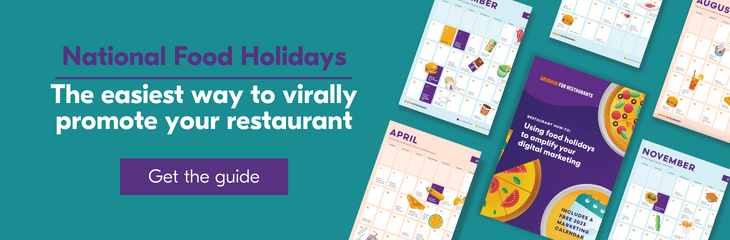
Download our Guide to National Food Holidays to learn how to spearhead your promotional marketing and elevate your digital presence. Use your new calendar to create a marketing plan or amplify your existing one. National food holidays could be your next step toward increased sales and a wealth of new customers.
March national food holidays
March is National Noodle Month and National Sauce Month.
- March 1: Mardi Gras
- March 2: National Banana Cream Pie Day
- March 3: National Cold Cuts Day
- March 4: National Pound Cake Day
- March 6: National Oreo Day
- March 7: National Flapjack Day
- March 9: National Meatball Day
- March 10: National Ranch Dressing Day
- March 13: National Chicken Noodle Soup Day
- March 14: National Potato Chip Day
- March 17: Saint Patrick’s Day
- March 18: National Sloppy Joe Day
- March 19: National Corn Dog Day
- March 20: National Ravioli Day
- March 21: National Crunchy Taco Day
- March 23: National Chip and Dip Day
- March 24: National Cheesesteak Day
- March 25: International Waffle Day
- March 26: National Spanish Paella Day
- March 30: National Hot Chicken Day

Restaurant Technology Trends for 2022
The growing demand for off-premise dining has made it even more attractive for restaurants to expand operations. Investing in the latest restaurant technology and digital innovations can help with everything from streamlining order taking to managing multi-channel marketing. Your ability to incorporate technology into your restaurant can have a huge impact on customer experience. The modern diner is tech savvy, and expects their favorite places to grab a bite to be up to date with the latest tech trends.
The online food delivery industry currently generates more than $26.5 billion a year. By 2024, that number is projected to surpass $32 billion. Technology has changed the way we dine and connect with restaurants. Keeping up with these trends can help you secure a loyal customer base and grow your ROI.
Here are the emerging restaurant technology trends every restaurant owner/operator should be mindful of and a few tips to help you as you leverage technology to take your restaurant to the next level.
1. Branded online ordering sites are now a necessity
The online food delivery industry is booming, with restaurants generating an impressive $26.5 billion annually, and considering that online ordering is growing three times as fast as in-house dining, that number will continue to rise. Even as in-person dining is back in full force, online ordering is growing 300% faster than in-house dining.
In a way, hungry diners searching for their next meal via the internet are a captive audience. Typically, they’ve already decided they want delivery or pickup – they’re just waiting to see which dish, cuisine or restaurant promotion piques their most interest. To stay competitive, it’s crucial that restaurants not only understand the importance of online ordering but also that they have a system in place to accommodate the flood of orders that are just around the corner.
Digital innovations in restaurant technology like digital menus, online ordering and secure mobile payment options appeal to consumers. Best of all, they help your restaurant stand out. But putting all that together on your own can be both daunting, time consuming and expensive.
That’s where Direct comes in. Direct is a commission-free online order platform that can be customized to fit your restaurant’s brand. Our easy-to-use ordering system has all the tools you need to create unparalleled ordering and delivery experiences that will keep consumers coming back for more.
2. Digital loyalty programs are evolving
Sometimes having incredible food and top-notch customer service just isn’t enough. Restaurants need an edge in order to outsell the competition. With new restaurant technology, loyalty programs and promotions can be used for just that.
While loyalty programs have been around forever, digitizing these experiences has made it easier for restaurants to reach customers and grow their ROI. 45% of consumers say that mobile ordering or loyalty programs would encourage them to use online ordering services more.
Offering customers an opportunity to turn loyalty into savings forgers a bond between consumers and corporations that’s proven profitable time and time again. Promotions can have the same effect by giving prospective customers a reason to try out a new establishment. It also gives existing customers a reason to come back and try a new dish.
Tie together your loyalty program and food promotions for deals like:
- Discounts or a dedicated mini menu tied to a national food holiday
- Deals linked to repeat visits, such as a free appetizer after five takeout orders
- Dollar deals awarded to customers who refer friends and family that afterward place a successful order
- Discounts celebrating a loyal customer’s birthday or program anniversary
Restaurants that join Grubhub get access to our Grubhub+ customers, where there is an audience of hungry, order-primed and subscription-paying diners waiting to see what your restaurant has to offer.
Direct users can also use built-in tools like direct-to-customer email lists and data streams to run tailored promotions or build a loyalty program from the ground up. Digital-based rewards programs allow restaurants to track customer data to provide more personalized rewards programs tailored specifically to their customers.
Restaurants that are on Grubhub Marketplace also get access to our powerful promotions and loyalty tools: A few of these tools include:
- Targeted promotions that offer superior value by targeting the right demographic
- Increased ROI thanks to smart marketing algorithms and detailed customer data
- Options for multiple campaign goals including attracting new customers, bringing back previous customers, starting a loyalty program or promoting specific menu items or order types
3. Contactless payments brings a new way to check out
The way diners pay for a meal looks a lot different these days. More and more customers have stopped carrying around cash, opting to pay for their food with cards, smartphones and even smartwatches. Contactless payment allows customers to pay for their meals without physically exchanging money.
While over 80% of US consumers have used contactless payments, only 67% of US retailers offer this payment option. Contactless payments are quick and secure, making the checkout process effortless for your customers. Restaurants who don’t incorporate contactless payment options into their business risk losing out on this large chunk of customers who resort to digital transactions.
How can you incorporate contactless payments into your restaurant? Adopting a digital point-of-sale (POS) system is the best place to start. POS technology allows small businesses to digitally manage transactions.
POS integration can also help you aggregate all your restaurant’s digital orders. Your restaurant technology no longer needs to operate on different wavelengths with the latest improvements in POS Integration. Big chain restaurants around the country are getting on board with a new post-pandemic business model that uses emerging restaurant technology to include multiple service channels. When you partner with Grubhub, you can easily integrate your POS system with Grubhub to simplify your order and menu management.
4. QR codes spread the word about your restaurant
Contactless consumer habits have extended beyond just payment with QR codes. A QR code gives consumers the ability to scan a code with their smartphones. Once they scan the code, they will be taken directly to a webpage of your choosing. QR codes allow digital materials to be more accessible – whether that be your restaurant’s menu, website or ordering platform.
QR code menus skyrocketed at restaurants during the COVID-19 pandemic. Diners appreciate the contactless way of placing an order, and the popular technology spread across the restaurant industry. QR codes give you the creative freedom to spread the word about your restaurant. Here are some places you can paste your QR codes to make them pop:
- windows: For potential customers who are trying to decide whether or not to eat at your restaurant, having access to the menu on the outside of windows can help them easily make their decision.
- walls: If you happen to have lines fairly often, then having the QR code menu on the wall where people can see it while waiting can speed up the ordering process.
- Tables: It’s common to see table toppers or small cards attached to tables in restaurants. This can be an easy way to give people more flexibility and time to decide what they want to order.
- Flyers: Print out the QR code menu and spread them all over town. This is a fun way to draw people’s attention to your restaurant, and you could offer a promotional deal for anyone that brings on the flyer the next time they eat at your establishment.
- Stickers: To be extra creative and spread the word about your product offering, you can turn your QR code menu into stickers to give to people or to hang around your community.
- Business cards: Similar to stickers, a business card is an easy item for people to grab and take with them either to their table to order or when they leave the restaurant.
Check out more tips on how you can implement QR codes at your restaurant.
5. Delivery packaging is getting an upgrade
As the channels that customers use are evolving, the way restaurants prepare and send out food has changed as well. Staying up to date on takeout packaging innovations is the key to maintaining customer satisfaction. While food quality has always been top-of-mind for diners, the integrity of the containers that keep their food safe in transit has also become an interest. Sustainability matters when it comes to packaging:
- 80% of consumers are concerned about how food packaging impacts pollution and animal safety
- 63% of the solid waste produced in the US is derived from packaging materials
- Choosing the wrong containers for your food can ruin the appearance, quality and taste of your dishes
No customer wants soggy fries trapped in a sweaty foam container, nor does a hungry family want to open their Mexican takeaway to find their salsa tubs popped open in route, spilling spicy sauce everywhere.
Take advantage of technological advances in container manufacturing by choosing the best to-go food containers that are not only designed for durability, but are also secure, environmentally friendly and crafted with specific types of food in mind.
Sustainability is a hot issue for many diners, and packaging is an area where restaurants can fall short of being eco-friendly. Recyclable containers that use biodegradable plastic, aluminum foil or recycled paperboard are not only good for the environment but can also keep your food safe en route to its destination. Learn more about how you can maintain food quality with sustainable packaging.
6. Third-party delivery is here to stay
Arguably the most significant new technology in restaurants isn’t truly in restaurants, it’s in the hands of customers ready to place an order. Third-party delivery apps have made delivery and takeout trends possible. Over one-third of Americans use a third-party delivery service at least twice a week, proving that third-party partnerships can have a huge impact on a restaurant’s ROI.
These unassuming little apps take care of everything from marketing and promotions to keeping customers up to date on when the order is prepared, packaged and on its way to their front store. But not all delivery apps follow through on their promises.
When you’re looking for a reliable delivery service app, look no further than Grubhub Marketplace. Here you get access to the largest online food delivery marketplace in existence, tied of course to an app that connects you with an audience made up to some 33+ million diners looking for restaurants just like yours.
Here, Grubhub has harnessed the power of restaurant technology to bring together cooks and consumers. Diners get to quiet their hungry bellies, while restaurants get great benefits like:
- Free merchant welcome kit
- A free tablet and/or POS integration for managing orders
- Free photo shoot and expert advice to make your meals look incredible
- Menu consultation services
- Access to a branded ordering site
- Promotional and loyalty tools
- Ability to respond to ratings and reviews
And that’s just the beginning. Partnering with Grubhub is a fast-ticket to better functionality, on-trend restaurant technology, and stress-free integration that powers more effective and efficient restaurant operations.
Restaurant technology in the bigger picture
The food we eat has always been a reflection of larger cultural trends and current events. With everything from the holistic wellness movement to sustainability affecting what we order, cook and consume.
Now, that same trend continues with restaurant technology shaping how we structure our work-from-home days, what we get hungry for when we’re gaming online, and how we expose our taste buds to exciting new cuisine.
Interested in seeing how Grubhub can help you stay on top of restaurant technology trends and usher your business toward a more successful future? Join Grubhub today and try it out free for 30 days. You’re going to love what you discover.
How to leverage customer data for your restaurant
Restaurant owners have endless data at their fingertips from a variety of sources — point-of-sale (POS) systems, marketing platforms, inventory trackers and scheduling software, to name a few. But do you know how to use this data to your advantage?
While it might take some time to understand up front, data analytics can help position your business for long-term growth. By learning how to categorize, collect, and use customer information, you can improve your marketing and build stronger customer relationships.
What are the four types of restaurant customer data?
When you start working with customer data for your restaurant, the sheer volume of information can feel overwhelming. It’s helpful to break everything down into categories:
- Identitydata covers basic information about your diners, enabling you to find your key demographics and spot opportunities for audience expansion. It includes things such as a customer’s name, age, birthday, location, ethnicity, gender, phone number and email address. Depending on your restaurant’s goals, your database might also include information about the customer’s family. You can take identity data a step further to add socioeconomic information such as job title, industry and approximate income.
- Engagement data includes details about how, when and how often customers interact with your restaurant. You can collect this information from your POS system or the analytics that are connected to your website, social media platforms or email marketing program. Useful metrics include website traffic, marketing email open rate, behavioral flow, click-through rate and conversions.
- Behavioral data covers the different ways diners engage with your restaurant. It could include order history, average order value, participation in loyalty programs and use of delivery promotions. On a broader scale, this data can also incorporate things such as email newsletter sign-ups and unsubscribes, creating an account on your delivery system and engagement on different types of devices.
- Attitudinal data involves customers’ attitudes toward your restaurant. It helps you track the opinion of your brand across your diners, the public and specific segments of your audience. For restaurants, it might cover the performance of a menu item, customer reactions to a price or feedback about a seasonal dish. This information typically comes from customer surveys, comment cards, online reviews and complaints.
How to capture customer data
Data can help drive everything from marketing to menu design — but first, you have to collect it. There are many ways to capture data; some are automatic, while others require direct input from your customers.
If you’re new to data analysis, it’s often easiest to start with hands-off data-collection solutions. These systems run in the background, gathering information until you’re ready to use it. Popular options include Google Analytics, which gathers website data, and social media analytics to help you track how customers interact with your profiles and posts.
To collect delivery data, try Grubhub Direct, a service that lets you set up a commission-free online ordering website for your business. As soon as your customers start ordering through your Direct site, the system automatically captures details such as order history, average order, purchase frequency and contact information. Since you own the data, you can download it for free, engage with customers directly and build one-on-one relationships.
When your automatic systems are running, try asking your diners for direct feedback — individual reviews tell you exactly what customers think. Request reviews in person, mention it in your marketing emails and make the request via social media. If your restaurant is on the Grubhub platform, customers can leave feedback after every order. With Grubhub Premium, you can even respond to ratings and reviews to build trust and show you’re serious about creating the best experience possible.
You can also encourage reviews by creating a Google Business profile. Customers can upload photos, rate your restaurant and leave comments. The rating is visible when someone comes across your restaurant through a Google or Google Maps search; a high rating can boost engagement and bring in new diners. Make the most of your Business profile by:
The physical activity in your restaurant is another important data source. Capture information by tracking restaurant capacity and orders per hour. Then, use the data to improve operations. When you understand how order volume and dinner numbers fluctuate throughout the day and week, it’s easier to adjust staffing to meet the demand. Efficient scheduling keeps labor costs in check and ensures employees’ workloads are reasonable.
5 tips to take advantage of customer data
Now that you know how to capture customer data, the next step is to use the information to improve your restaurant operations – and ensure customer satisfaction.
1. Create a customer loyalty program
Loyalty programs can help you collect and use customer data. Diners must sign up to participate, so you can record their names, contact information and order history. As you start to create personal records for each customer, use the data to reward and encourage repeat business:
- Track order value and provide a discount coupon after customers spend a certain amount over time.
- Monitor order frequency gaps and use them to trigger an automated “we miss you” email.
- Work with your delivery platform to offer a deal after a certain number of orders.
Check out more strategies for creating a restaurant loyalty program that stands out.
2. Send targeted promotions
Customer data gives you the power to personalize your marketing efforts. If you’re tracking a customer’s orders, for example, it’s easy to identify the items they order frequently. With that information, you can recommend new menu items, create targeted upsell offers or send customized discount coupons for the diner’s favorite meal.
Order times can be helpful, too. If you know a specific customer often comes in for lunch on Friday at noon, you might schedule a marketing email for 10 am to encourage them to choose your restaurant over a competitor.
Data is particularly useful within your delivery system. Use it to suggest items customers might like, offer a special discount for a larger order, or provide a free item with the purchase of another item. Services such as Grubhub Premium make it easy to access both promotion and loyalty tools to increase exposure and maximize the benefit of customer data. For example, if a quesadilla is your most popular item, consider offering a 10% discount to motivate diners to add it to their cart. Learn more about how you can run promotions on Grubhub.
3. Establish contacts
Once you have a customer’s contact information, use it to create and maintain an open line of communication. Put diners’ email addresses into a mailing list, and send out regular newsletters to promote new specials and announce seasonal menus. To prompt people to come in or order delivery, provide exclusive discount codes or special deals. Depending on your target demographic, you can also send coupons in the mail.
Regular contact can boost business returns, but it also keeps your restaurant top of mind. It’s a good way to announce changes that affect customers as well — holiday hours or a new location, for example. When you’re consistent with the frequency and personality of marketing emails, they can help humanize your brand and make diners feel they’re part of a community.
If you need to start collecting email addresses, there are several ways to go about it without seeming pushy. The trick is to find an incentive that’s appealing enough to get guests to hand over their email. Offer a free dessert to people who join your mailing list, invite social media followers to enter a contest, or require an email to sign in to your restaurant’s Wi-Fi.
4. Show appreciation
Tracking individual data helps you understand your customers on a deeper level. In fact, you probably know more about them than their coworkers. Use that data to show your appreciation and build a positive, lasting relationship. Some options include:
- Send a birthday discount code.
- Include a surprise treat for repeat customers.
- Celebrate the sign-up anniversary for loyalty-program members.
- Host an exclusive tasting or thank-you dinner for loyal diners.
No matter how you show thanks, receiving a special discount or bonus can mean a lot to a customer. Take a look at more ways you can show your customers you appreciate their business.
5. Get social
Social media is critical for restaurants — customers use platforms such as Instagram and TikTok to research restaurants and find exciting new dishes. To make sure your posts are getting in front of the right people, analyze customer data to find out where your target customers spend time online.
Different demographics tend to use different platforms. If you want to reach younger people, consider building a presence on TikTok or Instagram. For an older audience, you might want to double down on your Facebook posting strategy. Then, use your profile to build connections:
- Post videos of new dishes or tempting desserts.
- Release food posts when customers are thinking about their next meal.
- Offer discounts for social media followers.
Check out more tips on how to make your social media pop.
Take control of your customer data with Grubhub
At Grubhub, we understand how data can be powerful for restaurants. We’ve looked into customer data and trends to help independent restaurants like you understand your diners. Dive into our Technomic report where we dig into current online ordering trends and tips for independent restaurants. Take a look at Grubhub’s #2022Delivered to get a look into customer’s ordering habits and cuisine preferences.

Customer data is one of the most valuable tools you have to market your restaurant. The right information enables you to personalize marketing, build relationships, and boost loyalty. If you’re ready to streamline your data collection and marketing for delivery customers, try Grubhub today.
Hotel chef that serves with a smile recognized as ‘outstanding ambassador’
Charlotte’s tourism and hospitality industry has successfully bounced back after the hardships brought on by the pandemic.
In 2022, hotel demand in Uptown Charlotte for leisure travel was up 130% over pre-pandemic numbers and up 154% for group or convention-related travel. In addition, Mecklenburg County hit its highest annual total hotel revenue ever at $887 million.
A group of the people and businesses that helped support the growth and recovery were honored last week, including one worker Your704′s Elsa Gillis recently met.
ALSO READ: Two Charlotte chefs, one bar named semifinalists in the James Beard Awards
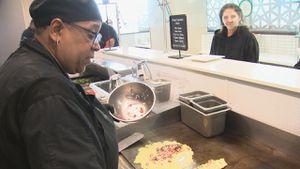
Over the course of 15 years, Wanda Grady has been smiling and singing her way through the early morning breakfast service at the Embassy Suites by Hilton in Uptown where she’s the omelette chef.
Grady’s positive attitude has not gone unnoticed by coworkers, hotel guests (her name is all over reviewed on TripAdvisor), or the Charlotte Regional Visitors Authority, who recently recognized her as “Outstanding Ambassador” at its annual Partners in Tourism Awards.
“It’s a beautiful hotel. Everybody is wonderful to me, I’m wonderful to everybody … You couldn’t ask for nothing more in your life,” Grady said.
Her coworker Harvey Johnson says Grady is a bright part of each person’s day.
“Every day, she’s like that every day,” Johnson said. “She has been like that for the last 13 years that we have been working together, she’s always the same. Regardless of what she’s going through, and of course we go through different things in life, she does a fantastic job.”
Grady believes it’s important to be kind to others because you never know what someone is going through.
“It’s important because it helps uplift people,” she said. “There’s people that travel through these hotels because someone’s at the hospital … there’s so many different reasons that bring you here.”
VIDEO: Colombian bakery is a family affair

Implementing a QR Code Menu
The restaurant industry has seen many advances over the years, and the COVID-19 pandemic has definitely had a hand in some of those rapid changes. Instead of remaining closed, many restaurants have found ways to reopen their establishments in a safe way. According to the National Restaurant Association, all restaurants in the country are back to 50% capacity or higher, which is a testament to the hard work and dedication of restaurant owners across the United States.
Whether you like it or not, going out to eat will never look the same thanks to the technological advances that have been put into place to keep people safe and boost customer satisfaction. One of the newer developments in the food industry is QR code menus. While some restaurants have been using this style of online menu for a long time, they have risen in popularity in the post-pandemic world.
If you’re interested in implementing QR code menus at your restaurant or simply want to learn more about this type of technology, continue reading.
What is a QR code menu?
You’ve most likely seen the small, black box known as a QR code before. It’s been around since the 1990s and is a machine-readable label that holds data and information about whatever the creator wants.
A contactless menu — a style of ordering that increases safety — features a QR code that your customers can scan with their smartphone cameras. Once they scan the code, they will be taken directly to your menu where they can browse food and drink options.
How to make a QR code menu
Making a QR code menu doesn’t have to be complicated. Even if you’re not tech-savvy, this is something you can do. Follow these steps to get started:
1. Find a QR code generator: There are many options for creating a QR code, but most will give you the option to create a PDF menu, JPEG menu and H5 menu file solution.
2.Choose your file: After picking the QR code creator, upload your menu file to the generator. Depending on the type of website or app that you’re working with, you may be able to personalize the type of file that is created.
3. Generate your QR code: Now that your file is uploaded to the QR code generator, you can complete the creation process. With your custom QR code, you may also be able to edit the design, color, patterns and edges to match your brand.
4. Test drive your QR code: Before you place your contactless QR code all over your restaurant, make sure that it works correctly. Use your smartphone to scan it to ensure the menu pops up on your web browser and is readable for easy use.
5. Download the code: Once you’re sure that the code works, download whatever file type works best for you. Generally, an SVG or PNG format is easy to use in print and online advertising.
6. Print the code: Now that you’ve downloaded the QR menu, all you need to do is print it and implement it where you’d like.
How to use a QR code menu in your restaurant
One of the wonderful things about QR code menus is their versatility. Unlike paper menus that are generally placed on tables or placed on the wall, contactless QR codes can be placed anywhere you desire. But, what are the most effective placement options for your menu? Let’s dive into some creative and effective places to put your QR code:
- Windows: For potential customers who are trying to decide whether or not to eat at your restaurant, having access to the menu on the outside of windows can help them easily make their decision.
- Walls: If you happen to have lines fairly often, then having the QR code menu on the wall where people can see it while waiting can speed up the ordering process.
- Tables: It’s common to see table toppers or small cards attached to tables in restaurants. This can be an easy way to give people more flexibility and time to decide what they want to order.
- Flyers: Print out the QR code menu and spread them all over town. This is a fun way to draw people’s attention to your restaurant, and you could offer a promotional deal for anyone that brings on the flyer the next time they eat at your establishment.
- Stickers: To be extra creative and spread the word about your product offering, you can turn your QR code menu into stickers to give to people or to hang around your community.
- business cards: Similar to stickers, a business card is an easy item for people to grab and take with them either to their table to order or when they leave the restaurant.
Boost customer experience with QR codes
In the technology-focused world that we’re living in, people enjoy fast-paced dining and hands-on experiences. QR code menus provide the self-service element that many customers desire when choosing a restaurant. It gives people the ability to scan the food, dessert and drink menus right when they sit down without waiting for a server to bring them.
It also eliminates the problem of menu sharing — the unfortunate occurrence when a restaurant doesn’t have enough menus for each person at a table. If you’ve ever been at a table with a hungry crowd without enough menus to look at, you understand the frustration of menu sharing. Adding a QR code menu can help you avoid hangry customers and allow everyone to individually spend time browsing your delicious options.
What should you consider when implementing a digital menu?
As helpful as QR code menus are, they still have their cons. If you’re considering exchanging your physical menus for contactless ones, make sure that you pay attention to the potential issues that come by relying on digital menus. Here are some challenges to consider:
Not everyone has a smartphone
Although smartphones have become a staple in most people’s lives, not everyone has a phone that will enable them to scan a QR code. To ensure you won’t lose business from this audience, it’s important to keep a couple of copies of a physical menu on hand just in case.
It can get in the way of communication
There are many reasons that people may be eating at your restaurant, but a group of friends or family might be getting together to catch up and communicate with one another. Having to sit down and instantly look at your phone to see the menu may put a barrier between interaction with your guests.
A QR code can take away from your restaurant’s aesthetic
For fine-dining or fancier restaurants, a QR code menu may feel like a disruption to your establishment’s upscale brand. Physical menus tend to feel more classic or traditional, so consider what type of restaurant you run and whether or not a contactless menu style will help the overall customer experience.
How can your restaurant benefit from a QR code menu?
Although the physical menus are great, there are many benefits that come from implementing a contactless QR code menu in your establishment. Here are some reasons to try them out:
Safety first
Traditional menus are often passed around to multiple diners and the staff without being sanitized. Eliminating physical menus reduces the possibility for bacteria living on shared surfaces or spreading through physical contact. A QR code menu doesn’t require customers to touch it, and the QR code flyers can easily be replaced.
Updating is easy
Because a QR code menu is digital, you can easily switch out entrees or drinks when you’re wanting to try out new dishes without having to reprint your restaurant menu. It also gives you the ability to update your menu’s design whenever you want to. Your staff just needs to edit the online menu and the QR codes will automatically sync with the updated info.
Fast table turnovers
Because there is no need to drop off or pick up menus and there is less obligation to sanitize surfaces between uses, you can save time and get more people in and out of your restaurant quickly. Quick table turnover means you can serve more customers daily.
Reduces costs
Buying physical menus and replacing them can add up, especially if you need to print many copies for all of your expected customers. Since QR code menus are digital, you skip the printer and save lots of money on design and printing services.
Integrates seamlessly
If you’re nervous about trying and implementing a QR code because you already have a stable technology stack in use, don’t worry! This contactless menu works well alongside any existing tech and online ordering systems because they are easy to upload to your website and display on TV or iPad screens.
Help restaurants
After the COVID-19 pandemic, many restaurants have struggled to fill empty staffing and serving positions within their businesses. QR code menus can help lower-staffed establishments because customers can use the menu without having to wait for it to be brought to the table.
Environmentally friendly
By using digital menus, you avoid using the large amounts of paper and plastic that physical menus require. This is a much more sustainable solution and is better for the environment. According to a study done by SmartBrief, customers are 50% more likely to choose a restaurant that operates with environmentally friendly practices over an establishment that doesn’t.
A partnership with Grubhub can benefit your restaurant
Implementing QR code menus isn’t the only way to improve your restaurant operations. Partner with Grubhub to get the following:
- Technology integrations: Gain access to point-of-sale and tech integrations to help simplify your processes.
- Grubhub Direct: Create a commission-free ordering website that matches your existing branding. Direct also makes it easy for you to integrate your QR code menu onto your site, making it easy for customers to order directly off your commission-free site with just one scan. For extra exposure, print out your QR codes and put them in your delivery bags for the next time someone wants to order from your restaurant.
- Delivery options: Seamlessly incorporate our flexible driving solutions to get orders where they need to go quickly.
- 24/7 support: When you partner with us, you get to work with a real person who wants your restaurant to thrive. Ask any questions from our experts and let us help you meet your goals.
There are so many people all over the country who are looking for a new restaurant to try out — 33+ million to be exact. If you want to turn these diners into repeat customers, partner with us!
Ready to get started? Partner with Grubhub today.