

Chef vs Cook: What’s the Difference?
The terms “chef” and “cook” are often used interchangeably. While they’re similar, the two positions often have different backgrounds and responsibilities. When you’re hiring restaurant employees, it’s important to understand the nuances of chef vs. cook roles.
Chefs vs. cook: what each role means
The concept of chef vs. cook can vary from restaurant to restaurant. After all, both positions are responsible for preparing ingredients and cooking the food that’s served to customers.
In a commercial kitchen, a chef usually has formal culinary training and experience — and high-level responsibilities. They might supervise lower-level employees, develop recipes, cook food and ensure the kitchen runs smoothly.
Cooks also prepare food, but they have more flexibility in terms of education and experience. Small, casual restaurants may not require formal training at all; cook jobs may be entry level or have minimal experience requirements.
Some restaurants have both chefs and cooks; others have one or the other. In a small restaurant, the chef and cook may be the same person. Larger kitchens typically have multiple types of chefs and/or cooks, each with nuanced roles.
In general, cooks are more common in chains, casual restaurants and small eaters. You’ll often find chefs in high-end restaurants and fine-dining establishments.
How do you become a chef or cook?
Education is the core of the difference between chef vs. cook roles. To become a chef, workers must typically attend culinary school. After that, they often start with a commis chef position and work their way up through the ranks of different restaurant kitchens.
Cook positions don’t usually require a culinary school degree. Many cooks start out with entry-level prep cook jobs. As they learn new recipes, build food-prep skills and gain experience, they can move up to line cook and head cook jobs.
What are the different classifications of kitchen roles?
“Chefs vs. cook” is a high-level classification; many restaurants have multiple positions within each category.
Common chef jobs include:
- executivechef. The highest-ranking chef in a kitchen, this person is in charge of top-level tasks such as developing a menu, creating recipes, tracking kitchen operations, managing the food-purchasing process, maintaining inventory and creating and sticking to a budget. Interestingly, executive chefs don’t typically spend much time cooking on a daily basis; their duties are primarily managerial.
- headchef. This role, also called the chef de cuisine, has a more hands-on supervisory role in the kitchen. They manage meal service, track food quality, and make sure kitchen staff members are working efficiently throughout each shift. Many head chefs spend time cooking. In smaller restaurants, the head chef may also take on the responsibility of the executive chef.
- Souschef. “Sous” means “below” in French; in a restaurant hierarchy, the sous chef is directly below the head chef and/or executive chef. They cook and help manage other kitchen staff, particularly when the head chef is unavailable. This position is common in restaurants with large kitchen teams.
- Chefs de partie. These chefs are responsible for individual stations in a kitchen. They might specialize in tasks such as making sauces, pastries, or vegetables. In some restaurants, they handle tasks including frying, grilling or roasting.
- Commischef. The lowest-ranked chefs, these workers support chefs de partie. They might prepare ingredients, help with cooking, or take on any task that occurs during a shift.
Types of cooks include:
- Head cook. This person is in charge of the kitchen; in a small business, the owner may even take on the role. They manage workers, train other cooks, and ensure dishes are prepared correctly and consistently. Head chefs are usually highly experienced; many have formal culinary education.
- Linecook. Line cooks have jobs that are similar to a chef de partie — the person responsible for a specific part of the “line,” or the kitchen operations.
- Prep cook. The lowest-ranking cooks in a kitchen, these employees get ingredients ready for a meal service. They might chop food, prepare cuts of meat, make salads or help chefs with simple cooking tasks. Prep cooks may also ensure that their areas are clean and sanitized.
The number of kitchen roles your restaurant needs depends on a number of factors. Restaurants with high-end or highly specialized menus often need more chefs, each with targeted experience or a unique set of skills. Bigger restaurants often require a larger staff to maintain consistent food quality and manage the sheer volume of customer orders.
Pros and cons of being a chef
For people who are considering a chef vs. cook career, the right path isn’t always clear. After all, a professional chef title commands respect, but it also takes time and money to earn high-ranking positions. The process can be so demanding, in fact, that many people choose to skip culinary school and work their way into a head cook position. Naturally, there are pros and cons to both approaches.
Pros of being a chef
- High earning potential
- Flexible career paths
- Skill-building opportunities
Cons of being a chef
- Requires a culinary degree
- Long hours
- Requires physical work
Hire a chef or cook for your restaurant
If you’re deciding whether to hire a chef or a cook for your restaurant, consider your priorities. A seasoned cook can offer practical knowledge and exceptional cooking skills, and they may accept a lower salary than a formally trained chef.
It doesn’t matter who you hire to lead your kitchen, it’s always important to create a good relationship with your staff to curb turnover. Implementing employee recognition ideas can make everyone who works at your restaurant feel valued — from the executive chef down to commission chefs and hosts.
Professional chefs require higher salaries, but they bring the benefits of a professional culinary education — specialized training, industry insights and connections that can benefit your business. Chefs can be a valuable resource in helping you grow the restaurant while controlling costs and maintaining food quality. No matter where your restaurant falls on the chef vs. cook spectrum, a skilled professional can help you build a stable, lasting business. As you look for ways to expand operations or increase revenue, a strong delivery presence is a must. Partner with Grubhub to reach a variety of local customers and introduce more diners to your food.

What you need to know about tip pooling
Tips are an integral part of the restaurant industry. They motivate employees to provide exceptional service, creating an experience that brings customers back time and again. For employers in many states, tips can also make up the difference between the server minimum wage and the federal minimum wage. If you’re looking for ways to distribute tips more fairly among employees, tip pooling is one option.
What are the tips for pooling?
Tip pooling is a practice where restaurant employees put all or part of their tips into a communal pool. The employer divides the total funds among eligible workers, either equally or using a predetermined ratio. This method is an alternative to tip sharing, where servers and bartenders voluntarily hand over part of their tips to other employees who help with service but don’t receive tips.
As you might guess, tip pooling can be a polarizing tipping method. It’s usually beneficial for employees such as bussers and expediters, but servers who tend to receive higher tips may find the practice unfair. And if certain employees work harder than others, either in perception or reality, tip pooling can create conflict among the staff.
For some employers, tip pools are the most sensible option. Take coffee shops, for example — multiple people are involved in taking orders and making drinks, but customers only tip once. By pooling tips, everyone receives their fair share. The same goes for any counter-serve restaurant where cashiers and kitchen employees work together to prepare orders.
Tip pooling is less common in traditional table service restaurants, but that’s not out of the question. As an employer, you might use this method to promote a collaborative rather than competitive atmosphere. If you’re currently using a tip credit system to satisfy minimum-wage requirements, you can still use a tip pooling system as long as you stay compliant with any applicable laws.
How are pooled tips calculated?
The way you calculate pooled tips depends on local, state and federal laws. All restaurants are subject to the Fair Labor Standards Act (FLSA), which allows employers to mandate a tip pooling arrangement for staff members. If you take a tip credit, the FLSA only permits your tip pool to include employees who traditionally receive tips. When you pay a minimum wage for all employees, you can also include non-tipped workers such as chefs or dishwashers. According to employment law, employers, managers and supervisors may not accept money from a tip pool.
The tip pooling method and timeline you choose also affects the calculation. If you pool tips for each shift and distribute them evenly, the process is simple. Add together all the tips at the end of the shift and divide them by the number of employees working. If the tips total $1,000 and you have 10 employees, each person will receive $100.
When you choose a percentage or points-based system, the process is slightly more complex. Imagine you have two servers that receive 40% each, a host that receives 15% and a busser who gets 5%. For a shift with $1,000 in tips, each server would get $400, the host would receive $150, and the busser would get $50.
Federal tip pooling law requires you to distribute the tip pool by payday at the latest. For card tips, you’re permitted to deduct the credit card company’s transaction fee percentage — unless doing so pushes the employee’s compensation below the minimum wage.
At tax time, your employees must report 100% of the tips they receive. The IRS also monitors employee tips as a percentage of your restaurant’s income. If tips make up less than 8% of your gross receipts, you must make up the difference and split it among tipped employees.
Tip pooling methods to try
Tip sharing is rarely a one-size-fits-all solution; as an employer, you can customize the process to fit your operations and employee preferences. Keep in mind that tip sharing doesn’t require you to pool 100% of tips. If servers and other tipped employees are good at the prospect, consider creating tip pools from 20% to 50% of the total gratuities.
Common tip-splitting methods include:
- Even distribution. The tip pool is split evenly between all employees. This method is useful for bakeries, fast food outlets, coffee shops and counter-serve restaurants where employees work together to prepare orders, serve meals and clean up after customers.
- Percentage-based. Employees receive a percentage of the tip pool based on their contribution to service. Because servers handle the bulk of the customer-facing duties, they typically get a majority of tips. Bussers, hosts and bartenders usually receive smaller percentages.
- Points. This tip-pooling method is similar to the percentage system, except employees receive a certain number of points depending on their role. Add up the points for everyone who’s working, then divide the total tips by the number of points to get a per-point dollar value. The point value changes every shift, helping to account for variations in staffing and order volume.
After you choose a tip-pooling method, you must decide whether to calculate tips at the end of each shift or at the end of the day. Shift-based distribution requires more accounting work on the employer’s side, but it offers fair compensation for employees who work the busiest shifts. You might choose a workday distribution method — where employees receive tips based on the number of hours they work — if you’re open for a limited number of hours or if your orders tend to be stable across shifts.
The pros and cons of pooling tips
Not sure if tip pooling is right for your restaurant? The pros and cons can help you make a decision.
Pros of pooling tips
- All service employees receive tips from the tip pool.
- Employees aren’t penalized when they’re assigned to a low-tipping table.
- Tip pools can encourage teamwork.
Cons of pooling tips
- Tip pooling laws can complicate your tip credit system.
- Employees are compensated equally even if they put in less work.
- It can create conflict between average and high-performing workers.
- Pooling tips adds complexity to employer accounting procedures.
When in doubt, ask your restaurant employees how they feel about pooled tips. Experienced, highly skilled workers may be strongly opposed; if they’re forced to pool tips with new or lower-performing workers, they’ll almost certainly make less money. When employees rotate positions in a counter-serve restaurant, however, the system can benefit the entire team.
Keep employees happy while growing your business
If your employees are happy with it, a tip pool can boost morale across the entire team. But employee appreciation shouldn’t stop there. Taking time to show your employees you appreciate their work will help foster a healthy work environment. Keeping employee practices consistent and fair will help minimize turnover.
Don’t forget to include your delivery tips, too. With Grubhub, you can opt to self-deliver orders within your preferred radius to ensure all tips remain with in-house staff. To learn more or try the system for free, get started with a Grubhub account.

How to Create a Compelling Kids’ Menu
Whether ordering in or eating out, mealtimes are often a family affair. Creating a menu specifically designed for kids makes the entire experience much easier for all involved. Does your restaurant have kids meals that have them asking for seconds?
The best children’s menus are both kid-friendly and parent-approved, so here are five kids’ menu ideas to help you please the whole family.
5 menu items you need in your kids meals
What makes a kids meal different from a regular menu is that it’s catered towards kids’ pallets, keeps portions smaller and often comes with a side. Parents appreciate when meals are holistic, keeping in mind nutrients and ingredients. Creating kids meals with a variety of popular mains and a choice of sides keeps kids full and parents happy.
Here are five dishes kids enjoy:
- Mac and Cheese
The gooey combo of melted cheese and macaroni noodles is one no kid can resist, making it a staple on any kids menu. Mac and cheese is the perfect item to let your chef get creative – use fun noodle shapes, combine cheese, add protein or finish with parmesan. Including a dairy-free cheese option or a gluten-free noodle substitute can help make sure this menu item can be enjoyed by all.
Spice up this popular “safe” option with healthy sides like chopped veggies or a cup of fruit. Parents will be thankful for the extra nutrition, and including a free side will make customers feel like they’re getting a good deal.
- Sliders and hot dogs
You can’t go wrong with hot dogs and hamburgers, no matter the season. Make this classic barbecue unique by serving it up in kid-friendly sliders. Offer turkey burgers or veggie dogs to accommodate those with dietary restrictions.
Provide a few sauce options so that the kiddos can dip their bite-sized mains into ketchup, honey mustard or an aioli. Giving kids the power to select what sauces they want can ensure you’re serving them what they like while avoiding wasting ingredients they won’t touch.
- Build-your-own tacos
The best way to satisfy picky eaters is to give them options, and tacos are the perfect food choice. Let kids pick from a variety of fillings, and bring out their choices in separate bowls. Provide a few mini tortillas so that the kids can experiment with their creations. Keep sauce portions small, and try toning down the spice level for young pallets.
- Chicken
While this game may seem basic, the preparation options are endless – keeping all types of little eaters satisfied. Stick to the classics with chicken fingers, or get creative with dino nuggets. You can also size down your most popular adult chicken dish to give kids a chance to try it in an approachable way.
A chicken dish isn’t complete without sides. Give a variety of fun and healthy options for kids to choose from like sweet potato fries, maple roasted carrots, parmesan broccoli or zucchini tots.
- Customizable pizzas
Pizza is another kid-favorite that is sure to be a kids meal hit. Want to take the classic cheese pizza to the next level? Give kids different topping options and create a fun design on the pie with their chosen toppings.
Save money on ingredients and limit food waste by creating an 8-10 inch personal pizza. If you want a healthy take on this quick service classic, try serving flatbreads or whole wheat crusts. Parents will appreciate the nutritional value, and kids may not notice the difference.
How to design a kid-friendly restaurant
Including the perfect kids meal dishes is just the beginning to create a kid-friendly restaurant environment. Here are some other ingredients you need in your recipe for success:
Offer Healthy Options
In kids’ food trends, we’re seeing staple menu items such as macaroni, cheeseburgers and pizza getting phased out in favor of more health-conscious options. Opt for alternatives such as veggies, fruit and lean meat, which are sure to win parental approval. Additionally, consider offering gluten-free or dairy-free options for kids with allergies or dietary restrictions.
Keep with the Theme
There’s no need to reinvent the wheel. Your kids’ menu doesn’t have to stray too far from your other offerings. Offer some of your staple choices in smaller portions that appeal to younger diners. This is especially important for older children who want to act (and eat) more like adults.
Offer combos (and allow for substitutions)
Allow kids to customize their kids meals by offering combo options. For example, let kids pick out their favorite entrée and two sides from a list of options. The best combo menus make it easy for parents and children to avoid certain ingredients – like gluten or meat – to easily accommodate dietary restrictions. If combos are a bit too complicated for your menu, you can still appeal to picky eaters by allowing for easy substitutions.
Keep it Punchy
Kids can have short attention spans, especially when it comes to making decisions. Long descriptions and wordy phrases can cause them to quickly lose interest. Keep descriptions short and to the point to please parents and budding readers alike. Eating is a full sensory experience. Add fun images to make the ordering experience even easier for the little ones.
Make the food fun!
Fun food for kids is key! There are plenty of ways to bring creativity into kids’ cuisine. Here are a few fun ways to make your restaurant kid-friendly:
- Make shapes out of fruit or faces out of veggies
- Use kid-friendly food coloring to play with color in items like drinks or bread
- Serve up your dishes on fun plates to encourage them to eat their meal to discover what’s underneath
- Pack kids take-out drinks in fun cups they can keep
- Create an interactive kids menu with games, coloring and crayons
- Provide high chairs to make it easy for kids to dine at the table
List your kids meal on Grubhub
Kids’ menu orders have grown 40% each year since 2012, which proves that kid-friendly foods are in high demand. Restaurants that can successfully enter those with little appetite will reap big benefits in the long run.
Are your kids meals ready to go? Partner with Grubhub to get your menu on Grubhub Marketplace so customers can enjoy your food on the go. Ready to reach new customers and grow your business with Grubhub? Signup today!
Your Guide to Restaurant Credit Card Processing
Credit card processing is one of the most significant developments to hit the restaurant industry in recent memory. This convenient technology lets business owners accept payments remotely, without the need for cash or checks. It makes buying and selling easier for merchants and customers alike, promoting smoother business processes.
Although most companies have managed credit card transactions the same way for years, new restaurant technology trends are revolutionizing the process. If your restaurant accepts cards as payment, it’s helpful to understand the underlying systems that make both the new and old methods possible.
Let’s dig in.
What is credit card processing?
Credit card processing is the method businesses use to accept payments by card. It includes a complex sequence of actions that are initiated when a customer swipes, taps or dips their card at your POS terminal. When the process is complete, the payment appears in your bank account.
For decades, customers paid for food by offering cash or writing a check. That all changed in 1950 when the first true credit card — the Diners Club card — allowed customers to charge their meals at a select number of restaurants in New York. Recognizing the benefits of this handy payment processing method, more businesses got on board. The idea spread to other cities, and within a few years, numerous banks began to offer credit cards.
Today, restaurants use this technology to provide a faster and more convenient checkout process. Unlike other payment methods, which require you to accept cash or checks and manually deposit them into your bank account, credit card processing allows you to transfer money remotely from a customer’s bank to yours.
The ins and outs of credit card processing
Restaurant credit card processing seems simple on the surface — a customer hands you a card, and the terminal either accepts or denies the payment. Behind the scenes, it’s considerably more complicated.
When the customer inserts their card, the card reader sends an authorization request to the device’s payment processor. The processor then relays the request to the network for the appropriate card association; Visa or MasterCard are two common national processing options. Using this network, your bank checks to make sure the customer’s account has enough money to cover the bill. The system returns a code that tells your POS to approve or deny the transaction.
These initial steps of credit card processing happen in seconds. However, when a transaction is approved, it can take a few days for the customer’s bank to send the funds to your bank.
Credit card technology is evolving, and your restaurant may have one of a few primary processing types. The oldest is the magnetic stripe, which stores customer information and transmits it to your POS via swipe. Most banks, however, have now adopted cards that are embedded with a tiny chip. They generate a different code for every purchase, creating an extra layer of security and making it harder to steal account information.
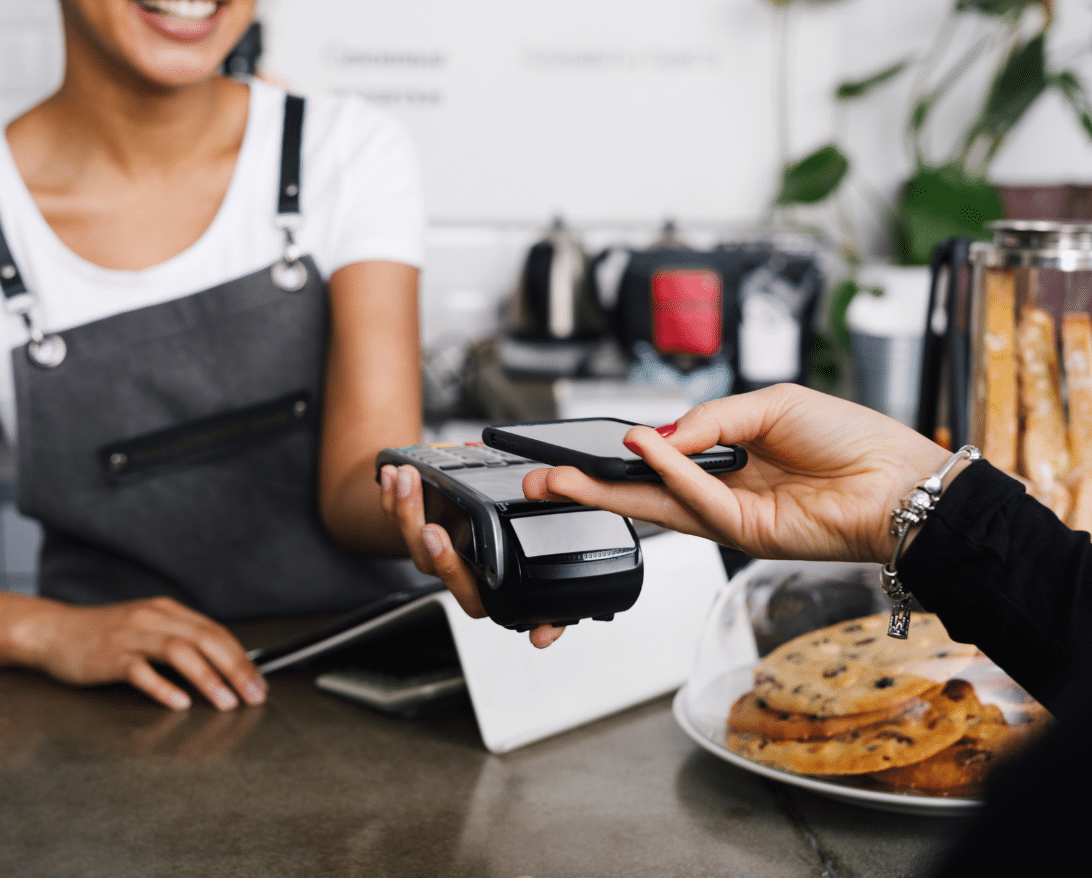
Today, many customers prefer a third option: contactless cards. These cards have chips that are equipped with tiny radio antennas. To transmit their account information, the customer taps the card on the reader — it sends the information over radio waves using radio frequency identification (RFID). Systems like Apple Pay use similar near-field communication (NFC) technology, enabling customers to pay with cards stored on their smartphones.
Keeping up with these latest trends in restaurant technology can help make your menu more accessible to customers. In fact, 80% of consumers have used contactless payments. If you fall into the 67% of US retailers who don’t offer this payment method, you could be missing out.
What to look for in a credit card processor
A high-performing credit card processor enables you to complete transactions quickly and create a better customer experience. When you’re choosing a credit card processor, consider these factors:
- Payment processing types. Select a processor that accepts a wide variety of in-person and online transactions. At a minimum, this includes swipe, chip, and contactless cards. RFID or NFC payments are particularly important; more than 50% of Americans use contactless payments. Most models also enable you to manually type in the customer’s credit card number for phone transactions or as a backup if other methods fail. If your restaurant participates in off-site events, look for a processor that allows mobile payment processing.
- Fees. Credit card processors charge a variety of fees for their services. Verify the percentages and calculate how they’ll affect your profit margins.
- Customer service options. Make sure an agent is available around the clock to help you if a problem arises. Read customer reviews; if you see a pattern of complaints about service, proceed with extreme caution. Regular outages or payment problems can damage customer relationships.
- Physical hardware. Investigate the type of hardware the processor offers and make sure it’s appropriate for your restaurant. It’s also a good idea to check whether the card reader is separate or built into a proprietary POS.
- compatibility. Verify that the system is compatible with your existing POS, CRM, and bookkeeping software.
- Terms. Check the terms of the agreement to find out how long it takes before funds are deposited into your account, verify the length of the contract, and learn about the fees for early termination.
Common credit card processing fees to be aware of
Accepting credit card payments involves multiple parties; each one typically charges a small processing fee for every transaction you make. They usually include:
- Merchant service fees. This is what your payment processor charges for its processing services.
- Interchange fees. This payment goes to the customer’s credit card issuer.
- assessment fee. This fee is charged every month as a percentage of your total sales. It goes to the credit card associations for the different types of cards you accept.
Actual fee amounts can vary considerably but usually range between 1.5% and 3.5% of each transaction. Each payment processor has its own pricing structure, so it’s important to compare quotes. The most expensive options tend to be those that charge a percentage of the sale plus an additional fee. Even though the flat fee is usually small, it can add up significantly over time. You can avoid high fees by choosing a provider that eliminates charges for renting equipment and sending statements.
Keep in mind that fees can vary between transaction types. To find the best deal, compare your sales data to the processor’s costs for in-person transactions, online sales, contactless app payments, and non-preferred cards.
Benefits of using credit card processing at your restaurant
Despite credit card processing fees, it’s almost always beneficial for your business to accept debit cards and credit card payments. Doing so helps you deliver a more convenient experience — customers can enjoy your food without a trip to the ATM. And because they don’t have to worry about having enough cash on hand, diners are free to spend more.
Modern consumers are accustomed to paying by card; in 2022, 41% of Americans made all their regular purchases without cash. Accepting cards lets you bring in more revenue from these cash-free customers.
Credit card processing also benefits your employees. The digital system reduces the risk of human error, making it easier to balance the till. Because customers don’t have to wait for change, transactions move more efficiently.
While credit cards have both benefits and drawbacks, you can minimize risk with these best practices:
- Ask for customer IDs.
- Use the chip instead of the magnetic stripe whenever possible.
- Offer contactless payments.
- Give a receipt for every transaction.
- Partner with a secure, reputable processor.
For most restaurants, the benefits of credit card processing far outweigh the fees. By choosing a payment processor carefully, you can minimize costs and deliver a fast, seamless checkout experience. Looking for more ways to integrate technology into your restaurant? Partner with Grubhub today to explore POS integrations, online ordering and delivery.

10 Restaurant Sustainability Tips | Grubhub
The US Department of Agriculture (USDA) estimates that 30% to 40% of the food supply in the United States goes to waste each year. Restaurants are a significant contributor; in fact, between 4% and 10% of the food in commercial kitchens is thrown out before it’s even prepared. That’s a lot of meals thrown in the trash.
If you run a restaurant, this issue may already be on your radar. By finding ways to reduce food waste in your organization, you can ease the financial and environmental impact and set a good example for other businesses in the industry.
But how can your restaurant reduce food waste while maintaining quality? Read on to find out.
The impact of food waste
For restaurant owners, reducing food waste is a financial priority. After all, the ingredients you don’t use can come with significant costs. If you spend $100,000 on food and 4% of it goes to waste, you’re losing $4,000 — plus the costs of labor and storage that come with ordering, handling, and managing inventory.
On a grand scale, wasted food has more serious effects, both for the planet and the human race.
- environmental impacts: The US Environmental Protection Agency (EPA) estimates that food waste accounts for 21.6% of municipal solid waste. Most of that waste ends up in landfills; this cycle wastes all the energy that went into growing, producing, and transporting the food. Because food emits methane as it decays, it contributes to climate change.
- Food insecurity: The USDA found that 13.5 million households in the United States were food insecure in 2021, which means they didn’t have access to enough food at some point during the year. Wasted food can’t be rerouted to families in need.
The causes of restaurant food waste vary. Some food spoils before it can be used, often due to ineffective storage or poor inventory management. In some cases, your kitchen team might prepare too much of a certain dish; if you can’t serve it in time, it ends up in the trash. The same thing happens when customers don’t finish their meals.
7 restaurant sustainability tips to reduce food waste in restaurants
Here’s the good news: There are plenty of things you can do to improve food waste reduction at your restaurant. With small adjustments to your operational practices, you can cut waste, save money and reduce your ecological footprint.
1. Conduct a food waste audit
A food waste audit is one way to track the food that’s thrown out at your restaurant. During the audit period, staff should dispose of all food waste — including kitchen scraps, spoiled food and plate scrapings — into designated bins. In the process, ask your team members to make notes of the following:
- Ingredients, dishes or items that appear frequently
- Items that could be donated
- Food that’s thrown out before it’s used
At the end of the audit, weigh the food waste. Write down the amount, along with the number of meals you served and the revenue you brought in. These numbers serve as a baseline for future comparisons.
The results of the audit can help you find opportunities to reduce waste. If you notice that customers almost always throw out a certain vegetable or side dish, for example, it’s a sign to replace it with something else. If you have a high volume of spoiled food, consider revising your inventory and storage strategy.
2. Recycle used cooking oil
Restaurants use an average of 35 pounds of cooking oil per day. Disposing of it can be a hassle; an environmentally friendly solution is to recycle the oil. Get in touch with an oil-collection company that can pick up your used oil and transport it to a recycling facility. There, the oil is transformed into biodiesel fuel, animal feed, fertilizer and other products.
To reduce the amount of oil you send out for recycling, extend the life of your cooking oil by skimming it every 2 hours. It’s also a good idea to filter it at least twice a day to remove extra food particles and contaminants.
3. Optimize your restaurant storage
A poorly planned storage system can cause food to go to waste before you have a chance to use it. Here are some steps you can take to successfully optimize your restaurant storage:
- Designate storage tasks to specific employees.
- Create a shelf-life chart for quick reference.
- Store and label products immediately after delivery.
- Use ingredients on a first-in, first-out basis.
- Use perishable items as soon as possible.
If you notice that certain items go in the trash frequently, it might be time to remove them from the menu or order them in lower quantities.
4. Donate food whenever possible
Speak to local food banks, soup kitchens, and homeless shelters to identify the foods you can donate. Most organizations have specific rules; for example, they probably won’t accept prepared food that’s been on a buffet line. However, they can typically take non-perishable goods and packaged foods that aren’t expired.
Donating food doesn’t cut your costs, but it can help you earn tax credits. It also keeps food waste out of landfills.
5. Give leftovers to employees
When your restaurant has left over food that can’t be safely stored, donated or used in another dish, invite your employees to take it home. This is a great way to reduce food loss when a specific item doesn’t sell or the kitchen makes too much. It also helps boost employee morale.
To protect your employees, it’s important to follow safe food-handling practices. Don’t let them take food that’s been sitting out too long, and always make sure it’s packaged and stored properly.
6. Consider composting
There’s not much you can do to salvage food scraps left over from food preparation or customer meals. Instead of throwing them in the garbage, turn them into compost. One option is a commercial composter, which works quickly and accepts most types of food. Alternatively, you might be able to send your scraps to an industrial composting company.
If you have the space — and if the local health department allows — you might be able to build a traditional compost bin outdoors. Then, simply donate the compost to a local farm or community garden.
What can be composted in a restaurant kitchen?
- Food and vegetable scraps
- Coffee grounds and paper filters
- Paper tea bags (no staples)
- Eggshells (crushed)
- Shredded paper and cardboard
Meat, dairy products and oils cannot be composted. Cooked food also will not be composted.
7. Reduce portion sizes
Does most of your restaurant’s waste come from customer plate scrapings? Your portion sizes might be too big. Reducing portions is particularly effective if your customers can’t easily take leftovers to go; this is a common issue for restaurants located near hotels and airports. Alternatively, offer popular dishes in multiple size options so customers can order the one that best fits their appetite.
Before you start offering smaller portions, take time to train the staff. Teach them how to measure the correct amount of each item and how to plate it attractively. Depending on current sizes, you might consider using smaller plates or getting creative with presentation.
Additional restaurant sustainability tips
Reducing food waste in restaurants is just the first step toward sustainability. If you want to make a bigger change in your business, try these tips:
- Turn off equipment. By shutting down some kitchen equipment when orders begin to dwindle, you can save hundreds of dollars each year.
- Replace pre-rinse spray valves. Swap them with efficient models that use 20% less than the federal standard of 1.6 GPM; it can help you save $115 to $240 annually on water and energy costs.
- Insulate your water pipes. This low-cost strategy reduces energy loss.
- Become a certified green restaurant. Work with the Green Restaurant Association to get personalized sustainability recommendations. When you meet them, you’ll receive a certification that can be used on your website and marketing materials.
- Invest in sustainable packaging. Swap out plastic and foam options for sustainable to-go containers
- Reduce single-use plastic cutlery. You’ll save money and reduce overall waste. To help, Grubhub has joined the #CutOutCutlery campaign. In addition, delivery orders automatically default to zero utensils, so customers can opt in only if needed.
Grubhub for Restaurants is committed to driving sustainability across the restaurant industry
As a trusted delivery and mobile ordering platform, Grubhub is taking action to boost sustainability and food waste reduction. When you sign up with Grubhub for Restaurants, you’ll gain access to features that include:
- Quick menu edits. It’s easy to remove dishes when an ingredient runs out or you switch to a seasonal menu.
- Promotions. Use sales to move inventory before it expires.
- Virtual restaurants. A virtual restaurant is delivery-only; it gives you the freedom to adjust your menu, ordering and food-prep strategy to reduce waste and use fewer resources.
- Tech integrations. Grubhub uses the latest technology to allow accurate ordering and reduce errors.
When you’re trying to cut back on food waste, every action helps. Whether you choose to compost food scraps or find a food-donation option for surplus food, your efforts can cut costs and help the planet. If environmentally friendly delivery is part of your sustainability plan, Grubhub can help. To try Grubhub for Restaurants, sign up today.
How to get a liquor license
Alcohol can be a profitable revenue stream for your restaurant. It’s an easy win — the markup is high, the labor requirements are low, and the product has a long shelf life. In fact, the average restaurant makes about 20% to 25% of its income from alcohol sales. Before you can add beer, wine or spirits to your menu, however, you’ll need a valid liquor license.
What is a liquor license?
A liquor license is the permit you need to make, distribute or sell alcohol legally. These licenses are usually issued by your state, but counties and cities may also set additional restrictions. While each area has its own rules, most liquor licenses regulate factors such as:
- The types of liquor you can sell
- When you can sell alcohol
- Where customers can consume the alcohol they buy
- Limits on alcohol sales
- Who can buy alcohol from you
- Price limits on alcohol
It’s important to understand the specific liquor laws for your state, county and city — after all, you’ll need a license before you can sell a single drink. Most areas offer several license classes to suit different establishments. Common classes include:
- Beer and wine. These licenses allow you to sell beer, wine, cider and occasionally other malt beverages. Most areas have distinct beer and wine licenses for bars, restaurants, wineries, breweries and catering businesses.
- All-liquor. This license goes by many names, but it typically permits you to sell beer, wine and spirits.
- Tavern. A tavern license is designed for establishments where alcohol makes up the majority of sales.
- Hotel. Hotels that serve alcohol on the premises need this type of license, which may offer both on-premises and off-premises consumption.
- Brewing. A brewing license allows an establishment to brew its own beer and sell it to customers. Other licenses may also be required.
Most states have multiple variations on these licenses that specify whether you need to sell food, if customers can take their drinks to go and rules for live entertainment. Make sure to start early; the application process can take months.
How to get a liquor license
Your state’s liquor-control body, which is often called the Department of Alcoholic Beverage Control (ABC), typically handles the licensing process. It can tell you how to get a liquor license and advise you of any local laws that might affect the process. Some states require you to have a seller’s permit and appropriate business tax registrations before you can apply.
The process can vary by state, county and city but usually involves a variation of these steps:
- File an application. Contact your state’s ABC and file an application. You may be able to apply online; in certain areas, however, you’ll need to bring the application to the nearest ABC office. Expect to pay an application fee. You may also be able to apply for a temporary permit to sell alcoholic beverages before the official review process is complete.
- Post a public notice. Many areas require you to post a public notice in your restaurant to let customers know you’re applying for a liquor license. Certain states have additional rules for publishing a notice in the local newspaper or advising neighboring homes and businesses about your plans.
- Pay license fees. Depending on your area, you can expect to pay anywhere from $500 to $4,000 or more. There may also be additional fees if you need inspections or multiple licenses. You’ll also need to pay a renewal fee every 1 or 2 years.
- Wait for the licensing review. During this process, which can take anywhere from 1 month to 1 year, officials review your application. They’re likely to investigate you and your premises, as well as local laws. If you qualify, the state will either mail or hand-deliver your license.
- Post license and required notices. Most states require you to display your physical liquor license behind glass. Some also require alcohol warnings for minors and pregnant people.
Given the potential length of the application review, it’s important to integrate it into your planning process. Expect delays if issues arise or if your state has met its quota for new liquor licenses. If that’s the case, you will likely need to make do with a beer and wine permit until the next period begins.
Other bar licenses you may need
The liquor licensing process can be complex; you may need more than one permit, depending on the structure of your business. For example, if you plan to host live music, you’ll often need a separate license. In New York, it’s called a cabaret liquor license. Michigan has separate permits for businesses that offer catering, dancing, or entertainment. If you’re offering food, plan to get a health permit and a food service license.
You might also need a special alcoholic beverages license to:
- Offer extended hours
- Sell liquor at a secondary location
- host events
- Have a second bar
- Selling alcohol to members only
- Operate at a private golf club or a ballpark
Each license comes with its own fee, which could be anywhere from $500 to $1,000 or more. Most licenses are administered through the state ABC, but your city council may have additional requirements when you’re applying for a new license; the city clerk can provide details.
Grow your alcohol selection with Grubhub
Since 2020, alcohol delivery has been a growing trend; customers appreciate the ability to enjoy a drink with their meals at home. A number of states now allow restaurants to offer alcoholic beverages in addition to their regular menu. It can be a worthwhile investment — on Grubhub, the average order value increases by $14-$15 when you add alcohol.
If your state permits, Grubhub makes it easy to add alcohol to your delivery menu. You’ll need to package drinks separately and advise customers that delivery drivers will check IDs at the time of drop-off. You can streamline the process by taking steps to optimize your restaurant for beverage delivery. Choose secure packaging, for example, and make sure to provide insulation for hot or cold drinks.
Whether you’re hoping to offer alcohol sales on-site or with delivery orders, a liquor license is a must. Start the process well in advance and you can be ready to serve drinks as soon as you open them to the public.

Pebblebrook Hotel Trust (NYSE:PEB) Price Target Cut to $16.00 by Analysts at Truist Financial
 Pebblebrook Hotel Trust (NYSE:PEB – Get Rating) had its price objective lowered by equity researchers at Truist Financial from $18.00 to $16.00 in a note issued to investors on Thursday, The Fly reports. Truist Financial’s price target would indicate a potential upside of 12.60% from the company’s current price.
A number of other research analysts have also issued reports on the stock. Barclays reduced their target price on shares of Pebblebrook Hotel Trust from $22.00 to $18.00 and set an “equal weight” rating on the stock in a report on Wednesday, December 21st. The Street lowered shares of Pebblebrook Hotel Trust from a “c-” rating to a “d+” rating in a report on Friday, December 30th. StockNews.com started coverage on shares of Pebblebrook Hotel Trust in a report on Thursday, March 16th. They issued a “sell” rating on the stock. Wells Fargo & Company dropped their price objective on shares of Pebblebrook Hotel Trust from $17.00 to $14.00 and set an “equal weight” rating for the company in a research note on Thursday, March 30th. Finally, Stifel Nicolaus dropped their price objective on shares of Pebblebrook Hotel Trust from $16.50 to $15.25 in a research note on Monday, March 27th. Three investment analysts have rated the stock with a sell rating and six have given a hold rating to the company. According to MarketBeat.com, the company presently has a consensus rating of “Hold” and an average target price of $17.88.
Pebblebrook Hotel Trust Stock Down 1.3 %
Shares of Pebblebrook Hotel Trust stock opened at $14.21 on Thursday. The Pebblebrook Hotel Trust has a 52-week low of $12.37 and a 52-week high of $26.14. The company has a 50 day moving average of $14.44 and a 200 day moving average of $14.86. The company has a quick ratio of 0.38, a current ratio of 0.38 and a debt-to-equity ratio of 0.77. The company has a market capitalization of $1.78 billion, a P/E ratio of -14.65, a P/E/G ratio of 0.60 and a beta of 1.85.
Pebblebrook Hotel Trust (NYSE:PEB – Get Rating) last announced its earnings results on Tuesday, February 21st. The real estate investment trust reported ($0.34) EPS for the quarter, missing analysts’ consensus estimates of $0.18 by ($0.52). The business had revenue of $319.61 million during the quarter, compared to analyst estimates of $309.55 million. The Pebblebrook Hotel Trust had a negative net margin of 6.26% and a negative return on equity of 2.77%. The business’s revenue was up 29.3% compared to the same quarter last year. During the same period in the previous year, the firm earned $0.06 earnings per share. As a group, research analysts forecast that the Pebblebrook Hotel Trust will post 1.71 EPS for the current fiscal year.
Insider Transactions at Pebblebrook Hotel Trust
In other Pebblebrook Hotel Trust news, CEO Jon E. Bortz purchased 14,000 shares of the company’s stock in a transaction dated Thursday, March 16th. The shares were bought at an average price of $13.62 per share, with a total value of $190,680.00. Following the completion of the transaction, the chief executive officer now directly owns 1,108,102 shares in the company, valued at approximately $15,092,349.24. The purchase was disclosed in a legal filing with the Securities & Exchange Commission, which is available through this hyperlink. In other news, CEO Jon E. Bortz acquired 14,000 shares of the firm’s stock in a transaction that occurred on Thursday, March 16th. The stock was acquired at an average cost of $13.62 per share, for a total transaction of $190,680.00. Following the completion of the acquisition, the chief executive officer now owns 1,108,102 shares in the company, valued at $15,092,349.24. The transaction was disclosed in a filing with the Securities & Exchange Commission, which is available at this hyperlink. Also, CEO Jon E. Bortz purchased 11,000 shares of the firm’s stock in a transaction on Wednesday, March 22nd. The stock was purchased at an average price of $12.95 per share, with a total value of $142,450.00. Following the completion of the purchase, the chief executive officer now owns 1,122,102 shares of the company’s stock, valued at $14,531,220.90. The disclosure for this purchase can be found here. Insiders have acquired a total of 39,865 shares of company stock valued at $555,064 over the last 90 days. 2.40% of the stock is owned by company insiders.
Institutional Trading of Pebblebrook Hotel Trust
Several hedge funds have recently added to or reduced their stakes in the company. Guggenheim Capital LLC increased its stake in shares of Pebblebrook Hotel Trust by 1.2% in the 3rd quarter. Guggenheim Capital LLC now owns 58,938 shares of the real estate investment trust’s stock valued at $855,000 after purchasing an additional 724 shares during the last quarter. PNC Financial Services Group Inc. increased its stake in shares of Pebblebrook Hotel Trust by 11.5% in the 4th quarter. PNC Financial Services Group Inc. now owns 11,653 shares of the real estate investment trust’s stock valued at $156,000 after purchasing an additional 1,199 shares during the last quarter. Assetmark Inc. increased its stake in shares of Pebblebrook Hotel Trust by 27.2% in the 4th quarter. Assetmark Inc. now owns 5,959 shares of the real estate investment trust’s stock valued at $80,000 after purchasing an additional 1,273 shares during the last quarter. Investnet Asset Management Inc. increased its stake in shares of Pebblebrook Hotel Trust by 0.5% in the 3rd quarter. Investnet Asset Management Inc. now owns 280,528 shares of the real estate investment trust’s stock valued at $4,070,000 after purchasing an additional 1,303 shares during the last quarter. Finally, Jane Street Group LLC increased its stake in shares of Pebblebrook Hotel Trust by 3.5% in the 2nd quarter. Jane Street Group LLC now owns 38,154 shares of the real estate investment trust’s stock valued at $632,000 after purchasing an additional 1,305 shares during the last quarter.
About Pebblebrook Hotel Trust
(Get Rating)
Pebblebrook Hotel Trust is a real estate investment trust, engaging in investments and acquisitions in hotel properties. Its hotels are located in markets like Atlanta, Georgia, Boston, Massachusetts, Chicago, Illinois, Key West, Miami and Naples, Florida, Los Angeles, San Diego and San Francisco, California, Nashville, Tennessee, New York, New York, Philadelphia , Pennsylvania, Portland, Oregon, and Seattle, Washington.
Featured Articles

Receive News & Ratings for Pebblebrook Hotel Trust Daily – Enter your email address below to receive a concise daily summary of the latest news and analysts’ ratings for Pebblebrook Hotel Trust and related companies with MarketBeat.com’s FREE daily email newsletter.
Your guide to great food critic reviews
Restaurateurs understand the weight of food critic reviews. A negative review could threaten to shut a restaurant’s doors, while a positive review can make a restaurant fill up reservations for weeks. In an industry where the approval of your work can make or break your business, it can be nerve racking to interact with food critics. To increase your chances of a positive rating, make sure your restaurant is prepared for a critic’s visit.
The role of a food critic
A food critic’s job is to visit restaurants, try the food, and write about the experience. Depending on the publication, the reviewer might also provide a rating. The purpose of a critic’s reviews is to educate readers about what to expect and help them make an informed decision about whether the restaurant is right for them.
Traditional food critics — those who write for newspapers and magazines — are usually reputable trained journalists. This formal education helps them apply consistent standards and write fairly about each establishment. Many critics have years of experience writing about food, restaurants, food service, chefs, and industry trends. They’re well-versed in different cuisines, cooking styles and service types.
Unlike other journalists, a restaurant critic needs a few specific, intangible skills — namely, a nuanced palette and few (if any) food aversions. That way, they can eat and write about a wide range of dishes without incorporating personal bias. Because they go incognito at restaurants, critics must be able to order and pay for meals without attracting attention.
Guidelines food critics follow
When a food journalist tries a restaurant, they pay close attention to every aspect of the experience. From the moment they walked in the door, they’re observing the decor, service, atmosphere and — of course — the food. Most publications require that their food writers follow a set of guidelines to ensure a fair reviewing process.
- Anonymity: To avoid special treatment, critics try hard to blend in with the rest of the patrons at a food establishment. Their goal is to get the same experience as any other customer. To that end, they rarely use their own names when making reservations.
- Range: Most critics try to taste a wide variety of recipes, often over the course of two or three visits. They typically order items from all parts of the menu, paying close attention to different ingredients and cooking techniques. This strategy gives them a better sense of the menu as well as the service experience. In many cases, a writer will bring a few guests to accommodate large orders without creating a spectacle.
- No gifts: In most cases, the publication pays for the critic’s meals. They don’t accept free or discounted meals to preserve the integrity of their reviews.
- Accuracy: Like any good journalist, a food critic strives for accuracy in every word. They double-check facts and verify that any claims they make are correct before the review is published.
Reputable critics understand that their words can have a very real effect on a business’s future; they go to great lengths to be fair and honest. Most publications establish a standard rating scale to help customers compare options at different price points. After a restaurant opens, writers usually wait a few weeks to review it; that way, the team has time to refine their operations and build key skills.
Wondering what standards your restaurant needs to meet? Some factors food critics consider include:
- Flavor and freshness of food
- Expertise of food preparation
- Selection of menu items
- Quality of service
- Atmosphere of the restaurant
- Price
Context is important, especially when it comes to service and atmosphere. After all, customers expect a different level of attentiveness and elegance at a fine-dining restaurant than they do at a diner. Critics take this into consideration when giving ratings.
In the age of blogs and social media, restaurant reviews can come from a variety of sources. While professional reviewers usually stick to journalistic standards, informal critics aren’t bound by the same standards.
How to earn a 5-star review
When you run a restaurant, you never know which patron could be a food critic. The best way to earn a good review is to create a consistent experience for all customers. Below are some tips and best practices.
- Focus on quality. Great meals start with high-quality ingredients. To preserve quality, make sure food is served quickly and stored safely.
- Refine your recipes. Narrow the selection to include meals customers respond well to. Choose dishes your kitchen staff can prepare well every time. Take a look at more tips on perfecting your menu.
- Train your staff. Make sure they understand skills such as speaking to customers, processing transactions, clearing tables, and serving food in a way that matches the atmosphere of the restaurant. This is particularly important for fine-dining restaurants, where customer expectations are higher.
- Offer efficient, friendly service. Customer-facing staff should aim to be friendly and welcoming but not intrusive. They should also be able to gauge what each table needs in terms of timing and interaction.
- Ask for feedback. Offer comment cards, send out surveys by email, or poll customers on social media. Use the responses to improve your operations.
The best part? When you maintain high standards for food critics, you’re more likely to receive more positive customer reviews on social media and Google Reviews. The same is true across more informal types of food writing, including blogs and online publications.
Steer clear of these common restaurant mistakes
Despite their attempts at anonymity, food critics occasionally become recognizable. In some cases, you might receive a tip that a food writer is on your reservation list. If that happens, it’s important to avoid these common mistakes.
- Don’t provide unusual services. If a food critic notices they’re getting preferential treatment, they’re likely to compare it to the service other tables are getting. When the difference is drastic, it can reflect unfavorably on the restaurant.
- Don’t gawk. Ask your servers and front-of-house staff to avoid staring at the critic; aim to create a standard, welcoming experience.
- Don’t interrupt the meal. Avoid the temptation to be overzealous with your service. Instead, give the critic time to taste and enjoy their meal.
- Don’t offer freebies. A trusted food critic with experience won’t accept meals for free. When you make the offer, even if it’s well-intentioned, it may seem like you’re trying to manipulate the situation.
By showing a critic what it’s truly like to dine in your restaurant, you can create a positive and realistic experience. Without excess attention, the reviewers have time to focus on the food – they can appreciate each detail of the restaurant and represent you fairly in their food writing.