
How to leverage customer data for your restaurant
Restaurant owners have endless data at their fingertips from a variety of sources — point-of-sale (POS) systems, marketing platforms, inventory trackers and scheduling software, to name a few. But do you know how to use this data to your advantage?
While it might take some time to understand up front, data analytics can help position your business for long-term growth. By learning how to categorize, collect, and use customer information, you can improve your marketing and build stronger customer relationships.
What are the four types of restaurant customer data?
When you start working with customer data for your restaurant, the sheer volume of information can feel overwhelming. It’s helpful to break everything down into categories:
- Identitydata covers basic information about your diners, enabling you to find your key demographics and spot opportunities for audience expansion. It includes things such as a customer’s name, age, birthday, location, ethnicity, gender, phone number and email address. Depending on your restaurant’s goals, your database might also include information about the customer’s family. You can take identity data a step further to add socioeconomic information such as job title, industry and approximate income.
- Engagement data includes details about how, when and how often customers interact with your restaurant. You can collect this information from your POS system or the analytics that are connected to your website, social media platforms or email marketing program. Useful metrics include website traffic, marketing email open rate, behavioral flow, click-through rate and conversions.
- Behavioral data covers the different ways diners engage with your restaurant. It could include order history, average order value, participation in loyalty programs and use of delivery promotions. On a broader scale, this data can also incorporate things such as email newsletter sign-ups and unsubscribes, creating an account on your delivery system and engagement on different types of devices.
- Attitudinal data involves customers’ attitudes toward your restaurant. It helps you track the opinion of your brand across your diners, the public and specific segments of your audience. For restaurants, it might cover the performance of a menu item, customer reactions to a price or feedback about a seasonal dish. This information typically comes from customer surveys, comment cards, online reviews and complaints.
How to capture customer data
Data can help drive everything from marketing to menu design — but first, you have to collect it. There are many ways to capture data; some are automatic, while others require direct input from your customers.
If you’re new to data analysis, it’s often easiest to start with hands-off data-collection solutions. These systems run in the background, gathering information until you’re ready to use it. Popular options include Google Analytics, which gathers website data, and social media analytics to help you track how customers interact with your profiles and posts.
To collect delivery data, try Grubhub Direct, a service that lets you set up a commission-free online ordering website for your business. As soon as your customers start ordering through your Direct site, the system automatically captures details such as order history, average order, purchase frequency and contact information. Since you own the data, you can download it for free, engage with customers directly and build one-on-one relationships.
When your automatic systems are running, try asking your diners for direct feedback — individual reviews tell you exactly what customers think. Request reviews in person, mention it in your marketing emails and make the request via social media. If your restaurant is on the Grubhub platform, customers can leave feedback after every order. With Grubhub Premium, you can even respond to ratings and reviews to build trust and show you’re serious about creating the best experience possible.
You can also encourage reviews by creating a Google Business profile. Customers can upload photos, rate your restaurant and leave comments. The rating is visible when someone comes across your restaurant through a Google or Google Maps search; a high rating can boost engagement and bring in new diners. Make the most of your Business profile by:
The physical activity in your restaurant is another important data source. Capture information by tracking restaurant capacity and orders per hour. Then, use the data to improve operations. When you understand how order volume and dinner numbers fluctuate throughout the day and week, it’s easier to adjust staffing to meet the demand. Efficient scheduling keeps labor costs in check and ensures employees’ workloads are reasonable.
5 tips to take advantage of customer data
Now that you know how to capture customer data, the next step is to use the information to improve your restaurant operations – and ensure customer satisfaction.
1. Create a customer loyalty program
Loyalty programs can help you collect and use customer data. Diners must sign up to participate, so you can record their names, contact information and order history. As you start to create personal records for each customer, use the data to reward and encourage repeat business:
- Track order value and provide a discount coupon after customers spend a certain amount over time.
- Monitor order frequency gaps and use them to trigger an automated “we miss you” email.
- Work with your delivery platform to offer a deal after a certain number of orders.
Check out more strategies for creating a restaurant loyalty program that stands out.
2. Send targeted promotions
Customer data gives you the power to personalize your marketing efforts. If you’re tracking a customer’s orders, for example, it’s easy to identify the items they order frequently. With that information, you can recommend new menu items, create targeted upsell offers or send customized discount coupons for the diner’s favorite meal.
Order times can be helpful, too. If you know a specific customer often comes in for lunch on Friday at noon, you might schedule a marketing email for 10 am to encourage them to choose your restaurant over a competitor.
Data is particularly useful within your delivery system. Use it to suggest items customers might like, offer a special discount for a larger order, or provide a free item with the purchase of another item. Services such as Grubhub Premium make it easy to access both promotion and loyalty tools to increase exposure and maximize the benefit of customer data. For example, if a quesadilla is your most popular item, consider offering a 10% discount to motivate diners to add it to their cart. Learn more about how you can run promotions on Grubhub.
3. Establish contacts
Once you have a customer’s contact information, use it to create and maintain an open line of communication. Put diners’ email addresses into a mailing list, and send out regular newsletters to promote new specials and announce seasonal menus. To prompt people to come in or order delivery, provide exclusive discount codes or special deals. Depending on your target demographic, you can also send coupons in the mail.
Regular contact can boost business returns, but it also keeps your restaurant top of mind. It’s a good way to announce changes that affect customers as well — holiday hours or a new location, for example. When you’re consistent with the frequency and personality of marketing emails, they can help humanize your brand and make diners feel they’re part of a community.
If you need to start collecting email addresses, there are several ways to go about it without seeming pushy. The trick is to find an incentive that’s appealing enough to get guests to hand over their email. Offer a free dessert to people who join your mailing list, invite social media followers to enter a contest, or require an email to sign in to your restaurant’s Wi-Fi.
4. Show appreciation
Tracking individual data helps you understand your customers on a deeper level. In fact, you probably know more about them than their coworkers. Use that data to show your appreciation and build a positive, lasting relationship. Some options include:
- Send a birthday discount code.
- Include a surprise treat for repeat customers.
- Celebrate the sign-up anniversary for loyalty-program members.
- Host an exclusive tasting or thank-you dinner for loyal diners.
No matter how you show thanks, receiving a special discount or bonus can mean a lot to a customer. Take a look at more ways you can show your customers you appreciate their business.
5. Get social
Social media is critical for restaurants — customers use platforms such as Instagram and TikTok to research restaurants and find exciting new dishes. To make sure your posts are getting in front of the right people, analyze customer data to find out where your target customers spend time online.
Different demographics tend to use different platforms. If you want to reach younger people, consider building a presence on TikTok or Instagram. For an older audience, you might want to double down on your Facebook posting strategy. Then, use your profile to build connections:
- Post videos of new dishes or tempting desserts.
- Release food posts when customers are thinking about their next meal.
- Offer discounts for social media followers.
Check out more tips on how to make your social media pop.
Take control of your customer data with Grubhub
At Grubhub, we understand how data can be powerful for restaurants. We’ve looked into customer data and trends to help independent restaurants like you understand your diners. Dive into our Technomic report where we dig into current online ordering trends and tips for independent restaurants. Take a look at Grubhub’s #2022Delivered to get a look into customer’s ordering habits and cuisine preferences.

Customer data is one of the most valuable tools you have to market your restaurant. The right information enables you to personalize marketing, build relationships, and boost loyalty. If you’re ready to streamline your data collection and marketing for delivery customers, try Grubhub today.

How to collaborate with micro influencers to grow restaurant sales
Social media can have a big impact on users’ food choices — scroll through Instagram food posts on an empty stomach and you’ll experience the effect for yourself. The power of social media suggestion is so strong, in fact, that it’s a cornerstone of many restaurants’ marketing strategies. One study found that 53% of millennials have eaten or ordered from restaurants after coming across them on TikTok. Social media has a direct influence on diners.
If you run a restaurant, now’s the time to go all in on social media. As you expand your online presence, working with micro-influencers is one way to quickly build a bigger audience and maximize your marketing budget.
What are micro influencers?
A micro influencer is a person who has a small, highly targeted social media following — typically, between 1,000 and 50,000 followers. These influencers build an audience by posting about a specific topic, offering opinions and sharing products or locations.
In the food industry, micro-influencers are often called food bloggers or food influencers. They usually focus on cooking, specific cuisines, outrageous dishes or restaurant reviews. Some people review different desserts, for example, while others focus on the best restaurants in a specific city or region.
The power of the micro influencer lies in the name: influence. Followers value the person’s opinions, perspectives or style. If the influencer shares a positive opinion of a product or a restaurant, it can affect consumer decision-making and result in a surge of sales for the business.
Influencing is such a powerful driver for sales, in fact, that brands regularly drop tens of thousands of dollars on sponsored posts. As a result, successful food influencers have gained millions of followers and six-figure incomes.
If your restaurant’s marketing budget is smaller, you can still integrate a similar strategy — that’s where micro influencers come in. Because they have smaller followings, these online personalities tend to be more affordable, available and flexible. Their audiences are often more loyal and engaged, which can result in a higher ROI.
Of course, paid posts aren’t the only way to get exposure from influencers. They often come to your restaurants and mention your food without being asked. To keep tabs on what people are saying about your restaurant, it’s critical to build a social media presence and monitor brand mentions.
Why partner with food bloggers?
Influencing is the modern version of word-of-mouth advertising. When you partner with food bloggers, you can leverage their network to build brand awareness for your restaurant. Since the review or recommendation is coming from a trusted source, followers may be more receptive to the message.
While you can reach new audiences through your own social media, food bloggers speed up the process. With a single post, you can reach a broad group of people who are already interested in what you have to offer — no targeted advertising required. Influencer marketing fits neatly into your existing social media strategy by driving traffic to your business website, profiles and online ordering platforms.
3 tips to successfully collaborate with food bloggers
Collaborating with food bloggers and micro-influencers can be an effective way to increase your restaurant’s social media reach and engagement. Foodie influencers live and breathe social media, so they understand exactly how to capture their followers’ attention and convince them to buy.
Authenticity is critical — audiences can spot an insincere money grab a mile away. To get the most from a partnership, it’s important to find the right blogger for your brand. Food influencer marketing is most effective when restaurants and influencers feel like a natural, organic match.
1. Build your restaurant’s social media presence
The best way to find food influencers is to meet them where they are — on social media. Before you reach out to bloggers, take time to build a robust and attention-grabbing digital presence. At a minimum, you should have:
Regular posts attract new customers, but they also show influencers you’re online and active. After all, exposure goes both ways; bloggers rely on you to share their posts to form a collaboration.
If you already have an established online presence, take engagement to the next level. Encourage your followers to comment by asking questions, hosting contests, or seeking input about new menu items. Give people (and bloggers) a reason to stop in by posting about specials and followers-only deals. When someone comments, respond; it’s a fun way to humanize the brand and attract influencers who want to work with people rather than a faceless corporation.
Keep in mind that some influencers will order delivery before writing a review. Don’t forget to include a link to your online ordering platform. Convenience matters — if your existing system doesn’t provide a fast, seamless experience, switch to Grubhub Direct to create a branded, commission-free website ordering at no additional cost.
2. Follow trending hashtags and accounts
Social media is all about the trends. To find top influencers, keep an eye out for trending hashtags that food bloggers use to connect with followers. Follow the hashtags to find relevant accounts and engage in the latest discussions. Look for posts with plenty of thoughtful comments; they indicate the audience is highly engaged.
Start with popular restaurant-related tags:
- #Foodie
- #FoodBlogger
- #Foodstagram
- #FoodPhotography
- #GoodEats
- #RestaurantPhotography
If you have an independent restaurant, find micro-influencers by refining your hashtag search with niche terms. For example, if you run a restaurant in Chicago, you could follow #ChicagoRestaurants, #ChicagoFoodie or #ChicagoEats. Do you focus on a specific cuisine? Try hashtags such as #ThaiFood, #PastaLover, #HealthyEats or #ChicagoVegans.
While you’re exploring hashtags, you’ll probably come across accounts that feature restaurants in your city or genre. Follow them and note when they share posts from local bloggers; it’s a great way to spot micro-influencers in your area.
3. Reach out to influencers directly
As soon as you find an influencer who seems like a good match for your restaurant, reach out directly. Request a collaboration, and explain a little bit about your restaurant’s story and vibe. Your message should also explain:
- What you’re looking for: You might want a restaurant review or a menu promotion, for example.
- What you’re offering in return: Few people are willing to work for free. At a minimum, you should offer a free meal or a discount. If you want to work with popular influencers, be prepared to pay.
Don’t be afraid to start with small, local influencers — people with highly relevant, active audiences that can bring big returns for your business. They also receive fewer offers, so you can often start a partnership on a budget. When you’re reaching out to someone with 10,000 or more followers, get in touch by email. People with large audiences get hundreds of DMs, so email is a good way to ensure your message doesn’t get lost in the shuffle.
How to prepare for a food influencer’s visit
Preparation is the key to a successful blogger collaboration. To get ready, follow these steps:
- Choose a good time: Suggest a time when the restaurant is busy but not completely full. The bloggers can get a sense of the vibe, and the staff will have time to provide plenty of attention.
- Focus on presentation: Make sure your table settings, plating, and presentation are top-notch and ready to shine in the influencer’s photos. Consider seating the blogger near a window; the natural light will help the food look its best.
- Agree on a menu in advance: Work with the influencer before the visit and decide whether they’ll be trying a specific dish, selecting from a tasting menu or ordering off the regular menu.
- Prep your staff: Ask servers to be prompt and courteous but not overbearing, and suggest the owners stop by the table to say hello. End the visit on a positive note by thanking the influencer and inviting them back.
Give influencers a reason to celebrate with food holidays
Influencers are always looking for new trends to inspire content. In the restaurant industry, food holidays — days that celebrate a specific food or cuisine — are the perfect fit. Get in on the fun by inviting local influencers to post about your restaurant on a relevant holiday; find a full list on the National Food Holiday calendar. Sweeten the deal by giving them a special discount to include in the post. On National Donut Day, you might host a $1 donut promotion or hand one out for free to every diner.

Your cuisine is a click away with Grubhub
To get the most from your influencer marketing campaign, it’s important to give viewers an easy way to order. That’s where Grubhub Direct comes in. Include your Direct link in your social media profile and the influencer’s post and customers can order while your restaurant is top of mind. To get started and put your restaurant in front of more customers, join Grubhub today.
Hotel chef that serves with a smile recognized as ‘outstanding ambassador’
Charlotte’s tourism and hospitality industry has successfully bounced back after the hardships brought on by the pandemic.
In 2022, hotel demand in Uptown Charlotte for leisure travel was up 130% over pre-pandemic numbers and up 154% for group or convention-related travel. In addition, Mecklenburg County hit its highest annual total hotel revenue ever at $887 million.
A group of the people and businesses that helped support the growth and recovery were honored last week, including one worker Your704′s Elsa Gillis recently met.
ALSO READ: Two Charlotte chefs, one bar named semifinalists in the James Beard Awards
Over the course of 15 years, Wanda Grady has been smiling and singing her way through the early morning breakfast service at the Embassy Suites by Hilton in Uptown where she’s the omelette chef.
Grady’s positive attitude has not gone unnoticed by coworkers, hotel guests (her name is all over reviewed on TripAdvisor), or the Charlotte Regional Visitors Authority, who recently recognized her as “Outstanding Ambassador” at its annual Partners in Tourism Awards.
“It’s a beautiful hotel. Everybody is wonderful to me, I’m wonderful to everybody … You couldn’t ask for nothing more in your life,” Grady said.
Her coworker Harvey Johnson says Grady is a bright part of each person’s day.
“Every day, she’s like that every day,” Johnson said. “She has been like that for the last 13 years that we have been working together, she’s always the same. Regardless of what she’s going through, and of course we go through different things in life, she does a fantastic job.”
Grady believes it’s important to be kind to others because you never know what someone is going through.
“It’s important because it helps uplift people,” she said. “There’s people that travel through these hotels because someone’s at the hospital … there’s so many different reasons that bring you here.”
VIDEO: Colombian bakery is a family affair

2023 Alcohol Delivery Trends for Restaurant Owners
Alcohol Delivery is expected to grow exponentially over the next few years – it’s time you learn how to capture this growing demand for to-go cocktails and alcoholic beverages. Check out what spiked drinks are trending in 2023 and how you can quench your diners’ thirst.
The pandemic kickstarted changes in local regulations to allow restaurants to incorporate alcohol delivery into their delivery strategy. Over 17 states and districts have decided to allow restaurants to sell to-go cocktails permanently, and customers love the ability to order to-go cocktails, beer and wine from their favorite restaurants on Grubhub.
Find out more about the benefits of offering alcohol delivery as part of your business model and see which cocktails seem to hit the spot best for thirsty diners eager for an effortless at-home happy hour.
The benefits of offering alcohol delivery or to-go cocktails
Curious whether it’s worth it to add alcohol to your delivery and to-go menus?
While it does take an up-front investment of both time and money to reconfigure your day-to-day operations and ensure your new alcohol offerings adhere to guidelines, Grubhub data shows a clear payoff.
Adding alcohol to your delivery menu on Grubhub can increase the average order value by a whopping $14-$15.
Think about that in terms of daily or weekly revenue; If you deliver 100 orders a day, you stand to see an average overall increase of $1400-$1500 per day and $9800-$10500 per week.
Of course, alcohol delivery on Grubhub is not available everywhere.
It’s important to do your research before you commit to a menu change or start collaborating with a local mixologist on cocktail ideas. If you’re a current Grubhub restaurant partner, please check with your Account Advisor to find out if you can offer alcohol.
To learn more about how you can add alcohol to your Grubhub menu, check out our guide to Grubhub alcohol delivery.
What were the top alcohol delivery and cocktail-to-go items ordered on Grubhub in 2022?
Grubhub’s #2022Delivered showed an uptick in alcohol orders, with a handful of cocktails seeing a meteoric rise in popularity.
- Beer
Whether it’s paired with a juicy burger or helps wash down game day wings, Grubhub diners’ go-to alcoholic drink is an ice cold beer. Beer is an easy addition to any alcohol delivery menu. Its pre-canned packaging means that you can offer a wide array of ales and lagers without a lot of prep work.
- margaritas
Frozen, on ice, with salt or without, margaritas continue to be a hugely popular drink that’s perfect for washing down that spicy carne asada on Taco Tuesday.
Keep delivery constraints in mind while you finalize your menu – frozen margaritas are harder to prepare and deliver without seeing a dip in quality. Also, too many flavor options could complicate things for your bartenders.
- Hot Sake
This hot Japanese drink has taken beverage delivery by storm. Hot sake, also known as ‘Kanzake,’ is a warm alcoholic beverage made from fermented rice. It comes in a wide variety of flavors and is known for having a higher alcohol content than wine. You can serve Sake pre-bottled and give diners quick instructions on how they can heat it up so they can perfect their at-home happy hour.
- Piña Colada
Cream of coconut, pineapple juice and rum can turn any cloudy day into a trip to the tropics. You can serve it blended or shaken with ice, and garnish it with a pineapple wedge, maraschino cherries, or both. Check out tips on how to make sure your Pina Coladas can stay fresh on the road. No matter how you prepare it, diners are going bananas for this fruity classic.
- Sauvignon Blanc
Sauvignon blanc is a fruity, light white wine that pairs perfectly with a soft cheese or a smoked salmon. Adding sealed bottles of wine to your delivery menu can help you easily take liquids on the road. Think about offering white wine pairings with your dinner entrees so your diners know exactly what bottle washes down their meal best.
Hello, 2023: Alcohol delivery and cocktail trend predictions for the year ahead
Half the battle when creating an alcohol delivery menu is deciding which cocktails to include. On the one hand, you want to appeal to various tastes; on the other hand, a streamlined menu with few items helps reduce buyer confusion and makes it easier for your staff to execute orders on time.
Getting to know what cocktail trends you should watch in 2023 could help you create a menu that hits all the right notes without going overboard. The result? More sales and less stress!
Bold and bubbly
If there’s one thing taking 2023 by storm it’s bold flavors. Diners are craving online ingredients both in their food and drink. Spicy cocktails are rising in popularity, combining the fiery sting of alcohols like tequila with the hot taste of chili peppers. Customers are turning toward bitter tastes as well, sipping on espresso martinis and Manhattans.
Bold flavor cravings have encouraged customers to embrace high-end spirits. Diners are willing to spend more for premium ingredients, especially if those ingredients break the norm. Don’t be afraid to offer a few higher-end cocktails and bottles of bubbles on your beverage menu for those who are looking for something bold and fancy to sip on.
Growing interest in low-ABV and alcohol-free beverages
The alcohol-free spirit movement is chugging right along, with “mocktails” getting more creative. You can buy infused faux alcohols to make mixed drinks, or rely on herbs and fruits to create fancy beverages that feel special without imparting an alcohol-based buzz. Mocktails can make your fancy drinks appeal to customers of all ages.
Global flavors are landing on drink menus
Diner’s don’t need to travel to Japan to enjoy the popular hot Sake, or fly south for a tasty Mexican beer. Global flavors are on the rise in the US as customers crave worldwide ingredients. Some of the most popular alcoholic drinks hail from all across the globe, and customers appreciate when they are paired with global ingredients. Try adding popular global drinks like Sangria, Negroni or Irish coffee to your beverage menu.
Hard seltzer are essential to any menu
Hard seltzers have continued to be an unstoppable addition to the beverage sector. Their undeniable popularity makes them a widespread winner because they tick many boxes.
They’re a lighter drink that appeals to people who might not love the taste of alcohol, they’re typically lower in calories than sugar-laden bottled cocktails and they’re nice to drink on a hot summer day.
Customers gravitate toward local spirits
Like local food, local spirits are getting a lot of support from people who want the money they spend to funnel back into their own community. As people strive to support small businesses, customers seek menu offerings that include liquor from local distilleries, breweries and winners.
Tequila (still) increasing in popularity
Margaritas are the number one drink of choice for Grubhub customers, but now their love for tequila is spreading. Try out some other accessible tequila cocktails like a Paloma grapefruit or experiment with the smokier, more complex aroma and taste of mezcal.
Grow your bottom line in the new year with Grubhub beverage delivery
According to BeverageDaily, alcohol e-commerce is expected to grow by 66% between 2020 and 2025. Much of that growth can be attributed to rising alcohol sales through online platforms like Grubhub Marketplace.
The first step to adding alcohol delivery to your business is to sign up with Grubhub for Restaurants. We have all the tips and tricks to help optimize your restaurant for beverage delivery so that your delicious concoctions make it to satisfied customers.
As a Grubhub restaurant partner, you’ll have a dedicated Account Advisor who can let you know if your market allows alcohol sales. If so, your Advisor will help you add alcohol to your account successfully so you can get up and running quickly.
What you need to know about POS Integration
Point-of-sale (POS) integration remains a hot topic among restaurant owners, and for good reason. In its 2016 POS Software Trends Report, Hospitality Technology revealed that more than half of restaurants want to be integrated with their POS systems. Since then, the idea has only picked up steam.
Point-of-sale (POS) integration remains a hot topic among restaurant owners, and for good reason. in its 2016 POS Software Trends Report, Hospitality Technology revealed that more than half of restaurants want to be integrated with their POS systems. Since then, the idea has only picked up steam.
By bringing together various restaurant operations, POS integration helps you better manage staff, access more intelligent business insights and increase efficiencies. And now, Grubhub is bringing its own online ordering capabilities to some of the leading POS systems, including Breadcrumb POS from Upserve, Toast and MICROS, to help restaurant owners integrate their delivery and takeout services with their business.
Curious if this is the right move? Check out three things POS integration can do for your restaurant.
If you are already a POS integrated Grubhub partner, read below to learn more about how to manage Grubhub operations through your provider- or sign in to your Grubhub for Restaurant’s account and navigate to the Help Center for additional guidance.
What does POS integration mean for my staff?
From preparing memorable dishes to maintaining a top-notch dining experience, front- and back-of-house staff members already have a lot on their plates. Help them make the most of their time in the kitchen by integrating your management operations with your POS system.
Not only can the right integration save your staff the trouble of taking orders, but it may also clear countertop space previously occupied by other ordering devices. Perhaps even more importantly, POS integration means you’ll only have to train your staff on one system, saving you tons of time.
Can it make a difference in my restaurant’s bottom line?
Regardless of whether you’re a quick service restaurant or more of a fine dining establishment, chances are you’ve struggled to schedule the right number of staff members for each shift. But with POS integration, you’ll have the luxury of kissing those problems goodbye.
By improving restaurant management efficiency, POS integration can help you deliver more orders without bringing in extra staff. More consolidated finances also enable you to take care of complicated tasks – such as balancing the books or managing tips – with ease.
I like to switch up my menu often, is that something a POS integration can help with?
Whether you’re adding daily specials or incorporating seasonal ingredients into crowd favorites, a POS integration may help speed up the process. When integrating your POS with Grubhub, those menu changes will automatically be reflected every time a front- or back-of-house staff member updates your menu.
How else can I manage Grubhub operations through POS integration?
In addition to updating your Grubhub menu directly through your POS provider, you will also be able to:
- Add menu photos
- Receive and fulfill orders
- Make order adjustments
- Adjust hours of operation
- And more!
Reach out to your provider for further assistance on how to take the actions outlined above.
Ready to reach new customers and grow your business with Grubhub? Signup today!
What POS integrations are capable on Grubhub?
We partner with many POS providers, including:
- Aloha
- Brinker
- Checkmate
- Chick-fil-A
- Chipotle
- Chowly
- Deliverect
- McDonald’s
- lol
- Omnivore
- Panera
- Sicom/RBI
- Taco Bells
- Toasts
- Wendy’s


Grand Gateway Hotel owner claims she can’t get a fair trial in Rapid City

The Grand Gateway Hotel at 1721 N. Lacrosse Street in Rapid City.
Matt Gade, Journal staff
One of the owners of the Grand Gateway Hotel, who allegedly sprayed a chemical at protesters, wants her triple assault case moved to another venue, claiming she is unable to get a fair trial in Pennington County because of media coverage.
An attorney representing Connie Uhre, 75, requested Friday that a Pennington County judge move her triple simple assault case to Fall River County, arguing that media coverage and social media posts have tainted the jury pool.
The Grand Gateway Hotel in Rapid City and Uhre received national media attention following racist comments in March 2022, multiple protests against the business and two federal discrimination lawsuits.
“This is pretrial publicity times ten,” Shawn Tornow told Magistrate Judge Scott Bogue Friday afternoon. “It would be unreasonable not to change the venue.”
Tornow submitted a six-page brief on Dec. 14 asking the court for a change of venue accompanied by a 42-page affidavit in an effort to prove that the social media involvement and media interest in the case has made it impossible for Uhre to have a fair trial in Pennington County.
People are also reading…
Connie Uhre’s motion to change the venue of her case to another county.
Shalom Baer Gee
The affidavit included clippings from the Rapid City Journal and other local media, as well as social media content — including a Facebook message apparently to Uhre that states, in part, “I hope every single business you guys own burns to the ground.”
Tornow appeared on behalf of Uhre, who is facing three misdemeanor counts of simple assault after she was arrested on May 27. She faces up to one year in a county jail and a $2,000 fine for each count if convicted. She has appeared in court herself thus far.
In multiple videos from demonstrators at the NDN Collective picket line boycott event, Uhre could be seen getting out of her vehicle in the Grand Gateway Hotel parking lot and spraying at least three demonstrators with Pledge, a cleaning spray. At least one demonstrator was sprayed directly in the face.

Connie Uhre, 75, owner of the Grand Gateway Hotel, is shown spraying a Native American demonstrator with a cleaning product. Uhre was arrested on three counts of simple assault.
Video capture
In one of the videos, Uhre tells the Native American demonstrators that the spray substance is “bug spray.”
The NDN Collective held the protest and boycott in response to comments Uhre made following a shooting on March 19, 2022 at the hotel involving two young Native American men who ultimately resulted in a murder case after the injured man died.
After the shooting, Uhre posted comments on Facebook saying she would “not allow a Native American to enter our business including Cheers (a bar on the property)” because she can’t tell “who is a bad Native or a good Native.” The comments have since been deleted.


The situation garnered local and national attention and ultimately led to the US Department of Justice filing a federal discrimination lawsuit against the parent company of the Grand Gateway Hotel, the Retsel Corporation. It alleges that Uhre and her son, Nicholas Uhre, discriminated against Native American customers in violation of Title II of the Civil Rights Act of 1964.
The lawsuit alleges that on at least two occasions on March 21 and 22, the defendants turned away Native Americans who sought to book a room in the Grand Gateway.

Katrina Colhoff, of Pine Ridge, holds sage while listening to the speakers at the Andrew W. Bogue Federal building on Wednesday, March 23, 2022 where it was announced that a federal civil rights lawsuit was filed against the Grand Gateway Hotel on North Lacrosse Street for denying services to Native Americans. The rally came just four days after a shooting early Saturday morning at the Grand Gateway Hotel on North Lacrosse Street.
Matt Gade Journal Staff
NDN Collective President/CEO Nick Tilsen announced March 23, 2022 that the organization filed a federal civil rights class action lawsuit against the Retsel Corporation for denying services to Native Americans.
At the time, Tilsen said the NDN Collective sent Sunny Red Bear, then the director of the racial equity campaign for the collective, to the hotel to book a room and she was denied. They then sent the Alberta Eagle director of operations to book rooms on behalf of the organization. He said Eagle was denied and removed from the lobby.
Red Bear, now action organizer at NDN Collective, is one of the alleged victims in the simple assault case against Uhre. She was present in the courtroom on Friday.
She told the Journal that she and the other victims were not notified of the defense’s motion for a change of venue or of the hearing.
“We don’t have a copy of the motion or anything. Just not being informed of what is happening. These are our rights and our rights are still being violated,” she said.
Red Bear also told the Journal that she felt Uhre should have to face the community and that her lawyer didn’t have a solid case for moving the case.
“Social media is a powerful tool, but you can’t tell on social media who’s for it and who’s against it. So there’s gonna be people who are supporting her as well,” Red Bear said. “He just didn’t have anything solid. It was a lot of assumptions being made.”
Tornow added during his argument for the case to be moved to Fall River County that the community takes cues from leadership, citing Major Steve Allender’s public comments following the incident.
Allender was outspoken in his opposition to Uhre’s comments about Native Americans.
“Such statements pitted people and communities against each other, tying race into virtually every community issue and every attempt to address and resolve such issues,” Allender said at the time. “Connie Uhre’s statements are wrong and harmful not only to Native Americans but also to Rapid City businesses and the community at large. Such comments erase the progress that has been made over the last 60 years or so.”
Allender, local businesses, law enforcement and county and tribal officials issued a joint statement condemning Uhre’s comments at a meeting within days of the posts.
“Much work has been done to build a level of trust, to forge relationships and partnerships, and to address major issues involving Rapid City and our Native American community. However, such racist and hateful statements as expressed by a few individuals only reinforces long-term standing feelings of distrust and threatening the relationship of the Rapid City community with its Native American residents and visitors,” a portion of the statement read.
The city of Rapid City, Pennington County, Tribal and business entities condemn recent statements from the family that owns the Grand Gateway Hotel.
The state argued Friday that any issues with prejudice could have worked out during jury selection and coverage spanned the state — meaning a change of venue to Fall River County would not affect the outcome.
Bogue did not make a decision on Friday, stating he would take the motion under advice.
“It’s an interesting issue, the whole question of social media,” he said.
— Contact Shalom Baer Gee at [email protected] —

How to create a plant-based menu
Have you noticed your customers gravitating toward plant-based dishes? You’re not the only one — going meat-free is a growing trend. In 2022, the plant-based food market was worth $10.9 billion, and Bloomberg estimates that plant-based food sales will increase by 500% by 2030.
Plant-based meals cater to two types of people: vegans and vegetarians. Vegans don’t eat any animal products; vegetarians typically avoid meat but eat eggs, dairy, fish, and sometimes poultry.
If you can expand or edit your restaurant’s menu to satisfy these customers, you can reach a wider market and boost your bottom line. Adding more plant-based dishes is also an effective way to become more sustainable.
How to create a plant-based menu for your restaurant
Given the rising popularity of meat-free diets, now’s a good time to add more plant-based options to your restaurant’s menu. You don’t need to rework the entire menu — simply add more options for vegans and vegetarians. In the process, you’ll attract new diners without alienating your existing customer base.
Don’t have time to develop new menu items? Look for ways to make substitutions or remove animal products from your existing dishes. That way, vegan and vegetarian diners can enjoy your most popular items, too.
Before you update your menu, take time to audit your current offerings. Check sales data to identify your highest- and lowest-performing dishes. Then, eliminate rarely ordered items to make room for new options. You’ll keep the menu in check and maintain a reasonable workload for your kitchen crew.
1. Find plant-based substitutes
Plant-based substitutes are a great way to make vegan menu items without adding more work to your cooks. All you need to do is find a suitable alternative for animal-based ingredients. Incorporating locally sourced food into your menu can also help you cater toward the plant-based crowd.
Some popular, vegan-friendly substitutes include:
- Portobello mushroom caps instead of chicken breasts
- Tofu as a substitute for chicken or beef
- Vegetable stock to replace chicken or beef stock
- Quinoa or vegetable patty instead of a beef burger
- Coconut oil or nut butter in place of dairy butter
- Vegan cheese as a substitute for dairy cheese
- Oat, rice, almond, soy or coconut milk for dairy milk
- Ground flaxseed, bananas, or applesauce to replace eggs
- Sorbet or coconut ice cream instead of dairy ice cream
Keep in mind that vegan substitutions don’t always work on a one-to-one ratio. You may need to adjust the amount to account for ingredients with different densities or consistencies.
2. Integrate plant-based options into traditional dishes
Adding vegan-friendly ingredients to an existing item is an easy way to provide more options for customers without recreating the entire dish. For example, you might consider offering meat as an add-on ingredient rather than an integral part of a menu item. Start with a basic green salad or a tomato-based pasta and enable diners to add chicken or salmon for an extra fee.
Integrating plant-based options into your main menu makes each dish more accessible to everyone, regardless of dietary preferences. Since these veggie-heavy items aren’t isolated in a “vegan” section, meat-eating customers are more likely to consider them.
3. Get creative with presentation
Vegan and vegetarian dishes aren’t limited to salads and steamed veggies. Get creative and you can make plant-based options feel like a treat. Dress up veggies with breading to add a bit of crunch, or go crazy with the spices to add a Cajun or Thai kick.
Don’t forget about sauces, dips, and marinades — serve deep-fried cauliflower bites with a rich Buffalo sauce, and try garlic-infused pita triangles with a selection of hummus flavors. Unexpected flavor profiles and tasty textures will delight your vegan diners and entice meat-eaters to try a veggie-based dish.
Captivating menu descriptions are critical; the right word choices can increase demand for non-meat items. Make sure to describe the texture and flavor and indicate that the dish is meat free. You can use words such as:
- Plant-based
- Veggies
- Vegans/vegetarians
- Plant proteins
Help your plant-eating diners identify appropriate items at a glance by placing a “V” or a plant symbol next to meat-free options. Just make sure to include a key, particularly if you have both vegan and vegetarian dishes.
4. Listen to customer feedback
If you’re a meat eater, it can be difficult to figure out which dishes your vegan diners will enjoy. Instead of guessing, ask for customer feedback. Print out a short survey and place it on each table, poll your followers on social media, and send a digital survey to your email list.
Consider testing new meal ideas using a rotating plant-based menu. An ever-changing lineup gives your chef the opportunity to experiment with new dishes, and you’ll have the chance to see how customers respond to different items.
What are examples of plant-based meals?
Not sure where to start? Find inspiration in a few of the top 2022 food trends:
- California rolls
- caesar salad
- Hash browns
- Edamame
- Onion rings
When in doubt, you can’t go wrong with vegan classics. Dishes such as eggplant Parmesan, veggie burritos, black bean burgers, roasted vegetable sandwiches, and minestrone soup are sure to please both plant-based and meat-eating customers.
Plant-based dishes are also predicted to make a splash in 2023. One of the top plant-based ingredients diners are looking for is non-dairy milk. Here are the top milk alternatives that were ordered on Grubhub in 2022:
- Oat Milk
- Almond Milk
- Coconut Milk
- Soy Milk
- Cashew Milk
Reach more customers with plant-based dishes
As plant-based diets become more popular, restaurants with vegan and vegetarian options are in high demand. In fact, in 2022, vegan dishes were some of the most popular delivery items ordered on Grubhub. Services like Grubhub make it easier to reach plant-focused diners — restaurants like PS Kitchen have used the platform to expand their reach and increase sales. With beautiful, vibrant photos that showcase the natural colors and textures of the vegetables, you can do the same. Ready to reach more plant-based diners? Join Grubhub today.
How to login to your Grubhub for Restaurants account
Logging in to your Grubhub For Restaurants account is the way restaurants can manage orders, view account details, manage payments and get help. If you are a restaurant currently live on Grubhub, login to your Grubhub for Restaurants account here. You can access your account as an admin or basic user to manage Grubhub orders. When you go live, you should already have an account created for you- for more info about this you can navigate to the Help center within your account. Read below to learn how to log in for the first time.
Create a Grubhub for Restaurants admin account
With a few days of going live on Grubhub for Restaurants, you should receive an email to login to your account if you are an admin. Review the steps below to reset your password for your Grubhub for Restaurants account.
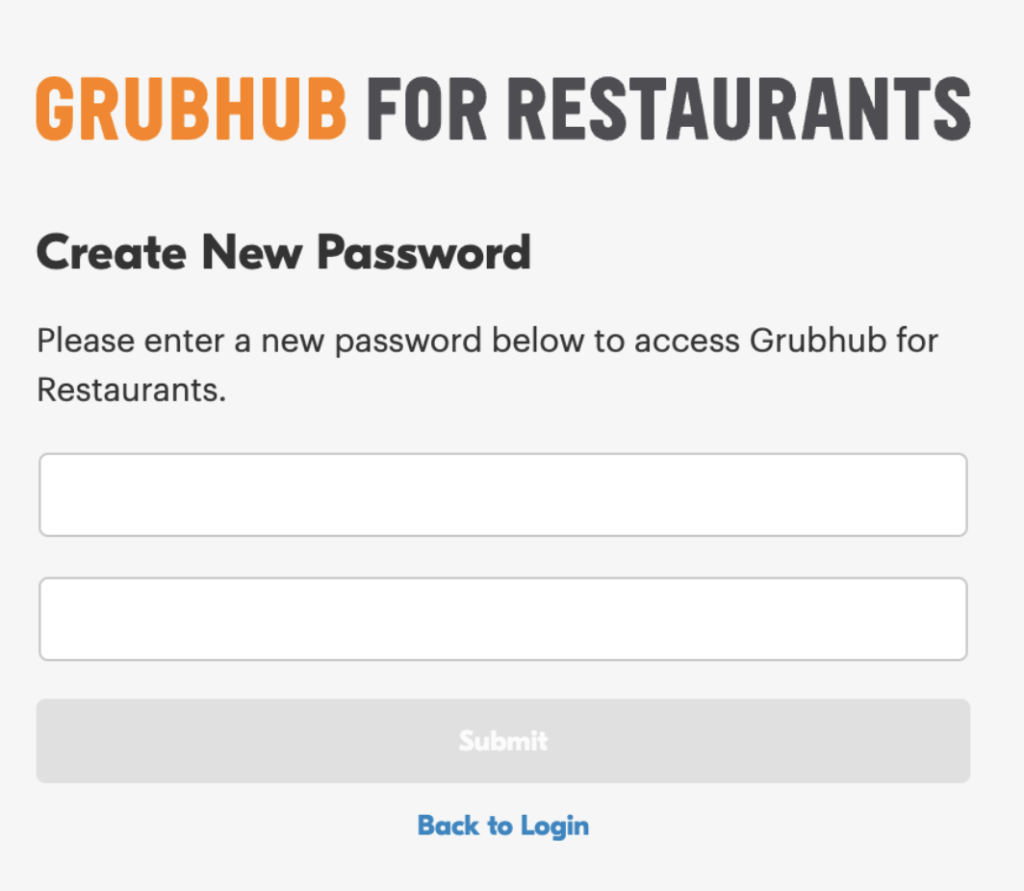
- Click on Create your password.
- Select a new password, confirm it and click Submit.
- You should be automatically redirected to restaurants.grubhub.com
- Use your new password to log in to Grubhub for Restaurants.
- Go to restaurant.grubhub.com
- Type in your username (your email address).
- Type in your password. You can choose to select Remember me, which will save your password so you don’t need to type it every time you log in.
- Select Sign in
Learn more about adding other users who can assist in editing your account.
If you do not receive the login email, contact your sales representative.
How to log in to your Grubhub for Restaurants admin account for the first time
With a few days of going live on Grubhub for Restaurants, you should receive an email to login to your account if you are an admin. Review the steps below to reset your password for your Grubhub for Restaurants account.
Note that depending on your account access, you may have different GFR account capabilities (basic vs. admin). Restaurant managers are typically given admin access, and can set up basic access for their staff within their account. To learn more about basic access, reach out to your restaurant manager.
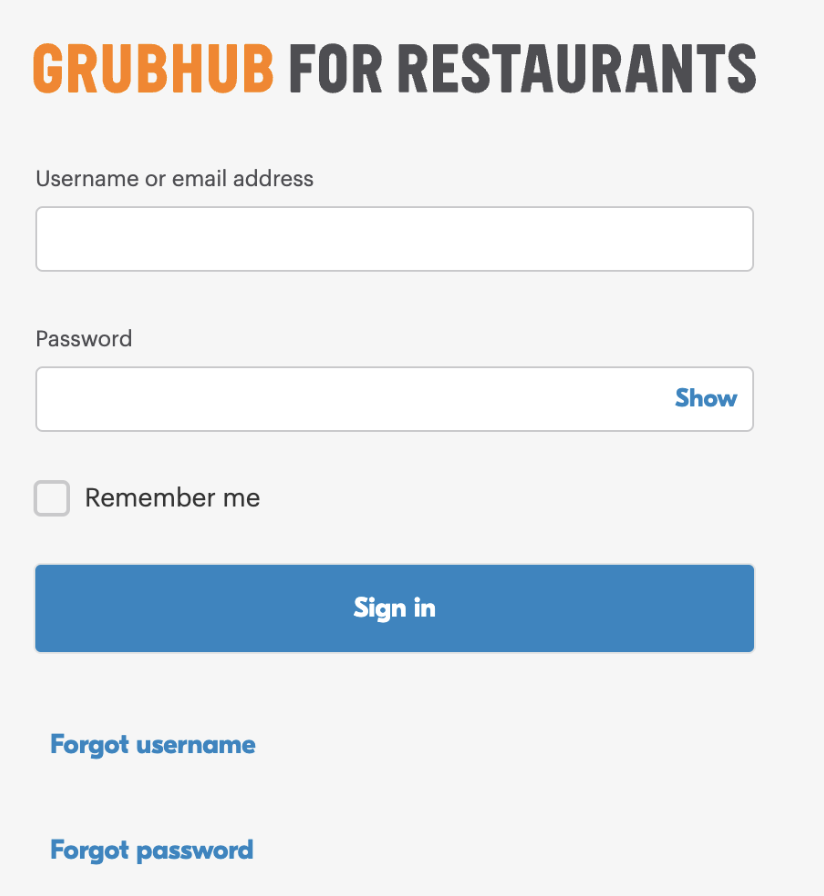
- Visit restaurant.grubhub.com/login
- Enter your username, which should be your email address associated with your Grubhub for Restaurants account. This applies to both basic and admin accounts.
- Click on Forgot Password
- An email will be sent to you with instructions on how to reset your password.
- You should receive instructions in your email within the next few minutes.
- Click on Reset password within the email you receive.
- Create a new password and log in again with your same username and new password.
- Select Sign in.
- Note that access to your Grubhub for Restaurants account may look different depending on whether your account has basic or admin access. For more information on access, reach out to your restaurant manager.
Learn more about adding other users who can assist in editing your account.
If you don’t receive the login email or still have issues, contact your Account Advisor, or, if you haven’t gone live on Grubhub for Restaurants yet, contact your ROI rep.
Forgot Password or Username
If you forget your password or username, select Forgot username or Forgot password, and additional instructions will pop up on the screen.
If you forgot your username, reach out to your restaurant manager and ask them for the login. If you are unable to contact anyone else who can edit your account and provide the right username, contact Grubhub Restaurant Care at 877-799-0790.
Sign Up with Grubhub
Not yet signed up with Grubhub for Restaurants? Get started using the button below and start getting more orders for your business.