
How to get a liquor license
Alcohol can be a profitable revenue stream for your restaurant. It’s an easy win — the markup is high, the labor requirements are low, and the product has a long shelf life. In fact, the average restaurant makes about 20% to 25% of its income from alcohol sales. Before you can add beer, wine or spirits to your menu, however, you’ll need a valid liquor license.
What is a liquor license?
A liquor license is the permit you need to make, distribute or sell alcohol legally. These licenses are usually issued by your state, but counties and cities may also set additional restrictions. While each area has its own rules, most liquor licenses regulate factors such as:
- The types of liquor you can sell
- When you can sell alcohol
- Where customers can consume the alcohol they buy
- Limits on alcohol sales
- Who can buy alcohol from you
- Price limits on alcohol
It’s important to understand the specific liquor laws for your state, county and city — after all, you’ll need a license before you can sell a single drink. Most areas offer several license classes to suit different establishments. Common classes include:
- Beer and wine. These licenses allow you to sell beer, wine, cider and occasionally other malt beverages. Most areas have distinct beer and wine licenses for bars, restaurants, wineries, breweries and catering businesses.
- All-liquor. This license goes by many names, but it typically permits you to sell beer, wine and spirits.
- Tavern. A tavern license is designed for establishments where alcohol makes up the majority of sales.
- Hotel. Hotels that serve alcohol on the premises need this type of license, which may offer both on-premises and off-premises consumption.
- Brewing. A brewing license allows an establishment to brew its own beer and sell it to customers. Other licenses may also be required.
Most states have multiple variations on these licenses that specify whether you need to sell food, if customers can take their drinks to go and rules for live entertainment. Make sure to start early; the application process can take months.
How to get a liquor license
Your state’s liquor-control body, which is often called the Department of Alcoholic Beverage Control (ABC), typically handles the licensing process. It can tell you how to get a liquor license and advise you of any local laws that might affect the process. Some states require you to have a seller’s permit and appropriate business tax registrations before you can apply.
The process can vary by state, county and city but usually involves a variation of these steps:
- File an application. Contact your state’s ABC and file an application. You may be able to apply online; in certain areas, however, you’ll need to bring the application to the nearest ABC office. Expect to pay an application fee. You may also be able to apply for a temporary permit to sell alcoholic beverages before the official review process is complete.
- Post a public notice. Many areas require you to post a public notice in your restaurant to let customers know you’re applying for a liquor license. Certain states have additional rules for publishing a notice in the local newspaper or advising neighboring homes and businesses about your plans.
- Pay license fees. Depending on your area, you can expect to pay anywhere from $500 to $4,000 or more. There may also be additional fees if you need inspections or multiple licenses. You’ll also need to pay a renewal fee every 1 or 2 years.
- Wait for the licensing review. During this process, which can take anywhere from 1 month to 1 year, officials review your application. They’re likely to investigate you and your premises, as well as local laws. If you qualify, the state will either mail or hand-deliver your license.
- Post license and required notices. Most states require you to display your physical liquor license behind glass. Some also require alcohol warnings for minors and pregnant people.
Given the potential length of the application review, it’s important to integrate it into your planning process. Expect delays if issues arise or if your state has met its quota for new liquor licenses. If that’s the case, you will likely need to make do with a beer and wine permit until the next period begins.
Other bar licenses you may need
The liquor licensing process can be complex; you may need more than one permit, depending on the structure of your business. For example, if you plan to host live music, you’ll often need a separate license. In New York, it’s called a cabaret liquor license. Michigan has separate permits for businesses that offer catering, dancing, or entertainment. If you’re offering food, plan to get a health permit and a food service license.
You might also need a special alcoholic beverages license to:
- Offer extended hours
- Sell liquor at a secondary location
- host events
- Have a second bar
- Selling alcohol to members only
- Operate at a private golf club or a ballpark
Each license comes with its own fee, which could be anywhere from $500 to $1,000 or more. Most licenses are administered through the state ABC, but your city council may have additional requirements when you’re applying for a new license; the city clerk can provide details.
Grow your alcohol selection with Grubhub
Since 2020, alcohol delivery has been a growing trend; customers appreciate the ability to enjoy a drink with their meals at home. A number of states now allow restaurants to offer alcoholic beverages in addition to their regular menu. It can be a worthwhile investment — on Grubhub, the average order value increases by $14-$15 when you add alcohol.
If your state permits, Grubhub makes it easy to add alcohol to your delivery menu. You’ll need to package drinks separately and advise customers that delivery drivers will check IDs at the time of drop-off. You can streamline the process by taking steps to optimize your restaurant for beverage delivery. Choose secure packaging, for example, and make sure to provide insulation for hot or cold drinks.
Whether you’re hoping to offer alcohol sales on-site or with delivery orders, a liquor license is a must. Start the process well in advance and you can be ready to serve drinks as soon as you open them to the public.

Pebblebrook Hotel Trust (NYSE:PEB) Price Target Cut to $16.00 by Analysts at Truist Financial
 Pebblebrook Hotel Trust (NYSE:PEB – Get Rating) had its price objective lowered by equity researchers at Truist Financial from $18.00 to $16.00 in a note issued to investors on Thursday, The Fly reports. Truist Financial’s price target would indicate a potential upside of 12.60% from the company’s current price.
A number of other research analysts have also issued reports on the stock. Barclays reduced their target price on shares of Pebblebrook Hotel Trust from $22.00 to $18.00 and set an “equal weight” rating on the stock in a report on Wednesday, December 21st. The Street lowered shares of Pebblebrook Hotel Trust from a “c-” rating to a “d+” rating in a report on Friday, December 30th. StockNews.com started coverage on shares of Pebblebrook Hotel Trust in a report on Thursday, March 16th. They issued a “sell” rating on the stock. Wells Fargo & Company dropped their price objective on shares of Pebblebrook Hotel Trust from $17.00 to $14.00 and set an “equal weight” rating for the company in a research note on Thursday, March 30th. Finally, Stifel Nicolaus dropped their price objective on shares of Pebblebrook Hotel Trust from $16.50 to $15.25 in a research note on Monday, March 27th. Three investment analysts have rated the stock with a sell rating and six have given a hold rating to the company. According to MarketBeat.com, the company presently has a consensus rating of “Hold” and an average target price of $17.88.
Pebblebrook Hotel Trust Stock Down 1.3 %
Shares of Pebblebrook Hotel Trust stock opened at $14.21 on Thursday. The Pebblebrook Hotel Trust has a 52-week low of $12.37 and a 52-week high of $26.14. The company has a 50 day moving average of $14.44 and a 200 day moving average of $14.86. The company has a quick ratio of 0.38, a current ratio of 0.38 and a debt-to-equity ratio of 0.77. The company has a market capitalization of $1.78 billion, a P/E ratio of -14.65, a P/E/G ratio of 0.60 and a beta of 1.85.
Pebblebrook Hotel Trust (NYSE:PEB – Get Rating) last announced its earnings results on Tuesday, February 21st. The real estate investment trust reported ($0.34) EPS for the quarter, missing analysts’ consensus estimates of $0.18 by ($0.52). The business had revenue of $319.61 million during the quarter, compared to analyst estimates of $309.55 million. The Pebblebrook Hotel Trust had a negative net margin of 6.26% and a negative return on equity of 2.77%. The business’s revenue was up 29.3% compared to the same quarter last year. During the same period in the previous year, the firm earned $0.06 earnings per share. As a group, research analysts forecast that the Pebblebrook Hotel Trust will post 1.71 EPS for the current fiscal year.
Insider Transactions at Pebblebrook Hotel Trust
In other Pebblebrook Hotel Trust news, CEO Jon E. Bortz purchased 14,000 shares of the company’s stock in a transaction dated Thursday, March 16th. The shares were bought at an average price of $13.62 per share, with a total value of $190,680.00. Following the completion of the transaction, the chief executive officer now directly owns 1,108,102 shares in the company, valued at approximately $15,092,349.24. The purchase was disclosed in a legal filing with the Securities & Exchange Commission, which is available through this hyperlink. In other news, CEO Jon E. Bortz acquired 14,000 shares of the firm’s stock in a transaction that occurred on Thursday, March 16th. The stock was acquired at an average cost of $13.62 per share, for a total transaction of $190,680.00. Following the completion of the acquisition, the chief executive officer now owns 1,108,102 shares in the company, valued at $15,092,349.24. The transaction was disclosed in a filing with the Securities & Exchange Commission, which is available at this hyperlink. Also, CEO Jon E. Bortz purchased 11,000 shares of the firm’s stock in a transaction on Wednesday, March 22nd. The stock was purchased at an average price of $12.95 per share, with a total value of $142,450.00. Following the completion of the purchase, the chief executive officer now owns 1,122,102 shares of the company’s stock, valued at $14,531,220.90. The disclosure for this purchase can be found here. Insiders have acquired a total of 39,865 shares of company stock valued at $555,064 over the last 90 days. 2.40% of the stock is owned by company insiders.
Institutional Trading of Pebblebrook Hotel Trust
Several hedge funds have recently added to or reduced their stakes in the company. Guggenheim Capital LLC increased its stake in shares of Pebblebrook Hotel Trust by 1.2% in the 3rd quarter. Guggenheim Capital LLC now owns 58,938 shares of the real estate investment trust’s stock valued at $855,000 after purchasing an additional 724 shares during the last quarter. PNC Financial Services Group Inc. increased its stake in shares of Pebblebrook Hotel Trust by 11.5% in the 4th quarter. PNC Financial Services Group Inc. now owns 11,653 shares of the real estate investment trust’s stock valued at $156,000 after purchasing an additional 1,199 shares during the last quarter. Assetmark Inc. increased its stake in shares of Pebblebrook Hotel Trust by 27.2% in the 4th quarter. Assetmark Inc. now owns 5,959 shares of the real estate investment trust’s stock valued at $80,000 after purchasing an additional 1,273 shares during the last quarter. Investnet Asset Management Inc. increased its stake in shares of Pebblebrook Hotel Trust by 0.5% in the 3rd quarter. Investnet Asset Management Inc. now owns 280,528 shares of the real estate investment trust’s stock valued at $4,070,000 after purchasing an additional 1,303 shares during the last quarter. Finally, Jane Street Group LLC increased its stake in shares of Pebblebrook Hotel Trust by 3.5% in the 2nd quarter. Jane Street Group LLC now owns 38,154 shares of the real estate investment trust’s stock valued at $632,000 after purchasing an additional 1,305 shares during the last quarter.
About Pebblebrook Hotel Trust
(Get Rating)
Pebblebrook Hotel Trust is a real estate investment trust, engaging in investments and acquisitions in hotel properties. Its hotels are located in markets like Atlanta, Georgia, Boston, Massachusetts, Chicago, Illinois, Key West, Miami and Naples, Florida, Los Angeles, San Diego and San Francisco, California, Nashville, Tennessee, New York, New York, Philadelphia , Pennsylvania, Portland, Oregon, and Seattle, Washington.
Featured Articles

Receive News & Ratings for Pebblebrook Hotel Trust Daily – Enter your email address below to receive a concise daily summary of the latest news and analysts’ ratings for Pebblebrook Hotel Trust and related companies with MarketBeat.com’s FREE daily email newsletter.

Happy hour menu ideas for your restaurant
There’s nothing like kicking back and relaxing with a cheap drink after a hard day’s work. As most people have returned to in-person activities, the demand for happy hour has risen. Whether you offer a nice selection of wines or are known for your fun cocktails, featuring happy hour discounts is a sure way to get more customers to place an order. It’s 5 o’clock somewhere, right?
When you’re looking for ways to maximize restaurant revenue, happy hour is a cost-effective option — you can start with just a few fun menu ideas and your regularly scheduled staff. This classic afternoon event tends to attract groups, which boosts order value and introduces a wide range of diners to your restaurant.
What’s the point of a happy hour?
Happy hour is a period of time — usually, 2-3 hours in the late afternoon or early evening — when bars and restaurants offer discounted alcoholic drinks and appetizers. The exact times vary by establishment and day of the week but usually fall somewhere between 4 pm and 8 pm on weekdays. Weekend happy hours might start as early as 2 pm
The point of a happy hour is to increase revenue during the slow period between lunch and dinner. It’s particularly effective if you want to attract an after-work crowd; drink specials can bring in professionals who are looking to wind down at the end of a long day.
As an extra incentive, many restaurants offer free cocktail-hour finger foods or deals on appetizers to tide customers over until dinner. Some restaurants create a dedicated menu; others come up with new happy hour ideas every day to give guests a reason to come back.
In addition to increasing foot traffic, happy hour offers several important business benefits for restaurants. You can take advantage of the relaxed atmosphere to try out new cocktail trends and appetizer recipes; it’s a great way to gauge the customer response before you change the permanent menu. You can also feature seasonal offerings on a limited-time menu. When you have a surplus of a kitchen ingredient or type of alcohol, use happy-hour discounts to boost orders and run inventory through faster.
Happy hour menu ideas customers will love
As you plan a happy hour menu, it’s important to decide whether it will be permanent or revolving. Both have advantages — a permanent menu streamlines your ordering and prep processes, but a revolving menu offers more flexibility.
Start with alcoholic beverages; they’re the foundation of a good happy hour. Accommodate a variety of tastes by offering a small selection of discounted beer, wine and mixed drinks. You can still offer the regular menu, of course, but expect happy-hour deals to get the most attention. The drinks you choose will depend on factors that include:
- How easy the drink is to prepare and serve
- Whether the bartender can make a large batch in advance
- Profit margins with the discounted price
- Seasonal trends and flavor preferences
- The popularity of the beverage during regular hours
- Current inventory and bartender preferences
When it comes to food, the best happy hour menu ideas prioritize big flavors and bite-size servings. That way, customers can take the edge off their appetites without filling up before dinner. If you’re serving beer in a casual environment, aim for popular finger foods that are easy to eat: soft pretzels and cheese, nachos, bacon-cream cheese roll-ups, or street tacos, for example. For a restaurant with a more elevated vibe, consider gastropub-style appetizers such as stuffed mushrooms, crostini with goat cheese, or charcuterie platters.
If you’re developing a seasonal menu for your restaurant, consider extending it to happy hour, too. Create dishes that feature local in-season produce, for example, or offer holiday-themed snacks and drinks. In the winter, you might add hot drinks to the menu, such as mulled wine or spiced apple cider.
Looking for ways to boost both food and beverage sales? Experiment with different happy-hour specials to encourage bigger orders:
- Discounted wine or beer flights
- Combo deals for an appetizer and two drinks
- Discount code just for social media followers
- $5 local beer or wine
- Four drinks for the price of three
- Buy one, get one half off the deal on appetizers
What happy hour drinks are trending?
The types of drinks customers turn to quench their thirst often change season to season. However, there are a few drinks that stand out all year round. What were the top ordered alcoholic beverages on Grubhub in 2022?
- Beer: This classic drink is a happy hour must have. Consider offering local brews and seasonal lagers to keep it fresh.
- margaritas: Whether they prefer it with salt or sugar on the ream, there’s no doubt customers can’t get enough of this sweet cocktail. Offer a variety of flavors and let customers dictate if they want it on the rocks.
- Hot Sake: This Japanese specialty has risen in popularity in the past year. Known as ‘okan’ or ‘kanzake’ in Japanese, this stronger drink comes in a variety of flavors and can be served at different temperatures depending on your diners’ liking.
- Piña Colada: Rum, coconut cream and pineapple juice are a dreamy mix of ingredients that many customers can’t turn down. Serve frozen with a slice of pineapple and a maraschino cherry to make diners feel like they’re at the beach all year round.
- White Wine: Wine is also a happy hour must-have. You can serve wine in mini pre-sealed to-go bottles to make your happy hour deal part of your delivery menu.
Happy hour doesn’t only mean spiked drinks. It can pay to offer non-alcoholic beverages at a happy hour discount to include everyone in your afternoon special. What non-alcoholic beverages were customers ordering on Grubhub?
- cola
- Lemon Lime Soda
- Iced Tea
- Iced Coffee
- Thai Iced Tea
Tips for a successful happy hour
Done well, happy hour can be good for your restaurant’s business; it boosts your revenue without excessive labor costs or major menu modifications. To get the most from the event, follow a few happy hour best practices:
- Stick to the same hours every week to set expectations
- Consider profit margins when evaluating happy hour menu ideas and discounts
- Choose finger foods when possible to reduce utility usage and streamline cleanup
- Offer happy hour exclusives to attract your regular lunch and dinner customers
- Ask for guest feedback on new recipes and drinks
- Choose times that fit between your restaurant’s specific rush periods
- Keep customers interested with themes, live entertainment and partnerships
Marketing is essential for a successful happy hour, especially in the first few months. Build excitement by mentioning the times and discounts on your website, in marketing emails and in advertisements. While you’re at it, try sending flyers to nearby businesses. Make sure to promote daily or weekly specials on social media to motivate spur-of-the-moment visits.
To get more customers in on the fun, offer happy hour appetizer specials and alcohol for delivery. It’s easy with Direct — you can build a commission-free branded ordering platform that enables customers to order snacks and drinks to enjoy at the comfort of their home. Your bottom line benefits as well; adding alcohol to your Grubhub menu can boost your average order value by up to $15. When you’re ready to expand your restaurant’s happy hour to your delivery menu, get started with Grubhub today.

S$0.13 (vs S$0.042 loss in FY 2021)
Hotel Properties (SGX:H15) Full Year 2022 Results
Key Financial Results
Revenue: S$525.5m (up 53% from FY 2021).
Net income: S$76.4m (up from S$21.7m loss in FY 2021).
Profit margin: 14% (up from net loss in FY 2021).
EPS: S$0.13 (up from S$0.042 loss in FY 2021).

All figures shown in the chart above are for the trailing 12 month (TTM) period
Hotel Properties Earnings Insights
Looking ahead, revenue is forecast to grow 10% pa on average over the next 2 years, compared to a 12% growth forecast for the Hospitality industry in Singapore.
Performance of the Singaporean Hospitality industry.
The company’s share price is broadly unchanged from a week ago.
Risk Analysis
Before we wrap up, we’ve discovered 2 warning signs for Hotel Properties (1 is a bit concerning!) that you should be aware of.
Have feedback on this article? Concerned about the content? get in touch with us directly. Alternatively, email editorial-team (at) simplywallst.com.
This article by Simply Wall St is general in nature. We provide commentary based on historical data and analyst forecasts only using an unbiased methodology and our articles are not intended to be financial advice. It does not constitute a recommendation to buy or sell any stock, and does not take account of your objectives or your financial situation. We aim to bring you long-term focused analysis driven by fundamental data. Note that our analysis may not factor in the latest price-sensitive company announcements or qualitative material. Simply Wall St has no position in any stocks mentioned.
Join A Paid User Research Session
You’ll receive a US$30 Amazon Gift Card for 1 hour of your time while helping us build better investing tools for the individual investors like yourself. Sign up here
How restaurants can use email marketing
Nothing is more enticing than a crisp coupon to your favorite business. The idea that you can get your favorite items for less can motivate any customer to take action. The same applies to restaurant deals. One mouthwatering deal sent directly to a customer can prompt them to place an order.
What’s a guaranteed way to reach your customers? Email marketing.
Restaurant email marketing programs are a proven method of building customer loyalty. A well-timed email can bring in new diners and remind recent diners to return. Email marketing is worth the investment. For every $1 you spend on email marketing, you can expect an average return of $36. With a strong email marketing campaign you can sit back and watch your ROI flow in.
How can restaurants use email marketing?
There are hundreds of ways to market a restaurant, but email marketing has proven to be successful. why? Because you can send specific messages and offers to specific customers, personalizing the marketing experience. Getting diners’ emails allows you to communicate with people who are familiar with your brand and who are interested in continuing to dine with you. Sending an email reminds a customer of your offerings and encourages them to place another order.
What type of content should you feature in your restaurant’s emails? Here are some places to start:
- Newsletters: Send out a monthly newsletter featuring all your offerings for the month, including any holidays, events or days you will be closed.
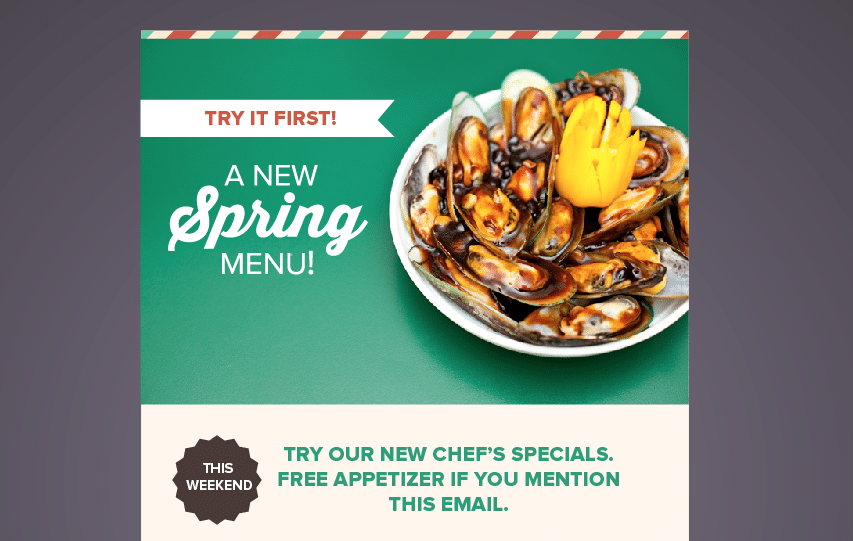
- New menus: If you launch a new menu let your customers know in an email.
- Promotions: Include limited-time promotions in your emails where customers will get a deal if they show the email or use a code and check out.
- Special hours: Send out an email whenever you change your hours or offers to keep customers informed.
- Events: Let your customers know what events you have planned and how they can sign up.
- Contests: Encourage diners to get involved with your brand by running contests with real (edible) prizes.
- Birthdays: Collect customers’ birthdays when you get their email addresses so you can send them a special birthday message with an exclusive deal.
- Feedback: Invite your customers to share feedback about their experience at your restaurant.
These days, the average consumer is getting dozens of emails from businesses every day. While emails allow you to reach customers on their devices whenever you like, you have to be careful about how frequently you communicate. As a restaurant, it’s best practice to send only one email a week. You can even make your communication monthly if you are running a newsletter.
Successful email marketers are acutely aware of the 80/20 rule: roughly 80% of customer actions (opens, clicks, orders, etc.) come from roughly 20% of your customer subscribers. Not even the most influential brands expect a 100% open rate, let alone a high click through rate.
The average email open rate in the restaurant industry is 20.26%, so don’t expect every subscribed customer to be engaged. However, even if a diner doesn’t open your email, receiving messages from your restaurant increases brand awareness.
Drive traffic to your restaurant website
Email marketing is just one ingredient in crafting the perfect online marketing strategy. All elements of your digital marketing strategy should work together. Think of your marketing channels as a web – all intertwined to encourage diners to place an order.
You should link to your restaurant’s website, social media profiles and online ordering platform in your emails. Place an email signup form on your website to encourage curious customers to become subscribers. You can even offer a promotion to incentivize diners to enter their emails on your website.
Check out this website pop up that incentives customers to sign up for an email newsletter:

Increasing your restaurant’s online presence helps your restaurant stay relevant in the modern world. Your restaurant’s website should showcase your brand while giving a clear avenue for action.
Don’t have an online ordering platform? Try Direct, a commission-free online ordering platform that can be custom branded for your restaurant. Including an online ordering link in your digital marketing materials allows you to convert curious online visitors to paying customers.
How to start a successful restaurant email marketing program
Setting up email marketing does not have to be complicated. Check out our guide to affordable digital marketing tools for more tips on how to create engaging content.
We’ve broken down three simple steps you can take to get your first email campaign off the ground.
Choose your software
First, you need to choose an email service provider. Conveniently, most email marketing services offer a free trial period, so spend some time testing platforms before spending a dime.
Your restaurant is unique, and your emails should be as well. Look for a platform that allows for easy customization and lets you “drag and drop” elements to create the perfect template.
Email solutions should also provide reports showing how many people subscribe, unsubscribe and forward your emails to friends, so you can evaluate the success of your campaigns. The best email marketing software also gives you the ability to segment your subscriber list. That way you can send out specifically targeted emails to first-time diners, regular customers and everyone in between.
A few popular services are MailChimp, YesMail and ExpressPigeon.
Collect customer emails
Once you have an email solution set up, it’s time to collect customer email addresses for your restaurant email marketing campaign. Add new subscribers by placing opt-in links on your website and social media feeds encouraging people to subscribe for deals and regular updates. You can also post QR codes around your restaurant or at the bottom of your take out menu for an easy way to sign up.
Take advantage of email forwarding, the digital version of word-of-mouth, by creating incentives to pass along your emails, such as a free appetizer if a customer refers to a friend. Offline, ask customers to provide their email address on comment and response cards or place a fishbowl on your counter to collect signup slips and business cards.
Keep track of how you get customers’ emails so that you can segment your audience. Market segmentation is the process of dividing your customers into groups based on shared characteristics. Segmenting your audience can help make sure your emails resonate with those they are targeting. Segmenting your audience based on factors like where they order (online or in-person), engagement (how often they click on your emails) or loyalty (how often they order) allows you to curate more relevant content so you get better open and click rates.
Craft your content
As the heart of your email campaign, your email content needs to be engaging and informative. Use a consistent layout to keep your planning time to a minimum and make your emails easier for customers to read.
Personalize your emails as much as possible. If you have multiple restaurant locations, segment your subscribers into lists and tailor emails by location. Use software that can insert first names into each separate email, and send customers special emails, such as their birthday. The more personalized you can be with emails, the less likely they are to end up in the trash.
You can also automate email streams with software like ActiveCampaign to map out what emails you want to send in a particular order. This way you can batch email content in a chronological order so that none of your customers miss out on your offerings – it doesn’t matter when they subscribe.
It’s good practice to keep emails short and sweet. The average person only spends 10 seconds looking at an email, so you want to design your email to quickly catch the attention of diners. It starts with an attention grabbing subject line. Your subject line should hint at the content in your email, intriguing readers to learn more. Organize your email content with the most urgent information at the top. All important and eye-catching information should fit on users’ screen before they scroll.
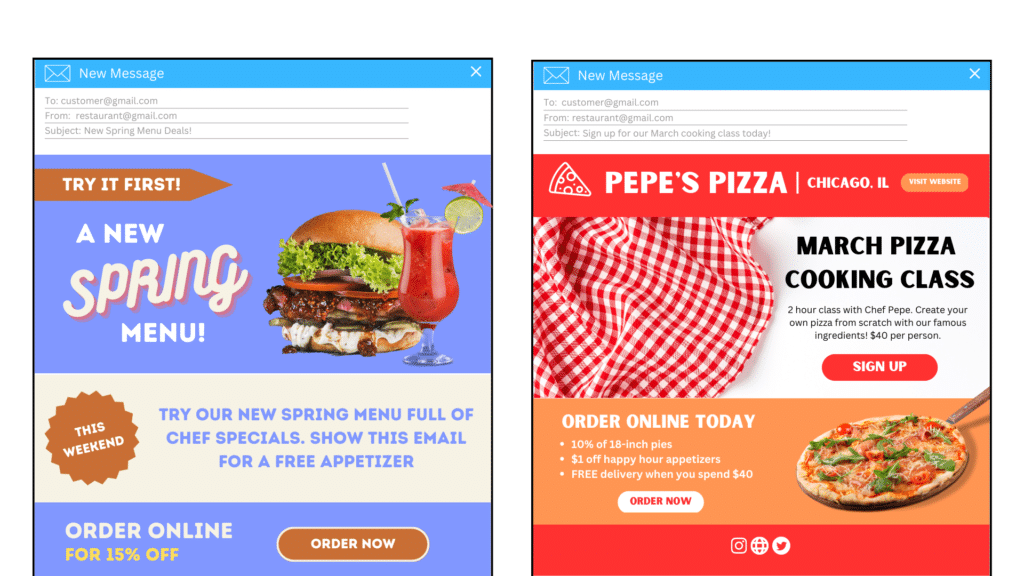
Last but no least, consider using the following restaurant promotion ideas a recurring theme in your emails:
- Deals and daily specials
- Upcoming events
- Changes menu
- “Instagram of the Week” – highlight your food in action by including a customer-submitted photo from Instagram
- “Tweet of the Week” – recognize your active Twitter followers by calling out a positive or humorous Tweet mentioning your restaurant
- customer reviews
Think of your emails as a small part of your digital presence. Make sure you plug in your restaurant’s online ordering site, website and social media platforms in all your emails to remind customers of where they can find out more about your business. Giving channels for customers to learn more about your restaurant helps ensure that their journey with your restaurant continues.
Upgrade your marketing strategy with Grubhub
Taking your marketing strategy to the next level is a lot easier with a dedicated partner by your side. That’s where Grubhub comes in. At Grubhub, we are dedicated to helping you grow your digital presence by offering tools like Marketplace, promotions, POS integrations and Direct.
Direct is a commission-free online ordering platform available to all Grubhub partners. With Direct, you own your customers’ data. That can mean their emails as well. You can leverage this customer data to increase customer loyalty, driving your bottom line.
Ready to increase your digital reach and gain more customers? Partner with Grubhub today.

2023 Alcohol Delivery Trends for Restaurant Owners
Alcohol Delivery is expected to grow exponentially over the next few years – it’s time you learn how to capture this growing demand for to-go cocktails and alcoholic beverages. Check out what spiked drinks are trending in 2023 and how you can quench your diners’ thirst.
The pandemic kickstarted changes in local regulations to allow restaurants to incorporate alcohol delivery into their delivery strategy. Over 17 states and districts have decided to allow restaurants to sell to-go cocktails permanently, and customers love the ability to order to-go cocktails, beer and wine from their favorite restaurants on Grubhub.
Find out more about the benefits of offering alcohol delivery as part of your business model and see which cocktails seem to hit the spot best for thirsty diners eager for an effortless at-home happy hour.
The benefits of offering alcohol delivery or to-go cocktails
Curious whether it’s worth it to add alcohol to your delivery and to-go menus?
While it does take an up-front investment of both time and money to reconfigure your day-to-day operations and ensure your new alcohol offerings adhere to guidelines, Grubhub data shows a clear payoff.
Adding alcohol to your delivery menu on Grubhub can increase the average order value by a whopping $14-$15.
Think about that in terms of daily or weekly revenue; If you deliver 100 orders a day, you stand to see an average overall increase of $1400-$1500 per day and $9800-$10500 per week.
Of course, alcohol delivery on Grubhub is not available everywhere.
It’s important to do your research before you commit to a menu change or start collaborating with a local mixologist on cocktail ideas. If you’re a current Grubhub restaurant partner, please check with your Account Advisor to find out if you can offer alcohol.
To learn more about how you can add alcohol to your Grubhub menu, check out our guide to Grubhub alcohol delivery.
What were the top alcohol delivery and cocktail-to-go items ordered on Grubhub in 2022?
Grubhub’s #2022Delivered showed an uptick in alcohol orders, with a handful of cocktails seeing a meteoric rise in popularity.

- Beer
Whether it’s paired with a juicy burger or helps wash down game day wings, Grubhub diners’ go-to alcoholic drink is an ice cold beer. Beer is an easy addition to any alcohol delivery menu. Its pre-canned packaging means that you can offer a wide array of ales and lagers without a lot of prep work.
- margaritas
Frozen, on ice, with salt or without, margaritas continue to be a hugely popular drink that’s perfect for washing down that spicy carne asada on Taco Tuesday.
Keep delivery constraints in mind while you finalize your menu – frozen margaritas are harder to prepare and deliver without seeing a dip in quality. Also, too many flavor options could complicate things for your bartenders.
- Hot Sake
This hot Japanese drink has taken beverage delivery by storm. Hot sake, also known as ‘Kanzake,’ is a warm alcoholic beverage made from fermented rice. It comes in a wide variety of flavors and is known for having a higher alcohol content than wine. You can serve Sake pre-bottled and give diners quick instructions on how they can heat it up so they can perfect their at-home happy hour.
- Piña Colada
Cream of coconut, pineapple juice and rum can turn any cloudy day into a trip to the tropics. You can serve it blended or shaken with ice, and garnish it with a pineapple wedge, maraschino cherries, or both. Check out tips on how to make sure your Pina Coladas can stay fresh on the road. No matter how you prepare it, diners are going bananas for this fruity classic.
- Sauvignon Blanc
Sauvignon blanc is a fruity, light white wine that pairs perfectly with a soft cheese or a smoked salmon. Adding sealed bottles of wine to your delivery menu can help you easily take liquids on the road. Think about offering white wine pairings with your dinner entrees so your diners know exactly what bottle washes down their meal best.
Hello, 2023: Alcohol delivery and cocktail trend predictions for the year ahead
Half the battle when creating an alcohol delivery menu is deciding which cocktails to include. On the one hand, you want to appeal to various tastes; on the other hand, a streamlined menu with few items helps reduce buyer confusion and makes it easier for your staff to execute orders on time.
Getting to know what cocktail trends you should watch in 2023 could help you create a menu that hits all the right notes without going overboard. The result? More sales and less stress!
Bold and bubbly
If there’s one thing taking 2023 by storm it’s bold flavors. Diners are craving online ingredients both in their food and drink. Spicy cocktails are rising in popularity, combining the fiery sting of alcohols like tequila with the hot taste of chili peppers. Customers are turning toward bitter tastes as well, sipping on espresso martinis and Manhattans.
Bold flavor cravings have encouraged customers to embrace high-end spirits. Diners are willing to spend more for premium ingredients, especially if those ingredients break the norm. Don’t be afraid to offer a few higher-end cocktails and bottles of bubbles on your beverage menu for those who are looking for something bold and fancy to sip on.
Growing interest in low-ABV and alcohol-free beverages
The alcohol-free spirit movement is chugging right along, with “mocktails” getting more creative. You can buy infused faux alcohols to make mixed drinks, or rely on herbs and fruits to create fancy beverages that feel special without imparting an alcohol-based buzz. Mocktails can make your fancy drinks appeal to customers of all ages.
Global flavors are landing on drink menus
Diner’s don’t need to travel to Japan to enjoy the popular hot Sake, or fly south for a tasty Mexican beer. Global flavors are on the rise in the US as customers crave worldwide ingredients. Some of the most popular alcoholic drinks hail from all across the globe, and customers appreciate when they are paired with global ingredients. Try adding popular global drinks like Sangria, Negroni or Irish coffee to your beverage menu.
Hard seltzer are essential to any menu
Hard seltzers have continued to be an unstoppable addition to the beverage sector. Their undeniable popularity makes them a widespread winner because they tick many boxes.
They’re a lighter drink that appeals to people who might not love the taste of alcohol, they’re typically lower in calories than sugar-laden bottled cocktails and they’re nice to drink on a hot summer day.
Customers gravitate toward local spirits
Like local food, local spirits are getting a lot of support from people who want the money they spend to funnel back into their own community. As people strive to support small businesses, customers seek menu offerings that include liquor from local distilleries, breweries and winners.
Tequila (still) increasing in popularity
Margaritas are the number one drink of choice for Grubhub customers, but now their love for tequila is spreading. Try out some other accessible tequila cocktails like a Paloma grapefruit or experiment with the smokier, more complex aroma and taste of mezcal.
Grow your bottom line in the new year with Grubhub beverage delivery
According to BeverageDaily, alcohol e-commerce is expected to grow by 66% between 2020 and 2025. Much of that growth can be attributed to rising alcohol sales through online platforms like Grubhub Marketplace.
The first step to adding alcohol delivery to your business is to sign up with Grubhub for Restaurants. We have all the tips and tricks to help optimize your restaurant for beverage delivery so that your delicious concoctions make it to satisfied customers.
As a Grubhub restaurant partner, you’ll have a dedicated Account Advisor who can let you know if your market allows alcohol sales. If so, your Advisor will help you add alcohol to your account successfully so you can get up and running quickly.

How to create a plant-based menu
Have you noticed your customers gravitating toward plant-based dishes? You’re not the only one — going meat-free is a growing trend. In 2022, the plant-based food market was worth $10.9 billion, and Bloomberg estimates that plant-based food sales will increase by 500% by 2030.
Plant-based meals cater to two types of people: vegans and vegetarians. Vegans don’t eat any animal products; vegetarians typically avoid meat but eat eggs, dairy, fish, and sometimes poultry.
If you can expand or edit your restaurant’s menu to satisfy these customers, you can reach a wider market and boost your bottom line. Adding more plant-based dishes is also an effective way to become more sustainable.
How to create a plant-based menu for your restaurant
Given the rising popularity of meat-free diets, now’s a good time to add more plant-based options to your restaurant’s menu. You don’t need to rework the entire menu — simply add more options for vegans and vegetarians. In the process, you’ll attract new diners without alienating your existing customer base.
Don’t have time to develop new menu items? Look for ways to make substitutions or remove animal products from your existing dishes. That way, vegan and vegetarian diners can enjoy your most popular items, too.
Before you update your menu, take time to audit your current offerings. Check sales data to identify your highest- and lowest-performing dishes. Then, eliminate rarely ordered items to make room for new options. You’ll keep the menu in check and maintain a reasonable workload for your kitchen crew.
1. Find plant-based substitutes
Plant-based substitutes are a great way to make vegan menu items without adding more work to your cooks. All you need to do is find a suitable alternative for animal-based ingredients. Incorporating locally sourced food into your menu can also help you cater toward the plant-based crowd.
Some popular, vegan-friendly substitutes include:
- Portobello mushroom caps instead of chicken breasts
- Tofu as a substitute for chicken or beef
- Vegetable stock to replace chicken or beef stock
- Quinoa or vegetable patty instead of a beef burger
- Coconut oil or nut butter in place of dairy butter
- Vegan cheese as a substitute for dairy cheese
- Oat, rice, almond, soy or coconut milk for dairy milk
- Ground flaxseed, bananas, or applesauce to replace eggs
- Sorbet or coconut ice cream instead of dairy ice cream
Keep in mind that vegan substitutions don’t always work on a one-to-one ratio. You may need to adjust the amount to account for ingredients with different densities or consistencies.
2. Integrate plant-based options into traditional dishes
Adding vegan-friendly ingredients to an existing item is an easy way to provide more options for customers without recreating the entire dish. For example, you might consider offering meat as an add-on ingredient rather than an integral part of a menu item. Start with a basic green salad or a tomato-based pasta and enable diners to add chicken or salmon for an extra fee.
Integrating plant-based options into your main menu makes each dish more accessible to everyone, regardless of dietary preferences. Since these veggie-heavy items aren’t isolated in a “vegan” section, meat-eating customers are more likely to consider them.
3. Get creative with presentation
Vegan and vegetarian dishes aren’t limited to salads and steamed veggies. Get creative and you can make plant-based options feel like a treat. Dress up veggies with breading to add a bit of crunch, or go crazy with the spices to add a Cajun or Thai kick.
Don’t forget about sauces, dips, and marinades — serve deep-fried cauliflower bites with a rich Buffalo sauce, and try garlic-infused pita triangles with a selection of hummus flavors. Unexpected flavor profiles and tasty textures will delight your vegan diners and entice meat-eaters to try a veggie-based dish.
Captivating menu descriptions are critical; the right word choices can increase demand for non-meat items. Make sure to describe the texture and flavor and indicate that the dish is meat free. You can use words such as:
- Plant-based
- Veggies
- Vegans/vegetarians
- Plant proteins
Help your plant-eating diners identify appropriate items at a glance by placing a “V” or a plant symbol next to meat-free options. Just make sure to include a key, particularly if you have both vegan and vegetarian dishes.
4. Listen to customer feedback
If you’re a meat eater, it can be difficult to figure out which dishes your vegan diners will enjoy. Instead of guessing, ask for customer feedback. Print out a short survey and place it on each table, poll your followers on social media, and send a digital survey to your email list.
Consider testing new meal ideas using a rotating plant-based menu. An ever-changing lineup gives your chef the opportunity to experiment with new dishes, and you’ll have the chance to see how customers respond to different items.
What are examples of plant-based meals?
Not sure where to start? Find inspiration in a few of the top 2022 food trends:
- California rolls
- caesar salad
- Hash browns
- Edamame
- Onion rings
When in doubt, you can’t go wrong with vegan classics. Dishes such as eggplant Parmesan, veggie burritos, black bean burgers, roasted vegetable sandwiches, and minestrone soup are sure to please both plant-based and meat-eating customers.
Plant-based dishes are also predicted to make a splash in 2023. One of the top plant-based ingredients diners are looking for is non-dairy milk. Here are the top milk alternatives that were ordered on Grubhub in 2022:
- Oat Milk
- Almond Milk
- Coconut Milk
- Soy Milk
- Cashew Milk
Reach more customers with plant-based dishes
As plant-based diets become more popular, restaurants with vegan and vegetarian options are in high demand. In fact, in 2022, vegan dishes were some of the most popular delivery items ordered on Grubhub. Services like Grubhub make it easier to reach plant-focused diners — restaurants like PS Kitchen have used the platform to expand their reach and increase sales. With beautiful, vibrant photos that showcase the natural colors and textures of the vegetables, you can do the same. Ready to reach more plant-based diners? Join Grubhub today.