

The best restaurant summer menu ideas for 2023
Summer is peak tourist season in the US, which means restaurants experience more foot traffic and higher order volumes. If you’ve been wanting to experiment with fresh dishes, now’s the perfect time — new restaurant summer menu ideas can keep locals and visitors coming back all season long.
Menu tips: 4 easy ways to make your summer menu stand out
A tantalizing summer menu appeals to loyal diners and new customers alike. To make it a success, try these tips:
- Go with lighter fare. When it’s hot outside, many customers prefer meals that aren’t too heavy. Look for ingredients that feel refreshing and healthy, including fresh vegetables, fruits, herbs and lean meats.
- Offer more kid-friendly options. Summer is a big time for family travel; to bring in larger, high-value groups, make sure your menu has a few kid-approved meals. Grilled cheese, cookies, corn dogs and chicken strips are always crowd pleasers for younger diners.
- Tempt your diners with summer menu promotions. Combo meals, buy-one-get-one offers and afternoon happy hour promotions encourage customers to choose your restaurant over a competitor. For people who are deciding between ordering delivery and cooking at home in the heat, a great promo can be the deciding factor.
- Showcase your most refreshing summer drinks. Complement your light, fresh food items with a special summer drink menu.

8 summer menu ideas to inspire your restaurant
Ready to get started? Use these menu ideas to refresh your restaurant’s menu for the warmer months.
1. Use fresh, local ingredients
Have you ever noticed that locally grown, seasonal food tends to taste better? That’s because it doesn’t have to travel far to reach you. Short transit times mean farmers can harvest at peak ripeness, when flavors are at their best. Use this to your advantage by incorporating fresh fruits, vegetables and herbs into your summer menu. Sourcing local ingredients can both cut costs and highlight local flavors.
The foods you choose will depend on your location and climate, but some summer favorites include:
- Fruits like watermelon, mangoes, peaches and berries
- Vegetables like cherry tomatoes, avocados, bell peppers, arugula, sugar snap peas, cabbage and zucchini
- Herbs like basil, dill, mint, rosemary, oregano and cilantro
2. Grill meat and vegetables
For many Americans, summer is the most popular grilling season. Tap into that traditional experience by adding grilled, charbroiled or smoked foods to your menu. After all, what says summer is better than a freshly charred hamburger with lettuce, cheddar cheese, pickles, red onions and crispy bacon?
Start with classics such as grilled burgers, pork chops and barbecued chicken and add in a few vegan-friendly options such as mushroom caps, sweet potatoes, vegetables and corn on the cob. If your location allows, set up a grill outside so the delicious aromas can tempt diners in from the street.
3. Cook up cold sides to refresh your guests
Too many hot foods can feel overwhelming when the temperature is high. To help your guests cool off, pair your entrees with a choice of cold sides. Options to consider include:
- Salad pasta
- Fresh fruit
- Coleslaw
- Side salads with mixed greens
- Cold potato salad
The best part? You can prepare the most cold sides in advance, which streamlines food preparation during the lunch or dinner rush. Just make sure to keep them refrigerated to reduce the risk of foodborne illness.
4. Offer seafood delights
Light and flavourful, seafood is a popular summer food — especially when you pair it with fresh herbs or citrus sauces or marinades. To appeal to health-conscious diners, add a few menu items that feature seafood options such as grilled fish, shrimp, crab cakes or scallops. If your business is located near water, use locally caught products for maximum flavor and freshness.
5. Serve chilled soup
Cold soup is the perfect starter for summer. Gazpacho, cucumber soup and vichyssoise satisfy customers without making them sweat. For extra appeal, choose soup recipes that include fresh herbs, colorful vegetable garnishes, goat cheese or a dollop of sour cream.
6. Sweeten your guests with fresh dessert
Dessert is one of the trickiest parts of a warm-weather menu; your goal is to offer sweet treats that won’t feel heavy or loaded with sugar. The solution? Select desserts that feature fruit as a main ingredient. Consider dishes such as strawberry shortcake, cherry pie, and parfaits, or keep it cool with sorbets, granitas and ice cream. Frozen lemonade pie, gourmet ice cream sandwiches, flaky pastries and lemon tarts also feel fresh and summery.
7. Take the edge off with cool beverages
Help guests start and end their meals on a refreshing note with a lineup of cold beverages. Cater to the cocktail crowd with seasonal beverages including margaritas, strawberry daiquiris, mojitos and Palomas. Don’t forget to add a few mocktails and iced refreshers — sweet, frozen drinks made with fruit, sparkling soda, and fresh herbs to make any meal feel special.
Add a lime wedge or fruit garnish to make the drink more appealing; colorful cocktails photograph beautifully, so you can promote them on social media during the summer holidays.
8. Highlight your seasonal specials
Some ingredients, such as ramps, are only available during certain times of the year. Make things more interesting this summer by incorporating these delicious foods into a seasonal menu. It’s a fun way to get creative while keeping your menu more dynamic and engaging for new and repeat customers.
Spice up your summer with Grubhub
A seasonal menu is an effective way to bring in more customers during the busy summer season. To get the most from your new food items, make sure to add them to your delivery menu — after all, summer is one of the most high-demand ordering times.
Grubhub makes it easy to promote your summer menu items and reach hungry diners. When you join the Grubhub Marketplace, your restaurant is available to both locals and tourists. The platform also comes with promotional tools to help you offer deals and appeal to budget-conscious customers. If local laws and regulations allow, you can even add beverage delivery to your Grubhub menu to increase the average order value by up to $15.
To prepare your restaurant for the summer season, join Grubhub today.

Restaurant advertisement: growing awareness of your brand
Restaurants rely on local business, which means awareness is everything. Before they can stop in for a meal, customers need to know your establishment exists. That’s the role of marketing and advertising: to build awareness and familiarity in your target audience as a way to boost sales.
Get your brand out there
Marketing is one of the most important aspects of operating a restaurant. An effective marketing strategy helps your business succeed by:
- Building brand awareness and name recognition
- Creating relationships with your target audience
- Distinguishing your restaurant from competitors
- Convincing customers to try your food
- Increasing sales and revenue
The way you market your restaurant also strengthens its brand — the way the public perceives and identifies the business. It’s hard to overestimate the value of a compelling and powerful brand. It builds familiarity, trust, and loyalty in your customers, making them more likely to choose your restaurant over competitors.
What’s the difference between marketing and restaurant advertising? Advertising is one facet of marketing; a restaurant advertisement typically involves promoting your restaurant through paid channels.
How to market your restaurant
The most effective restaurant marketing strategies use a multi-pronged approach. By showing your food and brand on a variety of channels, it’s possible to reach different sectors of your target audience.
This strategy also increases the number of times customers are exposed to your brand. That’s important for the legendary “Rule of Seven,” which states that viewers need to see an ad or marketing campaign seven times before they take action.
As you write a restaurant marketing plan, make sure to include a broad selection of platforms.
1. Email marketing
Email marketing is one of the most valuable forms of marketing for the food industry. You own the email list, which means you can communicate with recipients at any time — without relying on a search engine algorithm or a platform to show your content to followers.
Email is particularly effective for restaurants because it enables you to control when viewers see marketing messages. Want to boost midday sales? Send out an email with the daily lunch specials at 10:30 am, when office workers are starting to think about lunch. Is Mother’s Day coming up? Help customers decide how to celebrate by sending an email announcing a holiday brunch.
2. social media
When diners are trying to pick a restaurant, they often scroll through locations or relevant hashtags on social media to find an appealing option. Social media marketing increases your chances of showing up in those searches.
To build a powerful social media presence for your restaurant, you must capture diners’ attention when they’re ready to buy. This process typically involves:
- Selecting the platforms that are popular among your customers
- Post beautiful food photography and videos
- Humanizing your brand with “behind the scenes” content
- Boosting engagement with content and special discounts
- Including links to your website and online ordering system
It can pay to create accounts for your restaurant on Facebook, Instagram and TikTok. Utilizing a social media calendar can help you post on a consistent cadence.

3. Paid restaurant ads
Advertising usually requires you to pay for placement. Your restaurant advertisement strategy should include both print and digital ads, including:
- Social media advertising. Instagram and Facebook ads can be targeted to reach your ideal customer. You can customize them with photos of food, interiors or employees.
- Google display ads. By joining the Google ad network, you can position your restaurant’s advertisements on participating websites.
- Restaurant billboards. Billboards are essentially supersized print ads that sit in high-traffic areas.
- Print ads in newspapers and magazines. This type of traditional advertising tends to work well for an older demographic.
- Radio ads. Reach customers while they’re driving with paid radio ads that promote your food or special deals.
- Podcast ads. Like radio ads, these promotions are audio-only. They typically appear during podcast breaks. Podcasting is a popular medium for younger listeners.
- Advertising videos. Video promotions often appear in television commercials; you can also use them as display ads on websites and YouTube.
- Direct mail. Send restaurant ads through the physical mail. This is an effective way to stand out from online noise and promote a grand opening, special event or new menu. You can even include discount coupons as an added incentive.
A great restaurant ad is attention-grabbing and easy to understand — viewers should be able to comprehend the message in seconds. In many cases, effective ads use emotions to create fast, powerful connections with customers. Finally, make sure to include a call to action to convince the audience to visit your website, follow you on social media, sign up for the email list or stop by your restaurant.

4. Printmarketing
Digital marketing has gained traction in recent decades, but traditional print marketing can still be a powerful tool. You might create flyers to put up on local billboards or print a brochure to leave at hotels in the area. You can also staple your print marketing materials or special deals for customers’ takeout and delivery order bags. If your restaurant offers catering services, a printed catalog with a food menu can help event planners and wedding venues share your business with clients.
Other types of print marketing include:
- Business cards
- Table tents
- Posters
- Signs
- Bag inserts

5. Content marketing
Content marketing is the process of creating and sharing blog posts, videos and social media content to promote your restaurant. You can include both direct and indirect promotions. A social media post might announce your latest special outright; a blog post could take a more indirect route by sharing a popular recipe or discussing the food scene in your city.
Tips and tricks for marketing a restaurant
No matter what platform you choose, use these restaurant advertising and marketing tips to attract more customers:
- Invest in high-quality photography and video to showcase your food and restaurant in the best light.
- Include deals and discounts to give customers an additional reason to come in.
- Keep an eye on competitors and stay up-to-date with their marketing strategies.
- Engage customers by asking for feedback, particularly on social media.
- Fill out your Google Business profile completely.
- Experiment with advertisements in a variety of locations and refine your strategy to include the ones with the highest response.
How much should you spend on advertising?
Restaurant advertising can be as affordable or as expensive as your budget allows. As a rule of thumb, marketing experts suggest that small businesses spend between 7% and 8% of their revenue on marketing. For most companies, advertising spend should account for no more than 20% of the total marketing budget.
If your restaurant had yearly revenue of $1 million, the marketing budget would be $70,000 to $80,000. Your maximum advertising budget would fall between $14,000 and $16,000.
The actual budget can vary significantly from restaurant to restaurant. Some businesses see a high return on their ads, so they spend more. Others may be more successful with other types of marketing and choose to invest accordingly.
When you’re just starting out, you might want to spend more on paid ads. As soon as your organic marketing strategies catch up — you build a social media following or bring in traffic to blog posts, for example — you can reduce the advertising budget.
Calculating the ROI of your restaurant marketing efforts
At the end of the day, the goal of promotional activities is to bring in new customers and increase food sales. As a restaurant owner, it’s helpful to monitor the return on investment (ROI) of your restaurant marketing and advertising campaigns. The results can help you design a targeted strategy and set an appropriate budget. To calculate the ROI, use this formula:
(sales growth – marketing costs)/marketing costs = ROI
For example, if you spent $1,500 on marketing in a quarter and saw a $5,000 increase in sales during the same period, you would calculate ROI with this equation: ($5,000-$1,500)/$1,500 = 2.33%.
There are no set rules for an acceptable ROI. In general, the higher the ROI, the more successful the strategy. To find the strategies that work best for your restaurant, calculate the ROI for different advertising and marketing campaigns.
As you create a marketing and advertising plan for your restaurant, remember that it’s a process. With trial and error and regular attention, you can develop a refined strategy that brings in customers and increases sales.
Growing your advertising reach with Grubhub
Reaching customers is difficult for any restaurant. That’s why it helps to have a trusted partner like Grubhub by your side. When you list your restaurant on Grubhub Marketplace, you have instant access to 33+ million paying customers. You can run promotions and get access to loyalty tools to advertise your business, grow your brand.
Ready to grow your business? Sign up for Grubhub today.

A 5-star restaurant kitchen cleaning checklist
Next to cooking, cleaning is the most important process in your restaurant. Rigorous cleaning and sanitization helps kill bacteria, which prevents a variety of contact and food-borne illnesses. When the procedure is compliant with federal, state and local food codes, it’s easier to maintain a high restaurant health score, even after a surprise health inspection.
Cleanliness also benefits your bottom line — when diners can enjoy their meals in a fresh, spotless setting, they’re more likely to give you positive reviews and repeat business.
Need help with consistency and accountability? Try standardizing the process with a restaurant cleaning checklist. That way, employees don’t need to rely on memory after a long shift; they can simply work through the list and sign off on each task.
Front-of-house cleaning checklist
The commercial kitchen is often the focus of a restaurant cleaning procedure, but the front-of-house matters, too. Because this is the only part that restaurant customers see, it shapes their opinion of your business. For most establishments, it makes sense to separate the cleaning procedure into daily, weekly and monthly tasks. This ensures high-contact areas are always fresh; it also prevents dirt buildup, so deep-cleaning days are easier.
Before you start, make sure to have common cleaning supplies on hand:
- Cleaning gloves
- Surface cleaner
- Disinfectant spray
- Cleaning cloths
- Sponges
- Paper towels
- Glass cleaner
- Brooms
- Vacuum
- Fool
- Buckets
- Floor cleaners
- Scrub brushes
- Garbage bags
- degreasing solution
Daily front-of-house restaurant cleaning checklist
During each shift, perform these tasks as needed:
- Wipe down and sanitize tables, counters and seats
- Clean and sanitize bathrooms
- Sweep or vacuum floors
- Wipe food and drink off of the menu
- Wipe down condiments
At the end of the day, do the following:
- Clean and sanitize tables, counters and seats
- Clean and sanitize bathrooms
- Clean and sanitize railings and door handles
- Clean and sanitize menus
- Sweep and mop hard floors
- Vacuum rugs and carpeted areas
- Clean streaks, fingerprints and smudges from windows
- Refill disposable supplies
- Wipe down walls if needed
- Take out the trash
- Take out recycling
- Sanitize recycling containers
- Send dirty linens to the laundry
Weekly front-of-house restaurant cleaning checklist
- Clean and sanitize doors
- Wash windows
- Wash mirrors
- Dust light fixtures
- Dust decor and signs
- Deep-clean toilets and sinks
- Dust liquor bottles behind the bar, if applicable
- Clean draft lines, if applicable
Monthly front-of-house restaurant cleaning checklist
- Deep-clean all bathrooms
- Clean and dust light fixtures
- Clean and dust ceiling fans
- Vacuum all carpet thoroughly
Back-of-house cleaning checklist
Cleaning a commercial kitchen requires constant attention — in this fast-paced environment, it’s best to clean regularly throughout the day to prevent big messes. In the process, you’ll increase food safety and reduce the risk of cross-contamination and food-borne illness. Regular cleaning can also improve restaurant kitchen safety, which protects your employees and your business.
As with front-of-house cleaning, there are some tasks you should do every day. Others, you can do every week or month. To help your staff clean efficiently, stock up on these key cleaning supplies:
- Cleaning cloths
- Steelwool
- Scrub brushes
- Fool
- Brooms
- Cleaning gloves
- degreasing spray
- Disinfectant spray
- Surface cleaner
- Commercial floor cleaning solutions
- Commercial dishwasher detergent
- Dish detergent
- hand soap
- hand sanitizers
Daily restaurant kitchen cleaning checklist
During the day, keep the kitchen clean by running through this restaurant cleaning checklist as often as necessary:
- Wash hands frequently
- Clean surfaces before switching foods or dishes
- Clean and sanitize food-prep areas after preparing raw meat
- Wipe up messes
- Clean and dry spills on the floor
- Scrape the griddle
- Brush the grill
- Move utensils and dishes to the dishwashing area between tasks
- Package ingredients safe for storage
- Mark ingredients and prepared dishes with the date
- Run the dishwasher
At the end of the shift or the day, do the following:
- Clean and sanitize counters and food-prep areas
- Clean and disinfect cutting boards
- Degrease and wipe down appliances
- Clean the surface of the ice machine
- Clean and sanitize sinks
- Clean the grill, griddle, range and fryer
- Empty drip trays
- Filter the oil in the fryer
- Clean and sanitize handles and knobs
- Send all dishes, pots and utensils for dishwashers
- Put away clean items
- Send uniforms, aprons and towels to the laundry
- Clean floor mats
- Clean beverage-dispenser heads
- Take out the garbage
- Sweep and mop the floors
Weekly restaurant kitchen cleaning checklist
- Go through inventory and dispose of expired items
- Delime sinks, faucets and coffee makers
- Clean coolers and refrigerators
- Clean ovens
- Boil out the fryer
- Switch out the oil in the deep fryer
- Wipe down vent hoods
- Pour drain cleaner in floor and sink drains
Monthly restaurant kitchen cleaning checklist
- Clean vent hoods and fans
- Clean behind major appliances
- Clean and sanitize the interior of the ice machine
- Empty and clean the grease traps
- Wash the walls and ceiling
- Deep clean the floors
- Clean and sanitize inside refrigerators and freezers

7 Restaurant cleaning tips
Every restaurant will have a slightly different commercial cleaning checklist — a takeout sandwich shop requires a different process than a family pizza place. As you design and implement a custom procedure, use these tips to improve everyday cleanliness.
- Encourage frequent handwashing
Ask your staff to wash their hands regularly to prevent the spread of germs. At a minimum, they should wash before and after preparing food, after coming back from a break or the bathroom and after handling potentially dangerous foods such as raw meat. It’s also important to wash your hands after touching garbage, coughing, sneezing or blowing your nose. According to the CDC, the process should involve at least 20 seconds of scrubbing with soap.
- Follow the state food code
In most states, health inspectors visit restaurants one or more times per year and any time someone makes a complaint. To make sure you’re prepared, design your restaurant cleaning checklist to match your state’s food code; the city or county health department can provide a local inspection standards guide.
- Store foods quickly and correctly
Don’t leave ingredients or cooked food on the counter — instead, put them in the refrigerator quickly. By keeping the food below 40 degrees Fahrenheit, you can prevent the growth of harmful bacteria. And when foods are off the counter and safely in storage, they’re less likely to be cross-contaminated. This can help you limit food waste.
- Store cleaning supplies safely
When storing cleaning chemicals, consider your kitchen layout. Your storage area should be located away from heat, food-prep and storage areas and air intake vents. Ideally, choose a space with ventilation to prevent the buildup of fumes. Keep your restaurant kitchen cleaning checklist in mind, and place items when workers can get to them without interrupting the rest of the team.
- Delegate cleaning tasks
One of the best ways to clean a restaurant is to spread out the tasks. When everyone knows exactly what they’re responsible for, your team is less likely to skip steps. Consider creating individual commercial kitchen cleaning checklists for different employees or teams to streamline the process.
- Focus on daily cleaning
When your employees clean the kitchen and front-of-house on a daily basis, it’s easier to prevent dirt, dust and grease build-up. Over time, small cleaning tasks become a habit that’s tightly woven into your regular workflow.
- Minimize cell phone use
Cell phones are covered in bacteria — in fact, the University of Michigan found that phones are often 10 times dirtier than the average toilet seat. To prevent employees from transferring germs from their phones to food or appliances, ask them to minimize phone use while on the job. If they must touch the phone, ask them to wash their hands afterwards.
The importance of a clear cleaning checklist
A restaurant cleaning checklist is a simple tool, but it can transform your kitchen and front-of-house operations. When employees have a clear list of duties, they never need to wonder what’s been done; it’s easy to identify outstanding daily cleaning tasks at a glance.
This process benefits your restaurant by:
- Standardizing a compliant cleaning process
- Ensuring key areas are cleaned regularly
- Improving food safety
- Helping new employees contributing effectively
- Reducing the risk of missed cleaning tasks, even during busy shifts
- Holding employees accountable for assigned tasks
- Tracking weekly and monthly cleaning jobs
Without a checklist, it’s easy to skip small jobs — especially during busy shifts. This situation tends to have a snowball effect that affects cleanliness, food safety and the customer experience.
If you’re looking for ways to improve your restaurant’s cleaning process, a checklist is a simple and affordable solution. By designing it to match the state food code and dividing tasks among the kitchen and front-of-house staff, you can create a better system with minimal costs and little to no training.
What does a NSF certification mean for your restaurant?
When you operate a commercial kitchen, hygiene and safety are top priorities. You’ve probably implemented strict food safety practices, but when was the last time you evaluated your kitchen equipment? The design, materials and functionality of your refrigerators, water heaters and beverage dispensers can have a big impact on overall sanitation.
That’s where National Sanitation Foundation (NSF) certification comes in. Buying NSF-certified food equipment is one way to ensure your restaurant kitchen meets the highest safety standards.
What is NSF International?
NSF International, previously known as the National Sanitation Foundation, is an independent certification organization. It develops strict standards for public health and safety. NSF officials use the organization’s safety standards to test and certify a wide range of food, water, and consumer products.
Why does that matter to restaurant owners? When you buy a piece of equipment with an NSF International certification, you can rest assured that it’s free of contaminants, banned substances and hazardous materials. Choosing NSF-certified gear is one way to increase food safety and stay compliant with the local health code.
Currently, NSF has 140 different standards and testing protocols. The organization certifies products ranging from supplements to water filters and commercial food equipment.
Other NSF-certified product examples include:
- Water heaters and water treatment units
- Commercial refrigerators
- Storage freezers
- Manual food and beverage dispensing equipment
- Oven mitts
- Disposable gloves
- Automatic ice maker
- Knives and other utensils used for food preparation in commercial kitchens
- Detergent for commercial dishwashers
NSF International is based in Ann Arbor, Michigan. The organization works in more than 170 countries to improve public health standards across the globe.
What does NSF certification mean?
NSF International offers an accredited third-party certification process that’s widely respected around the world. When your restaurant purchases NSF-certified consumer products, it indicates to diners and health inspectors that you’re serious about food safety and customer health.
The NSF is an American National Standards Institute (ANSI) accredited standards developer. In other words, it’s one of the select organizations that are permitted to develop American National Standards (ANS) — scientifically developed, thoroughly tested, and expert-approved criteria that ensure consumer safety.
An NSF certification is like an official vote of confidence in a product, so you can purchase it with peace of mind. Because NSF standards are developed to meet or exceed health codes and federal and state regulations, buying certified products is one way to maintain a high restaurant health score.
Before the NSF creates a certification, the standards are subject to a rigorous development process that includes:
- Input from industry experts, public health officials, regulatory officials, testing labs, consumers and other certification bodies
- Joint committee-based revision and review
- Public review and comment period
The goal of this intensive, time-consuming procedure is to create consensus and build confidence in every standard and testing protocol.
NSF certification process
The NSF certification comes with a high level of trust, in part because of the stringent development and certification process. Every certified product must pass the same series of steps.
- Manufacturer applies and submits detailed information about the product.
- NSF officials evaluate the product thoroughly.
- NSF officials test the product in a lab using approved protocols to make sure it meets NSF standards.
- Inspectors from the NSF inspect the manufacturing facility, confirm consistent production, and sample products randomly to ensure compliance with NSF standards.
- The NSF team reviews the product testing and facility inspection results and determines whether to certify the product.
- The manufacturer signs the NSF contract and NSF International lists the product in its certification database.
The fun doesn’t stop there — every year, an NSF inspector visits the manufacturing facility and retests the products. If the manufacturer maintains consistent practices and meets NSF International standards, the product maintains its certification. If not, the NSF can revoke the certification. When a product threatens public health, the NSF is allowed to recall the product.
NSF certification contracts also control how and when manufacturers can use the NSF certification mark. These strict standards help prevent brands from using the mark to mislead customers; they’re necessary to maintain the integrity of the NSF mark.
How does the NSF mark benefit your restaurant?
As you might guess, the NSF mark carries a great deal of weight. In the restaurant industry, this certification is considered the gold standard of food safety and public health — when a product carries the NSF seal, you know it’s been tested and approved by experts.
Other ways restaurant operators benefit from NSF-certified products:
- Buyer confidence. NSF-certified equipment is designed to be compliant with food safety laws. That way, you can invest in expensive kitchen products with peace of mind.
- Communicates a commitment to food safety. When a health inspector sees the NSF International certification, it validates your restaurant’s commitment to health-code compliance, overall safety and lasting quality.
- Builds trust. If your customers are interested in food safety standards, the presence of NSF-certified products creates trust and lends credibility to your brand. It also improves your reputation among food-industry professionals, including chefs, food reviewers and vendors.
- Improve your restaurant brand. The presence of an NSF International seal reflects well on your business. Given the volatility of the restaurant industry, this extra boost of positivity can strengthen your brand and help carry you through tough times.
The NSF International certification also benefits the food-service industry as a whole. When every business is held to the same high standards, it tends to improve quality across the board. Restaurants will experience fewer health code violations, which gives consumers more confidence when dining out.
If you’re a restaurant operator, food safety is a top concern. Using NSF-certified products in your commercial kitchen is one way to improve operations, protect your diners and stay compliant with health-department rules.

What you need to know about restaurant accounting
Restaurant accounting is a uniquely complex process. Financial transactions pass through a variety of employees, including hosts, servers and bartenders. With all these inputs, a comprehensive accounting process is a must for restaurant owners — it helps you maintain accuracy, stay legally compliant and maximize profits.
Importance of efficient restaurant accounting
Restaurant accounting is the process of recording, monitoring and analyzing a food-service company’s financial transactions. A solid accounting system tracks the restaurant’s finances, providing a clear picture of the health of the business.
Efficiency is critical, especially in the restaurant industry — restaurants often operate on tight profit margins, so every dollar counts. Accurate records help you manage cash flow and calculate the cost of goods sold. That way, it’s easier to make smart decisions about vendor selection, inventory management, menu development and menu pricing.
The transactions at your restaurant involve a variety of unique factors, including tips, sales taxes and sales of non-food items such as gift cards. As you track your finances, you’ll also need to monitor information such as:
- Daily sales
- Payroll costs
- Inventory costs
- Food costs
- Money owed to suppliers
Historically, restaurants used pen and paper to manage their books. Today, most businesses use accounting software to save time and increase accuracy. Some programs even integrate with your point-of-sale (POS) system.
Restaurant accounting methods
Whether you handle your own bookkeeping or work with a restaurant accounting services provider, it’s important to select and stick to a specific method. Most restaurant owners use one of two accounting methods:
- cash accounting. With this restaurant accounting method, you record income as soon as you receive the cash. Similarly, you record expenses as soon as you pay for them.
- Accrual accounting. This strategy requires you to record income when the transaction happens, regardless of when you receive the funds. When you order goods or services, you record them right away — even if the money hasn’t left your account.
Because diners typically pay for their food costs immediately, cash accounting is a popular method of accounting for restaurants. It’s well-suited to smaller businesses; this method tracks money as it flows in and out, making it easier to monitor cash flow.
As your restaurant grows, accrual accounting is a better option. It’s more complicated, but it provides a more accurate picture of your finances. The IRS requires you to use this method if you carry inventory or if your gross receipts for the previous three tax years were more than $26 million.
How to do bookkeeping for your restaurant
An efficient and accurate restaurant accounting system creates a foundation for long-term success. Whether you’re opening a new restaurant or revamping existing bookkeeping procedures, use these steps as a guide.
- Select the right POS system and restaurant accounting software. The best accounting software for restaurants includes programs that connect directly to your POS system. Your daily transactions will flow into your financial records in real time, so you don’t have to spend time transferring data manually. This strategy also reduces the risk of human error. You might choose restaurant-specific programs such as Restaurant365 and MarginEdge or stick with familiar platforms such as QuickBooks or Xero.
- Track sales. Set up your restaurant accounting software and POS system to record sales each day. Every evening, run a sales report that breaks down food and beverage figures. You can also track other KPIs, such as top-selling items, high-performing services and sales trends for each day of the week. This process helps you identify problems, manage sales tax compliance and discover opportunities to increase profits.
- Record accounts payable. Record the money that your restaurant leaves for things such as food costs, inventory management, delivery fees, grease-hauling services, and advertising. Before you pay each bill, review the invoice for accuracy. To make sure you don’t miss due dates and incur late fees, it’s helpful to set aside time every week to settle accounts.
- Pay your employees. Record and disburse to payroll, paying close attention to tips and required state and federal taxes. Most restaurant owners must manage employment taxes for income, Social Security, unemployment and Medicare. You can handle the process yourself or outsource it to a payroll company to ensure you hold the correct amount and deposit the funds on time.
- Create a chart of accounts. This tool provides a top-level view of your restaurant’s assets, debts, revenue, equity, and expenses. You can customize it to include the cost of goods sold (COGS), or the amount of money it costs to make the dishes on your menu. This information helps you plan inventory and adjust the menu.
- Run and review financial reports. Reports help you understand how your restaurant is doing financially. While the specific reports can vary, most restaurants benefit from analyzing the sales report, profit and loss statement, cash flow statement, balance sheet, and inventory management report. Review your reports on a quarterly basis, and make sure to provide them to your tax services company when you pay income, employment, and sales tax.
- Set up a reconciliation process. About once per month, compare your financial reports to the records your business produces: POS sales data, bank statements, loan documents, payroll records and credit card statements. Make sure the two sets of data match; if they don’t, it’s important to find and correct the problem. Your restaurant accounting software is likely to have built-in reconciliation tools to speed up the process.
A partner that understands your business
Accounting for restaurants takes time, but it’s an essential part of a stable and successful operation. To make sure your delivery orders are flowing directly into your POS system and accounting software, partner with Grubhub — it integrates with top POS brands and offers convenient payment options to streamline your financial processes.

Chef vs Cook: What’s the Difference?
The terms “chef” and “cook” are often used interchangeably. While they’re similar, the two positions often have different backgrounds and responsibilities. When you’re hiring restaurant employees, it’s important to understand the nuances of chef vs. cook roles.
Chefs vs. cook: what each role means
The concept of chef vs. cook can vary from restaurant to restaurant. After all, both positions are responsible for preparing ingredients and cooking the food that’s served to customers.
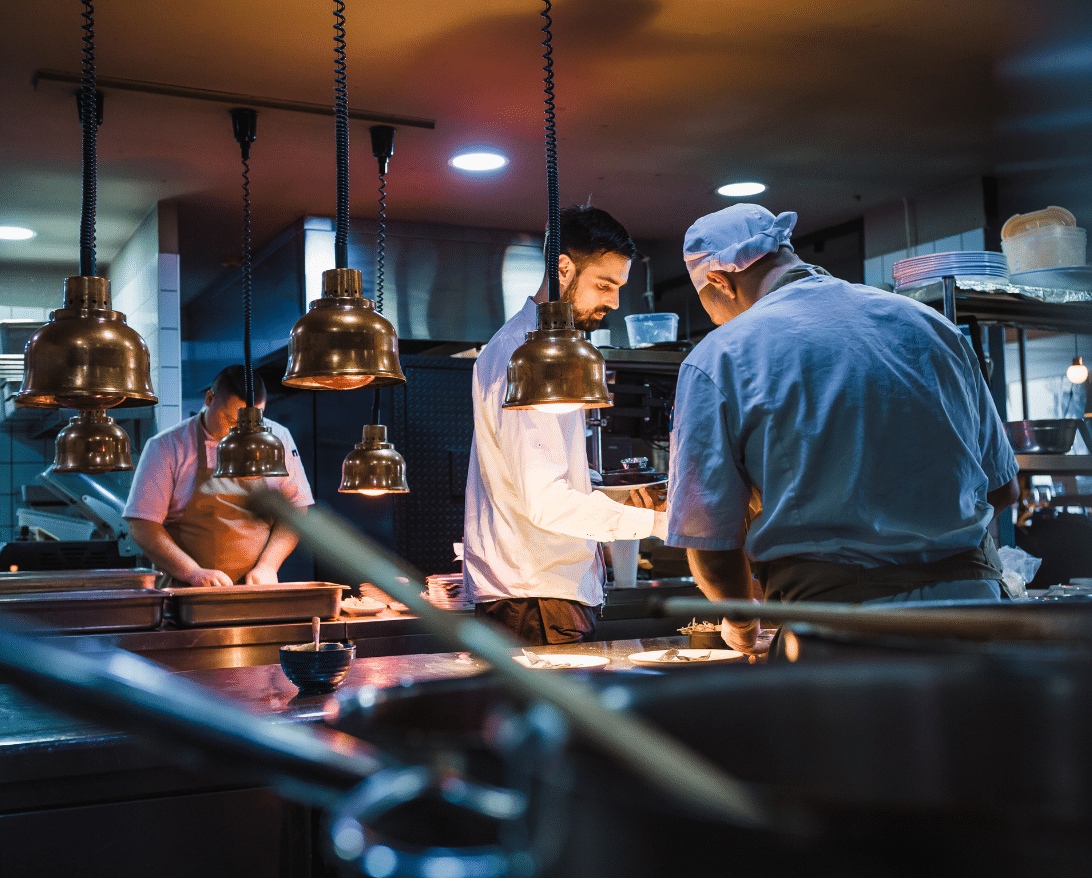
In a commercial kitchen, a chef usually has formal culinary training and experience — and high-level responsibilities. They might supervise lower-level employees, develop recipes, cook food and ensure the kitchen runs smoothly.
Cooks also prepare food, but they have more flexibility in terms of education and experience. Small, casual restaurants may not require formal training at all; cook jobs may be entry level or have minimal experience requirements.
Some restaurants have both chefs and cooks; others have one or the other. In a small restaurant, the chef and cook may be the same person. Larger kitchens typically have multiple types of chefs and/or cooks, each with nuanced roles.
In general, cooks are more common in chains, casual restaurants and small eaters. You’ll often find chefs in high-end restaurants and fine-dining establishments.
How do you become a chef or cook?
Education is the core of the difference between chef vs. cook roles. To become a chef, workers must typically attend culinary school. After that, they often start with a commis chef position and work their way up through the ranks of different restaurant kitchens.
Cook positions don’t usually require a culinary school degree. Many cooks start out with entry-level prep cook jobs. As they learn new recipes, build food-prep skills and gain experience, they can move up to line cook and head cook jobs.
What are the different classifications of kitchen roles?
“Chefs vs. cook” is a high-level classification; many restaurants have multiple positions within each category.
Common chef jobs include:
- executivechef. The highest-ranking chef in a kitchen, this person is in charge of top-level tasks such as developing a menu, creating recipes, tracking kitchen operations, managing the food-purchasing process, maintaining inventory and creating and sticking to a budget. Interestingly, executive chefs don’t typically spend much time cooking on a daily basis; their duties are primarily managerial.
- headchef. This role, also called the chef de cuisine, has a more hands-on supervisory role in the kitchen. They manage meal service, track food quality, and make sure kitchen staff members are working efficiently throughout each shift. Many head chefs spend time cooking. In smaller restaurants, the head chef may also take on the responsibility of the executive chef.
- Souschef. “Sous” means “below” in French; in a restaurant hierarchy, the sous chef is directly below the head chef and/or executive chef. They cook and help manage other kitchen staff, particularly when the head chef is unavailable. This position is common in restaurants with large kitchen teams.
- Chefs de partie. These chefs are responsible for individual stations in a kitchen. They might specialize in tasks such as making sauces, pastries, or vegetables. In some restaurants, they handle tasks including frying, grilling or roasting.
- Commischef. The lowest-ranked chefs, these workers support chefs de partie. They might prepare ingredients, help with cooking, or take on any task that occurs during a shift.
Types of cooks include:
- Head cook. This person is in charge of the kitchen; in a small business, the owner may even take on the role. They manage workers, train other cooks, and ensure dishes are prepared correctly and consistently. Head chefs are usually highly experienced; many have formal culinary education.
- Linecook. Line cooks have jobs that are similar to a chef de partie — the person responsible for a specific part of the “line,” or the kitchen operations.
- Prep cook. The lowest-ranking cooks in a kitchen, these employees get ingredients ready for a meal service. They might chop food, prepare cuts of meat, make salads or help chefs with simple cooking tasks. Prep cooks may also ensure that their areas are clean and sanitized.
The number of kitchen roles your restaurant needs depends on a number of factors. Restaurants with high-end or highly specialized menus often need more chefs, each with targeted experience or a unique set of skills. Bigger restaurants often require a larger staff to maintain consistent food quality and manage the sheer volume of customer orders.
Pros and cons of being a chef
For people who are considering a chef vs. cook career, the right path isn’t always clear. After all, a professional chef title commands respect, but it also takes time and money to earn high-ranking positions. The process can be so demanding, in fact, that many people choose to skip culinary school and work their way into a head cook position. Naturally, there are pros and cons to both approaches.
Pros of being a chef
- High earning potential
- Flexible career paths
- Skill-building opportunities
Cons of being a chef
- Requires a culinary degree
- Long hours
- Requires physical work
Hire a chef or cook for your restaurant
If you’re deciding whether to hire a chef or a cook for your restaurant, consider your priorities. A seasoned cook can offer practical knowledge and exceptional cooking skills, and they may accept a lower salary than a formally trained chef.
It doesn’t matter who you hire to lead your kitchen, it’s always important to create a good relationship with your staff to curb turnover. Implementing employee recognition ideas can make everyone who works at your restaurant feel valued — from the executive chef down to commission chefs and hosts.
Professional chefs require higher salaries, but they bring the benefits of a professional culinary education — specialized training, industry insights and connections that can benefit your business. Chefs can be a valuable resource in helping you grow the restaurant while controlling costs and maintaining food quality. No matter where your restaurant falls on the chef vs. cook spectrum, a skilled professional can help you build a stable, lasting business. As you look for ways to expand operations or increase revenue, a strong delivery presence is a must. Partner with Grubhub to reach a variety of local customers and introduce more diners to your food.

What you need to know about tip pooling
Tips are an integral part of the restaurant industry. They motivate employees to provide exceptional service, creating an experience that brings customers back time and again. For employers in many states, tips can also make up the difference between the server minimum wage and the federal minimum wage. If you’re looking for ways to distribute tips more fairly among employees, tip pooling is one option.
What are the tips for pooling?
Tip pooling is a practice where restaurant employees put all or part of their tips into a communal pool. The employer divides the total funds among eligible workers, either equally or using a predetermined ratio. This method is an alternative to tip sharing, where servers and bartenders voluntarily hand over part of their tips to other employees who help with service but don’t receive tips.
As you might guess, tip pooling can be a polarizing tipping method. It’s usually beneficial for employees such as bussers and expediters, but servers who tend to receive higher tips may find the practice unfair. And if certain employees work harder than others, either in perception or reality, tip pooling can create conflict among the staff.
For some employers, tip pools are the most sensible option. Take coffee shops, for example — multiple people are involved in taking orders and making drinks, but customers only tip once. By pooling tips, everyone receives their fair share. The same goes for any counter-serve restaurant where cashiers and kitchen employees work together to prepare orders.
Tip pooling is less common in traditional table service restaurants, but that’s not out of the question. As an employer, you might use this method to promote a collaborative rather than competitive atmosphere. If you’re currently using a tip credit system to satisfy minimum-wage requirements, you can still use a tip pooling system as long as you stay compliant with any applicable laws.
How are pooled tips calculated?
The way you calculate pooled tips depends on local, state and federal laws. All restaurants are subject to the Fair Labor Standards Act (FLSA), which allows employers to mandate a tip pooling arrangement for staff members. If you take a tip credit, the FLSA only permits your tip pool to include employees who traditionally receive tips. When you pay a minimum wage for all employees, you can also include non-tipped workers such as chefs or dishwashers. According to employment law, employers, managers and supervisors may not accept money from a tip pool.
The tip pooling method and timeline you choose also affects the calculation. If you pool tips for each shift and distribute them evenly, the process is simple. Add together all the tips at the end of the shift and divide them by the number of employees working. If the tips total $1,000 and you have 10 employees, each person will receive $100.
When you choose a percentage or points-based system, the process is slightly more complex. Imagine you have two servers that receive 40% each, a host that receives 15% and a busser who gets 5%. For a shift with $1,000 in tips, each server would get $400, the host would receive $150, and the busser would get $50.
Federal tip pooling law requires you to distribute the tip pool by payday at the latest. For card tips, you’re permitted to deduct the credit card company’s transaction fee percentage — unless doing so pushes the employee’s compensation below the minimum wage.
At tax time, your employees must report 100% of the tips they receive. The IRS also monitors employee tips as a percentage of your restaurant’s income. If tips make up less than 8% of your gross receipts, you must make up the difference and split it among tipped employees.
Tip pooling methods to try
Tip sharing is rarely a one-size-fits-all solution; as an employer, you can customize the process to fit your operations and employee preferences. Keep in mind that tip sharing doesn’t require you to pool 100% of tips. If servers and other tipped employees are good at the prospect, consider creating tip pools from 20% to 50% of the total gratuities.
Common tip-splitting methods include:
- Even distribution. The tip pool is split evenly between all employees. This method is useful for bakeries, fast food outlets, coffee shops and counter-serve restaurants where employees work together to prepare orders, serve meals and clean up after customers.
- Percentage-based. Employees receive a percentage of the tip pool based on their contribution to service. Because servers handle the bulk of the customer-facing duties, they typically get a majority of tips. Bussers, hosts and bartenders usually receive smaller percentages.
- Points. This tip-pooling method is similar to the percentage system, except employees receive a certain number of points depending on their role. Add up the points for everyone who’s working, then divide the total tips by the number of points to get a per-point dollar value. The point value changes every shift, helping to account for variations in staffing and order volume.
After you choose a tip-pooling method, you must decide whether to calculate tips at the end of each shift or at the end of the day. Shift-based distribution requires more accounting work on the employer’s side, but it offers fair compensation for employees who work the busiest shifts. You might choose a workday distribution method — where employees receive tips based on the number of hours they work — if you’re open for a limited number of hours or if your orders tend to be stable across shifts.
The pros and cons of pooling tips
Not sure if tip pooling is right for your restaurant? The pros and cons can help you make a decision.
Pros of pooling tips
- All service employees receive tips from the tip pool.
- Employees aren’t penalized when they’re assigned to a low-tipping table.
- Tip pools can encourage teamwork.
Cons of pooling tips
- Tip pooling laws can complicate your tip credit system.
- Employees are compensated equally even if they put in less work.
- It can create conflict between average and high-performing workers.
- Pooling tips adds complexity to employer accounting procedures.
When in doubt, ask your restaurant employees how they feel about pooled tips. Experienced, highly skilled workers may be strongly opposed; if they’re forced to pool tips with new or lower-performing workers, they’ll almost certainly make less money. When employees rotate positions in a counter-serve restaurant, however, the system can benefit the entire team.
Keep employees happy while growing your business
If your employees are happy with it, a tip pool can boost morale across the entire team. But employee appreciation shouldn’t stop there. Taking time to show your employees you appreciate their work will help foster a healthy work environment. Keeping employee practices consistent and fair will help minimize turnover.
Don’t forget to include your delivery tips, too. With Grubhub, you can opt to self-deliver orders within your preferred radius to ensure all tips remain with in-house staff. To learn more or try the system for free, get started with a Grubhub account.

10 Restaurant Sustainability Tips | Grubhub
The US Department of Agriculture (USDA) estimates that 30% to 40% of the food supply in the United States goes to waste each year. Restaurants are a significant contributor; in fact, between 4% and 10% of the food in commercial kitchens is thrown out before it’s even prepared. That’s a lot of meals thrown in the trash.
If you run a restaurant, this issue may already be on your radar. By finding ways to reduce food waste in your organization, you can ease the financial and environmental impact and set a good example for other businesses in the industry.
But how can your restaurant reduce food waste while maintaining quality? Read on to find out.
The impact of food waste
For restaurant owners, reducing food waste is a financial priority. After all, the ingredients you don’t use can come with significant costs. If you spend $100,000 on food and 4% of it goes to waste, you’re losing $4,000 — plus the costs of labor and storage that come with ordering, handling, and managing inventory.
On a grand scale, wasted food has more serious effects, both for the planet and the human race.
- environmental impacts: The US Environmental Protection Agency (EPA) estimates that food waste accounts for 21.6% of municipal solid waste. Most of that waste ends up in landfills; this cycle wastes all the energy that went into growing, producing, and transporting the food. Because food emits methane as it decays, it contributes to climate change.
- Food insecurity: The USDA found that 13.5 million households in the United States were food insecure in 2021, which means they didn’t have access to enough food at some point during the year. Wasted food can’t be rerouted to families in need.
The causes of restaurant food waste vary. Some food spoils before it can be used, often due to ineffective storage or poor inventory management. In some cases, your kitchen team might prepare too much of a certain dish; if you can’t serve it in time, it ends up in the trash. The same thing happens when customers don’t finish their meals.
7 restaurant sustainability tips to reduce food waste in restaurants
Here’s the good news: There are plenty of things you can do to improve food waste reduction at your restaurant. With small adjustments to your operational practices, you can cut waste, save money and reduce your ecological footprint.
1. Conduct a food waste audit
A food waste audit is one way to track the food that’s thrown out at your restaurant. During the audit period, staff should dispose of all food waste — including kitchen scraps, spoiled food and plate scrapings — into designated bins. In the process, ask your team members to make notes of the following:
- Ingredients, dishes or items that appear frequently
- Items that could be donated
- Food that’s thrown out before it’s used
At the end of the audit, weigh the food waste. Write down the amount, along with the number of meals you served and the revenue you brought in. These numbers serve as a baseline for future comparisons.
The results of the audit can help you find opportunities to reduce waste. If you notice that customers almost always throw out a certain vegetable or side dish, for example, it’s a sign to replace it with something else. If you have a high volume of spoiled food, consider revising your inventory and storage strategy.
2. Recycle used cooking oil
Restaurants use an average of 35 pounds of cooking oil per day. Disposing of it can be a hassle; an environmentally friendly solution is to recycle the oil. Get in touch with an oil-collection company that can pick up your used oil and transport it to a recycling facility. There, the oil is transformed into biodiesel fuel, animal feed, fertilizer and other products.
To reduce the amount of oil you send out for recycling, extend the life of your cooking oil by skimming it every 2 hours. It’s also a good idea to filter it at least twice a day to remove extra food particles and contaminants.
3. Optimize your restaurant storage
A poorly planned storage system can cause food to go to waste before you have a chance to use it. Here are some steps you can take to successfully optimize your restaurant storage:
- Designate storage tasks to specific employees.
- Create a shelf-life chart for quick reference.
- Store and label products immediately after delivery.
- Use ingredients on a first-in, first-out basis.
- Use perishable items as soon as possible.
If you notice that certain items go in the trash frequently, it might be time to remove them from the menu or order them in lower quantities.
4. Donate food whenever possible
Speak to local food banks, soup kitchens, and homeless shelters to identify the foods you can donate. Most organizations have specific rules; for example, they probably won’t accept prepared food that’s been on a buffet line. However, they can typically take non-perishable goods and packaged foods that aren’t expired.
Donating food doesn’t cut your costs, but it can help you earn tax credits. It also keeps food waste out of landfills.
5. Give leftovers to employees
When your restaurant has left over food that can’t be safely stored, donated or used in another dish, invite your employees to take it home. This is a great way to reduce food loss when a specific item doesn’t sell or the kitchen makes too much. It also helps boost employee morale.
To protect your employees, it’s important to follow safe food-handling practices. Don’t let them take food that’s been sitting out too long, and always make sure it’s packaged and stored properly.
6. Consider composting
There’s not much you can do to salvage food scraps left over from food preparation or customer meals. Instead of throwing them in the garbage, turn them into compost. One option is a commercial composter, which works quickly and accepts most types of food. Alternatively, you might be able to send your scraps to an industrial composting company.
If you have the space — and if the local health department allows — you might be able to build a traditional compost bin outdoors. Then, simply donate the compost to a local farm or community garden.
What can be composted in a restaurant kitchen?
- Food and vegetable scraps
- Coffee grounds and paper filters
- Paper tea bags (no staples)
- Eggshells (crushed)
- Shredded paper and cardboard
Meat, dairy products and oils cannot be composted. Cooked food also will not be composted.
7. Reduce portion sizes
Does most of your restaurant’s waste come from customer plate scrapings? Your portion sizes might be too big. Reducing portions is particularly effective if your customers can’t easily take leftovers to go; this is a common issue for restaurants located near hotels and airports. Alternatively, offer popular dishes in multiple size options so customers can order the one that best fits their appetite.
Before you start offering smaller portions, take time to train the staff. Teach them how to measure the correct amount of each item and how to plate it attractively. Depending on current sizes, you might consider using smaller plates or getting creative with presentation.
Additional restaurant sustainability tips
Reducing food waste in restaurants is just the first step toward sustainability. If you want to make a bigger change in your business, try these tips:
- Turn off equipment. By shutting down some kitchen equipment when orders begin to dwindle, you can save hundreds of dollars each year.
- Replace pre-rinse spray valves. Swap them with efficient models that use 20% less than the federal standard of 1.6 GPM; it can help you save $115 to $240 annually on water and energy costs.
- Insulate your water pipes. This low-cost strategy reduces energy loss.
- Become a certified green restaurant. Work with the Green Restaurant Association to get personalized sustainability recommendations. When you meet them, you’ll receive a certification that can be used on your website and marketing materials.
- Invest in sustainable packaging. Swap out plastic and foam options for sustainable to-go containers
- Reduce single-use plastic cutlery. You’ll save money and reduce overall waste. To help, Grubhub has joined the #CutOutCutlery campaign. In addition, delivery orders automatically default to zero utensils, so customers can opt in only if needed.
Grubhub for Restaurants is committed to driving sustainability across the restaurant industry
As a trusted delivery and mobile ordering platform, Grubhub is taking action to boost sustainability and food waste reduction. When you sign up with Grubhub for Restaurants, you’ll gain access to features that include:
- Quick menu edits. It’s easy to remove dishes when an ingredient runs out or you switch to a seasonal menu.
- Promotions. Use sales to move inventory before it expires.
- Virtual restaurants. A virtual restaurant is delivery-only; it gives you the freedom to adjust your menu, ordering and food-prep strategy to reduce waste and use fewer resources.
- Tech integrations. Grubhub uses the latest technology to allow accurate ordering and reduce errors.
When you’re trying to cut back on food waste, every action helps. Whether you choose to compost food scraps or find a food-donation option for surplus food, your efforts can cut costs and help the planet. If environmentally friendly delivery is part of your sustainability plan, Grubhub can help. To try Grubhub for Restaurants, sign up today.