

Pebblebrook Hotel Trust (NYSE:PEB) Price Target Cut to $16.00 by Analysts at Truist Financial
 Pebblebrook Hotel Trust (NYSE:PEB – Get Rating) had its price objective lowered by equity researchers at Truist Financial from $18.00 to $16.00 in a note issued to investors on Thursday, The Fly reports. Truist Financial’s price target would indicate a potential upside of 12.60% from the company’s current price.
A number of other research analysts have also issued reports on the stock. Barclays reduced their target price on shares of Pebblebrook Hotel Trust from $22.00 to $18.00 and set an “equal weight” rating on the stock in a report on Wednesday, December 21st. The Street lowered shares of Pebblebrook Hotel Trust from a “c-” rating to a “d+” rating in a report on Friday, December 30th. StockNews.com started coverage on shares of Pebblebrook Hotel Trust in a report on Thursday, March 16th. They issued a “sell” rating on the stock. Wells Fargo & Company dropped their price objective on shares of Pebblebrook Hotel Trust from $17.00 to $14.00 and set an “equal weight” rating for the company in a research note on Thursday, March 30th. Finally, Stifel Nicolaus dropped their price objective on shares of Pebblebrook Hotel Trust from $16.50 to $15.25 in a research note on Monday, March 27th. Three investment analysts have rated the stock with a sell rating and six have given a hold rating to the company. According to MarketBeat.com, the company presently has a consensus rating of “Hold” and an average target price of $17.88.
Pebblebrook Hotel Trust Stock Down 1.3 %
Shares of Pebblebrook Hotel Trust stock opened at $14.21 on Thursday. The Pebblebrook Hotel Trust has a 52-week low of $12.37 and a 52-week high of $26.14. The company has a 50 day moving average of $14.44 and a 200 day moving average of $14.86. The company has a quick ratio of 0.38, a current ratio of 0.38 and a debt-to-equity ratio of 0.77. The company has a market capitalization of $1.78 billion, a P/E ratio of -14.65, a P/E/G ratio of 0.60 and a beta of 1.85.
Pebblebrook Hotel Trust (NYSE:PEB – Get Rating) last announced its earnings results on Tuesday, February 21st. The real estate investment trust reported ($0.34) EPS for the quarter, missing analysts’ consensus estimates of $0.18 by ($0.52). The business had revenue of $319.61 million during the quarter, compared to analyst estimates of $309.55 million. The Pebblebrook Hotel Trust had a negative net margin of 6.26% and a negative return on equity of 2.77%. The business’s revenue was up 29.3% compared to the same quarter last year. During the same period in the previous year, the firm earned $0.06 earnings per share. As a group, research analysts forecast that the Pebblebrook Hotel Trust will post 1.71 EPS for the current fiscal year.
Insider Transactions at Pebblebrook Hotel Trust
In other Pebblebrook Hotel Trust news, CEO Jon E. Bortz purchased 14,000 shares of the company’s stock in a transaction dated Thursday, March 16th. The shares were bought at an average price of $13.62 per share, with a total value of $190,680.00. Following the completion of the transaction, the chief executive officer now directly owns 1,108,102 shares in the company, valued at approximately $15,092,349.24. The purchase was disclosed in a legal filing with the Securities & Exchange Commission, which is available through this hyperlink. In other news, CEO Jon E. Bortz acquired 14,000 shares of the firm’s stock in a transaction that occurred on Thursday, March 16th. The stock was acquired at an average cost of $13.62 per share, for a total transaction of $190,680.00. Following the completion of the acquisition, the chief executive officer now owns 1,108,102 shares in the company, valued at $15,092,349.24. The transaction was disclosed in a filing with the Securities & Exchange Commission, which is available at this hyperlink. Also, CEO Jon E. Bortz purchased 11,000 shares of the firm’s stock in a transaction on Wednesday, March 22nd. The stock was purchased at an average price of $12.95 per share, with a total value of $142,450.00. Following the completion of the purchase, the chief executive officer now owns 1,122,102 shares of the company’s stock, valued at $14,531,220.90. The disclosure for this purchase can be found here. Insiders have acquired a total of 39,865 shares of company stock valued at $555,064 over the last 90 days. 2.40% of the stock is owned by company insiders.
Institutional Trading of Pebblebrook Hotel Trust
Several hedge funds have recently added to or reduced their stakes in the company. Guggenheim Capital LLC increased its stake in shares of Pebblebrook Hotel Trust by 1.2% in the 3rd quarter. Guggenheim Capital LLC now owns 58,938 shares of the real estate investment trust’s stock valued at $855,000 after purchasing an additional 724 shares during the last quarter. PNC Financial Services Group Inc. increased its stake in shares of Pebblebrook Hotel Trust by 11.5% in the 4th quarter. PNC Financial Services Group Inc. now owns 11,653 shares of the real estate investment trust’s stock valued at $156,000 after purchasing an additional 1,199 shares during the last quarter. Assetmark Inc. increased its stake in shares of Pebblebrook Hotel Trust by 27.2% in the 4th quarter. Assetmark Inc. now owns 5,959 shares of the real estate investment trust’s stock valued at $80,000 after purchasing an additional 1,273 shares during the last quarter. Investnet Asset Management Inc. increased its stake in shares of Pebblebrook Hotel Trust by 0.5% in the 3rd quarter. Investnet Asset Management Inc. now owns 280,528 shares of the real estate investment trust’s stock valued at $4,070,000 after purchasing an additional 1,303 shares during the last quarter. Finally, Jane Street Group LLC increased its stake in shares of Pebblebrook Hotel Trust by 3.5% in the 2nd quarter. Jane Street Group LLC now owns 38,154 shares of the real estate investment trust’s stock valued at $632,000 after purchasing an additional 1,305 shares during the last quarter.
About Pebblebrook Hotel Trust
(Get Rating)
Pebblebrook Hotel Trust is a real estate investment trust, engaging in investments and acquisitions in hotel properties. Its hotels are located in markets like Atlanta, Georgia, Boston, Massachusetts, Chicago, Illinois, Key West, Miami and Naples, Florida, Los Angeles, San Diego and San Francisco, California, Nashville, Tennessee, New York, New York, Philadelphia , Pennsylvania, Portland, Oregon, and Seattle, Washington.
Featured Articles

Receive News & Ratings for Pebblebrook Hotel Trust Daily – Enter your email address below to receive a concise daily summary of the latest news and analysts’ ratings for Pebblebrook Hotel Trust and related companies with MarketBeat.com’s FREE daily email newsletter.
9 Tips for Becoming an Environmentally Green Restaurant
Sustainability is a big issue for modern consumers — they want to know their money is going to responsible businesses. In fact, 70% of Millennials and Gen Z consumers are willing to pay more for sustainable products. Modern diners are increasingly motivated to order from sustainable restaurants.
The shift toward eco-friendly and socially conscious practices creates an opportunity for restaurant owners. If you can show a commitment to sustainable operations, you can win customer confidence and create a lasting legacy.
So how can your restaurant go green? Keep reading to find out.
What are sustainable restaurants?
Sustainable restaurants embrace practices that benefit the environment and society while maintaining economic viability. The goal is to create a business model that can be sustained over time without creating a negative impact.
As you can imagine, full sustainability is challenging to achieve. The goal isn’t perfection — if the majority of restaurants make small adjustments, the collective effort has the potential to create powerful, long-lasting change. Restaurant owners are getting on board; according to a 2022 Datassential report, 70% are prioritizing sustainability. Even so, just 41% of restaurants feel their business model is truly sustainable.
Some of the factors that make a restaurant sustainable include:
- Reducing food waste
- Sourcing from suppliers with sustainable practices
- Minimizing wasted water and energy
- Embracing recycling and composting
- Cutting back on carbon emissions for delivery and food transportation
Why restaurant sustainability is more important than ever
Restaurant sustainability benefits the planet and society as a whole; it could also affect the success of your business. It’s a top priority for food-service businesses and suppliers, especially those with a younger customer base. According to the Pew Research Center, 67% of millennials and 67% of Gen Z believe the climate is a top priority. Because these two generations include 140.79 million people, it’s important to consider their preferences.
Consumers are serious about purchasing from companies with sustainable practices. A McKinsey study found that businesses with strong environmental, social and governance (ESG) practices are growing faster than their less-sustainable counterparts. In this environment, restaurants that are committed to going green and reducing waste may gain a competitive advantage. When given the choice, socially and environmentally conscious diners are more likely to choose a sustainable restaurant over the alternative.
It’s no longer enough to make vague eco-friendly statements. Research shows that 88% of Gen Z customers have a low level of trust in commercial ESG claims. They’re also experts in ferreting out the truth and calling out performative actions. As you build sustainable practices and hire new chefs, make sure they stand up to intense scrutiny; that way, you can avoid bad PR and win the loyalty of young customers.
Tips for sustainable restaurants
Most restaurants have room for improvement when it comes to sustainability. Beyond the obvious options, such as reducing energy use and saving water, there are several industry-specific actions you can take.
Food waste reduction
Food waste is one of the most important issues facing the restaurant industry. The food that’s sent to a landfill each year has significant consequences for the environment and the national food supply — and your bottom line. Adjusting your operations to reduce waste can cut your average food costs by 4% to 10% and reduce your cost of goods sold (COGS) by an average of 4 cents on every dollar.
Some ways to reduce restaurant food waste and increase restaurant sustainability include:
- Redesigning your inventory management system to reduce spoilage
- Ordering according to actual restaurant data
- Donating food to local non-profits
- Composting food scraps
- Serving smaller portions
Don’t be afraid to publicize your efforts on social media, customers are paying attention. In 2022, one report found that consumer awareness of food waste had increased by 39% in just 3 years. When you’re open about the process, it can help customers feel good about dining at your restaurant.
Sustainable food sourcing
The sustainability of your restaurant isn’t limited to internal practices — your supply chain matters, too. Take time to evaluate each supplier to find out if they’re implementing sustainable methods. Any time you add a new vendor, make sure to choose from companies with socially and environmentally safe business models.
Due diligence is especially important when you’re selecting food suppliers; farming and animal husbandry have a big impact on the environment. Keep an eye out for sustainable agriculture practices such as:
- Minimized use of pesticides
- Crop rotation that supports healthy soil and prevents erosion
- Intelligent water management
- Integrated livestock and crop management
- Fair labor practices
Another solution is to source food locally. When your ingredients have fewer miles to travel, they use less energy. And because local farmers don’t need to consider long transit times, they can harvest food later and provide fresher, more flavorful items. In contrast, the food that’s shipped from far away is often cooked with gas or chemicals.
Local sourcing does more than increase food quality at sustainable restaurants; it builds a stronger sense of community. Customers appreciate the chance to keep their money in the local economy and support small businesses they recognize. As a bonus, incorporating locally grown ingredients into a rotating seasonal menu can boost your bottom line. A regular lineup of new dishes gives diners a reason to keep coming back.
Eco-friendly packaging
Each year, Americans send more than 82.2 million pounds of municipal solid waste to landfills. About 28.1% of that waste consists of containers and packaging materials, according to the EPA.
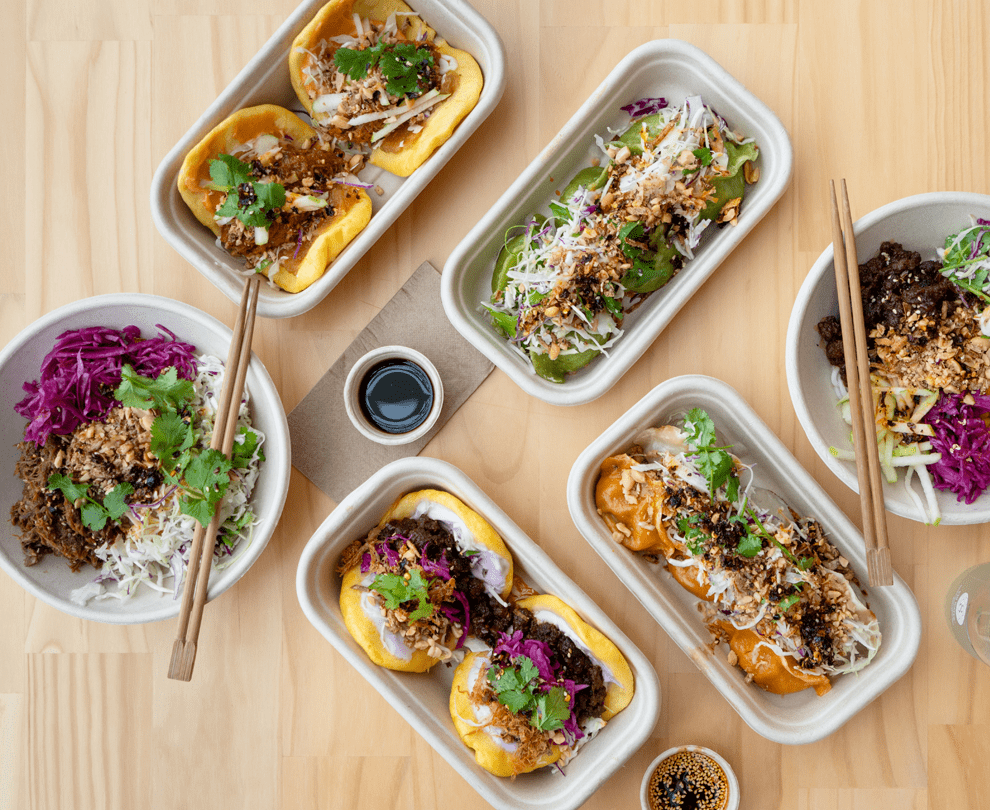
If your restaurant offers takeout and delivery, you can make a difference by switching to sustainable to-go containers. Avoid plastic and Styrofoam; they can take up to 500 years to decompose. Plastic containers often end up in the ocean, where they pollute the water and break down into small pieces that harm sea life. According to National Geographic, the oceans already contain 5.25 trillion pieces of plastic.
Sustainable packaging is biodegradable, which means it breaks down naturally and blends safely back into the ecosystem. Compostable containers are a good solution. Some are made with sustainably farmed sugarcane or bamboo. If you’re concerned about leaks, you can find paper containers lined with a plant-based starch resin. Although these containers still make it to landfills, they break down much faster than traditional options.
What is the Green Restaurant Association?
If you’re looking to help reduce food waste and incorporate sustainable practices, the Green Restaurant Association (GRA) is a good resource. This organization, which has been leading the charge for restaurant sustainability since 1990, is committed to driving change in the industry. It provides educational materials and access to a network of vetted sustainable distributors and products to help you build a better supply chain. The GRA also offers a sustainability certification program; once you become a Certified Green restaurant, the team can help you promote the credential.
The Green Star, which is a MICHELIN initiative, is a different type of distinction. It’s awarded to restaurants that are excelling in the area of sustainability. A Green Star is another vote of confidence for consumers.
Sustainability is a critical issue in the restaurant industry, and it’s likely to become more important in the coming years. By taking action now to improve your practices, you can establish a solid foundation for long-term success. At Grubhub, sustainability remains a priority. With the #CutOutCutlery campaign, diners must opt-in to get single-use plastic utensils, reducing the amount of unnecessary waste generated from each order. Ready to reach more customers and share your restaurant’s mission? Partner with Grubhub today.
Finding the Right Restaurant Insurance
When you open a restaurant, insurance is one of the most important investments you can make. Like car insurance or health insurance, these commercial policies help you manage the financial risks that come with doing business. Is your restaurant protected?
What is restaurant insurance?
Restaurant insurance is coverage that protects your business from financial losses when unexpected problems arise. It can help you cover legal and medical costs for customer injuries, for example, or pay for repairs and lost income after a kitchen fire.
Running a restaurant is inherently risky — the equipment is expensive, profit margins are narrow and a single mistake in food storage or handling can result in an outbreak of foodborne illness. Insurance helps mitigate that risk, making it a must-have protection for every restaurant owner.
Before you buy business insurance, it’s important to note that no two policies are alike. If you go into the process with a clear idea of your restaurant’s vulnerabilities, it’s easier to understand how different policy types can benefit your company.
Types of restaurant insurance to choose from
As a restaurant owner, you can select from a variety of coverage types; each one is designed to address a different liability, such as employee injuries or the potential for serving spoiled food. Common restaurant insurance options include:
- General liability insurance. These policies reduce your financial liability when someone makes a claim against your restaurant. The most common is bodily injury; coverage can help with expenses if a customer or a delivery person gets hurt while on your property. Some policies also include product liability coverage, which covers harm that results from the products you sell — usually, food poisoning. General liability coverage often extends to other things that might happen in the course of doing business, such as reputational harm, copyright infringement or damage to someone else’s property.
- Commercial umbrella insurance. You can use these policies to extend your liability coverage. They usually kick in when your general liability policy reaches its payout limit.
- Commercial property insurance. If your restaurant or the equipment in it is damaged, this type of coverage can pay for parts or all of the repair or replacement costs. In some cases, it replaces a percentage of your lost income if you have to shut down for repairs. Typically, coverage is limited to damage due to situations out of your control, such as fire or theft.
- Business income insurance. This type of insurance extends the protection of a property insurance policy, enabling you to receive extra funding during a shutdown. Depending on the terms, it might cover expenses such as utility bills or lost profits.
- Workers’ compensation insurance. Most restaurants must purchase a workers’ comp policy to help cover employees’ costs if they get sick or injured on the job. Specific laws and coverage options vary by state.
- Commercial crime insurance. These policies provide extra protection against general theft, employee theft, forgeries and data theft.
- Liquor liability insurance. If you serve alcohol, a liquor liability policy can help protect you if customers become intoxicated and cause harm to themselves, other people or property.
Some insurance providers offer a business owner’s policy that combines liability and business coverage. Others enable you to buy separate policies for customized protection.
The cost of restaurant coverage
The cost of restaurant business insurance can vary significantly based on factors such as your company’s size, location, revenue, and coverage amount. Some providers estimate an average annual cost of $2,080; others put that figure closer to $4,000.
When calculating premiums, insurance agents will consider your specific operations. For example, it usually costs more to insure a restaurant with upscale kitchen equipment or a high property value; if property damage occurs, the repair or replacement expenses are much higher. Likewise, a business with a large kitchen and front-of-house staff will pay more for workers’ comp than a two-person sandwich shop.
If the budget is a concern, try these tips to reduce your insurance costs:
- Ask about discounts for larger deductibles or up-front annual premium payments.
- Buy multiple policies from a single provider to get a bundle discount.
- Purchase only as much coverage as you actually need.
- Look for policies with a discount for loyalty or no-claims years.
Protecting your establishment
Buying restaurant insurance requires you to find a balance between protecting your business and controlling costs. An adequate amount of coverage provides peace of mind; more importantly, it helps your company stay afloat when unexpected expenses arise due to factors beyond your control.
- Determine the type of coverage you need. At a minimum, most restaurants need general liability coverage, property insurance, and workers’ comp insurance.
- Choose coverage limits. Your policy should provide enough financial support to cover common risks for your specific restaurant. If you run a bar with a mechanical bull, for example, you might need more liability coverage.
- Compare quotes. Get quotes from more than one insurance company, and compare them closely. Pay attention to what is covered, coverage limits, and the specific terms of the contract. Make sure to look at coverage restrictions, especially if your restaurant is located in an area that’s prone to hurricanes or flooding.
Restaurant insurance protects your business from a wide range of issues, from lawsuits to natural disasters. By investing in the right policies, you can stay compliant with local laws and keep the doors open even after a high-cost claim.

Happy hour menu ideas for your restaurant
There’s nothing like kicking back and relaxing with a cheap drink after a hard day’s work. As most people have returned to in-person activities, the demand for happy hour has risen. Whether you offer a nice selection of wines or are known for your fun cocktails, featuring happy hour discounts is a sure way to get more customers to place an order. It’s 5 o’clock somewhere, right?
When you’re looking for ways to maximize restaurant revenue, happy hour is a cost-effective option — you can start with just a few fun menu ideas and your regularly scheduled staff. This classic afternoon event tends to attract groups, which boosts order value and introduces a wide range of diners to your restaurant.
What’s the point of a happy hour?
Happy hour is a period of time — usually, 2-3 hours in the late afternoon or early evening — when bars and restaurants offer discounted alcoholic drinks and appetizers. The exact times vary by establishment and day of the week but usually fall somewhere between 4 pm and 8 pm on weekdays. Weekend happy hours might start as early as 2 pm
The point of a happy hour is to increase revenue during the slow period between lunch and dinner. It’s particularly effective if you want to attract an after-work crowd; drink specials can bring in professionals who are looking to wind down at the end of a long day.
As an extra incentive, many restaurants offer free cocktail-hour finger foods or deals on appetizers to tide customers over until dinner. Some restaurants create a dedicated menu; others come up with new happy hour ideas every day to give guests a reason to come back.
In addition to increasing foot traffic, happy hour offers several important business benefits for restaurants. You can take advantage of the relaxed atmosphere to try out new cocktail trends and appetizer recipes; it’s a great way to gauge the customer response before you change the permanent menu. You can also feature seasonal offerings on a limited-time menu. When you have a surplus of a kitchen ingredient or type of alcohol, use happy-hour discounts to boost orders and run inventory through faster.
Happy hour menu ideas customers will love
As you plan a happy hour menu, it’s important to decide whether it will be permanent or revolving. Both have advantages — a permanent menu streamlines your ordering and prep processes, but a revolving menu offers more flexibility.
Start with alcoholic beverages; they’re the foundation of a good happy hour. Accommodate a variety of tastes by offering a small selection of discounted beer, wine and mixed drinks. You can still offer the regular menu, of course, but expect happy-hour deals to get the most attention. The drinks you choose will depend on factors that include:
- How easy the drink is to prepare and serve
- Whether the bartender can make a large batch in advance
- Profit margins with the discounted price
- Seasonal trends and flavor preferences
- The popularity of the beverage during regular hours
- Current inventory and bartender preferences
When it comes to food, the best happy hour menu ideas prioritize big flavors and bite-size servings. That way, customers can take the edge off their appetites without filling up before dinner. If you’re serving beer in a casual environment, aim for popular finger foods that are easy to eat: soft pretzels and cheese, nachos, bacon-cream cheese roll-ups, or street tacos, for example. For a restaurant with a more elevated vibe, consider gastropub-style appetizers such as stuffed mushrooms, crostini with goat cheese, or charcuterie platters.
If you’re developing a seasonal menu for your restaurant, consider extending it to happy hour, too. Create dishes that feature local in-season produce, for example, or offer holiday-themed snacks and drinks. In the winter, you might add hot drinks to the menu, such as mulled wine or spiced apple cider.
Looking for ways to boost both food and beverage sales? Experiment with different happy-hour specials to encourage bigger orders:
- Discounted wine or beer flights
- Combo deals for an appetizer and two drinks
- Discount code just for social media followers
- $5 local beer or wine
- Four drinks for the price of three
- Buy one, get one half off the deal on appetizers
What happy hour drinks are trending?
The types of drinks customers turn to quench their thirst often change season to season. However, there are a few drinks that stand out all year round. What were the top ordered alcoholic beverages on Grubhub in 2022?
- Beer: This classic drink is a happy hour must have. Consider offering local brews and seasonal lagers to keep it fresh.
- margaritas: Whether they prefer it with salt or sugar on the ream, there’s no doubt customers can’t get enough of this sweet cocktail. Offer a variety of flavors and let customers dictate if they want it on the rocks.
- Hot Sake: This Japanese specialty has risen in popularity in the past year. Known as ‘okan’ or ‘kanzake’ in Japanese, this stronger drink comes in a variety of flavors and can be served at different temperatures depending on your diners’ liking.
- Piña Colada: Rum, coconut cream and pineapple juice are a dreamy mix of ingredients that many customers can’t turn down. Serve frozen with a slice of pineapple and a maraschino cherry to make diners feel like they’re at the beach all year round.
- White Wine: Wine is also a happy hour must-have. You can serve wine in mini pre-sealed to-go bottles to make your happy hour deal part of your delivery menu.
Happy hour doesn’t only mean spiked drinks. It can pay to offer non-alcoholic beverages at a happy hour discount to include everyone in your afternoon special. What non-alcoholic beverages were customers ordering on Grubhub?
- cola
- Lemon Lime Soda
- Iced Tea
- Iced Coffee
- Thai Iced Tea
Tips for a successful happy hour
Done well, happy hour can be good for your restaurant’s business; it boosts your revenue without excessive labor costs or major menu modifications. To get the most from the event, follow a few happy hour best practices:
- Stick to the same hours every week to set expectations
- Consider profit margins when evaluating happy hour menu ideas and discounts
- Choose finger foods when possible to reduce utility usage and streamline cleanup
- Offer happy hour exclusives to attract your regular lunch and dinner customers
- Ask for guest feedback on new recipes and drinks
- Choose times that fit between your restaurant’s specific rush periods
- Keep customers interested with themes, live entertainment and partnerships
Marketing is essential for a successful happy hour, especially in the first few months. Build excitement by mentioning the times and discounts on your website, in marketing emails and in advertisements. While you’re at it, try sending flyers to nearby businesses. Make sure to promote daily or weekly specials on social media to motivate spur-of-the-moment visits.
To get more customers in on the fun, offer happy hour appetizer specials and alcohol for delivery. It’s easy with Direct — you can build a commission-free branded ordering platform that enables customers to order snacks and drinks to enjoy at the comfort of their home. Your bottom line benefits as well; adding alcohol to your Grubhub menu can boost your average order value by up to $15. When you’re ready to expand your restaurant’s happy hour to your delivery menu, get started with Grubhub today.
How Restaurants Should Be Using Sustainable Food Containers
As younger, environmentally conscious diners become a majority of the food-industry customer base, many restaurants are making sustainability a top priority. To-go containers are a key focus — disposable packaging is a significant contributor to commercial waste. The right sustainable products can help you protect the environment while maintaining food quality.
Why sustainability matters
Increasing restaurant sustainability is one way to reduce your impact on the environment, especially when it comes to takeout containers. According to the EPA, containers and packaging are responsible for more than 23% of all the trash that goes to landfills in the United States. By switching to compostable, reusable, or recyclable to-go container alternatives, you can minimize your ecological footprint.
Your bottom line will also benefit — after all, customers care about sustainability. Millennials and Gen Z diners, in particular, are likely to pay attention to your company’s environmental practices. In fact, 71% of millennials and 75% of Gen Z consumers consider sustainability when making purchasing decisions. As these two generations wield $65 billion and $100 billion in purchasing power, respectively, paying attention to their preferences can give you a competitive advantage. If you’re currently sending out food in plastic containers with clear lids, it could be time to rethink your restaurant’s sustainability practices.
Sustainability made simpler
Sometimes, boosting restaurant sustainability is as simple as choosing different to-go containers and lids. Start by considering your use of plastic; it’s one of the biggest contributors to ocean pollution and accounts for 12.2% of solid waste. While it may not be feasible to completely eliminate plastic packaging, reducing your usage can help.
You might also consider joining Grubhub in the CutOutCutlery campaign, which is designed to help address the issue of plastic waste in the restaurant industry. The aim is simple — by requiring that customers opt in to receive plastic cutlery with their food, you can help reduce the amount of utensils that are thrown out unused. It’s an easy action, but it can go a long way toward reducing the 40 billion pieces of disposable cutlery American diners use each year.
When you partner with Grubhub for delivery orders, it’s easier than ever to be sustainable. Each order automatically defaults to a no-cutlery setting, cutting back on plastic waste immediately.
Some additional ways to increase sustainability in your restaurant include:
- Educate. Let customers know what they can do with their takeout containers when they’re done eating. Depending on the container, this might include recycling them or reusing them as food storage.
- Reduce. Streamline your packaging and use disposable items to minimize waste. While you’re at it, you might adjust portion sizes or kitchen practices to reduce food waste.
- Go local. Incorporate locally sourced food into your menu whenever possible; it requires less fuel, produces fewer emissions and supports the local economy.
- Recycle. For convenience, offer on-site recycling to help customers separate their plastic, paper, food scraps and landfill waste.
If you decide to implement a recycling program, make sure you understand what each recycling symbol means. The most recognizable symbol features a triangle made with three arrows. It indicates that the item can be recycled, and the number in the center explains how. If you don’t see this symbol on paper or plastic products, they may not be recyclable.
You may also see symbols that indicate a product is compostable or biodegradable. Compost symbols vary; some feature a circle with an apple core in the center, while others look like a ribbon loop with leaves at one end. Biodegradable products often feature a triangle or circle made of leaves.
What are the best to-go containers for restaurant delivery?
When you’re choosing the best takeout container for your restaurant, sustainability is a top factor. The most sustainable food containers are compostable or biodegradable; they’re usually made from compostable paper, sugarcane, wheat straw or bamboo. Recyclable paper, plastic, or aluminum boxes and hot cups are the next best solution.
Make sure to consider other factors, including:
- durability. Your container should be strong enough to support the weight of the food without sagging or collapsing. For heavy, wet items, a container with a clear lid is often a sturdy option.
- Sizing. To-go containers should be sized to fit the portion. Go too big and your servings will look small; too small and the contents will be challenging to eat without spills.
- Loose lids. The lid should fit tightly, even when the package shifts during transit.
- Branding. Customize takeout containers with branding to support your marketing efforts. Depending on your delivery and takeout volume, you might order preprinted packages or personalize them with a stamp.
The best takeout containers fulfill each of these categories. You can order them from restaurant wholesalers. If sustainability is a top priority, work with a sales representative to identify boxes that are both secure and environmentally friendly.
How can you package food for delivery to ensure quality?
After you choose to-go containers, it’s important to train your kitchen staff in proper food packaging. When everyone in your restaurant understands best practices, it helps ensure each meal arrives in good condition.
As you’re packaging food, follow these steps:
- Separate hot and cold items. Keeping them in separate bags makes it easy to maintain the correct temperature in transit. Use insulated bags to help keep hot foods hot during delivery.
- Package liquids carefully. Choose containers with tight lids, and ensure they’re secure before packing them. Use cup carriers for extra stability, and make sure glass bottles are protected.
- Follow alcohol delivery rules. For beverage delivery, make sure to label drinks as alcoholic and package them in a separate container. Clear labels keep you compliant and make it easier for delivery drivers to follow local laws.
- Vent fried foods. Keep fried items crispy by choosing vented boxes that let out condensation.
- Labels and seals. Give customers extra confidence by sealing plastic and paper food containers to ensure food safety. It’s also a good idea to label hot liquids to prevent spills and injuries to both delivery drivers and diners.
Partner with Grubhub for sustainable food delivery
Safe packaging is the first step; it’s also important to work with a reliable delivery partner. At Grubhub, our platform optimizes punctuality and efficiency to maximize food quality. Drivers can pick up orders within minutes of preparation, and delivery zone boundaries ensure meals arrive quickly. With the integrated utility opt-in, sustainability is built into the process.
Sign up for Grubhub today to start serving sustainable customers.
Improving Online Ordering With Images
Looking for a sure-fire way to win the attention of Grubhub customers and improve their online ordering experience? Try adding a few images to your restaurant’s menu through the Grubhub for Restaurants platform. Including photos can increase sales of menu items by up to 30 percent – and it’s easy to see why.
From improving order accuracy to giving customers a better idea of what to expect, images can help deliver an online ordering experience that customers are hungry for.
Why great restaurant photography improves diners’ online ordering experience
Integrating images into your restaurant’s online presence greatly improves customer satisfaction.
Take a look at the three pain points that strong restaurant photography has helped resolve:
Greater menu familiarity
While new and exotic dishes are guaranteed to spark curiosity, they likely won’t be a top choice among customers who don’t know what’s in them. Eating is a full sensory experience, and photos can help give diners visual cues that can get their mouths watering. Clear up any confusion about dishes on your restaurant’s menu by including images wherever possible.
Quicker online ordering
Use images to show, not just tell, customers about your restaurant’s offering. Supplementing menu descriptions with appetizing images that can capture the hearts – and stomachs – of customers in just seconds will reduce the time it takes them to place an online order. The faster a customer adds meals to their cart, the less chance that they will change their minds and not place an order.
Higher order accuracy
In addition to providing customers a snapshot of what a dish might look like once it finally arrives, images also give back-of-house staff members a visual guide for putting orders together. By taking a few seconds to compare the image on your restaurant’s menu with the finished product, your staff can ensure no detail – big or small – is overlooked.
Where to feature your restaurant photos
There are many places where your restaurant’s brand will pop up online, and it’s important that strong photos are included in your digital presence. Brush up on our restaurant photography tips if you want to learn more about how to snap professional-grade photos. Take a look at where you can add photos to get more traction online:
Feature your dishes on your restaurant’s menu
Your restaurant’s online menu is the most important place to feature images of your food. When diners are scrolling through a list of dishes, a jumble of dish descriptions makes it hard for them to navigate your restaurant’s offerings. Restaurants that have already made the switch from fully text menus to photos on their online ordering platforms have seen their conversion rates increase by about 25% on average.
Your menu photos should showcase your food – capturing each dish at its prime. Close up photos of your dishes help capture your creation’s details, giving diners a look into what ingredients are cooked in. Plating is especially important when it comes to menu photos. Take your time arranging each dish and make sure the plate and background are clean. You want your diners’ focus to go straight toward the food.
Nando’s Peri-Peri has perfected their menu photos on Grubhub Marketplace. Highlighting their main dishes along with recommended side pairings helps diners envision what their order will look like.
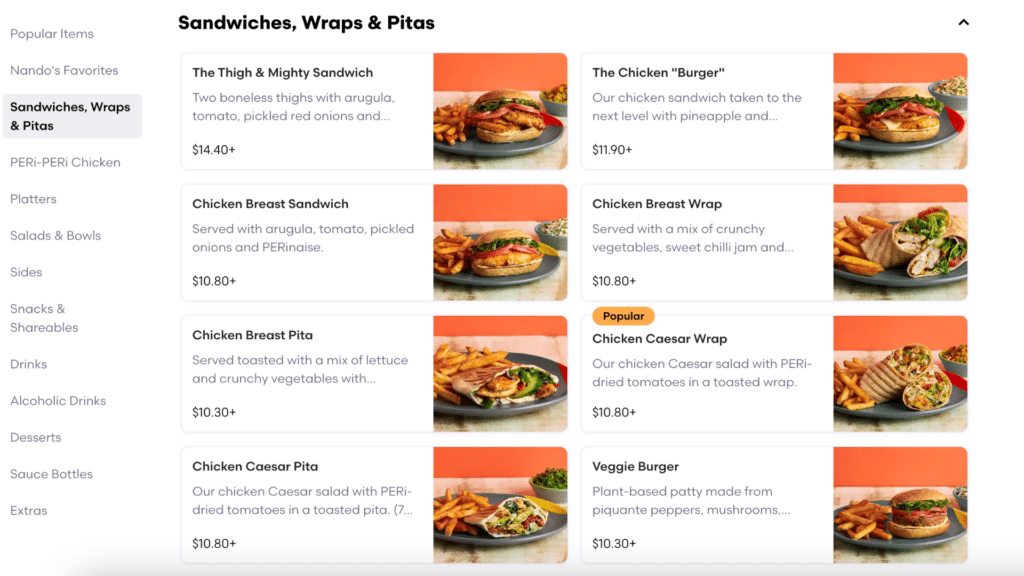
When you partner with Grubhub, your restaurant can schedule a free photoshoot so you can get professional photos of your cuisine to feature in your digital presence. Already a Grubhub Marketplace partner? Schedule your free photoshoot today or reach out to your Account Advisor to learn more.
Highlight your offerings on your restaurant’s website
90% of customers research a restaurant online before visiting – that’s more than any other type of business. Your website serves as a virtual home base for your restaurant’s brand. It’s often the first place you can make a memorable impression on customers, so featuring irresistible images of your cuisine can motivate diners to place an order.
Your restaurant’s brand begins to form online as soon as a customer search for your cuisine. When a customer searches for your restaurant on Google, your restaurant’s Google Business profile will appear. This profile features basic information about your restaurant including its address, hours, website and ordering platform. Make sure you update your Google Business profile so that customers can easily find out more info about your restaurant.
What types of images should you include on your restaurant’s website? Photos of your food are great to place on your homepage and menu. Crisp images of your cuisine on top of white plates that will showcase the natural colors of your ingredients stand out. Since natural light can help do the same, consider conducting each of your photoshoots near windows. Take a look around your restaurant and snap some photos of your staff in action. It’s also important to include photos of your ambiance so that diners can get a feel of your overall dining experience.
Be selective about what photos you choose to feature. Too many photos can bog down a website’s load time and make it more difficult to navigate. Check out more tips on how to design a successful restaurant website.
A strong restaurant website won’t do much for your bottom line unless you have a clear avenue for diners to place an order. Elements of how to create a seamless online ordering system? Look no further than Direct.
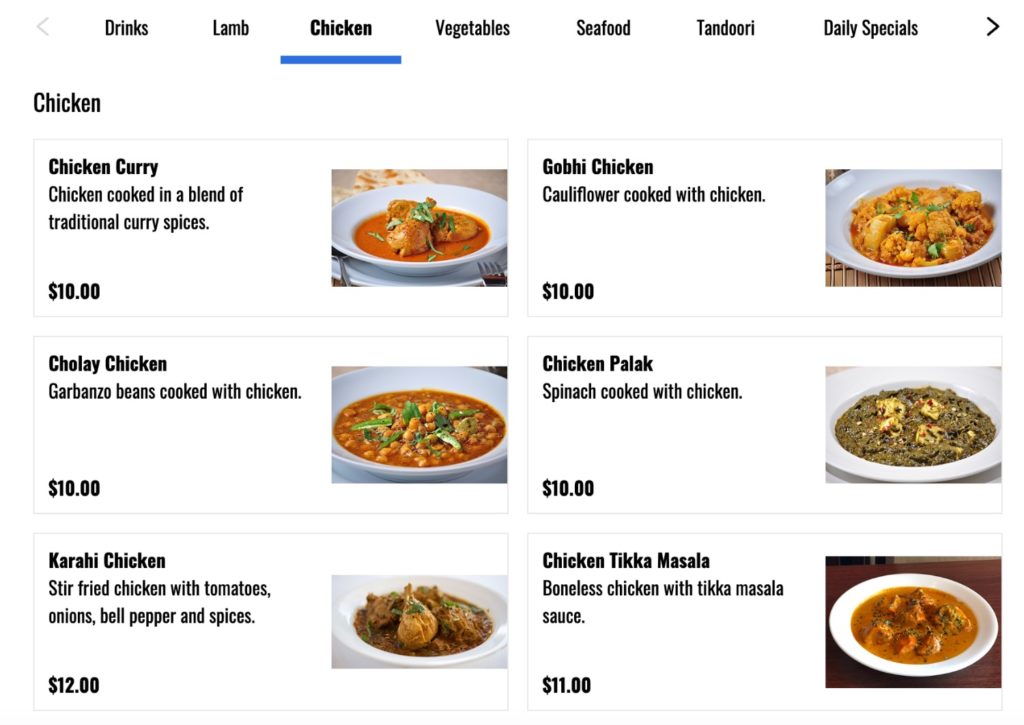
Direct is a commission-free online ordering platform that allows customers to place orders right from your website. Direct makes menu management simple. When you update menu items or add photos on your Marketplace menu, your Direct menu will automatically update to reflect changes. You can bring your restaurant’s brand to life with Direct by easily customizing your site to match your brick and mortar location.
Check out how Naan N Curry used their Direct site to feature their food photography:
Connect with your diners on social media
Social media is a gold mine for foodies these days. Social media offers the perfect format to tell your restaurant’s story through images – putting your mouth watering food photography center stage. Creating a social media profile for your restaurant can get your food into the digital conversation, and strong food photography can help bring your account to the top.
When it comes to social media, strong photography is key. There’s no one size fits all for social media composition, and cookie cutter posts can blend into customers’ feeds. Mix up the recipe by trying out one of these formats:
- Food features are high resolution, close up images of your dishes. These posts are great for featuring a specific menu item.
- Food films are videos that feature your dishes. Videos tend to perform better on social media apps like Instagram and TikTok, so taking advantage of this feature to show your food in action can draw extra attention from diners.
- Interactive stories is the best way to directly prompt an action from a customer. On apps like Instagram and Facebook, you can post images to your story that will appear at the top of diners’ feeds. With this feature you can directly link to your online ordering website, ask interactive questions or run a contest.
- Behind the scenes photos and videos help your restaurant come to life. You can make a short video showing how your chef whips up a recipe or use a photo slideshow to showcase what your employees like to order.
- Reposts of your followers’ photos of your food can not only connect you with your customers, but also give you more unique content to work with, turning your diners into your PR team. Make sure you get permission from the original creator before you repost any content. You can also collaborate with local micro influencers to expand your reach.
Hashtags are key when it comes to getting your account more exposure. #Foodie has over 200 million posts on Instagram, and #LocalRestaurant has racked up over 300,0000 posts. You can also get in on the local conversation by using hashtags like #AustinFoodie or #NYCeats. Adding trending hashtags to your post allows them to enter different categories online, bringing your restaurant into people’s social media feeds.
Make your restaurant picture perfect with Grubhub by your side
Embellishing your restaurant’s online presence with eye-catching photography can greatly improve your digital brand. Adding them to your website, online menu and social media accounts get customers’ mouths watering, prompting them to place an order.
A picture is worth a thousand words, and a picture of your delectable food is worth the delivery fee for Grubhub’s over 30 million customers. That’s why Grubhub offers a free photoshoot for restaurant partners. Ready to get your mouth watering food in front of hungry diners? Partner with Grubhub today to start taking more orders now.

The 9 most popular restaurant delivery days
Marketing for restaurant delivery is a tricky mix of strategy and timing. Throw in a need for creativity (who’s going to come up with weekly topics and track what’s relevant) and it can be tough for restaurant owners and operators to find time in their busy schedules to find ways to promote their eatery.
But the fact is, marketing remains one of the most important tasks on your to-do list because it’s the easiest way to keep your diners engaged and your restaurant top of mind.
For example, pairing promotions with a boosted social media presence can help generate business and put guests in seats. Or, as this case may be in modern times, directing them towards your online ordering platform so they can score some delivery.
Restaurant delivery is on the rise. More than 18 million orders were placed on Grubhub in 2022, and online ordering is growing 300% faster than in-house dining. By 2024, online food delivery services are projected to become a $32 billion industry. It pays to master your digital ordering strategy now.
Capitalizing on consumer trends can help drive diners to your restaurant.
National holidays with the most orders
It’s all about national holidays – and we don’t just mean Christmas and Fourth of July. National food holidays and unofficial top restaurant delivery days like mega sporting events and primetime for restaurants looking to amplify off-premise orders.
Take a look at the national holidays that bring the most orders to restaurants and learn how you can promote them to capture more hungry diners.
1. New Year’s Day
Nothing lulls regrets from the previous year more than a good hearty meal, according to Grubhub diners. Over 660,000 orders were placed on Grubhub on New Year’s Day in 2022. It can pay to double down on delivery in the new year as many customers don’t want to leave their house on the day off to get a meal. And having a delivery partner like Grubhub can help take the stress of coordinating deliveries off your plate.
The holiday season is a great time to roll out a seasonal menu that incorporates festive favorites. Perfecting a seasonal menu can help make your restaurant stand out as customers tend to appreciate flavors that correspond to the time of year. Consider creating a New Year’s Day brunch menu that can cure any hangover – incorporating comforting favorites like french toast, pancakes, fresh fruit and home fries.
2. Mother’s Day
For decades, Mother’s Day has been the most popular day for people to dine out. The holiday gives a perfect excuse to ditch the home cooking and take mom out for a nice meal. However, in recent years families don’t need to leave their house in order to get a five-star meal for the guest of honor.
Over 616,000 diners decided to get a restaurant meal for mom in 2022. Families are eager to celebrate the ladies in their lives with delicious food that nobody in the house has to cook themselves.
Read our Mother’s Day guide to see the plethora of ways to play into that excitement, including Mother’s Day restaurant specials and promo ideas like tucking kid-friendly extras such as stickers and coloring sheets into delivery bags. Don’t forget to use social media and your email list to let people know what you’ve got planned for the holiday.
3. Martin Luther King Jr. day
Martin Luther King Jr. Day falls on the third Monday of January. This federal holiday honors Dr. King’s legacy of social justice and equity. MLK Day is also a National Day of Service that encourages Americans to volunteer to improve their communities in honor of Dr. King.
While this holiday brings thousands of orders to restaurants, it’s also a time for restaurants to show they care for their communities. Restaurants can take part in the MLK Day of Service by giving back. Patrons tend to support businesses that align with their values, and this National Day of Service is a great opportunity to show what your restaurant stands for.
Consider hosting a food drive by highlighting that your restaurant is a place where people can drop off their food items. Take lead by donating restaurant meals to local food banks. There are many creative ways to give back to your community, and taking initiatives on this National Day of Service can make your restaurant stand out.
4. Presidents Day
Every third Monday in February Americans celebrate Presidents Day to honor those who have served as president in our 246-year history. Whether diners get the day off or not, many spend the day ordering from their favorite restaurants. In fact, over 550,000 customers placed orders on Grubhub last Presidents Day.
Looking for a unique promotion to run on Presidents Day? Try giving a percentage off different president’s favorite foods on your menu. Did you know John Adams started his mornings with hard cider? Or that Thomas Jefferson’s favorite food was mac and cheese? While you may not serve James Garfield’s favorite squirrel stew dish, you can highlight the dishes you do have that past presidents have enjoyed.
5. Labor Day
Labor Day is when we all say goodbye to summer and start looking forward to the crisp breath of fall. Many people are taking a minute to indulge in a last-minute burst of warm weather by barbecuing poolside or taking a picnic to the park or the beach.
Tailor your Labor Day promotions to what customers are already feeling. A farewell to summer celebration allows for tons of great prompt ideas on social media. Imagine brightly colored graphics, snapshots from the restaurant’s summer events, and a few strategic mentions of your Labor Day delivery deals like offering 15% off with a themed code like BYESUMMER.
Make the most of the biggest restaurant delivery days with Grubhub
Partnering with Grubhub gives restaurant owners and operators just like you access to a wide array of tools and educational resources designed to help you maximize engagement, traction and profits.
Grubhub’s promotion and loyalty tools guide you through the process of targeting your ideal customer, using smart marketing and plug-and-play promotions that have seen other Grubhub partners generate an average of 72% more new customers.
With Grubhub Marketplace, your restaurant gets in front of local diners who otherwise may have never heard of your food or who may have forgotten how delicious your menu truly is. Seasonal promotions are an excuse to remind everyone that you’re there, you have something incredible to offer and that they can sample it again at a discount.
What’s the best food delivery service for your restaurant?
Curious which food delivery service is the best? With so many food delivery apps on the market, there are endless potential partners for you to consider. But not all restaurant delivery services offer the same access to potential diners or the same tools to help you scale your business and achieve your goals.
Using the best food delivery service available can help you tap into promotional opportunities such as major holidays.
Here are a few things to consider as you decide which food delivery platform is right for you.
Brand name and customer reach in your area
It’s no use joining a third-party delivery service if it won’t get you in front of the diners that truly matter. With nearly 163 million Americans eating out each week – 64% of the country’s adults – it’s crucial to reach as many potential guests as possible.
Grubhub Marketplace is the largest marketplace of its kind, connecting restaurants with more than 33 million diners eager to find the source of their next delivery order. In fact, 9 out of 10 independent restaurant operators surveyed who use Grubhub agree Grubhub increases the volume of takeout and delivery orders – higher than the competitor average.
To gauge how Grubhub is doing in your area, visit Marketplace and check out nearby restaurants already using Grubhub to see their success for yourself.
Restaurant fees and profit margins
You’re joining a third-party food delivery service to help bolster your profits, don’t hurt them. Some delivery partners are primarily interested in their own bottom line, but Grubhub is invested in joint success, empowering restaurants so we can all share in a more bountiful future.
Grubhub Marketplace offers restaurants three different levels of membership, ranging from Basic to Premium. You control what you pay and which marketing tools you access so you can tailor your investment to the needs of your restaurant.
In addition to reaching your share of those 33+ million diners on Grubhub, you also get a dedicated Account Advisor and access to delivery services so you’re not navigating success on your own.
Your customers, your data
It’s hard to take your online delivery and takeout services up a notch unless you have access to key data points used in strategic decision making.
Direct not only helps you launch your own online ordering site, it also helps generate diner data you can use to fuel your marketing efforts. And it’s all free, with no commissions ever. Just promote your unique food service delivery link and watch as the customer and data roll in.
Delivery boundaries
One way to save on delivery fees is to use your own in-house team. Although this approach won’t work for everyone, restaurants that do have the bandwidth to oversee self-delivery can add that to other delivery service options including Grubhub delivery, supplemental delivery and pickup.
Grubhub delivery is a proven system, too. Nearly 9 out of 10 independent restaurant owners who use Grubhub agree that Grubhub streamlines takeout and delivery order processing, and 77% of consumers surveyed who use Grubhub highly rate Grubhub’s delivery speed.
Make the most of major delivery days with Grubhub
Top restaurant delivery days hold a major promise for restaurants looking for ways to broaden their customer base and increase revenue, but sometimes it takes a strong partner to make those goals a reality.
Partnering with a third-party delivery app gives you access to tools, knowledge and a built-in audience. At Grubhub, that means joining a platform that’s already a proven success. Now it’s your turn.
To experience the power of Grubhub firsthand, sign up today and get ready for your next round of holiday delivery promotions.

Restaurant Technology Trends for 2022
The growing demand for off-premise dining has made it even more attractive for restaurants to expand operations. Investing in the latest restaurant technology and digital innovations can help with everything from streamlining order taking to managing multi-channel marketing. Your ability to incorporate technology into your restaurant can have a huge impact on customer experience. The modern diner is tech savvy, and expects their favorite places to grab a bite to be up to date with the latest tech trends.
The online food delivery industry currently generates more than $26.5 billion a year. By 2024, that number is projected to surpass $32 billion. Technology has changed the way we dine and connect with restaurants. Keeping up with these trends can help you secure a loyal customer base and grow your ROI.
Here are the emerging restaurant technology trends every restaurant owner/operator should be mindful of and a few tips to help you as you leverage technology to take your restaurant to the next level.
1. Branded online ordering sites are now a necessity
The online food delivery industry is booming, with restaurants generating an impressive $26.5 billion annually, and considering that online ordering is growing three times as fast as in-house dining, that number will continue to rise. Even as in-person dining is back in full force, online ordering is growing 300% faster than in-house dining.
In a way, hungry diners searching for their next meal via the internet are a captive audience. Typically, they’ve already decided they want delivery or pickup – they’re just waiting to see which dish, cuisine or restaurant promotion piques their most interest. To stay competitive, it’s crucial that restaurants not only understand the importance of online ordering but also that they have a system in place to accommodate the flood of orders that are just around the corner.
Digital innovations in restaurant technology like digital menus, online ordering and secure mobile payment options appeal to consumers. Best of all, they help your restaurant stand out. But putting all that together on your own can be both daunting, time consuming and expensive.
That’s where Direct comes in. Direct is a commission-free online order platform that can be customized to fit your restaurant’s brand. Our easy-to-use ordering system has all the tools you need to create unparalleled ordering and delivery experiences that will keep consumers coming back for more.

2. Digital loyalty programs are evolving
Sometimes having incredible food and top-notch customer service just isn’t enough. Restaurants need an edge in order to outsell the competition. With new restaurant technology, loyalty programs and promotions can be used for just that.
While loyalty programs have been around forever, digitizing these experiences has made it easier for restaurants to reach customers and grow their ROI. 45% of consumers say that mobile ordering or loyalty programs would encourage them to use online ordering services more.
Offering customers an opportunity to turn loyalty into savings forgers a bond between consumers and corporations that’s proven profitable time and time again. Promotions can have the same effect by giving prospective customers a reason to try out a new establishment. It also gives existing customers a reason to come back and try a new dish.
Tie together your loyalty program and food promotions for deals like:
- Discounts or a dedicated mini menu tied to a national food holiday
- Deals linked to repeat visits, such as a free appetizer after five takeout orders
- Dollar deals awarded to customers who refer friends and family that afterward place a successful order
- Discounts celebrating a loyal customer’s birthday or program anniversary
Restaurants that join Grubhub get access to our Grubhub+ customers, where there is an audience of hungry, order-primed and subscription-paying diners waiting to see what your restaurant has to offer.
Direct users can also use built-in tools like direct-to-customer email lists and data streams to run tailored promotions or build a loyalty program from the ground up. Digital-based rewards programs allow restaurants to track customer data to provide more personalized rewards programs tailored specifically to their customers.
Restaurants that are on Grubhub Marketplace also get access to our powerful promotions and loyalty tools: A few of these tools include:
- Targeted promotions that offer superior value by targeting the right demographic
- Increased ROI thanks to smart marketing algorithms and detailed customer data
- Options for multiple campaign goals including attracting new customers, bringing back previous customers, starting a loyalty program or promoting specific menu items or order types
3. Contactless payments brings a new way to check out
The way diners pay for a meal looks a lot different these days. More and more customers have stopped carrying around cash, opting to pay for their food with cards, smartphones and even smartwatches. Contactless payment allows customers to pay for their meals without physically exchanging money.
While over 80% of US consumers have used contactless payments, only 67% of US retailers offer this payment option. Contactless payments are quick and secure, making the checkout process effortless for your customers. Restaurants who don’t incorporate contactless payment options into their business risk losing out on this large chunk of customers who resort to digital transactions.
How can you incorporate contactless payments into your restaurant? Adopting a digital point-of-sale (POS) system is the best place to start. POS technology allows small businesses to digitally manage transactions.
POS integration can also help you aggregate all your restaurant’s digital orders. Your restaurant technology no longer needs to operate on different wavelengths with the latest improvements in POS Integration. Big chain restaurants around the country are getting on board with a new post-pandemic business model that uses emerging restaurant technology to include multiple service channels. When you partner with Grubhub, you can easily integrate your POS system with Grubhub to simplify your order and menu management.
4. QR codes spread the word about your restaurant
Contactless consumer habits have extended beyond just payment with QR codes. A QR code gives consumers the ability to scan a code with their smartphones. Once they scan the code, they will be taken directly to a webpage of your choosing. QR codes allow digital materials to be more accessible – whether that be your restaurant’s menu, website or ordering platform.
QR code menus skyrocketed at restaurants during the COVID-19 pandemic. Diners appreciate the contactless way of placing an order, and the popular technology spread across the restaurant industry. QR codes give you the creative freedom to spread the word about your restaurant. Here are some places you can paste your QR codes to make them pop:
- windows: For potential customers who are trying to decide whether or not to eat at your restaurant, having access to the menu on the outside of windows can help them easily make their decision.
- walls: If you happen to have lines fairly often, then having the QR code menu on the wall where people can see it while waiting can speed up the ordering process.
- Tables: It’s common to see table toppers or small cards attached to tables in restaurants. This can be an easy way to give people more flexibility and time to decide what they want to order.
- Flyers: Print out the QR code menu and spread them all over town. This is a fun way to draw people’s attention to your restaurant, and you could offer a promotional deal for anyone that brings on the flyer the next time they eat at your establishment.
- Stickers: To be extra creative and spread the word about your product offering, you can turn your QR code menu into stickers to give to people or to hang around your community.
- Business cards: Similar to stickers, a business card is an easy item for people to grab and take with them either to their table to order or when they leave the restaurant.
Check out more tips on how you can implement QR codes at your restaurant.
5. Delivery packaging is getting an upgrade
As the channels that customers use are evolving, the way restaurants prepare and send out food has changed as well. Staying up to date on takeout packaging innovations is the key to maintaining customer satisfaction. While food quality has always been top-of-mind for diners, the integrity of the containers that keep their food safe in transit has also become an interest. Sustainability matters when it comes to packaging:
- 80% of consumers are concerned about how food packaging impacts pollution and animal safety
- 63% of the solid waste produced in the US is derived from packaging materials
- Choosing the wrong containers for your food can ruin the appearance, quality and taste of your dishes
No customer wants soggy fries trapped in a sweaty foam container, nor does a hungry family want to open their Mexican takeaway to find their salsa tubs popped open in route, spilling spicy sauce everywhere.
Take advantage of technological advances in container manufacturing by choosing the best to-go food containers that are not only designed for durability, but are also secure, environmentally friendly and crafted with specific types of food in mind.
Sustainability is a hot issue for many diners, and packaging is an area where restaurants can fall short of being eco-friendly. Recyclable containers that use biodegradable plastic, aluminum foil or recycled paperboard are not only good for the environment but can also keep your food safe en route to its destination. Learn more about how you can maintain food quality with sustainable packaging.
6. Third-party delivery is here to stay
Arguably the most significant new technology in restaurants isn’t truly in restaurants, it’s in the hands of customers ready to place an order. Third-party delivery apps have made delivery and takeout trends possible. Over one-third of Americans use a third-party delivery service at least twice a week, proving that third-party partnerships can have a huge impact on a restaurant’s ROI.
These unassuming little apps take care of everything from marketing and promotions to keeping customers up to date on when the order is prepared, packaged and on its way to their front store. But not all delivery apps follow through on their promises.
When you’re looking for a reliable delivery service app, look no further than Grubhub Marketplace. Here you get access to the largest online food delivery marketplace in existence, tied of course to an app that connects you with an audience made up to some 33+ million diners looking for restaurants just like yours.
Here, Grubhub has harnessed the power of restaurant technology to bring together cooks and consumers. Diners get to quiet their hungry bellies, while restaurants get great benefits like:
- Free merchant welcome kit
- A free tablet and/or POS integration for managing orders
- Free photo shoot and expert advice to make your meals look incredible
- Menu consultation services
- Access to a branded ordering site
- Promotional and loyalty tools
- Ability to respond to ratings and reviews
And that’s just the beginning. Partnering with Grubhub is a fast-ticket to better functionality, on-trend restaurant technology, and stress-free integration that powers more effective and efficient restaurant operations.
Restaurant technology in the bigger picture
The food we eat has always been a reflection of larger cultural trends and current events. With everything from the holistic wellness movement to sustainability affecting what we order, cook and consume.
Now, that same trend continues with restaurant technology shaping how we structure our work-from-home days, what we get hungry for when we’re gaming online, and how we expose our taste buds to exciting new cuisine.
Interested in seeing how Grubhub can help you stay on top of restaurant technology trends and usher your business toward a more successful future? Join Grubhub today and try it out free for 30 days. You’re going to love what you discover.