

How to Create a Compelling Kids’ Menu
Whether ordering in or eating out, mealtimes are often a family affair. Creating a menu specifically designed for kids makes the entire experience much easier for all involved. Does your restaurant have kids meals that have them asking for seconds?
The best children’s menus are both kid-friendly and parent-approved, so here are five kids’ menu ideas to help you please the whole family.
5 menu items you need in your kids meals
What makes a kids meal different from a regular menu is that it’s catered towards kids’ pallets, keeps portions smaller and often comes with a side. Parents appreciate when meals are holistic, keeping in mind nutrients and ingredients. Creating kids meals with a variety of popular mains and a choice of sides keeps kids full and parents happy.
Here are five dishes kids enjoy:
- Mac and Cheese
The gooey combo of melted cheese and macaroni noodles is one no kid can resist, making it a staple on any kids menu. Mac and cheese is the perfect item to let your chef get creative – use fun noodle shapes, combine cheese, add protein or finish with parmesan. Including a dairy-free cheese option or a gluten-free noodle substitute can help make sure this menu item can be enjoyed by all.
Spice up this popular “safe” option with healthy sides like chopped veggies or a cup of fruit. Parents will be thankful for the extra nutrition, and including a free side will make customers feel like they’re getting a good deal.
- Sliders and hot dogs
You can’t go wrong with hot dogs and hamburgers, no matter the season. Make this classic barbecue unique by serving it up in kid-friendly sliders. Offer turkey burgers or veggie dogs to accommodate those with dietary restrictions.
Provide a few sauce options so that the kiddos can dip their bite-sized mains into ketchup, honey mustard or an aioli. Giving kids the power to select what sauces they want can ensure you’re serving them what they like while avoiding wasting ingredients they won’t touch.
- Build-your-own tacos
The best way to satisfy picky eaters is to give them options, and tacos are the perfect food choice. Let kids pick from a variety of fillings, and bring out their choices in separate bowls. Provide a few mini tortillas so that the kids can experiment with their creations. Keep sauce portions small, and try toning down the spice level for young pallets.
- Chicken
While this game may seem basic, the preparation options are endless – keeping all types of little eaters satisfied. Stick to the classics with chicken fingers, or get creative with dino nuggets. You can also size down your most popular adult chicken dish to give kids a chance to try it in an approachable way.
A chicken dish isn’t complete without sides. Give a variety of fun and healthy options for kids to choose from like sweet potato fries, maple roasted carrots, parmesan broccoli or zucchini tots.
- Customizable pizzas
Pizza is another kid-favorite that is sure to be a kids meal hit. Want to take the classic cheese pizza to the next level? Give kids different topping options and create a fun design on the pie with their chosen toppings.
Save money on ingredients and limit food waste by creating an 8-10 inch personal pizza. If you want a healthy take on this quick service classic, try serving flatbreads or whole wheat crusts. Parents will appreciate the nutritional value, and kids may not notice the difference.
How to design a kid-friendly restaurant
Including the perfect kids meal dishes is just the beginning to create a kid-friendly restaurant environment. Here are some other ingredients you need in your recipe for success:
Offer Healthy Options
In kids’ food trends, we’re seeing staple menu items such as macaroni, cheeseburgers and pizza getting phased out in favor of more health-conscious options. Opt for alternatives such as veggies, fruit and lean meat, which are sure to win parental approval. Additionally, consider offering gluten-free or dairy-free options for kids with allergies or dietary restrictions.
Keep with the Theme
There’s no need to reinvent the wheel. Your kids’ menu doesn’t have to stray too far from your other offerings. Offer some of your staple choices in smaller portions that appeal to younger diners. This is especially important for older children who want to act (and eat) more like adults.
Offer combos (and allow for substitutions)
Allow kids to customize their kids meals by offering combo options. For example, let kids pick out their favorite entrée and two sides from a list of options. The best combo menus make it easy for parents and children to avoid certain ingredients – like gluten or meat – to easily accommodate dietary restrictions. If combos are a bit too complicated for your menu, you can still appeal to picky eaters by allowing for easy substitutions.
Keep it Punchy
Kids can have short attention spans, especially when it comes to making decisions. Long descriptions and wordy phrases can cause them to quickly lose interest. Keep descriptions short and to the point to please parents and budding readers alike. Eating is a full sensory experience. Add fun images to make the ordering experience even easier for the little ones.
Make the food fun!
Fun food for kids is key! There are plenty of ways to bring creativity into kids’ cuisine. Here are a few fun ways to make your restaurant kid-friendly:
- Make shapes out of fruit or faces out of veggies
- Use kid-friendly food coloring to play with color in items like drinks or bread
- Serve up your dishes on fun plates to encourage them to eat their meal to discover what’s underneath
- Pack kids take-out drinks in fun cups they can keep
- Create an interactive kids menu with games, coloring and crayons
- Provide high chairs to make it easy for kids to dine at the table
List your kids meal on Grubhub
Kids’ menu orders have grown 40% each year since 2012, which proves that kid-friendly foods are in high demand. Restaurants that can successfully enter those with little appetite will reap big benefits in the long run.
Are your kids meals ready to go? Partner with Grubhub to get your menu on Grubhub Marketplace so customers can enjoy your food on the go. Ready to reach new customers and grow your business with Grubhub? Signup today!
Your Guide to Restaurant Credit Card Processing
Credit card processing is one of the most significant developments to hit the restaurant industry in recent memory. This convenient technology lets business owners accept payments remotely, without the need for cash or checks. It makes buying and selling easier for merchants and customers alike, promoting smoother business processes.
Although most companies have managed credit card transactions the same way for years, new restaurant technology trends are revolutionizing the process. If your restaurant accepts cards as payment, it’s helpful to understand the underlying systems that make both the new and old methods possible.
Let’s dig in.
What is credit card processing?
Credit card processing is the method businesses use to accept payments by card. It includes a complex sequence of actions that are initiated when a customer swipes, taps or dips their card at your POS terminal. When the process is complete, the payment appears in your bank account.
For decades, customers paid for food by offering cash or writing a check. That all changed in 1950 when the first true credit card — the Diners Club card — allowed customers to charge their meals at a select number of restaurants in New York. Recognizing the benefits of this handy payment processing method, more businesses got on board. The idea spread to other cities, and within a few years, numerous banks began to offer credit cards.
Today, restaurants use this technology to provide a faster and more convenient checkout process. Unlike other payment methods, which require you to accept cash or checks and manually deposit them into your bank account, credit card processing allows you to transfer money remotely from a customer’s bank to yours.
The ins and outs of credit card processing
Restaurant credit card processing seems simple on the surface — a customer hands you a card, and the terminal either accepts or denies the payment. Behind the scenes, it’s considerably more complicated.
When the customer inserts their card, the card reader sends an authorization request to the device’s payment processor. The processor then relays the request to the network for the appropriate card association; Visa or MasterCard are two common national processing options. Using this network, your bank checks to make sure the customer’s account has enough money to cover the bill. The system returns a code that tells your POS to approve or deny the transaction.
These initial steps of credit card processing happen in seconds. However, when a transaction is approved, it can take a few days for the customer’s bank to send the funds to your bank.
Credit card technology is evolving, and your restaurant may have one of a few primary processing types. The oldest is the magnetic stripe, which stores customer information and transmits it to your POS via swipe. Most banks, however, have now adopted cards that are embedded with a tiny chip. They generate a different code for every purchase, creating an extra layer of security and making it harder to steal account information.
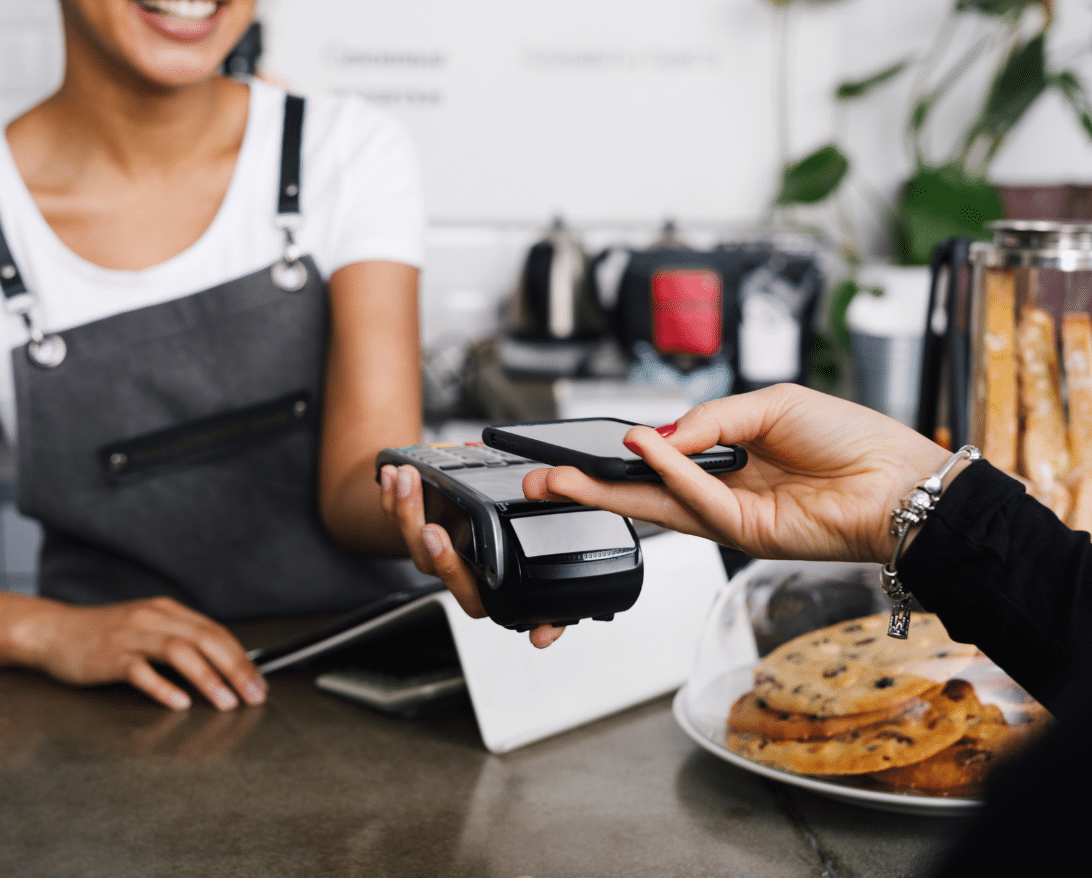
Today, many customers prefer a third option: contactless cards. These cards have chips that are equipped with tiny radio antennas. To transmit their account information, the customer taps the card on the reader — it sends the information over radio waves using radio frequency identification (RFID). Systems like Apple Pay use similar near-field communication (NFC) technology, enabling customers to pay with cards stored on their smartphones.
Keeping up with these latest trends in restaurant technology can help make your menu more accessible to customers. In fact, 80% of consumers have used contactless payments. If you fall into the 67% of US retailers who don’t offer this payment method, you could be missing out.
What to look for in a credit card processor
A high-performing credit card processor enables you to complete transactions quickly and create a better customer experience. When you’re choosing a credit card processor, consider these factors:
- Payment processing types. Select a processor that accepts a wide variety of in-person and online transactions. At a minimum, this includes swipe, chip, and contactless cards. RFID or NFC payments are particularly important; more than 50% of Americans use contactless payments. Most models also enable you to manually type in the customer’s credit card number for phone transactions or as a backup if other methods fail. If your restaurant participates in off-site events, look for a processor that allows mobile payment processing.
- Fees. Credit card processors charge a variety of fees for their services. Verify the percentages and calculate how they’ll affect your profit margins.
- Customer service options. Make sure an agent is available around the clock to help you if a problem arises. Read customer reviews; if you see a pattern of complaints about service, proceed with extreme caution. Regular outages or payment problems can damage customer relationships.
- Physical hardware. Investigate the type of hardware the processor offers and make sure it’s appropriate for your restaurant. It’s also a good idea to check whether the card reader is separate or built into a proprietary POS.
- compatibility. Verify that the system is compatible with your existing POS, CRM, and bookkeeping software.
- Terms. Check the terms of the agreement to find out how long it takes before funds are deposited into your account, verify the length of the contract, and learn about the fees for early termination.
Common credit card processing fees to be aware of
Accepting credit card payments involves multiple parties; each one typically charges a small processing fee for every transaction you make. They usually include:
- Merchant service fees. This is what your payment processor charges for its processing services.
- Interchange fees. This payment goes to the customer’s credit card issuer.
- assessment fee. This fee is charged every month as a percentage of your total sales. It goes to the credit card associations for the different types of cards you accept.
Actual fee amounts can vary considerably but usually range between 1.5% and 3.5% of each transaction. Each payment processor has its own pricing structure, so it’s important to compare quotes. The most expensive options tend to be those that charge a percentage of the sale plus an additional fee. Even though the flat fee is usually small, it can add up significantly over time. You can avoid high fees by choosing a provider that eliminates charges for renting equipment and sending statements.
Keep in mind that fees can vary between transaction types. To find the best deal, compare your sales data to the processor’s costs for in-person transactions, online sales, contactless app payments, and non-preferred cards.
Benefits of using credit card processing at your restaurant
Despite credit card processing fees, it’s almost always beneficial for your business to accept debit cards and credit card payments. Doing so helps you deliver a more convenient experience — customers can enjoy your food without a trip to the ATM. And because they don’t have to worry about having enough cash on hand, diners are free to spend more.
Modern consumers are accustomed to paying by card; in 2022, 41% of Americans made all their regular purchases without cash. Accepting cards lets you bring in more revenue from these cash-free customers.
Credit card processing also benefits your employees. The digital system reduces the risk of human error, making it easier to balance the till. Because customers don’t have to wait for change, transactions move more efficiently.
While credit cards have both benefits and drawbacks, you can minimize risk with these best practices:
- Ask for customer IDs.
- Use the chip instead of the magnetic stripe whenever possible.
- Offer contactless payments.
- Give a receipt for every transaction.
- Partner with a secure, reputable processor.
For most restaurants, the benefits of credit card processing far outweigh the fees. By choosing a payment processor carefully, you can minimize costs and deliver a fast, seamless checkout experience. Looking for more ways to integrate technology into your restaurant? Partner with Grubhub today to explore POS integrations, online ordering and delivery.
9 Tips for Becoming an Environmentally Green Restaurant
Sustainability is a big issue for modern consumers — they want to know their money is going to responsible businesses. In fact, 70% of Millennials and Gen Z consumers are willing to pay more for sustainable products. Modern diners are increasingly motivated to order from sustainable restaurants.
The shift toward eco-friendly and socially conscious practices creates an opportunity for restaurant owners. If you can show a commitment to sustainable operations, you can win customer confidence and create a lasting legacy.
So how can your restaurant go green? Keep reading to find out.
What are sustainable restaurants?
Sustainable restaurants embrace practices that benefit the environment and society while maintaining economic viability. The goal is to create a business model that can be sustained over time without creating a negative impact.
As you can imagine, full sustainability is challenging to achieve. The goal isn’t perfection — if the majority of restaurants make small adjustments, the collective effort has the potential to create powerful, long-lasting change. Restaurant owners are getting on board; according to a 2022 Datassential report, 70% are prioritizing sustainability. Even so, just 41% of restaurants feel their business model is truly sustainable.
Some of the factors that make a restaurant sustainable include:
- Reducing food waste
- Sourcing from suppliers with sustainable practices
- Minimizing wasted water and energy
- Embracing recycling and composting
- Cutting back on carbon emissions for delivery and food transportation
Why restaurant sustainability is more important than ever
Restaurant sustainability benefits the planet and society as a whole; it could also affect the success of your business. It’s a top priority for food-service businesses and suppliers, especially those with a younger customer base. According to the Pew Research Center, 67% of millennials and 67% of Gen Z believe the climate is a top priority. Because these two generations include 140.79 million people, it’s important to consider their preferences.
Consumers are serious about purchasing from companies with sustainable practices. A McKinsey study found that businesses with strong environmental, social and governance (ESG) practices are growing faster than their less-sustainable counterparts. In this environment, restaurants that are committed to going green and reducing waste may gain a competitive advantage. When given the choice, socially and environmentally conscious diners are more likely to choose a sustainable restaurant over the alternative.
It’s no longer enough to make vague eco-friendly statements. Research shows that 88% of Gen Z customers have a low level of trust in commercial ESG claims. They’re also experts in ferreting out the truth and calling out performative actions. As you build sustainable practices and hire new chefs, make sure they stand up to intense scrutiny; that way, you can avoid bad PR and win the loyalty of young customers.
Tips for sustainable restaurants
Most restaurants have room for improvement when it comes to sustainability. Beyond the obvious options, such as reducing energy use and saving water, there are several industry-specific actions you can take.
Food waste reduction
Food waste is one of the most important issues facing the restaurant industry. The food that’s sent to a landfill each year has significant consequences for the environment and the national food supply — and your bottom line. Adjusting your operations to reduce waste can cut your average food costs by 4% to 10% and reduce your cost of goods sold (COGS) by an average of 4 cents on every dollar.
Some ways to reduce restaurant food waste and increase restaurant sustainability include:
- Redesigning your inventory management system to reduce spoilage
- Ordering according to actual restaurant data
- Donating food to local non-profits
- Composting food scraps
- Serving smaller portions
Don’t be afraid to publicize your efforts on social media, customers are paying attention. In 2022, one report found that consumer awareness of food waste had increased by 39% in just 3 years. When you’re open about the process, it can help customers feel good about dining at your restaurant.
Sustainable food sourcing
The sustainability of your restaurant isn’t limited to internal practices — your supply chain matters, too. Take time to evaluate each supplier to find out if they’re implementing sustainable methods. Any time you add a new vendor, make sure to choose from companies with socially and environmentally safe business models.
Due diligence is especially important when you’re selecting food suppliers; farming and animal husbandry have a big impact on the environment. Keep an eye out for sustainable agriculture practices such as:
- Minimized use of pesticides
- Crop rotation that supports healthy soil and prevents erosion
- Intelligent water management
- Integrated livestock and crop management
- Fair labor practices
Another solution is to source food locally. When your ingredients have fewer miles to travel, they use less energy. And because local farmers don’t need to consider long transit times, they can harvest food later and provide fresher, more flavorful items. In contrast, the food that’s shipped from far away is often cooked with gas or chemicals.
Local sourcing does more than increase food quality at sustainable restaurants; it builds a stronger sense of community. Customers appreciate the chance to keep their money in the local economy and support small businesses they recognize. As a bonus, incorporating locally grown ingredients into a rotating seasonal menu can boost your bottom line. A regular lineup of new dishes gives diners a reason to keep coming back.
Eco-friendly packaging
Each year, Americans send more than 82.2 million pounds of municipal solid waste to landfills. About 28.1% of that waste consists of containers and packaging materials, according to the EPA.
If your restaurant offers takeout and delivery, you can make a difference by switching to sustainable to-go containers. Avoid plastic and Styrofoam; they can take up to 500 years to decompose. Plastic containers often end up in the ocean, where they pollute the water and break down into small pieces that harm sea life. According to National Geographic, the oceans already contain 5.25 trillion pieces of plastic.
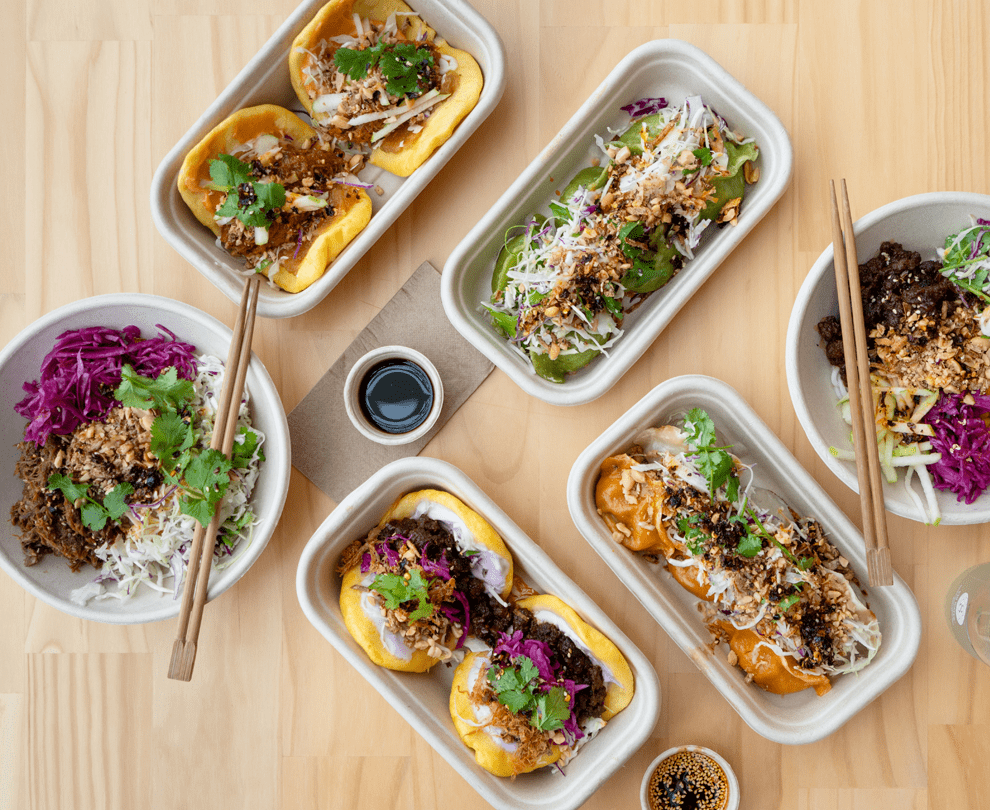
Sustainable packaging is biodegradable, which means it breaks down naturally and blends safely back into the ecosystem. Compostable containers are a good solution. Some are made with sustainably farmed sugarcane or bamboo. If you’re concerned about leaks, you can find paper containers lined with a plant-based starch resin. Although these containers still make it to landfills, they break down much faster than traditional options.
What is the Green Restaurant Association?
If you’re looking to help reduce food waste and incorporate sustainable practices, the Green Restaurant Association (GRA) is a good resource. This organization, which has been leading the charge for restaurant sustainability since 1990, is committed to driving change in the industry. It provides educational materials and access to a network of vetted sustainable distributors and products to help you build a better supply chain. The GRA also offers a sustainability certification program; once you become a Certified Green restaurant, the team can help you promote the credential.
The Green Star, which is a MICHELIN initiative, is a different type of distinction. It’s awarded to restaurants that are excelling in the area of sustainability. A Green Star is another vote of confidence for consumers.
Sustainability is a critical issue in the restaurant industry, and it’s likely to become more important in the coming years. By taking action now to improve your practices, you can establish a solid foundation for long-term success. At Grubhub, sustainability remains a priority. With the #CutOutCutlery campaign, diners must opt-in to get single-use plastic utensils, reducing the amount of unnecessary waste generated from each order. Ready to reach more customers and share your restaurant’s mission? Partner with Grubhub today.

Insider Selling: Sotherly Hotels Inc. (NASDAQ:SOHO) Chairman Sells $39,600.00 in Stock
 Sotherly Hotels Inc. (NASDAQ:SOHO – Get Rating) Chairman Andrew Sims sold 20,000 shares of the company’s stock in a transaction on Wednesday, March 29th. The shares were sold at an average price of $1.98, for a total transaction of $39,600.00. Following the completion of the sale, the chairman now owns 1,500 shares of the company’s stock, valued at approximately $2,970. The transaction was disclosed in a filing with the SEC, which is available through this hyperlink.
Sotherly Hotels Stock Performance
Shares of SOHO opened at $2.00 on Friday. The company has a debt-to-equity ratio of 6.27, a quick ratio of 1.29 and a current ratio of 1.29. The stock has a market capitalization of $38.38 million, a P/E ratio of 1.43 and a beta of 1.69. The company’s fifty day moving average is $2.20 and its two-hundred day moving average is $2.05. Sotherly Hotels Inc. has a 1 year low of $1.48 and a 1 year high of $3.11.
Hedge Funds Weigh In On Sotherly Hotels
Several institutional investors have recently bought and sold shares of the company. Thompson Davis & CO. Inc. grew its stake in shares of Sotherly Hotels by 32.8% during the 3rd quarter. Thompson Davis & CO. Inc. now owns 1,108,044 shares of the real estate investment trust’s stock worth $2,083,000 after purchasing an additional 273,747 shares during the period. JW Cole Advisors Inc. grew its stake in shares of Sotherly Hotels by 65.6% during the 3rd quarter. JW Cole Advisors Inc. now owns 49,750 shares of the real estate investment trust’s stock worth $94,000 after purchasing an additional 19,700 shares during the period. Seneca House Advisors acquired a new position in shares of Sotherly Hotels during the 3rd quarter worth $68,000. Jane Street Group LLC grew its stake in shares of Sotherly Hotels by 218.4% during the 4th quarter. Jane Street Group LLC now owns 35,030 shares of the real estate investment trust’s stock worth $63,000 after purchasing an additional 24,028 shares during the period. Finally, Virtu Financial LLC acquired a new position in shares of Sotherly Hotels during the 1st quarter worth $55,000. 21.57% of the stock is owned by institutional investors and hedge funds.
Wall Street Analysts Forecast Growth
Several analysts recently commented on SOHO shares. TheStreet upgraded shares of Sotherly Hotels from a “d” rating to a “c” rating in a research report on Friday, March 3rd. StockNews.com started coverage on shares of Sotherly Hotels in a research report on Wednesday. They issued a “hold” rating for the company.
Sotherly Hotels Company Profile
(Get Rating)
Sotherly Hotels, Inc. is a real estate investment trust. It engages in the business of acquisition, renovation, upbranding, and repositioning of upscale to upper-upscale full-service hotels. The company was founded in August 2004 and is headquartered in Williamsburg, VA.
Further Reading
Receive News & Ratings for Sotherly Hotels Daily – Enter your email address below to receive a concise daily summary of the latest news and analysts’ ratings for Sotherly Hotels and related companies with MarketBeat.com’s FREE daily email newsletter.
/cloudfront-us-east-1.images.arcpublishing.com/dmn/AGPQSNCM4ZCQVPB7OWA6NP4WFA.jpg "McKinney’s Denizen Hotel eyes summer groundbreaking")
McKinney’s Denizen Hotel eyes summer groundbreaking
Developers working for more than a year on a new McKinney hotel hope to break ground on the project in the coming months.
The Denizon Hotel is planned on State Highway 121 at Alma Road in the huge Craig Ranch development.
Archstreet Hotel Partners will build the more than 100-room hotel as part of the mixed-use District 121 project. The almost 20-acre development also includes a new office building plus restaurant and retail space. The four-story hotel building is expected to cost about $20 million.
“We hope to start work this summer and open in the fall of 2024,” Archstreet founder Michael Mueller said. He previously founded Nylo Hotels, which built properties in Las Colinas and Plano.
Dallas architect 5G Studio Collaborative is designing the luxury hotel.
The Denizen Hotel will be the latest addition to the hospitality market along SH 121 between Frisco and McKinney – a corridor that’s seen dramatic growth.
The Craig Ranch development includes thousands of homes plus commercial and retail construction.
Dallas-Fort Worth is the country’s fastest growing hotel market with more than 170 projects in the development pipeline.
Restaurant employee onboarding made easy
Regular hiring is a reality for many restaurants. Each time a new employee joins the staff, you must train them and introduce them to your company’s practices. A streamlined, standardized and comprehensive onboarding process can simplify the process, boost retention and enable new employees to work independently in less time.
Employee onboarding: increase retention with proper training
Employee onboarding is the process of orienting, training and integrating new employees into your restaurant. Well done, onboarding helps each new hire feel comfortable and familiar with the company; it also gives them the skills they need to perform their jobs with confidence.
Employees care deeply about proper training. In fact, Gallup research finds that learning opportunities are important to 75% of frontline employees. It’s one of the top priorities for workers — the only factors that rank higher are job growth and pay. Supportive management comes in fourth, so it’s important to hire the right restaurant manager.
Despite the importance of onboarding, only 12% of employees in the United States are satisfied with their companies’ processes.
If you can find a way to beat the statistics and improve workers’ first weeks on the job, it can have far-reaching benefits for your restaurant. In particular, improving onboarding can go a long way toward reducing employee turnover. That’s a big deal, considering 40% of turnover happened during the first year of employment.
Onboarding improves employee retention by building:
- Confidence. Comprehensive onboarding gives workers the tools and skills they need to succeed.
- Clarity. Employees learn exactly what they’re expected to do, so they can perform to higher standards and gauge their progress accurately.
- Culturalunderstanding. Workers get to know the restaurant’s traditions, values, and vibe.
- Relationships. During onboarding, employees create relationships that make the workplace more fun, friendly and welcoming. These bonds help workers feel like they belong.
- Job satisfaction. When workers have strong social bonds and the ability to perform well, they are more likely to be satisfied with their position.
New hire checklist: what to include in your restaurant employee onboarding
A good onboarding process starts well before new hires start work; you can start building a connection right away. The first thing to do with a new restaurant employee is to provide important information. For example, you might send a welcome email that includes the orientation date, an onboarding schedule and a list of documents to bring on the first day. This strategy eliminates uncertainty and sets expectations so that employees can prepare. It also establishes a relationship immediately, which can help reduce the chances that workers will ghost you before they start — something 30% of employees have done.
Phases of the restaurant employee onboarding process include:
- Pre-onboarding (or preboarding). The first step of onboarding begins as soon as the new hire accepts the job offer and ends on their first day. It’s a great time to let the workers know what to expect from their first few days and weeks. At the same time, you should prepare paperwork, uniforms and other documents that help employees understand the company and culture.
- Orientation. This phase starts when the new employee arrives for their first day. It typically includes an orientation session, paperwork signing, setting up digital accounts, a tour of the restaurant and an introduction to the team. You might also educate the new hire on company policies and procedures, including server minimum wage.
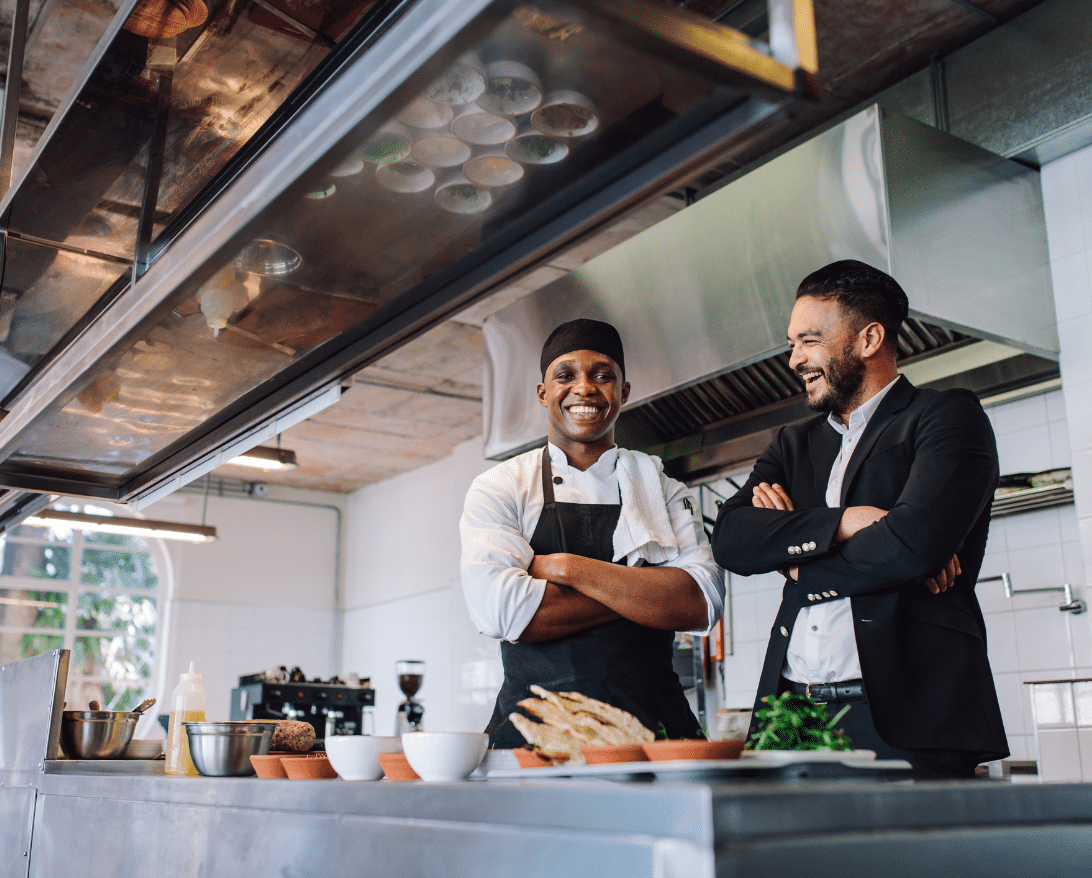
- Training. At this point, the employee is ready to start learning their roles and responsibilities. For front-of-house positions, you might pair the new hire with an experienced employee for on-the-job training. Kitchen workers may learn hygiene practices, food preparation, inventory management standards and how to operate equipment, depending on their position.
- Transition and growth. During this stage, the employee transitions into their new job, working independently in their position. Consider assigning each hire a mentor who can offer guidance and advice. It’s important to schedule regular check-ins to answer questions, ask for feedback and identify any outstanding issues.
Every restaurant will have a slightly different onboarding process, depending on their operations. If you own a franchise, you may need to train workers in corporate policies; for fine-dining establishments, you might include educational sessions on table settings, precise serving etiquette and communicating with chefs.
Regardless of your restaurant’s size and style, the best employee onboarding process is both thorough and personal. At the end, new workers should have a clear understanding of their role and how it fits into the overall business model. And most importantly, they should feel welcome and accepted as part of the team.
As you design and execute a unique onboarding program, a new hire checklist can help you cover all the bases:
- Send a welcome email with key dates and information.
- Print new-hire paperwork.
- Prepare employee handbook, job description, and benefits and payroll information.
- Order the employee’s uniform, name tags, and any necessary equipment.
- Create accounts for POS, time-tracking system, and e-mail.
- Plan an orientation session and tour.
- Introduce the employee to the team.
- Offer standalone and on-the-job training.
- Pair the new hire with an existing employee for mentorship.
- Ask for feedback.
- Check in at regular intervals.
Tips for a streamlined onboarding process
A streamlined employee onboarding process can set a positive tone for a new hire. It provides the information they need to know without hours of dry training sessions. To achieve this balance, try establishing onboarding best practices such as:
- Complete paperwork digitally to save time.
- Make sure uniforms, accounts and name tags are ready on the first day.
- Announce the new hire to current employees before the start date.
- Utilize employee onboarding software and on-the-job training to keep workers engaged.
- Offer opportunities to socialize with other employees.
- Explain lingo, table numbering and unique restaurant practices.
- Assign a single point of contact for questions.
- Offer a first-day package with branded merchandise.
- Ask managers to communicate frequently with each new restaurant employee.
Successful restaurants rely heavily on standardized onboarding processes. In-N-Out Burger, for example, uses comprehensive training and transparent levels of development to ensure workers are fully prepared for each role. This system seems to be working — the chain is ranked as the 10th best place to work on Glassdoor, making it the only restaurant in the top 50.
To make your onboarding more successful, use these tips:
- Involve current employees. Ask them what the new employee needs to know, and include the suggestions in the onboarding process. As a bonus, this practice can keep your team engaged and help minimize restaurant employee turnover.
- Be organized and prepared. When your materials and staff are ready for the new hire, they’ll be able to move through the process with ease.
- Showcase restaurant culture. Find ways to integrate new workers into the culture. Invite them to the staff tasting session before dinner service, for example, or ask them to participate in a customer’s birthday celebration.
The importance of new hire training
Training is one of the most important parts of the employee onboarding process — it enables workers to perform their jobs safely, efficiently, and in compliance with the health code. Each new hire should receive a thorough education in the skills and information they need to perform their job. For servers, this might include taking orders, working the POS system and serving meals. A kitchen-crew hire is more likely to need training in your restaurant’s food-prep practices, recipe preparation and stove operations.
Effective training typically involves the entire team. Restaurant managers and existing employees should support new workers by answering questions, offering helpful tips, and gently correcting mistakes. Your human resources team can encourage this type of collaborative behavior with employee recognition programs.
Streamline your restaurant onboarding with Grubhub
A key part of the onboarding process involves training new employees to use your restaurant’s POS technology and online ordering system. Grubhub makes this process quick and convenient by seamlessly integrating with a variety of popular POS systems and creating an intuitive operation that’s easy to learn. As a result, workers can master the procedures for in-house, takeout and delivery orders in less time. If you’re looking for ways to save time, ensure accurate orders, and improve your onboarding system, get started with Grubhub today.
How to increase restaurant sales with 2022 National Food Holidays
When it comes to marketing, national food holidays and restaurants are the perfect match. Every year, there are hundreds of national food holidays that encourage people across the country to band together and share affection for everyone from
These famously celebratory days are a fantastic opportunity to reach out to new customers while also re-engaging with the people who may be familiar with your restaurant but haven’t visited or ordered take-out in a while.
Seasonal marketing matters
One thing that’s certain is that our world is constantly changing. People’s lives, technology, food ingredients, trends and diner behaviors are forever evolving. And although a business plan may seem constant, restaurants should never forget about their diners’ current reality when it comes to marketing.
That’s why the best chance restaurants will get to be relevant year-round is to connect with their customers in real-time through real-life happenings – like national food holidays. Use our top marketing tips for restaurants and free calendar downloads to help you create entertaining and eye-catching promotions that build your brand and boost your revenue.
How to use the top National Food Holidays of 2023 for your restaurant marketing strategy
To make your national food holiday promotions as effective as possible, tie them into a larger restaurant marketing strategy that looks at the big picture, not just a single opportunity. A restaurant marketing strategy is a formal plan that documents, tracks and analyzes all your marketing efforts and activities.
Use these simple steps to help you implement national food holidays into your marketing strategy today:
Find the food holidays that fit
Incorporating national food holidays into your marketing strategy is a huge opportunity for growth and engagement, but it can also damage your brand if you aren’t careful about which holidays you choose. Every holiday you choose to promote should fit not only your brand but your menu.
For example, it doesn’t make much sense to launch a huge National Hot Dog Day campaign (July 23) if your menu serves classic French cuisine. Start with your own concept and see which food holidays feel like an authentic fit.
Pick your promotions
Food holidays are prime time for freebies and discounts. Nothing motivates a diner to press ‘order now’ more than a discount.
Some offers you may consider running during a national food holiday include:
- Free menu items: Allow customers to redeem a specific free item with their purchase, such as a free chocolate chip cookie (May 16) with every entree
- Free menu selection: Highlight a specific area of your menu, perhaps discounting all your salads for National Kale Day (October 5)
- Dollar-off: Offer a fixed amount of money off for new customers during a national food holiday, giving $1 off everything with fries in honor of National French Fry Day (July 13)
- Percentage off: Choose a fixed percentage off orders during a national holiday, like advertising 20% off all caffeinated drinks on National Coffee Day (September 29)
- Free delivery: If your restaurant offers self-delivery, you can food the bill for all delivery fees during a national holiday, like on National Dessert Day (October 14)
Spread the word
It’s important to use all the channels available to share your national food holiday promotions. When your restaurant joins the Grubhub Marketplace, you get immediate access to powerful marketing and promotional tools to help maximize your sharing and build a loyal fan base.
Social media is also a powerful tool for restaurant owners because it’s immediate. It’s direct and it costs as little or as much as you want. Use organic posts like behind-the-scenes photos to gain traction or use some of your marketing budget to take advantage of paid advertising on platforms like Facebook, TikTok and Instagram.
Remember, the goal is to find ways to build brand awareness, attract new customers, expand your market and nurture customer loyalty.
4 social media posts ideas to promote your 2023 national food holiday campaigns
The key to being successful on social media is making sure you have a presence. In fact, 45% of diners have tried a restaurant because of social media. Creating an eye-catching social media presence can turn curious social media scrollers into satisfied customers.
Here are some ideas on how you can start sharing your national food holiday deals in a smart way that boosts engagement and gets your restaurant noticed.
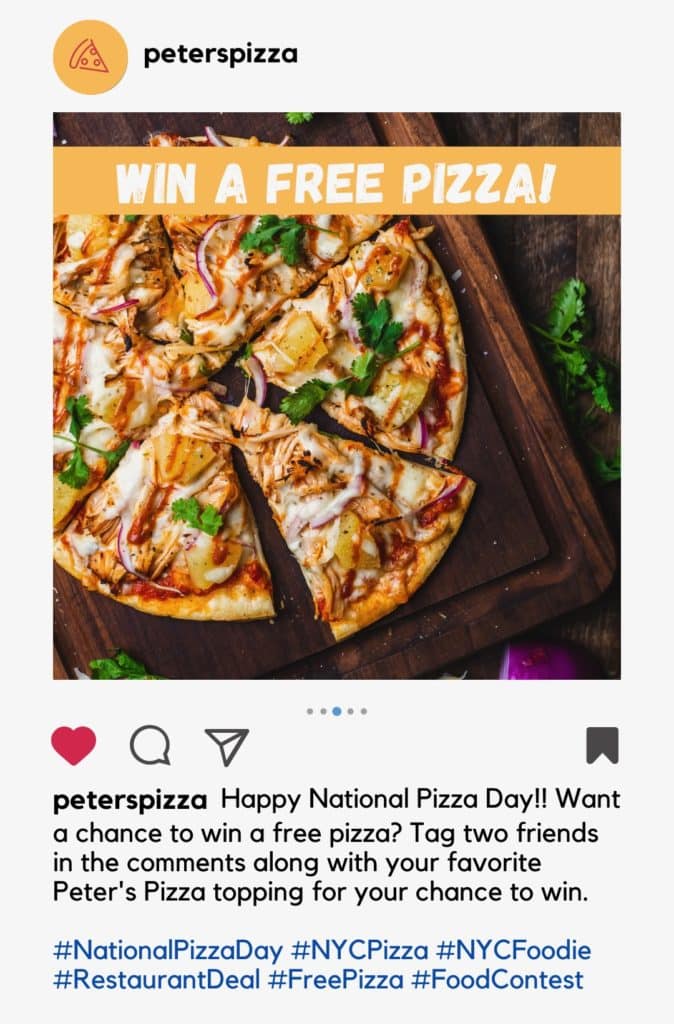
1. Run a social media contest
People love to win stuff. Even if they don’t come out on top, studies show that consumers are more likely to engage with a post if that post is promoting some kind of contest. Contests convert at a rate of 3.7% higher than posts with other non-costed CTAs.
Instagram contests are similarly popular, with contest-related posts getting more than triple the likes and 64 times more comments than other types of posts. That’s a major engagement.
Big Idea: Take advantage by running contests that encourage interaction, such as asking food trivia questions and counting each commented answer as an entry, requiring users to like and share your post to win, or asking followers to tag a friend in your post as part of their entry .
2. Use trending hashtags
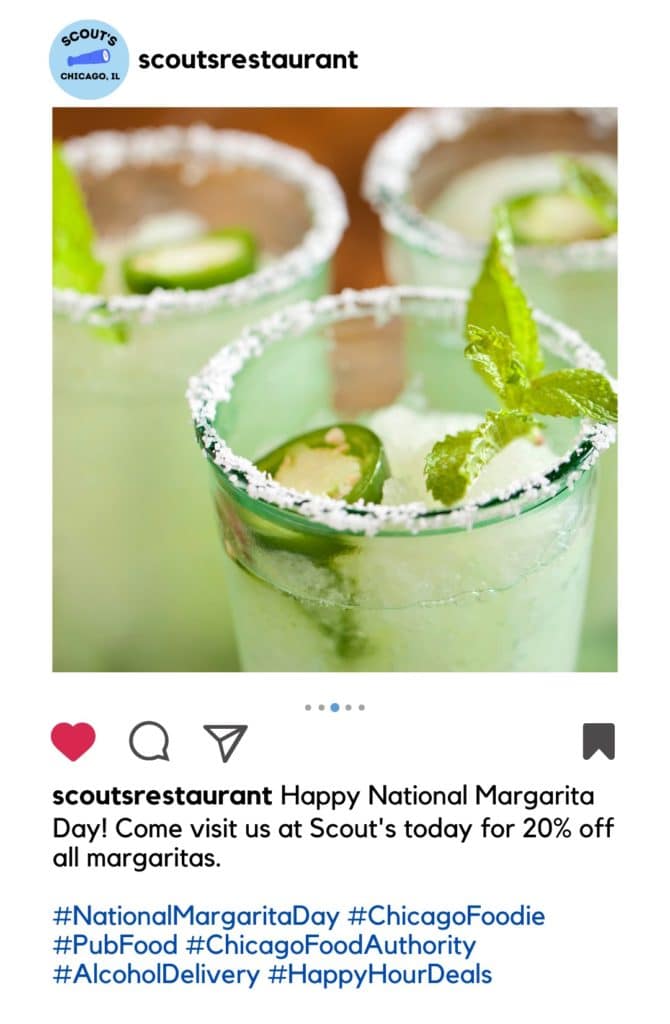
Because national food holidays are a coast-to-coast affair, there are often trending hashtags you can use to ride the wave of popularity and get your restaurant into the national spotlight. Hashtags allow your posts to enter different categories online, bringing your restaurant into people’s social media feeds.
Big Idea: Along with using the obvious national food day hashtags like #NationalMargaritaDay, make sure to also incorporate your restaurant’s city-specific hashtags like #EatAustin, #ChicagoFoodAuthority of #NYCEats. Using these will allow you to tap into the already-there audience you’re looking for.
3. Promote your online ordering site
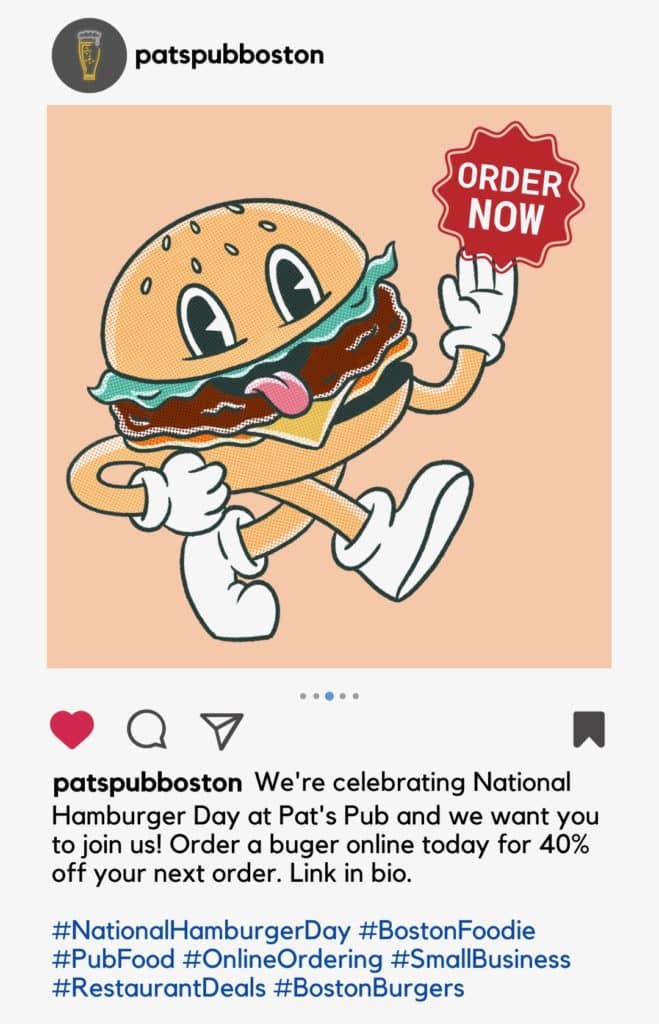
Most promotions work best when you remove any possible hurdles that stand between your customer and the order button. In the world of online ordering, that means making it as easy as possible for diners to find your menu, put their food on their virtual card, and pay up.
When you share your promotional posts on social media, offering customers the ability to order directly from you can help you drive more sales through your national food holiday campaigns.
Don’t have the ability to take online orders? Grubhub can help! Direct is a commission-free platform designed to help you reach loyal diners and build your online brand. With Direct, you can drive customers to your very own online ordering website, customized just for your restaurant. Read all about how Brooklyn-based Broccolini did just this and more.
Big Idea: Include links to your online ordering site on your social media pages so that you can convert curious scrollers into customers. Make sure you highlight your online ordering site in your captions so that it’s clear how diners can place an order.
4. Highlight your dishes
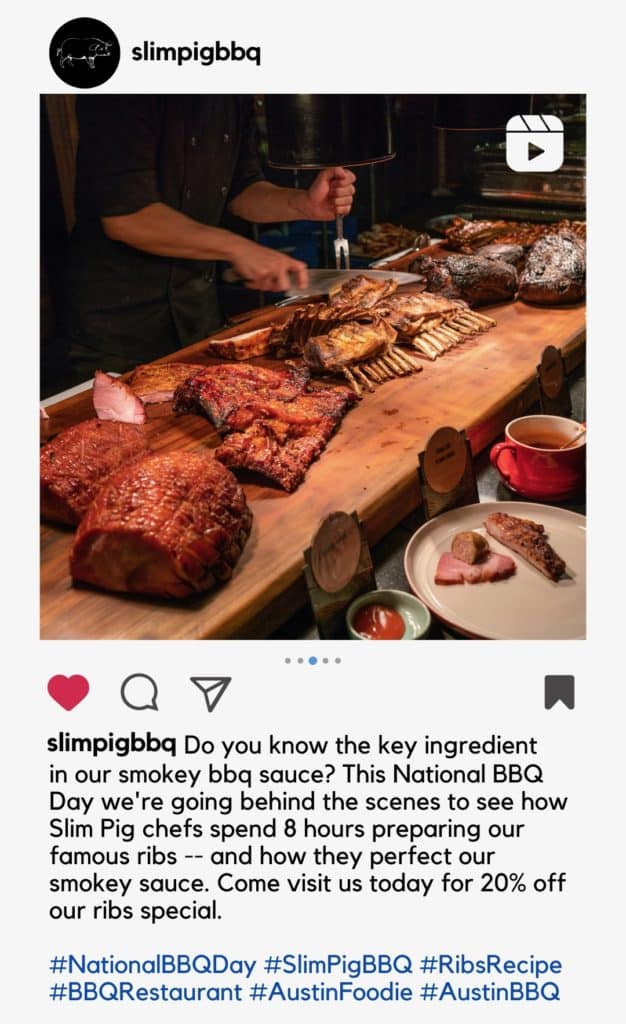
Your food is your pride and joy and what keeps customers coming back for seconds. Making your cuisine the prime feature of your social media profile not only shows off your specialty, but also gets diners’ mouths watering. Nothing gets a diner more motivated to place an order than a juicy photo of a rack of ribs on National Barbecue Day (May 16).
Taking and presenting high quality photos of your food is essential to creating an effective social media presence. When you partner with Grubhub, you can schedule a free photoshoot for your restaurant.
Partnering with micro influencers can help your restaurant gain more exposure. Encourage those who visit your restaurant to post photos of their food online. Delectable food pics can stand out in people’s feeds.
Big ideas: Make sure to feature high quality photos of the dishes you are preparing for national food holidays. You can even give a behind the scenes look into your chef’s meal preparation. Post these photos onto your restaurant’s social media to appeal to diners’ taste buds.
Start your restaurant’s celebration today
The best thing you can do when using national food holidays to promote your restaurant is to create a solid plan. That way, you’re ready and prepared to give your diners the best reason to indulge in your delicious food – daily!
Lucky for you, we’ve already done step one for you. We’ve compiled all the national food holidays in one place and created a complete calendar listing and it’s available to you for FREE to download now.
Use your new calendar to create a new marketing plan or amplify your existing one, and national food holidays could be your next step toward increasing sales and a wealth of new customers.
Already eager to get ready for your next national food holiday promotion? Sign up with Grubhub for Restaurant to access powerful promotion and loyalty tools today!

How the property changed hands
DELAND — The historic Hotel Putnam has seen a lot in its 100 years at 225 W. New York Ave. in downtown.
Demolition began on Feb. 13, about six weeks after a structural engineer recommended it be torn down because of the level of deterioration.
Here’s a look at what happened just within the past 10-plus years:
2012: Apartments no more
Owner Jayne Rocco receives notice from the bank that it would begin collecting “all rents and profits” due to her falling behind on mortgage payments.
The last of the remaining tenants were evicted from the Putnam, which had been serving as a 60-unit apartment building, the previous year as many had stopped paying their rent, which led to Rocco falling behind on the mortgage.
The two clubs on the first floor, JR’s Saloon and Club Envy, also closed around this time.
moving out:The Hotel Putnam’s final days as an apartment building in downtown DeLand
2013: New owner from New York City
The Hotel Putnam was purchased from Occor Inc., owned by Rocco, for $902,800, by Soly Halabi with Venture Capital Properties in New York City, according to property records.
Halabi said he and his silent partner in the venture wanted to restore the property for operation as a hotel or possibly apartments.
‘Move quickly’:The new owner talks about intentions for the Putnam Hotel project
2014: Plans for Putnam ‘on hold’
A year into owning the Putnam, Halabi says the plans he and his silent partner have for the building are “on hold for the time being.”
He also said they wouldn’t knock the aging building down.
“There’s too much history with the building,” Halabi said that July.
2015: Sold again
A Daytona Beach-based development company purchases the Putnam for $450,000, according to property records.
Summit Hospitality Management Group declined to comment at that time on the plans for the vacant building.
2016: Hotel Putnam ‘available’
A for-sale sign is posted at the front of the property, just west of the intersection of West New York and Florida avenues.
The listed agent, Scott Garrett with the Orlando-based Boss Commercial Real Estate, said the asking price was $999,999.
Summit Hospitality’s vice president of operations said that September that the company was actually hoping to keep the acquisition and find a possible partner in the project.
2017: New proposal from new developer
Sarasota-based Tony Collins, who was under contract to buy the Putnam, proposes a plan to the City Commission in April that would see the city contribute $750,000 in cash over five years.
![Developer Tony Collins stands in front of the Hotel Putnam in DeLand. [News-Journal/Nigel Cook]](https://www.gannett-cdn.com/authoring/2017/06/05/NDNJ/ghows-LK-4fde5992-04ed-063e-e053-0100007f06ed-f2e1f53e.jpeg?width=660&height=422&fit=crop&format=pjpg&auto=webp)
Additionally, Collins sought a change to the city’s code that would amount to a tax exemption of $600,000 to $700,000 over 10 years. Collins pitched using the Putnam for “high-end” apartments with a museum space on the first floor.
The commission voted that June to invest $500,000 from the general fund over five years.
By the year’s end, the agreement expired as Collins failed to obtain the necessary financing.
expired:The agreement between the developer and DeLand on Hotel Putnam failed to come to fruition
2018: Orlando-based developer enters the picture; a fire breaks out
Mohamed Rashad via his company, Big Bubba Investments, LLC, purchases the Putnam for $1 million.
Not long after making the purchase with plans to turn it into a multi-family project, DeLand firefighters responded to the property after a blaze was spotted.
Future after fire?:Prospects for DeLand’s historic Hotel Putnam uncertain after blaze
The investigation into the “set-fire” was closed six months later, no suspects were identified.
It was common knowledge that trespassers entered the property and/or the actual building now and then.
2021: Utah-based developer brings hope
Axia Partners bought the Putnam Hotel from Rashad for $2.3 million in November.
DeLand City Manager Michael Pleus said he and others familiar with the property’s history were feeling as hopeful as Axia had experience with major redevelopments.