
Chef vs Cook: What’s the Difference?
The terms “chef” and “cook” are often used interchangeably. While they’re similar, the two positions often have different backgrounds and responsibilities. When you’re hiring restaurant employees, it’s important to understand the nuances of chef vs. cook roles.
Chefs vs. cook: what each role means
The concept of chef vs. cook can vary from restaurant to restaurant. After all, both positions are responsible for preparing ingredients and cooking the food that’s served to customers.
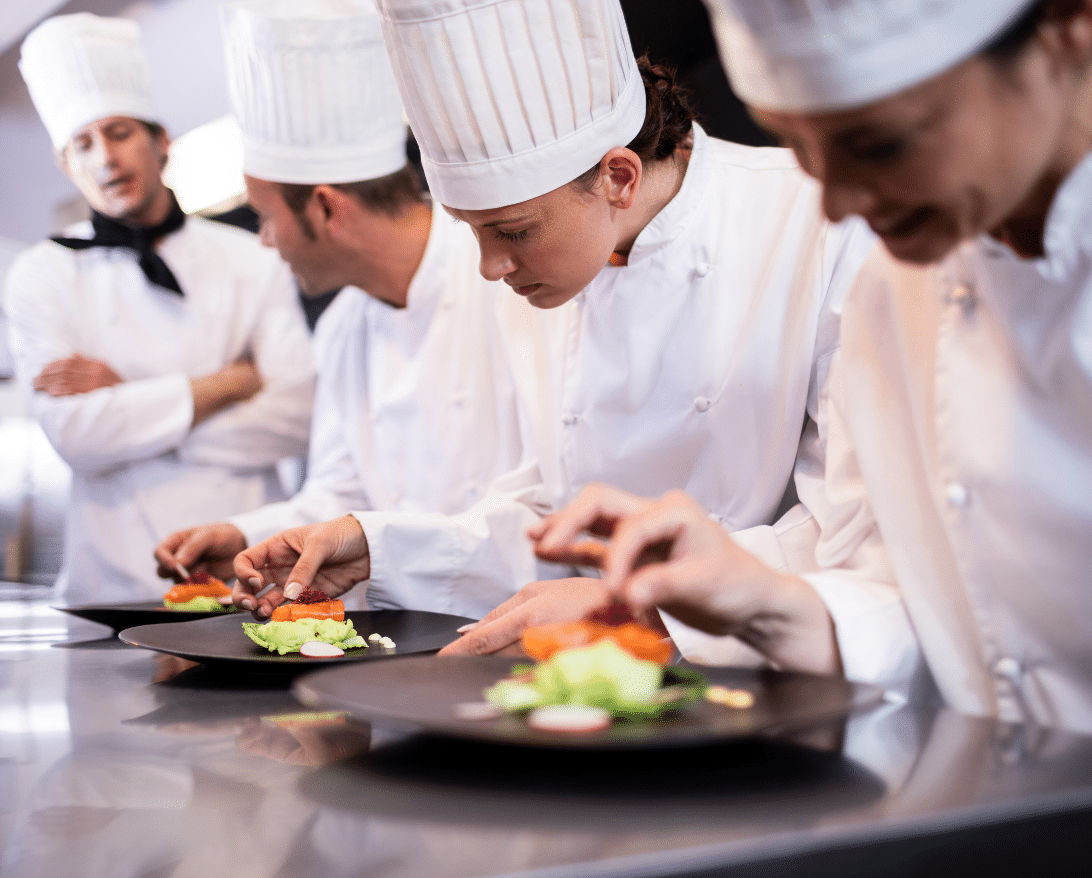
In a commercial kitchen, a chef usually has formal culinary training and experience — and high-level responsibilities. They might supervise lower-level employees, develop recipes, cook food and ensure the kitchen runs smoothly.
Cooks also prepare food, but they have more flexibility in terms of education and experience. Small, casual restaurants may not require formal training at all; cook jobs may be entry level or have minimal experience requirements.
Some restaurants have both chefs and cooks; others have one or the other. In a small restaurant, the chef and cook may be the same person. Larger kitchens typically have multiple types of chefs and/or cooks, each with nuanced roles.
In general, cooks are more common in chains, casual restaurants and small eaters. You’ll often find chefs in high-end restaurants and fine-dining establishments.
How do you become a chef or cook?
Education is the core of the difference between chef vs. cook roles. To become a chef, workers must typically attend culinary school. After that, they often start with a commis chef position and work their way up through the ranks of different restaurant kitchens.
Cook positions don’t usually require a culinary school degree. Many cooks start out with entry-level prep cook jobs. As they learn new recipes, build food-prep skills and gain experience, they can move up to line cook and head cook jobs.
What are the different classifications of kitchen roles?
“Chefs vs. cook” is a high-level classification; many restaurants have multiple positions within each category.
Common chef jobs include:
- executivechef. The highest-ranking chef in a kitchen, this person is in charge of top-level tasks such as developing a menu, creating recipes, tracking kitchen operations, managing the food-purchasing process, maintaining inventory and creating and sticking to a budget. Interestingly, executive chefs don’t typically spend much time cooking on a daily basis; their duties are primarily managerial.
- headchef. This role, also called the chef de cuisine, has a more hands-on supervisory role in the kitchen. They manage meal service, track food quality, and make sure kitchen staff members are working efficiently throughout each shift. Many head chefs spend time cooking. In smaller restaurants, the head chef may also take on the responsibility of the executive chef.
- Souschef. “Sous” means “below” in French; in a restaurant hierarchy, the sous chef is directly below the head chef and/or executive chef. They cook and help manage other kitchen staff, particularly when the head chef is unavailable. This position is common in restaurants with large kitchen teams.
- Chefs de partie. These chefs are responsible for individual stations in a kitchen. They might specialize in tasks such as making sauces, pastries, or vegetables. In some restaurants, they handle tasks including frying, grilling or roasting.
- Commischef. The lowest-ranked chefs, these workers support chefs de partie. They might prepare ingredients, help with cooking, or take on any task that occurs during a shift.
Types of cooks include:
- Head cook. This person is in charge of the kitchen; in a small business, the owner may even take on the role. They manage workers, train other cooks, and ensure dishes are prepared correctly and consistently. Head chefs are usually highly experienced; many have formal culinary education.
- Linecook. Line cooks have jobs that are similar to a chef de partie — the person responsible for a specific part of the “line,” or the kitchen operations.
- Prep cook. The lowest-ranking cooks in a kitchen, these employees get ingredients ready for a meal service. They might chop food, prepare cuts of meat, make salads or help chefs with simple cooking tasks. Prep cooks may also ensure that their areas are clean and sanitized.
The number of kitchen roles your restaurant needs depends on a number of factors. Restaurants with high-end or highly specialized menus often need more chefs, each with targeted experience or a unique set of skills. Bigger restaurants often require a larger staff to maintain consistent food quality and manage the sheer volume of customer orders.
Pros and cons of being a chef
For people who are considering a chef vs. cook career, the right path isn’t always clear. After all, a professional chef title commands respect, but it also takes time and money to earn high-ranking positions. The process can be so demanding, in fact, that many people choose to skip culinary school and work their way into a head cook position. Naturally, there are pros and cons to both approaches.
Pros of being a chef
- High earning potential
- Flexible career paths
- Skill-building opportunities
Cons of being a chef
- Requires a culinary degree
- Long hours
- Requires physical work
Hire a chef or cook for your restaurant
If you’re deciding whether to hire a chef or a cook for your restaurant, consider your priorities. A seasoned cook can offer practical knowledge and exceptional cooking skills, and they may accept a lower salary than a formally trained chef.
It doesn’t matter who you hire to lead your kitchen, it’s always important to create a good relationship with your staff to curb turnover. Implementing employee recognition ideas can make everyone who works at your restaurant feel valued — from the executive chef down to commission chefs and hosts.
Professional chefs require higher salaries, but they bring the benefits of a professional culinary education — specialized training, industry insights and connections that can benefit your business. Chefs can be a valuable resource in helping you grow the restaurant while controlling costs and maintaining food quality. No matter where your restaurant falls on the chef vs. cook spectrum, a skilled professional can help you build a stable, lasting business. As you look for ways to expand operations or increase revenue, a strong delivery presence is a must. Partner with Grubhub to reach a variety of local customers and introduce more diners to your food.

10 Restaurant Sustainability Tips | Grubhub
The US Department of Agriculture (USDA) estimates that 30% to 40% of the food supply in the United States goes to waste each year. Restaurants are a significant contributor; in fact, between 4% and 10% of the food in commercial kitchens is thrown out before it’s even prepared. That’s a lot of meals thrown in the trash.
If you run a restaurant, this issue may already be on your radar. By finding ways to reduce food waste in your organization, you can ease the financial and environmental impact and set a good example for other businesses in the industry.
But how can your restaurant reduce food waste while maintaining quality? Read on to find out.
The impact of food waste
For restaurant owners, reducing food waste is a financial priority. After all, the ingredients you don’t use can come with significant costs. If you spend $100,000 on food and 4% of it goes to waste, you’re losing $4,000 — plus the costs of labor and storage that come with ordering, handling, and managing inventory.
On a grand scale, wasted food has more serious effects, both for the planet and the human race.
- environmental impacts: The US Environmental Protection Agency (EPA) estimates that food waste accounts for 21.6% of municipal solid waste. Most of that waste ends up in landfills; this cycle wastes all the energy that went into growing, producing, and transporting the food. Because food emits methane as it decays, it contributes to climate change.
- Food insecurity: The USDA found that 13.5 million households in the United States were food insecure in 2021, which means they didn’t have access to enough food at some point during the year. Wasted food can’t be rerouted to families in need.
The causes of restaurant food waste vary. Some food spoils before it can be used, often due to ineffective storage or poor inventory management. In some cases, your kitchen team might prepare too much of a certain dish; if you can’t serve it in time, it ends up in the trash. The same thing happens when customers don’t finish their meals.
7 restaurant sustainability tips to reduce food waste in restaurants
Here’s the good news: There are plenty of things you can do to improve food waste reduction at your restaurant. With small adjustments to your operational practices, you can cut waste, save money and reduce your ecological footprint.
1. Conduct a food waste audit
A food waste audit is one way to track the food that’s thrown out at your restaurant. During the audit period, staff should dispose of all food waste — including kitchen scraps, spoiled food and plate scrapings — into designated bins. In the process, ask your team members to make notes of the following:
- Ingredients, dishes or items that appear frequently
- Items that could be donated
- Food that’s thrown out before it’s used
At the end of the audit, weigh the food waste. Write down the amount, along with the number of meals you served and the revenue you brought in. These numbers serve as a baseline for future comparisons.
The results of the audit can help you find opportunities to reduce waste. If you notice that customers almost always throw out a certain vegetable or side dish, for example, it’s a sign to replace it with something else. If you have a high volume of spoiled food, consider revising your inventory and storage strategy.
2. Recycle used cooking oil
Restaurants use an average of 35 pounds of cooking oil per day. Disposing of it can be a hassle; an environmentally friendly solution is to recycle the oil. Get in touch with an oil-collection company that can pick up your used oil and transport it to a recycling facility. There, the oil is transformed into biodiesel fuel, animal feed, fertilizer and other products.
To reduce the amount of oil you send out for recycling, extend the life of your cooking oil by skimming it every 2 hours. It’s also a good idea to filter it at least twice a day to remove extra food particles and contaminants.
3. Optimize your restaurant storage
A poorly planned storage system can cause food to go to waste before you have a chance to use it. Here are some steps you can take to successfully optimize your restaurant storage:
- Designate storage tasks to specific employees.
- Create a shelf-life chart for quick reference.
- Store and label products immediately after delivery.
- Use ingredients on a first-in, first-out basis.
- Use perishable items as soon as possible.
If you notice that certain items go in the trash frequently, it might be time to remove them from the menu or order them in lower quantities.
4. Donate food whenever possible
Speak to local food banks, soup kitchens, and homeless shelters to identify the foods you can donate. Most organizations have specific rules; for example, they probably won’t accept prepared food that’s been on a buffet line. However, they can typically take non-perishable goods and packaged foods that aren’t expired.
Donating food doesn’t cut your costs, but it can help you earn tax credits. It also keeps food waste out of landfills.
5. Give leftovers to employees
When your restaurant has left over food that can’t be safely stored, donated or used in another dish, invite your employees to take it home. This is a great way to reduce food loss when a specific item doesn’t sell or the kitchen makes too much. It also helps boost employee morale.
To protect your employees, it’s important to follow safe food-handling practices. Don’t let them take food that’s been sitting out too long, and always make sure it’s packaged and stored properly.
6. Consider composting
There’s not much you can do to salvage food scraps left over from food preparation or customer meals. Instead of throwing them in the garbage, turn them into compost. One option is a commercial composter, which works quickly and accepts most types of food. Alternatively, you might be able to send your scraps to an industrial composting company.
If you have the space — and if the local health department allows — you might be able to build a traditional compost bin outdoors. Then, simply donate the compost to a local farm or community garden.
What can be composted in a restaurant kitchen?
- Food and vegetable scraps
- Coffee grounds and paper filters
- Paper tea bags (no staples)
- Eggshells (crushed)
- Shredded paper and cardboard
Meat, dairy products and oils cannot be composted. Cooked food also will not be composted.
7. Reduce portion sizes
Does most of your restaurant’s waste come from customer plate scrapings? Your portion sizes might be too big. Reducing portions is particularly effective if your customers can’t easily take leftovers to go; this is a common issue for restaurants located near hotels and airports. Alternatively, offer popular dishes in multiple size options so customers can order the one that best fits their appetite.
Before you start offering smaller portions, take time to train the staff. Teach them how to measure the correct amount of each item and how to plate it attractively. Depending on current sizes, you might consider using smaller plates or getting creative with presentation.
Additional restaurant sustainability tips
Reducing food waste in restaurants is just the first step toward sustainability. If you want to make a bigger change in your business, try these tips:
- Turn off equipment. By shutting down some kitchen equipment when orders begin to dwindle, you can save hundreds of dollars each year.
- Replace pre-rinse spray valves. Swap them with efficient models that use 20% less than the federal standard of 1.6 GPM; it can help you save $115 to $240 annually on water and energy costs.
- Insulate your water pipes. This low-cost strategy reduces energy loss.
- Become a certified green restaurant. Work with the Green Restaurant Association to get personalized sustainability recommendations. When you meet them, you’ll receive a certification that can be used on your website and marketing materials.
- Invest in sustainable packaging. Swap out plastic and foam options for sustainable to-go containers
- Reduce single-use plastic cutlery. You’ll save money and reduce overall waste. To help, Grubhub has joined the #CutOutCutlery campaign. In addition, delivery orders automatically default to zero utensils, so customers can opt in only if needed.
Grubhub for Restaurants is committed to driving sustainability across the restaurant industry
As a trusted delivery and mobile ordering platform, Grubhub is taking action to boost sustainability and food waste reduction. When you sign up with Grubhub for Restaurants, you’ll gain access to features that include:
- Quick menu edits. It’s easy to remove dishes when an ingredient runs out or you switch to a seasonal menu.
- Promotions. Use sales to move inventory before it expires.
- Virtual restaurants. A virtual restaurant is delivery-only; it gives you the freedom to adjust your menu, ordering and food-prep strategy to reduce waste and use fewer resources.
- Tech integrations. Grubhub uses the latest technology to allow accurate ordering and reduce errors.
When you’re trying to cut back on food waste, every action helps. Whether you choose to compost food scraps or find a food-donation option for surplus food, your efforts can cut costs and help the planet. If environmentally friendly delivery is part of your sustainability plan, Grubhub can help. To try Grubhub for Restaurants, sign up today.
Finding the Right Restaurant Insurance
When you open a restaurant, insurance is one of the most important investments you can make. Like car insurance or health insurance, these commercial policies help you manage the financial risks that come with doing business. Is your restaurant protected?
What is restaurant insurance?
Restaurant insurance is coverage that protects your business from financial losses when unexpected problems arise. It can help you cover legal and medical costs for customer injuries, for example, or pay for repairs and lost income after a kitchen fire.
Running a restaurant is inherently risky — the equipment is expensive, profit margins are narrow and a single mistake in food storage or handling can result in an outbreak of foodborne illness. Insurance helps mitigate that risk, making it a must-have protection for every restaurant owner.
Before you buy business insurance, it’s important to note that no two policies are alike. If you go into the process with a clear idea of your restaurant’s vulnerabilities, it’s easier to understand how different policy types can benefit your company.
Types of restaurant insurance to choose from
As a restaurant owner, you can select from a variety of coverage types; each one is designed to address a different liability, such as employee injuries or the potential for serving spoiled food. Common restaurant insurance options include:
- General liability insurance. These policies reduce your financial liability when someone makes a claim against your restaurant. The most common is bodily injury; coverage can help with expenses if a customer or a delivery person gets hurt while on your property. Some policies also include product liability coverage, which covers harm that results from the products you sell — usually, food poisoning. General liability coverage often extends to other things that might happen in the course of doing business, such as reputational harm, copyright infringement or damage to someone else’s property.
- Commercial umbrella insurance. You can use these policies to extend your liability coverage. They usually kick in when your general liability policy reaches its payout limit.
- Commercial property insurance. If your restaurant or the equipment in it is damaged, this type of coverage can pay for parts or all of the repair or replacement costs. In some cases, it replaces a percentage of your lost income if you have to shut down for repairs. Typically, coverage is limited to damage due to situations out of your control, such as fire or theft.
- Business income insurance. This type of insurance extends the protection of a property insurance policy, enabling you to receive extra funding during a shutdown. Depending on the terms, it might cover expenses such as utility bills or lost profits.
- Workers’ compensation insurance. Most restaurants must purchase a workers’ comp policy to help cover employees’ costs if they get sick or injured on the job. Specific laws and coverage options vary by state.
- Commercial crime insurance. These policies provide extra protection against general theft, employee theft, forgeries and data theft.
- Liquor liability insurance. If you serve alcohol, a liquor liability policy can help protect you if customers become intoxicated and cause harm to themselves, other people or property.
Some insurance providers offer a business owner’s policy that combines liability and business coverage. Others enable you to buy separate policies for customized protection.
The cost of restaurant coverage
The cost of restaurant business insurance can vary significantly based on factors such as your company’s size, location, revenue, and coverage amount. Some providers estimate an average annual cost of $2,080; others put that figure closer to $4,000.
When calculating premiums, insurance agents will consider your specific operations. For example, it usually costs more to insure a restaurant with upscale kitchen equipment or a high property value; if property damage occurs, the repair or replacement expenses are much higher. Likewise, a business with a large kitchen and front-of-house staff will pay more for workers’ comp than a two-person sandwich shop.
If the budget is a concern, try these tips to reduce your insurance costs:
- Ask about discounts for larger deductibles or up-front annual premium payments.
- Buy multiple policies from a single provider to get a bundle discount.
- Purchase only as much coverage as you actually need.
- Look for policies with a discount for loyalty or no-claims years.
Protecting your establishment
Buying restaurant insurance requires you to find a balance between protecting your business and controlling costs. An adequate amount of coverage provides peace of mind; more importantly, it helps your company stay afloat when unexpected expenses arise due to factors beyond your control.
- Determine the type of coverage you need. At a minimum, most restaurants need general liability coverage, property insurance, and workers’ comp insurance.
- Choose coverage limits. Your policy should provide enough financial support to cover common risks for your specific restaurant. If you run a bar with a mechanical bull, for example, you might need more liability coverage.
- Compare quotes. Get quotes from more than one insurance company, and compare them closely. Pay attention to what is covered, coverage limits, and the specific terms of the contract. Make sure to look at coverage restrictions, especially if your restaurant is located in an area that’s prone to hurricanes or flooding.
Restaurant insurance protects your business from a wide range of issues, from lawsuits to natural disasters. By investing in the right policies, you can stay compliant with local laws and keep the doors open even after a high-cost claim.

InterContinental Hotels Group (LON:IHG) Lowered to Sell at Redburn Partners
 Redburn Partners lowered shares of InterContinental Hotels Group (LON:IHG – Get Rating) to sell a rating in a research note issued to investors on Tuesday morning, reports Marketbeat Ratings.
Several other equity analysts have also recently issued reports on the company. Jefferies Financial Group lifted their price target on InterContinental Hotels Group from GBX 5,500 ($67.54) to GBX 6,200 ($76.14) and gave the company a buy rating in a research report on Wednesday, January 25th. JPMorgan Chase & Co. reduced their price objective on InterContinental Hotels Group from GBX 6,200 ($76.14) to GBX 6,000 ($73.68) and set a neutral rating for the company in a research report on Wednesday, February 22nd. Deutsche Bank Aktiengesellschaft reaffirmed a buy rating and issued a GBX 5,520 ($67.79) price target on shares of InterContinental Hotels Group in a research report on Tuesday, November 22nd. Barclays lowered InterContinental Hotels Group to an equal weight rating in a research note on Monday, March 6th. Finally, Peel Hunt reiterated a hold rating and issued a GBX 5,750 ($70.61) price objective on shares of InterContinental Hotels Group in a research note on Tuesday, February 21st. One equity research analyst has rated the stock with a sell rating, six have been given a hold rating and five have issued a buy rating to the stock. According to MarketBeat.com, the company has an average rating of Hold and a consensus target price of GBX 5,750 ($70.61).
InterContinental Hotels Group Stock Up 1.8 %
LON:IHG opened at GBX 5,384 ($66.12) on Tuesday. The company has a market cap of £9.43 billion, a PE ratio of 3,130.23, a P/E/G ratio of 0.77 and a beta of 0.98. InterContinental Hotels Group has a 52 week low of GBX 4,174 ($51.26) and a 52 week high of GBX 5,796 ($71.18). The business’s 50 day moving average is GBX 5,561.12 and its two-hundred day moving average is GBX 4,996.47.
InterContinental Hotels Group Increases Dividends
The firm also recently announced a dividend, which will be paid on Tuesday, May 16th. Stockholders of record on Thursday, March 30th will be issued a $0.95 dividend. This is an increase from InterContinental Hotels Group’s previous dividend of $0.44. This represents a dividend yield of 1.4%. The ex-dividend date of this dividend is Thursday, March 30th. InterContinental Hotels Group’s payout ratio is presently 6,744.19%.
Insider Transactions at InterContinental Hotels Group
In other news, insider Paul Edgecliffe-Johnson sold 21,094 shares of the business’s stock in a transaction that occurred on Tuesday, February 21st. The stock was sold at an average price of GBX 5,521 ($67.80), for a total value of £1,164,599.74 ($1,430,185.12). 4.33% of the stock is owned by company insiders.
InterContinental Hotels Group Company Profile
(Get Rating)
InterContinental Hotels Group PLC owns, manages, franchises, and leases hotels in the Americas, Europe, Asia, the Middle East, Africa, and Greater China. The company operates hotels under the Six Senses, Regent, InterContinental Hotels & Resorts, Vignette Collection, Kimpton Hotels & Restaurants, Hotel Indigo, EVEN Hotels, HUALUXE, Holiday Inn, Holiday Inn Express, Holiday Inn Club Vacations, avid, Staybridge Suites, Atwell Suites, Candlewood Suites, voco, and Crowne Plaza.
Featured Stories
Receive News & Ratings for InterContinental Hotels Group Daily – Enter your email address below to receive a concise daily summary of the latest news and analysts’ ratings for InterContinental Hotels Group and related companies with MarketBeat.com’s FREE daily email newsletter.

How To Make a Restaurant Schedule
Restaurant scheduling is both an art and a science — it must simultaneously serve the business, satisfy customer demand, and account for employees’ needs. Given the complex factors involved, it’s safe to expect a certain amount of trial and error. Stick with it and you can create a workable restaurant schedule that keeps operations running smoothly and efficiently.
Why is restaurant scheduling important?
Restaurant scheduling creates the framework for your operations. A predictable schedule makes it easier to assign duties, plan deliveries and ensure busy shifts are adequately staffed. It also helps you spread out the workload, ensuring every employee has a chance to work lucrative shifts. That balance is critical, given that hiring is one of the biggest restaurant challenges in 2023; a fair distribution of labor can keep employees happy and boost retention.
The restaurant schedule you choose depends primarily on your business hours. Some common types of schedules are:
- 5-2-2-5. Employees work 12-hour shifts in the pattern of 5 days on, 2 days off, 2 days on, and 5 days off. While the shifts are tiring, this schedule enables employees to work full-time while enjoying long stretches of time off.
- 2-2-3. If your restaurant is open 24 hours a day, this schedule might be the right choice. Employees work 2 days, have 2 days off, and work 3 days. To make it work, you need four separate teams of employees who are willing to work 12-hour shifts.
- 5-4-9. This schedule follows a 2-week pattern and requires a 5-day work week. The first week, an employee works 4 9-hour days and 1 8-hour day. The second week, they work 4 9-hour days and get the fifth day off. You might also see this method called a 9/80 schedule.
- open. With an open-hour schedule, you publish available shifts in advance. Staff members can then sign up to fill the time slots that fit their schedule.
Instead of sticking to a rigid schedule template, many restaurants opt to split longer shifts into two shorter shifts. Instead of one 12-hour shift, you might plan an 8-hour shift and a 4-hour shift, for example. This strategy limits long, stressful work days, which reduces burnout and employee turnover.
How to build a shift schedule
When you’re building a shift schedule for your restaurant, there are a few key components to keep in mind. First, consider whether you’re using a fixed or rotating schedule. In a fixed schedule, employees work the same days and hours each week. With a rotating schedule, employees move through different shifts; that way, everyone has a chance to work busy hours with the biggest potential for tips. It’s also important to determine the shift length and the ratio of work days to days off.
Policies are another key component of employee scheduling. These rules govern the process and help employees understand what to expect. At a minimum, your restaurant should have written policies for:
- Requesting time off
- Claiming shifts (if applicable)
- Swapping shifts or covering for other workers
- Overtime pay and limits
- Back-to-back shifts
- Maximum hours per week
As you’re creating a shift schedule, follow these basic steps:
- Set the shifts. Determine the number of shifts you need and the best length for each one. The shift structure should typically be the same each week — that way, you can simply use a restaurant schedule template to speed up the process — but you might occasionally need to make small changes based on employee availability and special events.
- List duties for each shift. Examine the calendar for the upcoming week to determine what needs to be done during each shift. Include tasks such as kitchen preparation, sidework, training new employees and setting up for special events.
- Estimated diner volume. Examine your reservations log and historical sales data to determine the expected sales volume for each shift. Make sure to check local event calendars; if there’s a festival or conference happening nearby, you may need a larger staff to handle the extra foot traffic.
- Consider employee needs. Check for time-off requests and employee conflicts for the upcoming week to determine who’s available for each shift.
- Assign employees to each shift. Determine how many people you need for each open shift. Schedule more employees for busy periods; keep staffing light for slow periods to save on labor costs and help workers maximize tips. If some of your staff members work on a fixed schedule, this process might simply involve adding extra workers to busy shifts.
Restaurant schedule: tips for happy employees
Fair, consistent staff scheduling is an essential part of a productive restaurant culture. To make sure the process accommodates your employees’ needs, follow these best practices:
- Publish the schedule as early as possible.
- Use scheduling templates for consistency and speed.
- Select a digital format for convenience and accessibility.
- Make sure employees understand scheduling policies.
- Be flexible to account for employees’ life events.
- Ensure shifts are adequately staffed to avoid overwork.
- Consider employees’ skills and preferences when scheduling.
- Use a central communication hub to keep each shift updated.
Keep in mind that it will take time to develop a schedule that works well for your team and business. Restaurant managers should observe employees, watch the time clock and monitor labor data to make sure the process is equitable. For example, a pattern of excessive shift swaps could indicate your current schedule is at odds with employees’ personal commitments. If you notice certain shifts are consistently understaffed, it might be time to recruit new restaurant staff to provide extra coverage and enable a better distribution of labor.
By adapting the restaurant scheduling system to help employees maintain a better work-life balance, you can increase job satisfaction and increase retention. While you work to find the right solution, employee recognition incentives can encourage staff members to be patient and stick with the company.
Useful restaurant schedule software
If you have a sizable workforce and multiple daily shifts, building a restaurant schedule is a time-consuming task. Restaurant scheduling software can speed up the process and free you up to tackle revenue-generating projects. These programs benefit your business by:
- Enabling you to edit the schedule from anywhere
- Forecasting demand using historical labor data
- Generating automatic schedules
- Allowing employees to request changes digitally
- Adjusting automatically to shift swaps and other staff scheduling changes
- Providing customizable notifications for managers and staff
The right software program improves the experience for everyone on your team. Employees can log in at any time to see their schedule, eliminating confusion and allowing for advance planning. Workers can request changes quickly and conveniently, giving you more time to cover open shifts.
A variety of manufacturers offer scheduling software; popular options include Paycor, 7shifts, Jolt and ToastTab. Like Grubhub, many scheduling programs are engineered to integrate with your POS system for a seamless employee experience. Be sure to check compatibility with your delivery and POS programs before you invest; software that works with your existing tech stack helps the process move faster.
Don’t have a delivery platform? Grubhub makes it easy to connect your POS software and restaurant scheduling programs. To try it out, get started today.
Improving Online Ordering With Images
Looking for a sure-fire way to win the attention of Grubhub customers and improve their online ordering experience? Try adding a few images to your restaurant’s menu through the Grubhub for Restaurants platform. Including photos can increase sales of menu items by up to 30 percent – and it’s easy to see why.
From improving order accuracy to giving customers a better idea of what to expect, images can help deliver an online ordering experience that customers are hungry for.
Why great restaurant photography improves diners’ online ordering experience
Integrating images into your restaurant’s online presence greatly improves customer satisfaction.
Take a look at the three pain points that strong restaurant photography has helped resolve:
Greater menu familiarity
While new and exotic dishes are guaranteed to spark curiosity, they likely won’t be a top choice among customers who don’t know what’s in them. Eating is a full sensory experience, and photos can help give diners visual cues that can get their mouths watering. Clear up any confusion about dishes on your restaurant’s menu by including images wherever possible.
Quicker online ordering
Use images to show, not just tell, customers about your restaurant’s offering. Supplementing menu descriptions with appetizing images that can capture the hearts – and stomachs – of customers in just seconds will reduce the time it takes them to place an online order. The faster a customer adds meals to their cart, the less chance that they will change their minds and not place an order.
Higher order accuracy
In addition to providing customers a snapshot of what a dish might look like once it finally arrives, images also give back-of-house staff members a visual guide for putting orders together. By taking a few seconds to compare the image on your restaurant’s menu with the finished product, your staff can ensure no detail – big or small – is overlooked.
Where to feature your restaurant photos
There are many places where your restaurant’s brand will pop up online, and it’s important that strong photos are included in your digital presence. Brush up on our restaurant photography tips if you want to learn more about how to snap professional-grade photos. Take a look at where you can add photos to get more traction online:
Feature your dishes on your restaurant’s menu
Your restaurant’s online menu is the most important place to feature images of your food. When diners are scrolling through a list of dishes, a jumble of dish descriptions makes it hard for them to navigate your restaurant’s offerings. Restaurants that have already made the switch from fully text menus to photos on their online ordering platforms have seen their conversion rates increase by about 25% on average.
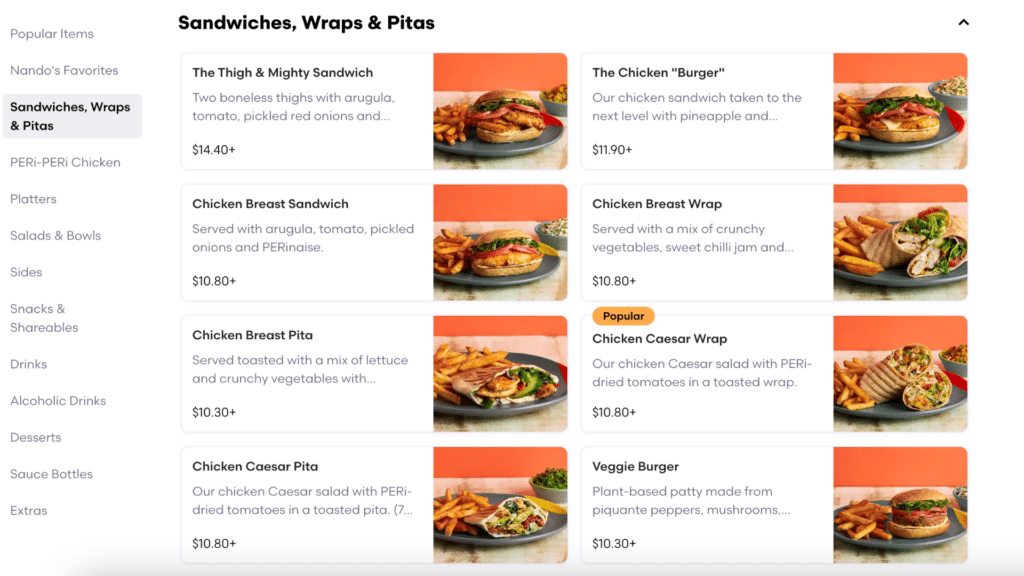
Your menu photos should showcase your food – capturing each dish at its prime. Close up photos of your dishes help capture your creation’s details, giving diners a look into what ingredients are cooked in. Plating is especially important when it comes to menu photos. Take your time arranging each dish and make sure the plate and background are clean. You want your diners’ focus to go straight toward the food.
Nando’s Peri-Peri has perfected their menu photos on Grubhub Marketplace. Highlighting their main dishes along with recommended side pairings helps diners envision what their order will look like.
When you partner with Grubhub, your restaurant can schedule a free photoshoot so you can get professional photos of your cuisine to feature in your digital presence. Already a Grubhub Marketplace partner? Schedule your free photoshoot today or reach out to your Account Advisor to learn more.
Highlight your offerings on your restaurant’s website
90% of customers research a restaurant online before visiting – that’s more than any other type of business. Your website serves as a virtual home base for your restaurant’s brand. It’s often the first place you can make a memorable impression on customers, so featuring irresistible images of your cuisine can motivate diners to place an order.
Your restaurant’s brand begins to form online as soon as a customer search for your cuisine. When a customer searches for your restaurant on Google, your restaurant’s Google Business profile will appear. This profile features basic information about your restaurant including its address, hours, website and ordering platform. Make sure you update your Google Business profile so that customers can easily find out more info about your restaurant.
What types of images should you include on your restaurant’s website? Photos of your food are great to place on your homepage and menu. Crisp images of your cuisine on top of white plates that will showcase the natural colors of your ingredients stand out. Since natural light can help do the same, consider conducting each of your photoshoots near windows. Take a look around your restaurant and snap some photos of your staff in action. It’s also important to include photos of your ambiance so that diners can get a feel of your overall dining experience.
Be selective about what photos you choose to feature. Too many photos can bog down a website’s load time and make it more difficult to navigate. Check out more tips on how to design a successful restaurant website.
A strong restaurant website won’t do much for your bottom line unless you have a clear avenue for diners to place an order. Elements of how to create a seamless online ordering system? Look no further than Direct.
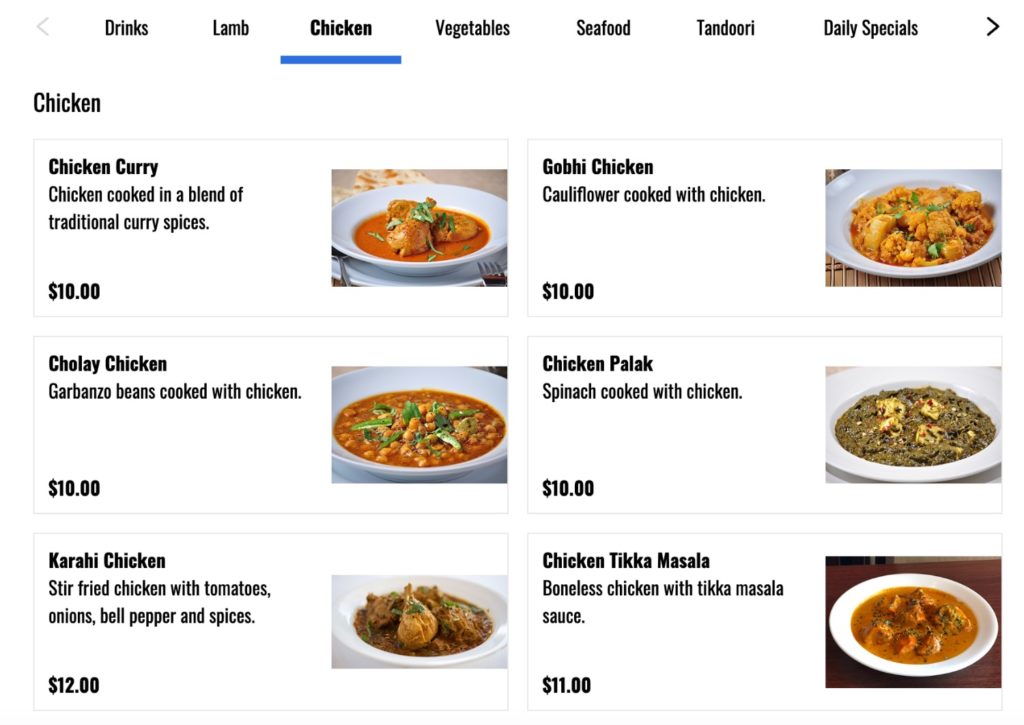
Direct is a commission-free online ordering platform that allows customers to place orders right from your website. Direct makes menu management simple. When you update menu items or add photos on your Marketplace menu, your Direct menu will automatically update to reflect changes. You can bring your restaurant’s brand to life with Direct by easily customizing your site to match your brick and mortar location.
Check out how Naan N Curry used their Direct site to feature their food photography:
Connect with your diners on social media
Social media is a gold mine for foodies these days. Social media offers the perfect format to tell your restaurant’s story through images – putting your mouth watering food photography center stage. Creating a social media profile for your restaurant can get your food into the digital conversation, and strong food photography can help bring your account to the top.
When it comes to social media, strong photography is key. There’s no one size fits all for social media composition, and cookie cutter posts can blend into customers’ feeds. Mix up the recipe by trying out one of these formats:
- Food features are high resolution, close up images of your dishes. These posts are great for featuring a specific menu item.
- Food films are videos that feature your dishes. Videos tend to perform better on social media apps like Instagram and TikTok, so taking advantage of this feature to show your food in action can draw extra attention from diners.
- Interactive stories is the best way to directly prompt an action from a customer. On apps like Instagram and Facebook, you can post images to your story that will appear at the top of diners’ feeds. With this feature you can directly link to your online ordering website, ask interactive questions or run a contest.
- Behind the scenes photos and videos help your restaurant come to life. You can make a short video showing how your chef whips up a recipe or use a photo slideshow to showcase what your employees like to order.
- Reposts of your followers’ photos of your food can not only connect you with your customers, but also give you more unique content to work with, turning your diners into your PR team. Make sure you get permission from the original creator before you repost any content. You can also collaborate with local micro influencers to expand your reach.
Hashtags are key when it comes to getting your account more exposure. #Foodie has over 200 million posts on Instagram, and #LocalRestaurant has racked up over 300,0000 posts. You can also get in on the local conversation by using hashtags like #AustinFoodie or #NYCeats. Adding trending hashtags to your post allows them to enter different categories online, bringing your restaurant into people’s social media feeds.
Make your restaurant picture perfect with Grubhub by your side
Embellishing your restaurant’s online presence with eye-catching photography can greatly improve your digital brand. Adding them to your website, online menu and social media accounts get customers’ mouths watering, prompting them to place an order.
A picture is worth a thousand words, and a picture of your delectable food is worth the delivery fee for Grubhub’s over 30 million customers. That’s why Grubhub offers a free photoshoot for restaurant partners. Ready to get your mouth watering food in front of hungry diners? Partner with Grubhub today to start taking more orders now.

The 9 most popular restaurant delivery days
Marketing for restaurant delivery is a tricky mix of strategy and timing. Throw in a need for creativity (who’s going to come up with weekly topics and track what’s relevant) and it can be tough for restaurant owners and operators to find time in their busy schedules to find ways to promote their eatery.
But the fact is, marketing remains one of the most important tasks on your to-do list because it’s the easiest way to keep your diners engaged and your restaurant top of mind.
For example, pairing promotions with a boosted social media presence can help generate business and put guests in seats. Or, as this case may be in modern times, directing them towards your online ordering platform so they can score some delivery.
Restaurant delivery is on the rise. More than 18 million orders were placed on Grubhub in 2022, and online ordering is growing 300% faster than in-house dining. By 2024, online food delivery services are projected to become a $32 billion industry. It pays to master your digital ordering strategy now.
Capitalizing on consumer trends can help drive diners to your restaurant.
National holidays with the most orders
It’s all about national holidays – and we don’t just mean Christmas and Fourth of July. National food holidays and unofficial top restaurant delivery days like mega sporting events and primetime for restaurants looking to amplify off-premise orders.
Take a look at the national holidays that bring the most orders to restaurants and learn how you can promote them to capture more hungry diners.
1. New Year’s Day
Nothing lulls regrets from the previous year more than a good hearty meal, according to Grubhub diners. Over 660,000 orders were placed on Grubhub on New Year’s Day in 2022. It can pay to double down on delivery in the new year as many customers don’t want to leave their house on the day off to get a meal. And having a delivery partner like Grubhub can help take the stress of coordinating deliveries off your plate.
The holiday season is a great time to roll out a seasonal menu that incorporates festive favorites. Perfecting a seasonal menu can help make your restaurant stand out as customers tend to appreciate flavors that correspond to the time of year. Consider creating a New Year’s Day brunch menu that can cure any hangover – incorporating comforting favorites like french toast, pancakes, fresh fruit and home fries.
2. Mother’s Day
For decades, Mother’s Day has been the most popular day for people to dine out. The holiday gives a perfect excuse to ditch the home cooking and take mom out for a nice meal. However, in recent years families don’t need to leave their house in order to get a five-star meal for the guest of honor.
Over 616,000 diners decided to get a restaurant meal for mom in 2022. Families are eager to celebrate the ladies in their lives with delicious food that nobody in the house has to cook themselves.
Read our Mother’s Day guide to see the plethora of ways to play into that excitement, including Mother’s Day restaurant specials and promo ideas like tucking kid-friendly extras such as stickers and coloring sheets into delivery bags. Don’t forget to use social media and your email list to let people know what you’ve got planned for the holiday.
3. Martin Luther King Jr. day
Martin Luther King Jr. Day falls on the third Monday of January. This federal holiday honors Dr. King’s legacy of social justice and equity. MLK Day is also a National Day of Service that encourages Americans to volunteer to improve their communities in honor of Dr. King.
While this holiday brings thousands of orders to restaurants, it’s also a time for restaurants to show they care for their communities. Restaurants can take part in the MLK Day of Service by giving back. Patrons tend to support businesses that align with their values, and this National Day of Service is a great opportunity to show what your restaurant stands for.
Consider hosting a food drive by highlighting that your restaurant is a place where people can drop off their food items. Take lead by donating restaurant meals to local food banks. There are many creative ways to give back to your community, and taking initiatives on this National Day of Service can make your restaurant stand out.
4. Presidents Day
Every third Monday in February Americans celebrate Presidents Day to honor those who have served as president in our 246-year history. Whether diners get the day off or not, many spend the day ordering from their favorite restaurants. In fact, over 550,000 customers placed orders on Grubhub last Presidents Day.
Looking for a unique promotion to run on Presidents Day? Try giving a percentage off different president’s favorite foods on your menu. Did you know John Adams started his mornings with hard cider? Or that Thomas Jefferson’s favorite food was mac and cheese? While you may not serve James Garfield’s favorite squirrel stew dish, you can highlight the dishes you do have that past presidents have enjoyed.
5. Labor Day
Labor Day is when we all say goodbye to summer and start looking forward to the crisp breath of fall. Many people are taking a minute to indulge in a last-minute burst of warm weather by barbecuing poolside or taking a picnic to the park or the beach.
Tailor your Labor Day promotions to what customers are already feeling. A farewell to summer celebration allows for tons of great prompt ideas on social media. Imagine brightly colored graphics, snapshots from the restaurant’s summer events, and a few strategic mentions of your Labor Day delivery deals like offering 15% off with a themed code like BYESUMMER.
Make the most of the biggest restaurant delivery days with Grubhub
Partnering with Grubhub gives restaurant owners and operators just like you access to a wide array of tools and educational resources designed to help you maximize engagement, traction and profits.
Grubhub’s promotion and loyalty tools guide you through the process of targeting your ideal customer, using smart marketing and plug-and-play promotions that have seen other Grubhub partners generate an average of 72% more new customers.
With Grubhub Marketplace, your restaurant gets in front of local diners who otherwise may have never heard of your food or who may have forgotten how delicious your menu truly is. Seasonal promotions are an excuse to remind everyone that you’re there, you have something incredible to offer and that they can sample it again at a discount.
What’s the best food delivery service for your restaurant?
Curious which food delivery service is the best? With so many food delivery apps on the market, there are endless potential partners for you to consider. But not all restaurant delivery services offer the same access to potential diners or the same tools to help you scale your business and achieve your goals.
Using the best food delivery service available can help you tap into promotional opportunities such as major holidays.
Here are a few things to consider as you decide which food delivery platform is right for you.
Brand name and customer reach in your area
It’s no use joining a third-party delivery service if it won’t get you in front of the diners that truly matter. With nearly 163 million Americans eating out each week – 64% of the country’s adults – it’s crucial to reach as many potential guests as possible.
Grubhub Marketplace is the largest marketplace of its kind, connecting restaurants with more than 33 million diners eager to find the source of their next delivery order. In fact, 9 out of 10 independent restaurant operators surveyed who use Grubhub agree Grubhub increases the volume of takeout and delivery orders – higher than the competitor average.
To gauge how Grubhub is doing in your area, visit Marketplace and check out nearby restaurants already using Grubhub to see their success for yourself.
Restaurant fees and profit margins
You’re joining a third-party food delivery service to help bolster your profits, don’t hurt them. Some delivery partners are primarily interested in their own bottom line, but Grubhub is invested in joint success, empowering restaurants so we can all share in a more bountiful future.
Grubhub Marketplace offers restaurants three different levels of membership, ranging from Basic to Premium. You control what you pay and which marketing tools you access so you can tailor your investment to the needs of your restaurant.
In addition to reaching your share of those 33+ million diners on Grubhub, you also get a dedicated Account Advisor and access to delivery services so you’re not navigating success on your own.
Your customers, your data
It’s hard to take your online delivery and takeout services up a notch unless you have access to key data points used in strategic decision making.
Direct not only helps you launch your own online ordering site, it also helps generate diner data you can use to fuel your marketing efforts. And it’s all free, with no commissions ever. Just promote your unique food service delivery link and watch as the customer and data roll in.
Delivery boundaries
One way to save on delivery fees is to use your own in-house team. Although this approach won’t work for everyone, restaurants that do have the bandwidth to oversee self-delivery can add that to other delivery service options including Grubhub delivery, supplemental delivery and pickup.
Grubhub delivery is a proven system, too. Nearly 9 out of 10 independent restaurant owners who use Grubhub agree that Grubhub streamlines takeout and delivery order processing, and 77% of consumers surveyed who use Grubhub highly rate Grubhub’s delivery speed.
Make the most of major delivery days with Grubhub
Top restaurant delivery days hold a major promise for restaurants looking for ways to broaden their customer base and increase revenue, but sometimes it takes a strong partner to make those goals a reality.
Partnering with a third-party delivery app gives you access to tools, knowledge and a built-in audience. At Grubhub, that means joining a platform that’s already a proven success. Now it’s your turn.
To experience the power of Grubhub firsthand, sign up today and get ready for your next round of holiday delivery promotions.
How to increase restaurant sales with 2022 National Food Holidays
When it comes to marketing, national food holidays and restaurants are the perfect match. Every year, there are hundreds of national food holidays that encourage people across the country to band together and share affection for everyone from
These famously celebratory days are a fantastic opportunity to reach out to new customers while also re-engaging with the people who may be familiar with your restaurant but haven’t visited or ordered take-out in a while.
Seasonal marketing matters
One thing that’s certain is that our world is constantly changing. People’s lives, technology, food ingredients, trends and diner behaviors are forever evolving. And although a business plan may seem constant, restaurants should never forget about their diners’ current reality when it comes to marketing.
That’s why the best chance restaurants will get to be relevant year-round is to connect with their customers in real-time through real-life happenings – like national food holidays. Use our top marketing tips for restaurants and free calendar downloads to help you create entertaining and eye-catching promotions that build your brand and boost your revenue.
How to use the top National Food Holidays of 2023 for your restaurant marketing strategy
To make your national food holiday promotions as effective as possible, tie them into a larger restaurant marketing strategy that looks at the big picture, not just a single opportunity. A restaurant marketing strategy is a formal plan that documents, tracks and analyzes all your marketing efforts and activities.
Use these simple steps to help you implement national food holidays into your marketing strategy today:
Find the food holidays that fit
Incorporating national food holidays into your marketing strategy is a huge opportunity for growth and engagement, but it can also damage your brand if you aren’t careful about which holidays you choose. Every holiday you choose to promote should fit not only your brand but your menu.
For example, it doesn’t make much sense to launch a huge National Hot Dog Day campaign (July 23) if your menu serves classic French cuisine. Start with your own concept and see which food holidays feel like an authentic fit.
Pick your promotions
Food holidays are prime time for freebies and discounts. Nothing motivates a diner to press ‘order now’ more than a discount.
Some offers you may consider running during a national food holiday include:
- Free menu items: Allow customers to redeem a specific free item with their purchase, such as a free chocolate chip cookie (May 16) with every entree
- Free menu selection: Highlight a specific area of your menu, perhaps discounting all your salads for National Kale Day (October 5)
- Dollar-off: Offer a fixed amount of money off for new customers during a national food holiday, giving $1 off everything with fries in honor of National French Fry Day (July 13)
- Percentage off: Choose a fixed percentage off orders during a national holiday, like advertising 20% off all caffeinated drinks on National Coffee Day (September 29)
- Free delivery: If your restaurant offers self-delivery, you can food the bill for all delivery fees during a national holiday, like on National Dessert Day (October 14)
Spread the word
It’s important to use all the channels available to share your national food holiday promotions. When your restaurant joins the Grubhub Marketplace, you get immediate access to powerful marketing and promotional tools to help maximize your sharing and build a loyal fan base.
Social media is also a powerful tool for restaurant owners because it’s immediate. It’s direct and it costs as little or as much as you want. Use organic posts like behind-the-scenes photos to gain traction or use some of your marketing budget to take advantage of paid advertising on platforms like Facebook, TikTok and Instagram.
Remember, the goal is to find ways to build brand awareness, attract new customers, expand your market and nurture customer loyalty.
4 social media posts ideas to promote your 2023 national food holiday campaigns
The key to being successful on social media is making sure you have a presence. In fact, 45% of diners have tried a restaurant because of social media. Creating an eye-catching social media presence can turn curious social media scrollers into satisfied customers.
Here are some ideas on how you can start sharing your national food holiday deals in a smart way that boosts engagement and gets your restaurant noticed.
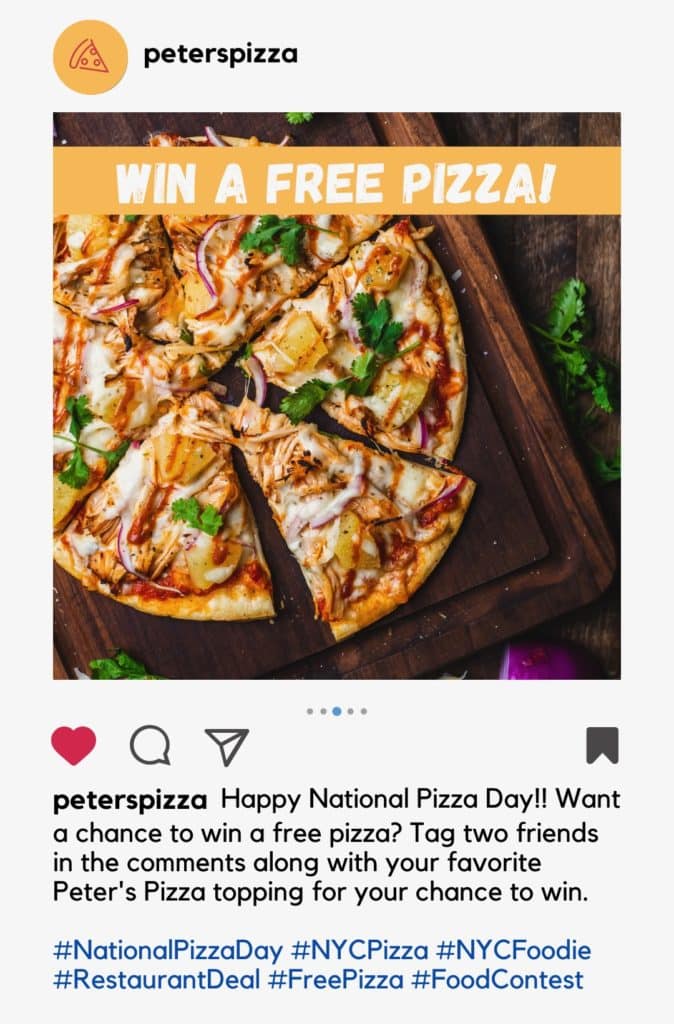
1. Run a social media contest
People love to win stuff. Even if they don’t come out on top, studies show that consumers are more likely to engage with a post if that post is promoting some kind of contest. Contests convert at a rate of 3.7% higher than posts with other non-costed CTAs.
Instagram contests are similarly popular, with contest-related posts getting more than triple the likes and 64 times more comments than other types of posts. That’s a major engagement.
Big Idea: Take advantage by running contests that encourage interaction, such as asking food trivia questions and counting each commented answer as an entry, requiring users to like and share your post to win, or asking followers to tag a friend in your post as part of their entry .
2. Use trending hashtags
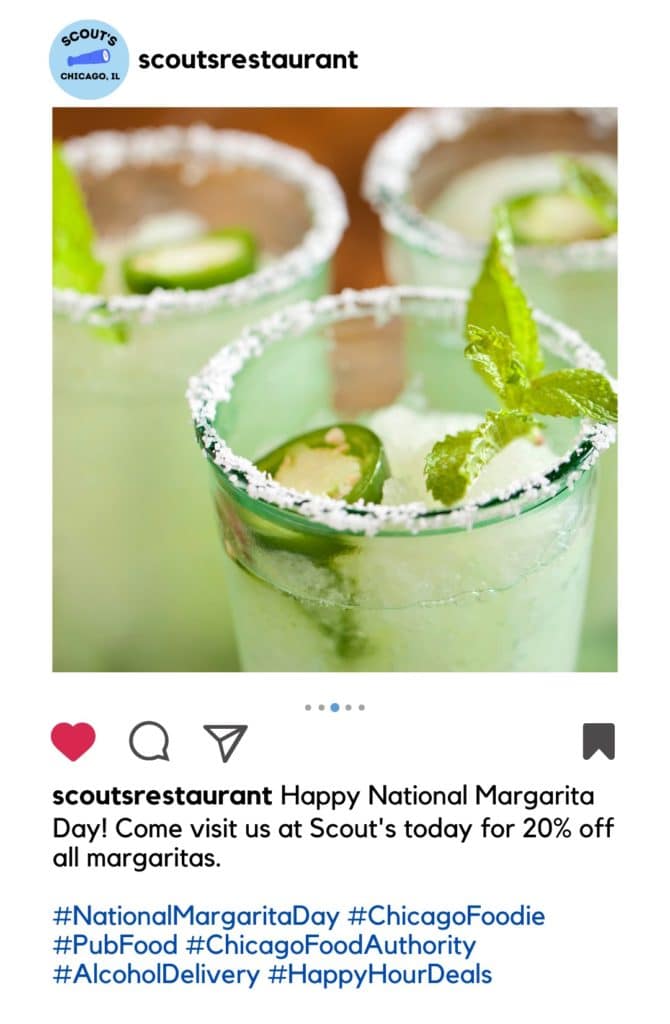
Because national food holidays are a coast-to-coast affair, there are often trending hashtags you can use to ride the wave of popularity and get your restaurant into the national spotlight. Hashtags allow your posts to enter different categories online, bringing your restaurant into people’s social media feeds.
Big Idea: Along with using the obvious national food day hashtags like #NationalMargaritaDay, make sure to also incorporate your restaurant’s city-specific hashtags like #EatAustin, #ChicagoFoodAuthority of #NYCEats. Using these will allow you to tap into the already-there audience you’re looking for.
3. Promote your online ordering site
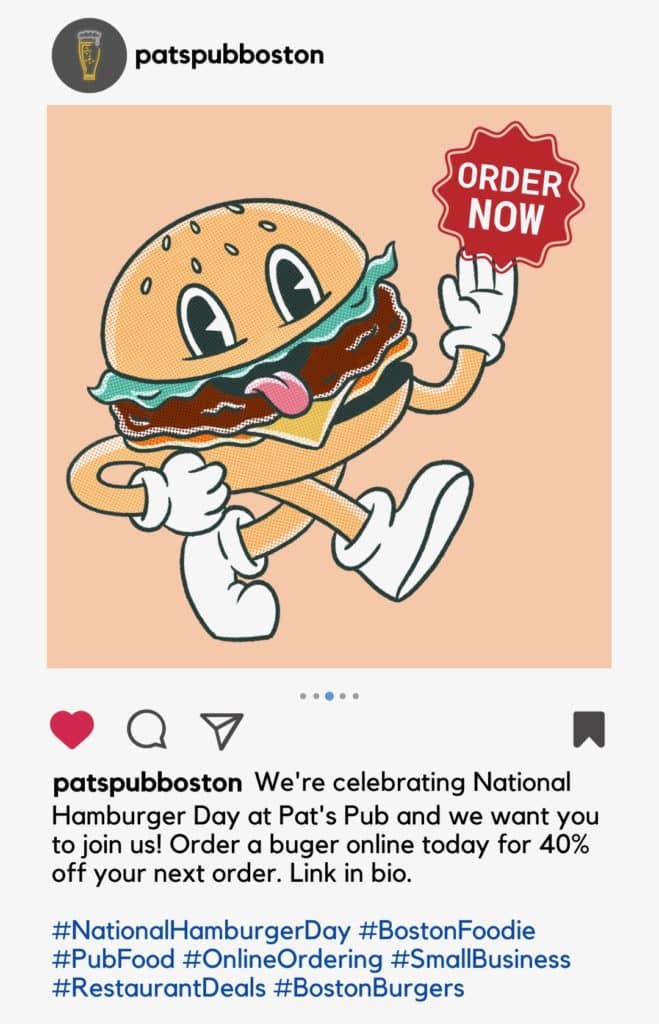
Most promotions work best when you remove any possible hurdles that stand between your customer and the order button. In the world of online ordering, that means making it as easy as possible for diners to find your menu, put their food on their virtual card, and pay up.
When you share your promotional posts on social media, offering customers the ability to order directly from you can help you drive more sales through your national food holiday campaigns.
Don’t have the ability to take online orders? Grubhub can help! Direct is a commission-free platform designed to help you reach loyal diners and build your online brand. With Direct, you can drive customers to your very own online ordering website, customized just for your restaurant. Read all about how Brooklyn-based Broccolini did just this and more.
Big Idea: Include links to your online ordering site on your social media pages so that you can convert curious scrollers into customers. Make sure you highlight your online ordering site in your captions so that it’s clear how diners can place an order.
4. Highlight your dishes
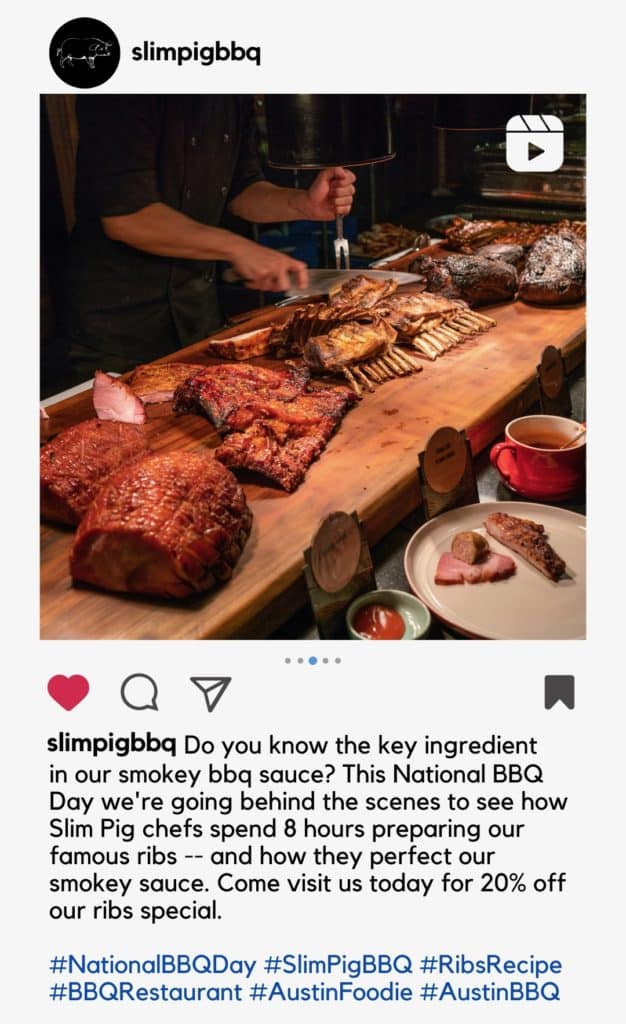
Your food is your pride and joy and what keeps customers coming back for seconds. Making your cuisine the prime feature of your social media profile not only shows off your specialty, but also gets diners’ mouths watering. Nothing gets a diner more motivated to place an order than a juicy photo of a rack of ribs on National Barbecue Day (May 16).
Taking and presenting high quality photos of your food is essential to creating an effective social media presence. When you partner with Grubhub, you can schedule a free photoshoot for your restaurant.
Partnering with micro influencers can help your restaurant gain more exposure. Encourage those who visit your restaurant to post photos of their food online. Delectable food pics can stand out in people’s feeds.
Big ideas: Make sure to feature high quality photos of the dishes you are preparing for national food holidays. You can even give a behind the scenes look into your chef’s meal preparation. Post these photos onto your restaurant’s social media to appeal to diners’ taste buds.
Start your restaurant’s celebration today
The best thing you can do when using national food holidays to promote your restaurant is to create a solid plan. That way, you’re ready and prepared to give your diners the best reason to indulge in your delicious food – daily!
Lucky for you, we’ve already done step one for you. We’ve compiled all the national food holidays in one place and created a complete calendar listing and it’s available to you for FREE to download now.
Use your new calendar to create a new marketing plan or amplify your existing one, and national food holidays could be your next step toward increasing sales and a wealth of new customers.
Already eager to get ready for your next national food holiday promotion? Sign up with Grubhub for Restaurant to access powerful promotion and loyalty tools today!